The Spiel des Jahres jury announced their 2026 winners in Berlin on July 12th - yesterday - and the BGG hotness list responded immediately. JinxO, Martin Ang’s word-association party game, won the Spiel des Jahres. Rebirth, Reiner Knizia’s tile-laying euro from Mighty Boards, won the Kennerspiel des Jahres. Both debut inside the top three this week. More unusually, all four nominees for those two awards appear on the list simultaneously: Cozy Stickerville (#16) and Moon Colony Bloodbath (#18) join the winners in what is the most concentrated SdJ presence this list has seen in a single week.
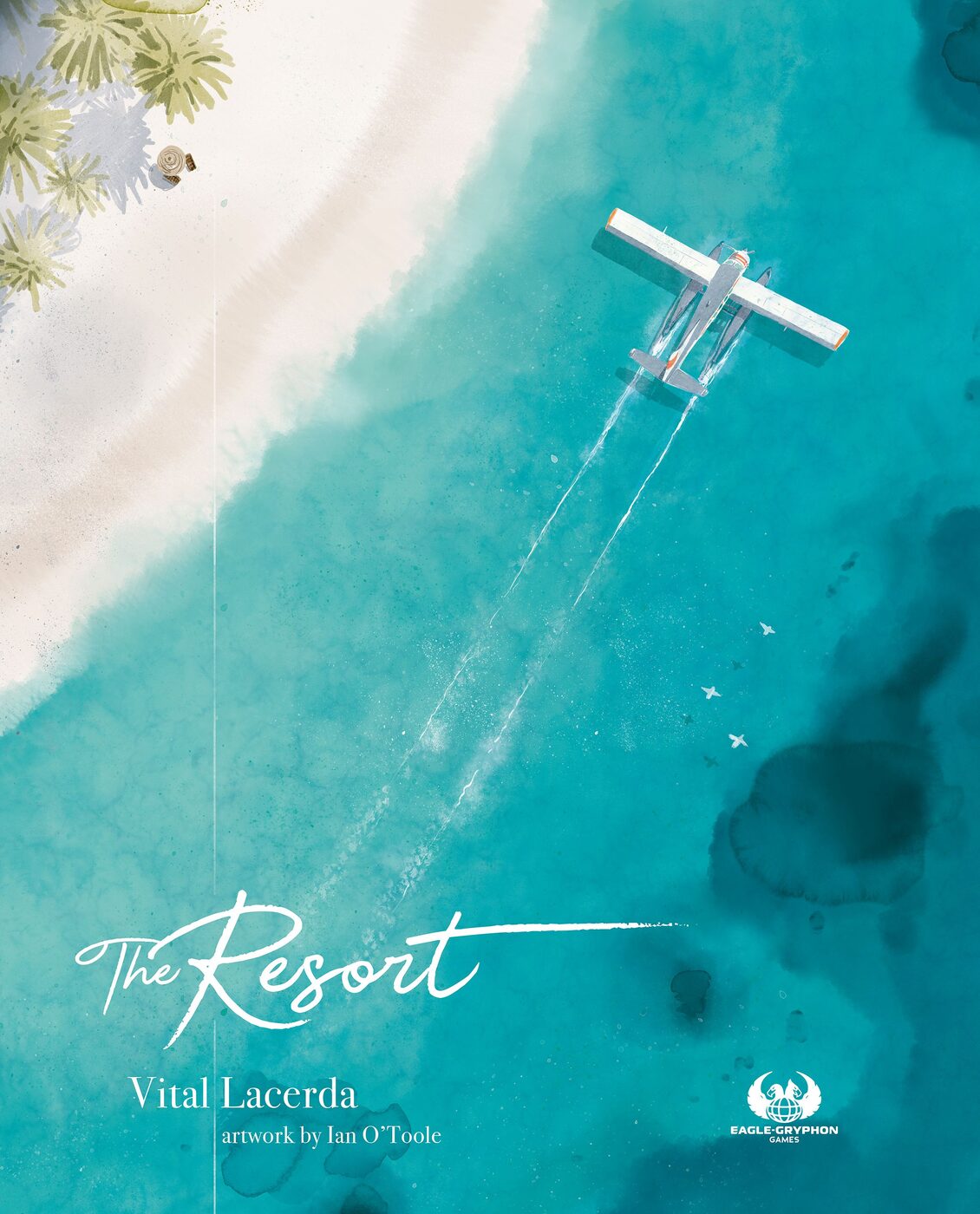
Meanwhile, The Resort takes #1 on what appears to be a Kickstarter launch this week - a competitive resort management game set on a remote Pacific island. Three other crowdfunding campaigns are driving hotness positions: Galileo’s Truth (#5, Gamefound), Ringyō (#10, Kickstarter), and the Defenders of Hogwarts campaign which, having generated last week’s biggest movement, drops entirely off the list after a single week.
Six new entries, eight drop-offs, and a Spiel des Jahres sweep. This is one of the more active weeks the hotness has seen all year.
This Week’s Top 20
| # | Game | Trend |
|---|---|---|
| 1 | The Resort | 🆕 NEW |
| 2 | Rebirth | 🆕 NEW |
| 3 | JinxO | 🆕 NEW |
| 4 | Kingdom Come: Deliverance - The Board Game | 🔻 -3 (was #1) |
| 5 | Galileo’s Truth | 🆕 NEW |
| 6 | Magical Athlete | 🔺 +10 (was #16) |
| 7 | Wingspan Pocket | 🔻 -5 (was #2) |
| 8 | World Order | 🔺 +3 (was #11) |
| 9 | Wondrous Creatures | 🔺 +3 (was #12) |
| 10 | Ringyō | 🆕 NEW |
| 11 | Container | 🔻 -6 (was #5) |
| 12 | Yonder | 🆕 NEW |
| 13 | The Old King’s Crown | 🔻 -4 (was #9) |
| 14 | SETI: Search for Extraterrestrial Intelligence | 🔻 -6 (was #8) |
| 15 | The Lord of the Rings: Fate of the Fellowship | 🔻 -2 (was #13) |
| 16 | Cozy Stickerville | 🆕 NEW |
| 17 | dnup | 🔻 -10 (was #7) |
| 18 | Moon Colony Bloodbath | 🆕 NEW |
| 19 | Harmonies | 🔻 -5 (was #14) |
| 20 | Ark Nova | 🔻 -1 (was #19) |
Dropped off: Defenders of Hogwarts (#3), Kingdom Come: Deliverance - The Board Game second entry (#4), Politik (#6), Quickdraw: Battle for Silver City (#10), Duel of Meloch (#15), Diables (#17), Nippon: Zaibatsu (#18), The Quest for El Dorado (#20)
Spiel des Jahres 2026 - all four nominees, both winners, on the list at once
The Spiel des Jahres jury announced their 2026 winners at the Berlin ceremony on Saturday, July 12th. For the main Spiel des Jahres award - Germany’s most watched board game prize and a reliable driver of global sales - the winner is JinxO, a word-association party game by Martin Ang, originally published in Indonesia in 2024 under the Tabletoys Games label and released in German as Dito! by Game Factory. The other two nominees were Cozy Stickerville by Corey Konieczka and Morty Sorty Magic Shop by Markus Slawitscheck.
For the Kennerspiel des Jahres - the expert award targeting hobbyist players - the winner is Rebirth, Reiner Knizia’s tile-laying game for two to four players, published by Mighty Boards and Frosted Games. The other two Kennerspiel nominees were Boss Fighters QR by Michael Palm and Lukas Zach and Moon Colony Bloodbath by Donald X. Vaccarino.
The hotness implication is immediate: Rebirth enters at #2, JinxO at #3, and the losing nominees Cozy Stickerville and Moon Colony Bloodbath debut at #16 and #18 respectively. All four games on the two main nomination shortlists are now on the BGG hotness list simultaneously. That is unusual. Typically the winners drive a spike while the non-winners see modest movement. This week every game that received a shortlist nomination has surged, suggesting the ceremony generated broad interest across the entire field rather than concentrating engagement on the winners alone.
JinxO - the party game that won Germany’s highest board game honour
JinxO is designed by Martin Ang and was originally only available at Spiel in Essen and through Indonesian distribution. The concept is deceptively compact: four to seven players answer three topic prompts per round, writing three answers each onto a 3×3 dry-erase grid. After all players have filled their grids, answers are read aloud. An answer that matches at least one other player scores one point. An answer that matches exactly one other player scores two - that rare “JinxO” moment where you and one other player are perfectly aligned. An answer that matches no one scores nothing.
The game sounds straightforward, but the psychological layer is where it earns its place at the table. You are not trying to be clever or creative; you are trying to predict what other people will write. The correct answer is the boring one. The shared vocabulary of a group - inside jokes, regional references, generational touchstones - becomes the actual game board. Groups that know each other well play a fundamentally different game than strangers do, and the experience recalibrates every time the player group changes.
The Spiel des Jahres jury specifically cited the “touch of empathy” required to succeed, which is a fair description of what the game demands. Whether JinxO’s win produces a mainstream sales surge will depend on retail availability outside Germany - it was largely unknown in English-speaking markets before the nomination, and distribution is currently limited. But a Spiel des Jahres win has historically generated enough global demand to pull publishers toward wider release within months.
Rebirth - Knizia’s tile-layer takes the Kennerspiel
Rebirth is Reiner Knizia’s take on the tile-laying genre, set in a post-calamity Scotland where clans compete to restore the land. Each player draws tiles from their own face-down pile and places them onto a shared hexagonal board. Tiles represent the clan’s contribution to reconstruction. The mechanism rewards foresight - the board fills up, and spatial relationships between tiles determine scoring through area majority, contract fulfilment, and end-game bonuses.
Knizia’s reputation in the eurogame community rests on games that appear simple and reveal strategic depth through play. Rebirth fits that profile. The Kennerspiel des Jahres positions it correctly: accessible enough for engaged family play, with enough texture for hobbyists to find genuinely interesting decisions throughout. The BGG rating of 7.8 with nearly 11,000 collections before the win suggests the game already had significant traction among dedicated players, which the Kennerspiel nomination will convert into much wider awareness.
Lucky Duck Games and Mighty Boards co-publish the retail version. A Kickstarter campaign ran in 2024. For players who missed the campaign, the award win makes retail availability a more urgent question than it was last week.
The Resort - Kickstarter launch sends it straight to #1
The Resort is a competitive strategy game for two to four players set on a remote Pacific island opened for tourism development. Players take on the role of competing resort entrepreneurs, each managing the construction and operation of their own luxury resort on shared terrain. The core loop involves investing in accommodations, services, and guest experiences while navigating the constraints of shared island infrastructure and limited available space. Different guest types have different preferences, and optimising revenue requires calibrating your resort’s offerings to match what your target guests actually want - while your opponents are doing the same on adjacent parcels of the same island.
The design appears to sit in the economic euro space, with spatial elements introduced by the shared island board creating player interaction that pure engine-building games avoid. Guests moving between resort areas, infrastructure choices that affect all players, and limited construction zones turn what could be a solitaire management game into something genuinely competitive.
The campaign launched on Kickstarter this week, which explains the #1 debut. A resort management game with appealing art on a Kickstarter launch day consistently generates this kind of hotness spike - the Defenders of Hogwarts trajectory last week (launching and jumping to #3) follows the same pattern, though The Resort has gone further. Whether it holds next week depends on ongoing campaign momentum and how well the game’s community discussion sustains after the initial announcement rush.
Galileo’s Truth - Thundergryph and Awaken Realms launch on Gamefound
Galileo’s Truth is a competitive euro for one to four players designed by Virginio Gigli and Flaminia Brasini, published by Thundergryph Games. The setting is 1610 - the year Galileo published his telescopic observations and began his collision course with Church orthodoxy. Players take the role of scholars navigating an era where pursuing knowledge of heliocentrism risked accusations of heresy. Mechanically, the game combines worker placement, deck building, and resource management with a Suspicion track that limits how aggressively players can pursue forbidden discoveries.
The publication context adds another layer of interest: Awaken Realms acquired Thundergryph Games earlier this year, and Galileo’s Truth is the first joint project from the combined entity. Thundergryph’s catalogue - Darwin’s Journey, Tang Garden - skews toward mid-weight euros with strong thematic integration. Awaken Realms brings production scale and distribution reach. The Gamefound campaign opened July 7th, which drives the #5 debut this week.
Gigli and Brasini are a design partnership with form in exactly this space - thematic eurogames set in historical Europe with interlocking systems. Galileo’s Truth is playing in the same territory as Darwin’s Journey, which performed well both on crowdfunding and at retail. The Awaken Realms distribution machinery gives it better reach than Thundergryph could have managed independently.
Ringyō - Paverson Games’ Edo-period forestry game hits Kickstarter
Ringyō is a simultaneous worker placement game for one to four players by Charlie McCarron, published by Paverson Games, with artwork by Kwanchai Moriya. The setting is Edo-period Japan. Players are daimyo - feudal lords - each managing a personal province board that begins as old-growth forest. Over five rounds, you make decisions about whether to harvest trees for construction materials or maintain forest cover to prevent flooding, how to send advisors to the Shogun in Edo to compete for imperial favour, and how to balance the immediate demands of your province against the longer-term consequences of your land management choices.
The environmental tension is the design’s central innovation: clear-cutting your forest provides building materials but leaves your province vulnerable to weather events that the game’s card-driven weather system generates each round. Sustainable forestry pays off across the full five-round arc; aggressive harvesting peaks early and suffers late. The bidding element for Shogun favour introduces player interaction across otherwise separate province boards.
Kwanchai Moriya’s art is a recognisable draw in the hobby - he’s done work on Oath, Spirit Island, and a long list of other well-regarded games. The Dice Tower live play posted last week will have driven meaningful BGG traffic. The Kickstarter campaign launched this week.
Yonder - Haakon Hoel Gaarder returns with a larger canvas
Yonder is a one to four player worker placement game designed and illustrated by Haakon Hoel Gaarder, published by Sinister Fish. Gaarder’s previous games - Villagers, Streets, and Moon - form a loose thematic trilogy of accessible, beautifully illustrated games with tight solo modes and clean multiplayer structures. Yonder is a larger, more complex game that builds on that foundation.
Players dispatch fantasy workers - goblins, ogres, dwarves, elves, and skeletons - to gather resources, build settlements, and fulfil contracts from a rotating cast of envoys arriving from other settlements. Each envoy brings a lucrative but time-limited offer; meeting their demands rewards you, but the next envoy will want something different. The game earns gold as the primary victory condition, which gives it a cleaner win-condition structure than games that use points tallied across multiple categories.
At #12, Yonder is a measured debut for a game from a designer with a devoted following. Sinister Fish games tend to attract players who appreciate the Villagers school of design - accessible, thematic, solo-friendly - and that audience is engaged enough to generate consistent BGG discussion. Whether Yonder expands beyond that existing fanbase will depend on how the game plays at higher player counts.
Magical Athlete climbs ten - CMYK’s racing game finds its audience
Magical Athlete jumped from #16 to #6 this week - a ten-position rise without any obvious campaign or announcement driving it. The Richard Garfield and Takashi Ishida co-designed racing game from CMYK debuted last week as a measured reprint. This week’s movement suggests word-of-mouth is working: people are receiving their copies, playing, and posting, which drives BGG forum activity and wishlist additions that generate hotness position.
This is a different category of hotness climb from the campaign-driven spikes elsewhere on the list. The Resort, Ringyō, and Galileo’s Truth are all reacting to launch announcements. Magical Athlete is reacting to actual play experience, which tends to produce more sustained hotness over multiple weeks rather than a single-week spike followed by normalisation.
The vanishing act - eight games drop off
Last week’s list shed eight titles in one week, which is unusually high turnover. Several of these exits follow patterns worth noting.
Defenders of Hogwarts, which jumped from #13 to #3 last week on the back of its Kickstarter launch, has dropped off entirely in a single week. This is the fast-spike-fast-exit pattern characteristic of campaign launches that generate announcement curiosity but don’t sustain discussion into the following week. The MinaLima Harry Potter game remains on Kickstarter, but the hotness moment was the launch day - it won’t return to the list unless a significant update or milestone generates fresh BGG activity.
Politik exits from #6 after a strong run. Quickdraw: Battle for Silver City and Duel of Meloch continue the trajectory they began last week - both were announcement spikes that are now fully normalised. The Kingdom Come second entry (#4 last week) was always likely to fade once the initial dual-game novelty wore off.
Diables exits after one week despite its Gamefound campaign still running. Nippon: Zaibatsu and The Quest for El Dorado complete the departures - both had reprint or campaign-adjacent spikes that have run their natural course.
The steady core - what holds
Kingdom Come: Deliverance - The Board Game drops from #1 to #4, its first position fall after three weeks at the top. The game has had an exceptional run but is now competing against a particularly busy week. Wingspan Pocket falls five to #7 but remains present. Container drops six to #11 - a meaningful fall for a game that had been holding the #5 position steadily.
Wondrous Creatures and World Order both climb three positions to #9 and #8 respectively, continuing quiet but consistent upward movement. Ark Nova holds at #20, its position barely changing from last week - a reliable fixture that the hotness list seems unable to fully eject.
The Lord of the Rings: Fate of the Fellowship (#15) and SETI (#14) both drift down but remain present for another week. Neither has an active campaign or announcement; both are simply games that people keep discovering and discussing.