The BGG Hotness list is one of the best real-time signals for what the hobby is collectively obsessing over. This week, the signal is loud and clear: interaction is back.
The Top 5
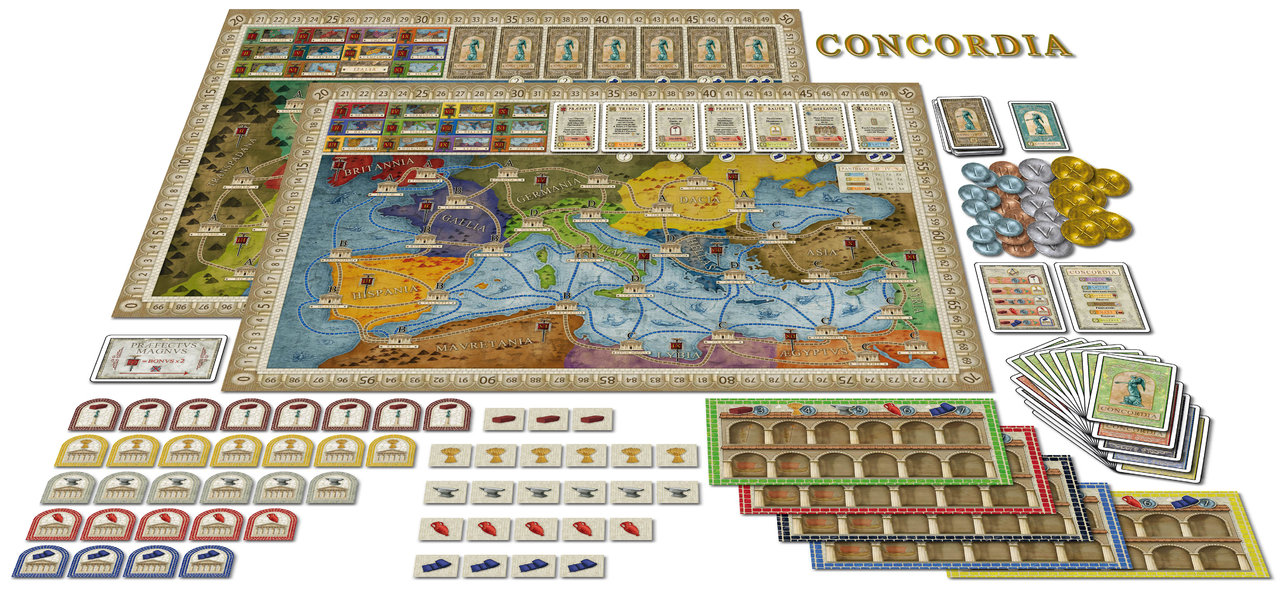
#1: Concordia Special Edition is holding firm for a second consecutive week. That’s not a fluke. Concordia has always been the euro that euro-sceptics love, precisely because your card plays directly mess with what’s available to opponents. The Special Edition adds enough production value to justify a re-buy for existing fans, and it’s pulling in new players who skipped the understated original box. A 12-year-old design outperforming everything new on the market. Let that sink in.
#2: Fossilium continues climbing. A set collection game about fossil excavation sounds dry, but the spatial puzzle of dig site management has genuine teeth. Players compete for the same excavation sites, and timing your digs around opponents’ plans is the whole game. This one’s a slow burner.
#3: Pies has entered the chat. Yes, it’s called Pies. No, don’t let the name fool you. This is a surprisingly sharp area-control game from a first-time designer that’s been generating word-of-mouth buzz since Essen prototypes started circulating. Keep an eye on this one.
#4: The Old King’s Crown is a legacy-adjacent campaign game that’s been slowly building momentum. The cooperative play is tight enough that table talk genuinely matters. You can’t just optimise your own board and hope for the best.
#5: Harmonies rounds out the top five. An abstract about building natural landscapes that rewards spatial awareness and forward planning. Clean, satisfying, and surprisingly crunchy for its weight.
The New Entry
#19: Dune Imperium: Uprising makes its first Hotness appearance, driven by the digital implementation announcement. The original Dune Imperium was already the gold standard for deck-building-meets-worker-placement. Uprising’s expanded market row and new faction mechanics have been divisive enough to keep people talking. That’s usually a good sign.
The Pattern
Look at the top five again. Concordia: your card play affects opponents’ options. Fossilium: competing for dig sites. Pies: area control. The Old Kings Crown: cooperative dependency. Even Harmonies requires awareness of the shared landscape pool.
This isn’t coincidence. After years of multiplayer-solitaire engine builders dominating the Hotness, we’re seeing a clear swing toward games where what your opponents do actually matters. Players are voting with their attention. And the message is: if I wanted to optimise alone, I’d play a video game.
The question is whether publishers are listening. The crowdfunding space is still dominated by big-box productions where player interaction is an afterthought. But the Hotness, which tracks what people are actively looking at and discussing, is telling a different story.
What to Watch
Keep an eye on Concordia at #1. Games rarely hold the top spot for three consecutive weeks unless there’s sustained new-player discovery happening. If it’s still there next Monday, we’re looking at something remarkable. A design from 2013 outperforming everything new.
Weekly Hotness is published every Monday based on BoardGameGeek’s trending data. Follow @TheDiceDrop for daily analysis.