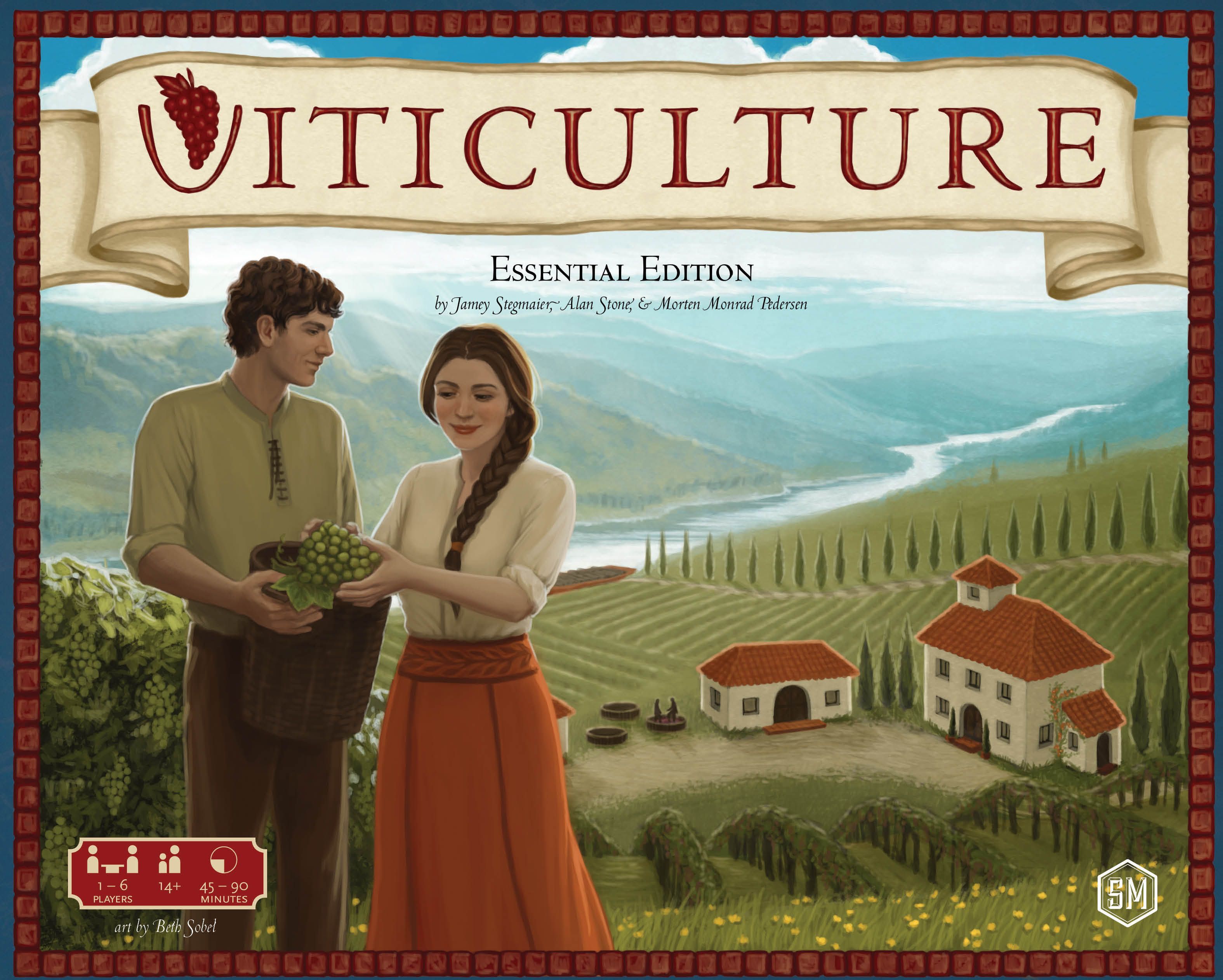
Two board games about making wine. Both worker placement. Both highly rated on BGG. Both have “vine” somewhere in their DNA.
That’s where the similarities end.
Viticulture Essential Edition is the gateway - a warm, welcoming Tuscan sunset that teaches you the rhythm of seasons while you plant vines, crush grapes, and fill wine orders. It’s Jamey Stegmaier at his most accessible, a game that makes you feel like a winemaker without ever making your head spin.
Vinhos: Deluxe Edition is the masterclass - a dense, uncompromising economic engine from Vital Lacerda that models the entire Portuguese wine industry. Regions, vintages, trade fairs, exports, oenologists, weather events. It’s not simulating the feeling of winemaking. It’s simulating the business.
If you’ve ever stood in a game shop holding both boxes, wondering which one’s for you, here’s the full breakdown.
At a Glance
| Category | Viticulture EE | Vinhos Deluxe | Edge |
|---|---|---|---|
| BGG Rating | 7.96 (#44 overall) | 8.05 (#155 overall) | 🏆 Vinhos (higher rating) |
| Weight | 2.90 / 5 | 3.99 / 5 | Depends on taste |
| Players | 1-6 | 1-4 | Viticulture (higher count) |
| Play Time | 90 min | 180 min | Viticulture (half the time) |
| Designer | Jamey Stegmaier | Vital Lacerda | Two legends |
| Year | 2015 | 2016 | - |
| Strategy Rank | #46 | #94 | 🏆 Viticulture |
The numbers tell a story immediately. Viticulture is lighter, shorter, plays more people, and ranks higher in the strategy category despite being a full complexity point lower. Vinhos has the higher raw rating but far fewer ratings (7,955 vs 55,130) - the self-selecting audience of Lacerda fans will do that.
The Theme: Tuscan Dream vs Portuguese Business Plan
Both games put you in charge of a winery. The difference is what “in charge” means.
In Viticulture, you’re living the romantic version. Plant a vine. Harvest grapes. Make wine. Fill an order. The seasons turn, workers come and go, and there’s a gentle poetry to the yearly cycle. You might build a tasting room or host a tour. Visitor cards bring colourful characters who offer one-time bonuses - it feels like running a small family vineyard.
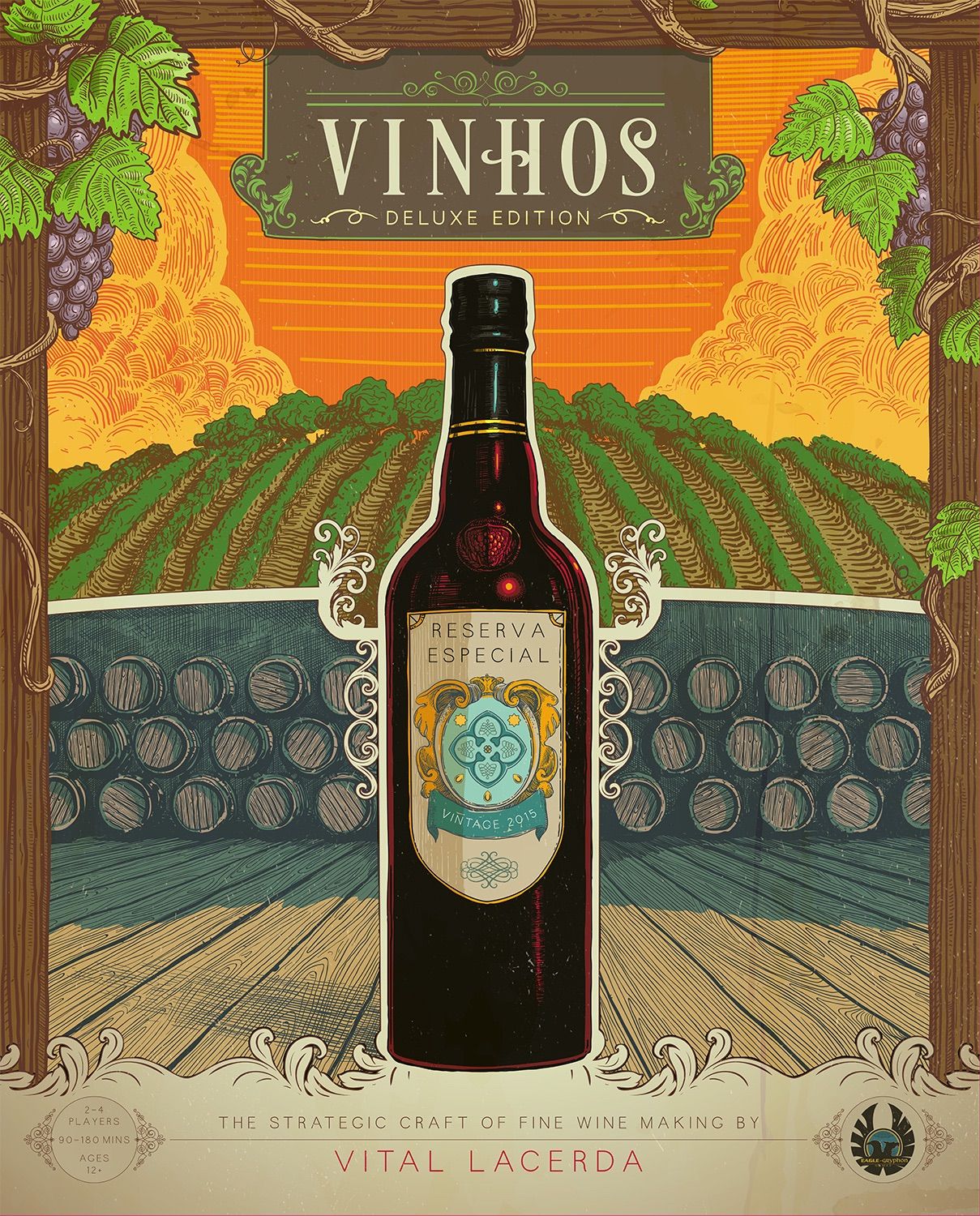
In Vinhos, you’re running a corporation. You’re tracking wine quality across multiple regions, timing your production around weather tiles, hiring oenologists to boost specific vintages, and attending trade fairs where you pitch your wine against other players’ bottles in a prestige contest. There’s an actual export system. There are bank managers. The game models the difference between Alentejo and Dão wine regions - and it matters mechanically.
Viticulture makes wine feel like a craft. Vinhos makes wine feel like an industry. Neither is wrong. But they attract fundamentally different players.
Worker Placement: Welcoming vs Punishing
Both are worker placement games, but the feel couldn’t be more different.
Viticulture uses a forgiving seasonal system. Spring, summer, autumn, winter - each season opens different action spaces. You choose wake-up order (earlier means fewer perks but first pick of spaces), then take turns placing workers. The grande worker - your one special worker who can go anywhere regardless of whether a space is taken - is a brilliant safety valve. You might not get your first choice, but you’ll never be completely locked out.
The pacing is gentle. You typically have 3 regular workers and your grande, giving you 4 actions per year spread across the seasons. Decisions matter, but the game doesn’t punish mistakes harshly. Planted a vine you can’t harvest yet? No worries, it’ll be there next year.
Vinhos is far more demanding. The action selection uses a rondel-like grid where your movement is restricted, and positioning is everything. Taking an action adjacent to another player costs money. Long-term planning isn’t optional - it’s the whole game. You need to think 2-3 rounds ahead to time your wine production, fair attendance, and export schedule.
Every action in Vinhos has opportunity cost that you feel. The game runs only 6 rounds, with trade fairs at rounds 3 and 6 that force you to present wine. If your production timeline is off, you’re showing up to the fair with plonk while your opponent uncorks a masterpiece.
Complexity: A Full Point Apart
BGG weight tells the story clearly: Viticulture sits at 2.90 and Vinhos at 3.99. That’s a massive gap.
Viticulture at 2.90 means: experienced gamers can teach this in 15 minutes. New players will have one confused round and then get it. The iconography is clean, the flow is intuitive (seasons!), and the visitor cards - while text-heavy - are straightforward once you’ve seen a few.
Vinhos at 3.99 means: expect a 30-45 minute teach minimum. The rulebook is dense. The action grid takes multiple plays to internalise. The scoring is multi-layered - wine quality, fair performance, export points, estate bonuses. First-time players will make catastrophic strategic errors they won’t even recognise until round 4.
This isn’t a criticism of Vinhos - it’s a feature. Lacerda designs games for people who want that depth. But if you’re buying blind, know what you’re getting into.
Solo Mode
Both games support solo play, and both do it reasonably well.
Viticulture’s Automa (the Stonemaier solo system) provides a smooth, low-overhead opponent. It blocks spaces and scores points, creating tension without bogging you down in maintenance. It’s one of the better Automa implementations - quick turns, minimal bookkeeping, and the game’s seasonal structure works beautifully solo.
Vinhos’ solo mode pits you against a scoring threshold. It’s more of a puzzle optimisation - can you hit the target score within 6 rounds? The lack of a simulated opponent means less blocking interaction, which some solo players prefer (pure optimisation) and others find less engaging.
For dedicated solo play, Viticulture edges ahead thanks to the Automa creating a more dynamic game state.
Player Interaction
Viticulture has gentle interaction. You’re competing for action spaces, and the wake-up order mechanic creates interesting tactical decisions, but you’re largely building your own vineyard in parallel. The visitor cards occasionally let you steal grapes or disrupt opponents, but it’s not the core experience.
Vinhos is more directly competitive. The action grid costs money when you’re near opponents. Trade fairs are head-to-head scoring events. The export market has limited demand. You’re acutely aware of what everyone else is doing because it directly affects your costs and scoring opportunities. For a Lacerda game, it’s surprisingly interactive.
Production & Table Presence
Viticulture is gorgeous in an understated way. The board depicts a beautiful Tuscan landscape, the glass tokens for grapes and wine are lovely, and the wooden workers are solid. The Tuscany expansion (which many consider essential) adds a spectacular double-sided board with a detailed map of Tuscany. It’s warm, inviting, and photographs well.
Vinhos Deluxe is imposing. The board is enormous, packed with tracks, regions, and iconography. Eagle-Gryphon’s production is premium - thick tiles, quality cardboard, wooden barrels. But it’s dense. Your table will be full, and the visual information overload can intimidate new players. It looks like a serious game because it is one.
Who Should Buy Which?
Choose Viticulture Essential Edition if you:
- Want a gateway-plus game that non-gamers can enjoy
- Love thematic immersion without mechanical overwhelm
- Play with mixed experience groups
- Want excellent solo play
- Prefer games under 2 hours
- Already enjoy Stonemaier’s design philosophy (Wingspan, Scythe)
Choose Vinhos Deluxe Edition if you:
- Crave deep economic systems
- Already love Lacerda (Lisboa, The Gallerist, On Mars)
- Want a game that rewards 10+ plays with new strategic layers
- Prefer games where every decision is agonising (in a good way)
- Have a dedicated game group comfortable with heavy games
- Want the most realistic wine-industry simulation in board gaming
Buy both if you:
- Genuinely love wine-themed games (they serve completely different moods)
- Have groups of varying experience levels
- Want a “light night” and “heavy night” option in the same theme
The Verdict
These games don’t really compete with each other. They share a theme the way a cosy rom-com and a gritty crime drama share the setting of New York - technically the same backdrop, utterly different experiences.
Viticulture is the crowd-pleaser. It’s in the BGG top 50 for a reason - it nails the intersection of theme, accessibility, and strategic depth that makes people fall in love with board games. If you own one wine game, this is probably it.
Vinhos is the connoisseur’s choice. It’s a masterpiece of economic game design that very few people will play enough to fully appreciate. But for those who do, it’s extraordinary - a game where the theme of winemaking isn’t decoration but the entire structural framework.
Neither is “better.” They’re different drinks for different occasions. A crisp Vinho Verde on a summer evening, or a complex aged Douro with a meal that demands your full attention. The best collection has room for both.