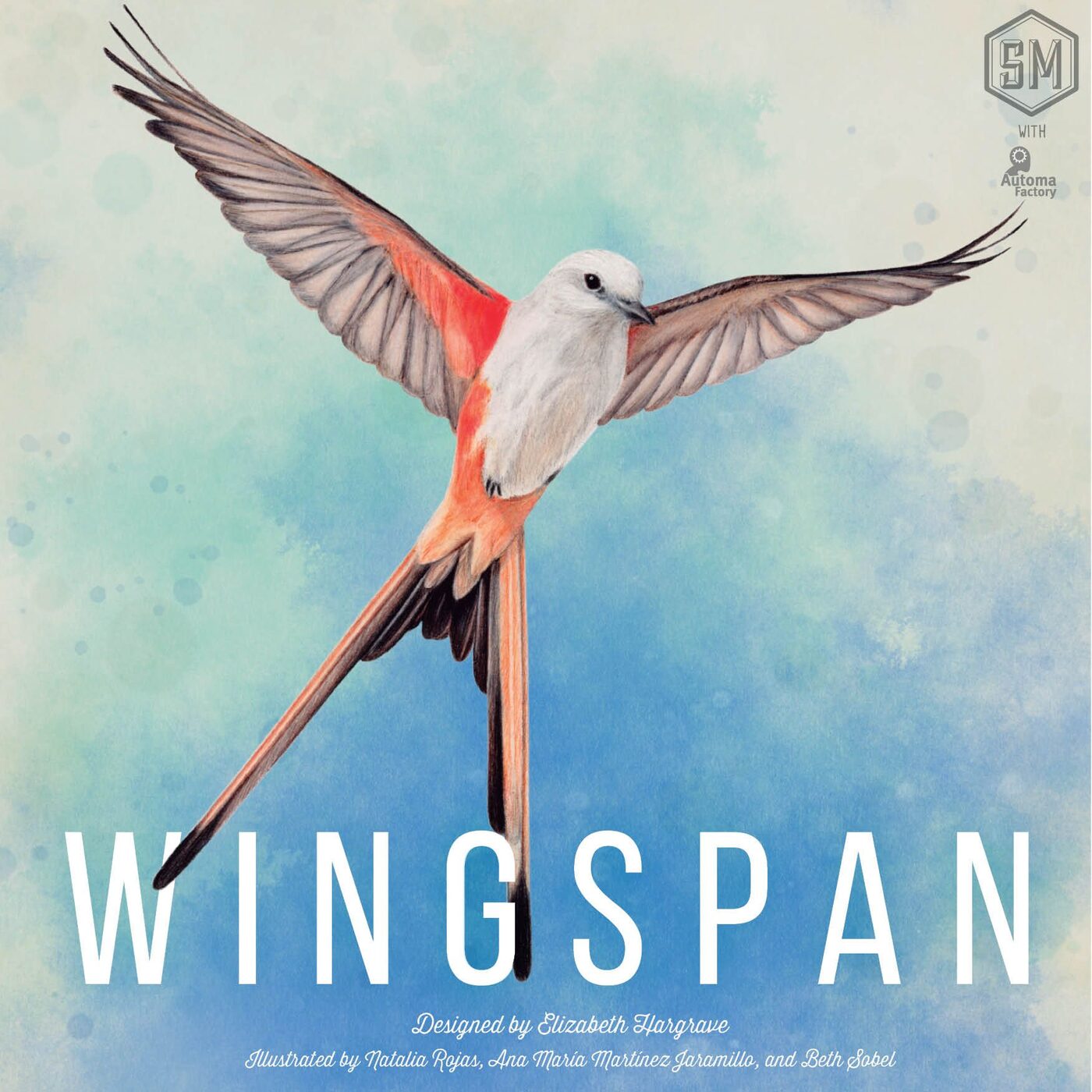
Wingspan is the game that seemingly everyone owns. It’s sitting at #38 all time on BGG with over 115,000 ratings and an average score of 8.0. Designer Elizabeth Hargrave built something genuinely special: an engine-builder themed around bird habitats that’s pretty enough to stop strangers at a coffee shop.
But here’s the question that actually matters for solo players: does the Automa system turn this into a satisfying solo experience, or is it just a way to fill the player count minimum?
Let’s go through it properly.
How the Solo Mode Works
Wingspan uses a dedicated Automa deck to simulate an opponent. Here’s the mechanical breakdown:
Each round, you flip a number of Automa cards equal to the round number (so 1 card in round 1, 4 cards in round 4). Each card tells you what column the Automa “activates” - it doesn’t take bird cards or build an actual engine, but it does two things:
Competes for end-of-round goals. Many of Wingspan’s four end-of-round goals (most birds in a habitat, most eggs, etc.) are contested between you and the Automa. The Automa cards tally points toward those goals.
Blocks the bird card display. When an Automa card activates, one of the five face-up bird cards gets pushed out of the display, narrowing your options for that round.
At game end, the Automa scores points using a separate scoring mechanism based on cards drawn during play. You’re trying to outscore it.
Difficulty: Three levels - Easy, Normal, and Hard - which adjust the Automa’s end-game point multiplier. There’s also an optional Automabon Society card you can add for an extra challenge if you’re consistently winning on Hard.
Setup and Teardown
Solo Wingspan is meaningfully faster to set up than the full multiplayer game.
Setup time: Around 10-12 minutes. You’re dealing with one player board, one food/egg supply, the bird card display, and the Automa deck. No extra player boards, no coordinating between multiple people.
Teardown time: 10-15 minutes. The card sorting is the main task - birds back by category, habitat tiles back in their tray.
Compared to multiplayer: A 4-player game can take 15-20 minutes just to set up and even longer to break down. Solo is noticeably leaner.
Table Footprint
Wingspan solo uses roughly the same space as a single player’s position in a multiplayer game - plus a small area for the central bird display and the Automa pile. You need:
- Your main player board (36cm × 26cm approximately)
- The birdfeeder and egg tokens
- The 5-card bird display plus reserve pile
- The Automa deck (small, sits in a corner)
- Your hand of cards
A standard dining table handles this without stress. It’s not a space hog.
Decision Density
This is where opinions divide.
In Wingspan, your core actions are: play a bird, gain food, lay eggs, draw cards. In solo, you make all these decisions with full information about what the Automa will do next (since you flip the Automa card before deciding your own action). Some players find this satisfying - you’re optimising against a known threat. Others find it removes the tension of playing around a human opponent who might surprise you.
The plain truth: Wingspan’s decision space is the same solo as in multiplayer. What changes is the social pressure. You don’t feel someone watching the display and thinking about taking your target bird. That psychological layer is gone.
What you do get is a clean optimisation puzzle. Each round has a clear goal: outperform the Automa on the end-of-round criteria while building the most efficient engine you can.
For a game weighted at 2.48 on BGG (light-to-medium complexity), that’s a comfortable depth level for solo play. This isn’t Mage Knight - you’re not drowning in choices. But there’s enough going on to keep things interesting for 45-60 minutes.
Replayability
Wingspan’s solo replayability rests on three pillars:
1. Bird card variety. The base game has 170 unique bird cards. You’ll rarely see the same combination twice. Each bird has specific habitat requirements and powers, so the available birds heavily shape your strategy each session.
2. Variable end-of-round goals. The four goals rotate randomly. Sometimes you’ll be racing to collect the most eggs; other times it’s about stuffing a specific habitat. Your approach needs to shift with them.
3. Bonus cards. You start each game with one of several bonus cards that scores points for meeting specific conditions (most birds with over 50cm wingspan, most birds costing 3+ food, etc.). These act as a secondary engine to build around.
The expansions add significantly more: Wingspan European Expansion (81 more birds), Oceania (95 birds + new nectar food type), and Asia (75 birds + new duet mode). If solo longevity is your concern, the expansions extend the game substantially.
What the BGG Community Says
The solo poll tells a clear story. Of 1,360 BGG users who voted on Wingspan at 1 player:
| Verdict | Votes | Share |
|---|---|---|
| Recommended | 849 | 62% |
| Not Recommended | 395 | 29% |
| Best | 116 | 9% |
That’s a strong “Recommended” majority, but notably very few people call solo the best way to play. The 29% Not Recommended is higher than you’d see for a purpose-built solo game like Arkham Horror LCG or Gloomhaven - but Wingspan was primarily designed as a multiplayer game, so that’s expected.
The pattern in community discussion on r/soloboardgaming is consistent: the Automa is technically well-implemented and easy to run, but the lower player interaction in the base game means the gap between solo and multiplayer isn’t as wide as it might be in a heavier game.
One player on r/soloboardgaming put it directly: “The Automa offers a fantastic way to enjoy Wingspan solo. I’m uncertain if it will maintain its appeal with the current content available, especially since it’s a lighter game in terms of depth.”
Critics point to another real issue: luck can feel punishing solo. A bad dice roll for food, combined with a bird display that doesn’t cooperate, can make a run feel unwinnable through no fault of your play. With a human opponent you can at least commiserate. Against the Automa, you’re just losing to variance.
Who This Is For
Wingspan solo works well for:
- New to the hobby players who want to learn the game before teaching others. Solo removes the social pressure while you get the systems in your head.
- Regular Wingspan fans who want to play when a group isn’t available. It scratches the same itch without requiring others.
- Engine-builder enthusiasts who enjoy optimisation puzzles at a medium complexity level.
It’s less suited to:
- Players who primarily care about interaction and drama. The Automa is polished but not surprising. It doesn’t make mistakes, doesn’t have personality, and won’t create the moments a human opponent will.
- Players seeking a deep, punishing solo challenge. At weight 2.48, this isn’t going to scratch that itch. It’s a pleasant 50-minute game, not a brain-burner.
- Solo-first gamers who want replayability without buying expansions. The base 170 cards do eventually start to feel familiar after many plays.
The Bottom Line
Wingspan’s Automa is one of the better implementations of the format: easy to run, reasonably tense on higher difficulties, and mechanically faithful to the multiplayer experience. It doesn’t pretend to replace playing with people, but it’s a competent substitute when you want to play and no one else is around.
BGG community verdict: Recommended. Not the best solo game ever made, but a solid one - especially if you already own the game.
BGG rating: 8.0 / 10 | Weight: 2.48 | Solo time: ~50 minutes | View on BGG →