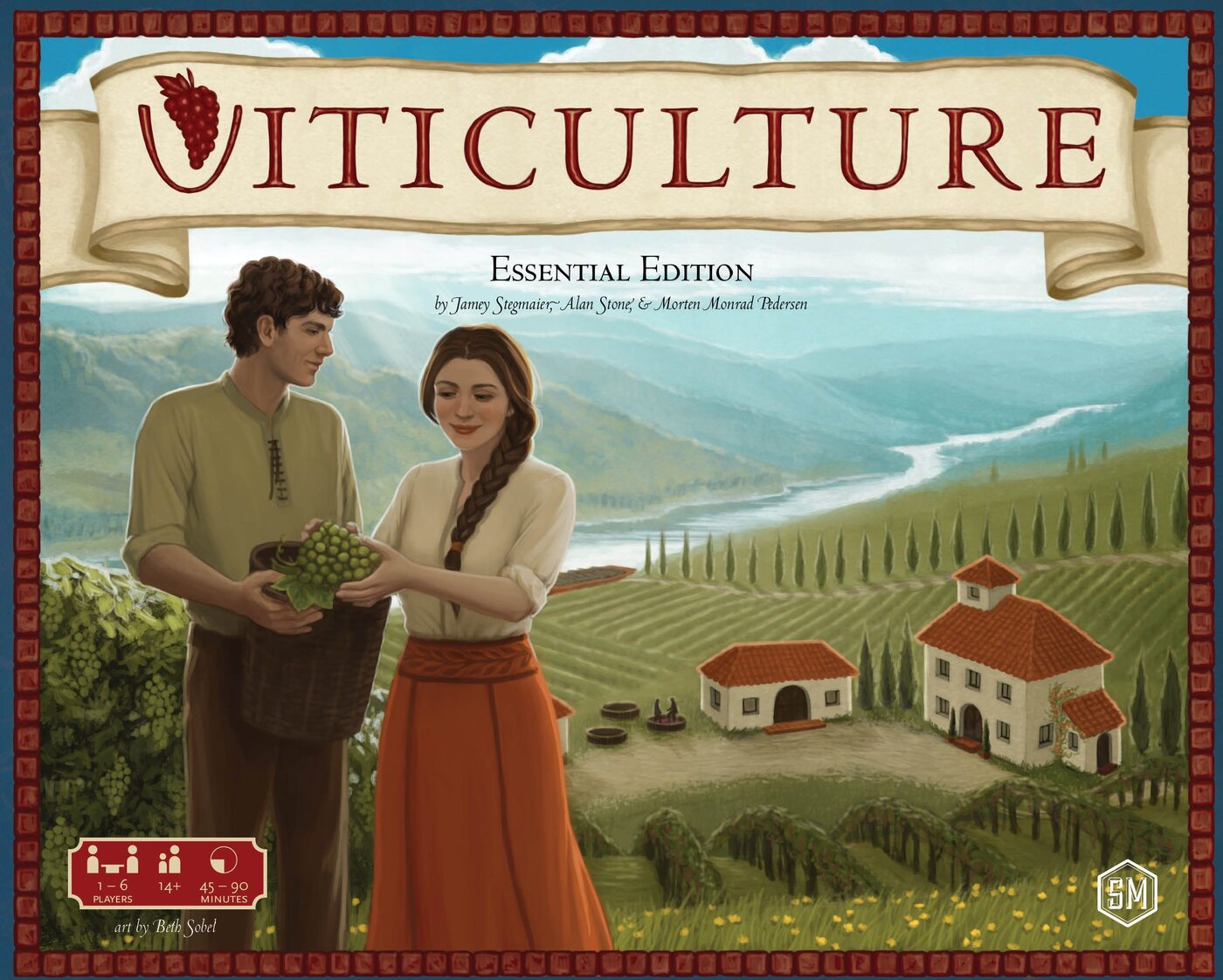
Viticulture Essential Edition is owned by over 78,000 people on BoardGameGeek. It’s ranked #44 overall. It has a 7.96 average rating across 55,000 ratings. It wins awards. It converts sceptics.
It also sits, sealed or barely touched, on an enormous number of shelves.
That’s not a coincidence. Viticulture has a specific, diagnosable shelving problem - and it’s not that the game is bad. It’s one of the best euro games ever made. The problem is a cluster of small friction points that make the first play harder than it needs to be, all pointing at the same root causes. Fix those and you’ve rescued one of the genuinely great board gaming experiences of the past decade.
Here’s the rescue plan.
The Real Barrier (It’s Not What You Think)
Viticulture looks like it should be easy to teach. The theme is intuitive - you’re running a vineyard in Tuscany, growing grapes, making wine, filling orders. The weight sits at 2.9/5 on BGG. It’s not a heavy game. And yet first-time groups regularly leave the session confused, under-engaged, or quietly unsure what they were doing for ninety minutes.
The culprit is usually a combination of three things:
1. The Grande Worker Rules
Every player has a Grande Worker - a special worker that can be placed on any action space, even a full one. This sounds simple. In practice, it trips up nearly every first play.
The Grande Worker is played after all other workers have been placed by all players in a season. Many groups miss this and play it as a regular priority-queue override. One r/boardgames user put it plainly: “Read the rules over the Grande Worker twice. I played five games wrong before I was corrected.” It sounds like a small rules edge case. But played incorrectly, it warps the action economy and makes the game feel broken in ways that are hard to diagnose.
Fix: Before the first game, spend five minutes on just this rule. Demo it with a worker on an imaginary full space. When it lands correctly, the game clicks immediately - the Grande Worker becomes a brilliant tension mechanism, not a source of confusion.
2. Workers Don’t Come Back Between Seasons
Viticulture is divided into two seasons per year - Summer and Winter. Your workers are placed in Summer, then placed again in Winter, and only return at the very end of the year. This means whatever workers you use in Summer are unavailable in Winter of that same year.
This is counterintuitive to anyone coming from Agricola, Stone Age, or most other worker placement games. First-time players routinely commit their entire workforce in Summer, then stare at an empty hand in Winter wondering why they can’t do anything.
Fix: Say this out loud during setup: “We each have three workers for the whole year. Summer eats first.” That single reframe changes how people approach the wake-up chart, which dictates who places first in each season and is the first real strategic decision of the game.
3. You’re Probably Playing at the Wrong Player Count
This is the most underdiscussed barrier. Viticulture supports 1-6 players. Many people who buy it bring it out at 5 or 6 players - it’s a social theme, it’s Tuscany, they want the full table.
The BGG data tells a different story:
| Player Count | “Best” Votes | “Not Recommended” Votes |
|---|---|---|
| 3 players | 439 | 14 |
| 4 players | 495 | 22 |
| 5 players | 96 | 155 |
| 6 players | 26 | 301 |
At 5-6 players, action spaces dry up fast, downtime stretches, and the action economy becomes frustrating rather than tense. At 6p, nearly a third of the community actively recommends against it. The game isn’t wrong - the player count is.
Fix: Viticulture is a 3-4 player game. That’s where it shines. At 4p you get maximum action competition without the painful downtime. At 3p it flows beautifully with excellent decision density. Plan your next play for this range.
The Rescue Plan
Here’s what to do this week:
Step 1: Watch one rules video instead of reading the rulebook cold. The Viticulture EE rulebook is serviceable but front-loads complexity. A fifteen-minute playthrough video (Stonemaier’s own tutorial is solid) will get someone up to speed faster than the manual.
Step 2: Invite 3-4 players, not 5-6. If your usual gaming group is larger, split into two sessions or simply acknowledge that some people sit out the first teach. The 3-4p experience is dramatically better.
Step 3: Pre-sort the cards. Summer Visitors (yellow), Winter Visitors (blue), Vine cards (green), Wine Orders (purple) are already colour-coded. Put them in separate piles face-up before the session so the first game isn’t also a sorting exercise. Ten minutes prep, zero confusion at the table.
Step 4: Play with Mamas & Papas. The Essential Edition includes these asymmetric starting cards that give each player different initial resources. Use them from game one - they personalise the opening and give players an immediate handle on their strategy. Many first-play guides suggest skipping them, which is wrong. They make the game easier to engage with, not harder.
Step 5: Tell the table that the first year is the tutorial. The opening year is always slow - players are building infrastructure, their cellars are empty, and the board is sparse. This is normal. By year three, the board is alive with tension, wines are aging, and orders are racing to completion. The table needs to know that Year 1 is not representative of how the game feels.
What Players Said After Finally Playing It
One Reddit user who’d had it shelved for a year described their first successful play: “We bought it from a board game café after playing it there - we went home and bought another copy the same day. It turned out to be a lot of fun when we played it correctly.”
Another: “Once you get past the first two rounds it becomes obvious. The theme and mechanics are in complete sync - you actually feel like you’re running a vineyard.”
The consistent pattern is clear: groups who bounce off Viticulture usually encountered one of the barriers above. Groups who work past them consistently love the game.
The Tonight Test
Can you realistically play Viticulture Essential Edition tonight?
Setup time: 15-20 minutes including card sorting and player board setup.
Play time at 3-4 players: 75-90 minutes for a first game, 60 minutes once everyone knows the rules.
Player count available tonight: If you have 3 or 4, you’re in the sweet spot. Two players works well and runs under an hour. Solo mode with the included Automa is genuinely good if you want a test drive before teaching.
Rules investment: Watch a 15-minute tutorial video while setup is happening. You’ll be ready.
The verdict: yes, tonight. Viticulture Essential Edition is a 2.9-weight game. It’s not Twilight Imperium. It’s not an all-day commitment. It is an evening-long experience that gets better every time you play it - but that improvement can’t start until you actually open the box.
The wine isn’t going to make itself.