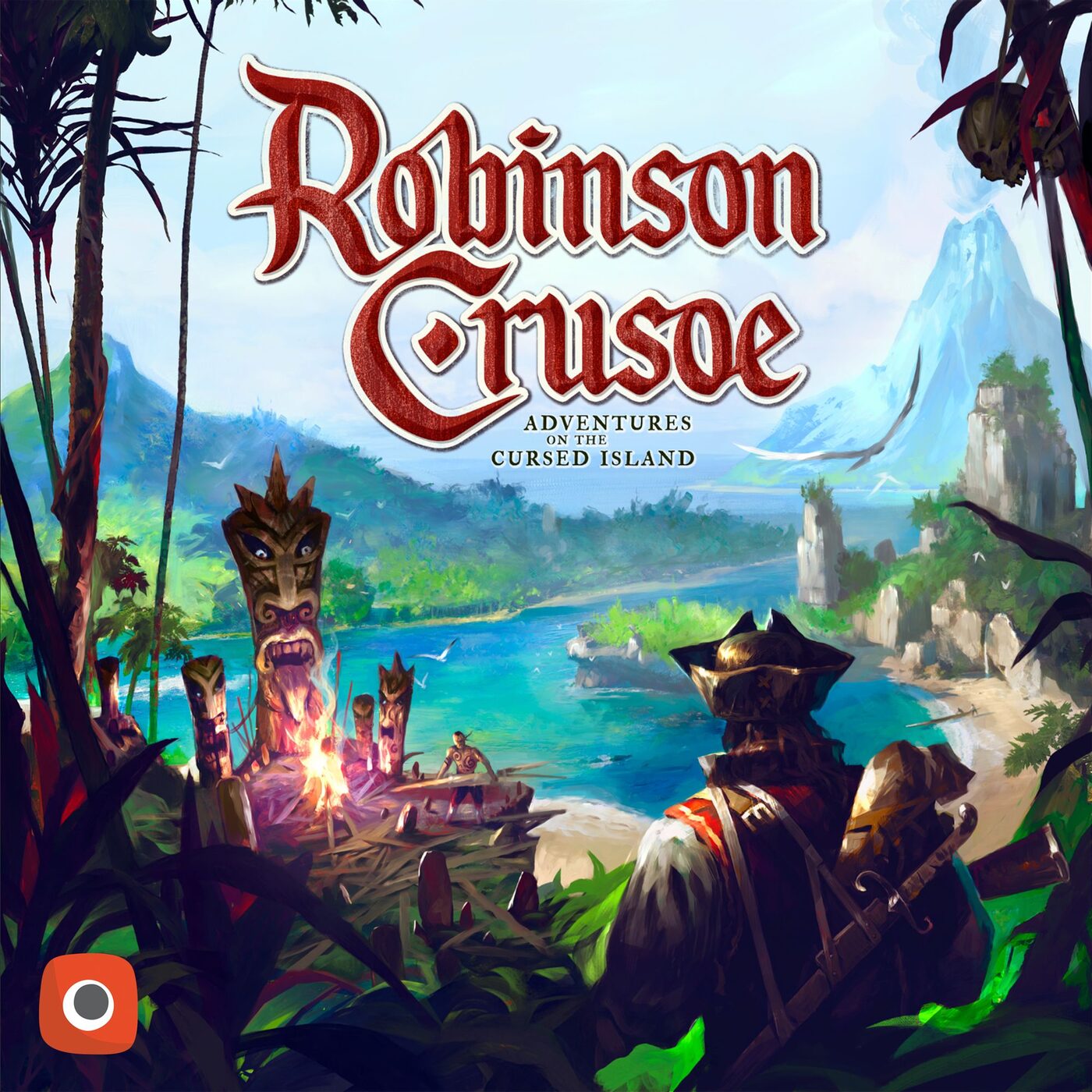
You bought it for a reason. Maybe you watched a review that called it one of the most tense, thematic cooperative experiences in modern board gaming. Maybe it was in a BGG Top 100 list and the price was right. Maybe a friend told you it was the best solo game they’d ever played.
You opened the box. You saw the rulebook. And somewhere between page 4 and page 14, you made a silent agreement with yourself: not tonight.
Robinson Crusoe: Adventures on the Cursed Island has been doing this to people since 2012. It sits at #120 on BGG with a rating of 7.72 and nearly 47,000 ratings - which means a lot of people finished it, loved it, and told others to buy it. And then those people put it on a shelf.
Let’s diagnose the real barriers and build an actual plan to play this tonight.
The Vital Stats
- BGG Rating: 7.72 / 10
- BGG Rank: #120 Overall
- Weight: 3.83 / 5 (heavy - but not as heavy as it feels)
- Players: 1-4 (plays best at 1-2)
- Play Time: 60-120 minutes
- Designer: Ignacy Trzewiczek
- Publisher: Portal Games
Why It’s Still on the Shelf
The barriers here are specific and diagnosable. None of them mean the game is bad.
1. The Rulebook Is Genuinely Bad (Was)
The original Robinson Crusoe rulebook is one of the hobby’s cautionary tales. It’s structured as a reference document, not a learning tool. Rules for the same phase appear in multiple sections. Edge cases are scattered everywhere. Critical clarifications are buried in sidebars you’ll miss on first read.
BGG comments from new players sum it up plainly: “Looking through the rules made my brain freeze.” Another: “I’d love to try this game - but found the rule book difficult to read so will need to be taught.”
The good news: Portal Games acknowledged this. There’s a revised Learn to Play guide available, and the second edition rulebook is substantially cleaner. If you’re working from an original copy, download the updated PDF.
2. You Think It Needs Four Players
The box says 1-4. Your brain assumes a co-op is best at full count. You try to organise four adults for a 2-hour session involving a game none of them know, and it never happens.
Here’s the reality: Robinson Crusoe is actually at its best with one or two players. At four, it becomes a meeting. At two, it becomes a puzzle you’re solving together. Solo, it’s one of the most immersive survival simulations in the hobby.
The solo experience in particular is exceptional - every decision lands entirely on you, the feedback loop is tight, and the tension is real. BGG’s solo guild has ranked it among the top solo experiences for over a decade.
3. You’re Afraid of Getting It Wrong
Robinson Crusoe is brutal. Scenarios end in failure regularly, especially early on. Players read this and assume they’ve misunderstood something - that they must be doing it wrong, because surely the game can’t really be this hard.
It is that hard. And that’s intentional. The failure is the experience. You’re supposed to lose your shelter in a storm on round three. You’re supposed to watch your food supply collapse just when rescue seemed close. That tension is what makes a win feel earned.
The fear of playing incorrectly (and “wasting” the session) keeps a lot of copies in the box. But there’s almost no wrong way to experience Robinson Crusoe - the scenarios are self-contained, and losing teaches you the game faster than any rulebook.
4. Setup Looks Intimidating
The component list is substantial. Cards to shuffle, tokens to sort, tiles to arrange, a beast of a board. Looking at an unorganised copy, setup feels like a 45-minute commitment before you’ve played a single turn.
With any prep, this collapses to under 15 minutes. The game rewards a small upfront investment in organisation.
The Rescue Plan
Here’s how to get Robinson Crusoe to the table - realistically - this week.
Step 1: Spend 20 Minutes Sorting the Box (Once)
You don’t need an expensive insert. You need:
- Small ziplock bags - one per token type, labelled with a marker
- Rubber bands - around each card deck
- A single tray or box insert from BGG’s Print & Play community (free PDF, print and fold)
With sorted components, setup for Scenario 1 takes about 12 minutes. Do this once and you’ll never dread opening the box again.
Step 2: Download the Learn to Play Guide
Portal Games released an updated quick-start guide that prioritises learning over completeness. It covers the core action loop in about 6 pages. Use this instead of the rulebook for your first game. Treat the full rulebook as a reference you consult when questions arise - not a pre-requisite.
The BGG files section has several excellent player-made quick reference cards. Print one. Keep it next to the board.
Step 3: Start With Scenario 1 - Castaways
Robinson Crusoe ships with six scenarios. Scenario 1 (Castaways) is the tutorial. It introduces mechanics gradually and gives you the best chance of understanding the game before the difficulty ratchets up.
Resist the urge to try Scenario 2 or the King Kong expansion on your first play. Scenario 1 exists specifically to teach you. Let it.
Step 4: Play With Two Players, or Solo
This cannot be stressed enough. Four players means four people asking questions, four people potentially quarterbacking, four decision points per action. Two players means you can talk through every move, both players stay engaged, and teaching is fast.
If you want to try it solo, do it. The solo mode is not a watered-down version - it’s the mode many players consider optimal. You control one character (or two in a “two-handed” setup), and the game throws everything at you. It’s genuinely one of the best solo experiences in the hobby at this weight.
Step 5: Accept That You Will Lose
This is the most important mental shift. Plan to lose your first game. Tell anyone playing with you explicitly: “We’re probably going to fail. That’s the point.” Removing the expectation of winning removes the frustration when the inevitable cascade of bad events hits in round five.
The game is teaching you. Losing to a food shortage teaches you to prioritise hunting. Losing to exposure teaches you to build shelter before anything else. After one failed run, you’ll understand the game’s systems in a way no rulebook can convey.
What Players Say After It Clicks
The pattern in BGG discussions is consistent: first play is rough, second play is illuminating, third play is when it becomes a favourite.
From the BGG forum, a user who gave it a 9: “The theme is incredible - every card, every event, every desperate decision feels connected to actually surviving. Losing hurts in the best way.”
Another: “First time we were completely overwhelmed. Second game we barely survived. Third game we started to feel like actual survivors and it was fantastic.”
The conversion rate for people who play three sessions is remarkably high. The barrier is almost entirely in the first session - and specifically, in the psychological gap between “reading the rules” and “sitting down and actually playing.”
Who This Game Is Still Not For
Let’s be clear-eyed. Robinson Crusoe isn’t for everyone, even after you understand it:
- If you dislike randomness in cooperative games, this will frustrate you indefinitely. The event deck is unforgiving and intentionally chaotic.
- If your group is competitive and tends toward quarterbacking tension, the pressure of Robinson Crusoe makes this worse, not better.
- If losing feels bad in a way that isn’t fun, the game’s difficulty curve will feel punishing rather than rewarding.
For those players: this isn’t a rescue. It’s a different kind of clarity - some games genuinely aren’t for you, and that’s fine.
But if you bought Robinson Crusoe because the theme excited you, because the survival tension sounded compelling, or because a solo heavy euro sounded perfect? You just haven’t played it yet. Everything else is solvable.
The Tonight Test
Can you realistically play Robinson Crusoe tonight?
Yes - with 30 minutes of prep.
- Pull the box out now. Sort tokens into bags while watching TV. This is the hardest step and it takes 20 minutes.
- Download the Portal Games Learn to Play guide (a quick search will find it).
- Set up Scenario 1 before dinner. The board state is straightforward to establish.
- Start with one or two players. Keep your phone nearby for BGG rules queries - there are extensive FAQ threads for every edge case.
- Plan to play for 90 minutes. Accept a loss. Thank the game for the lesson.
Robinson Crusoe has been sitting there not because it’s too complex to play - but because the path from box to table has never been laid out plainly. Now it has been.
The island is waiting.
Robinson Crusoe: Adventures on the Cursed Island is published by Portal Games. BGG rating 7.72 / Weight 3.83 - verified August 2026.