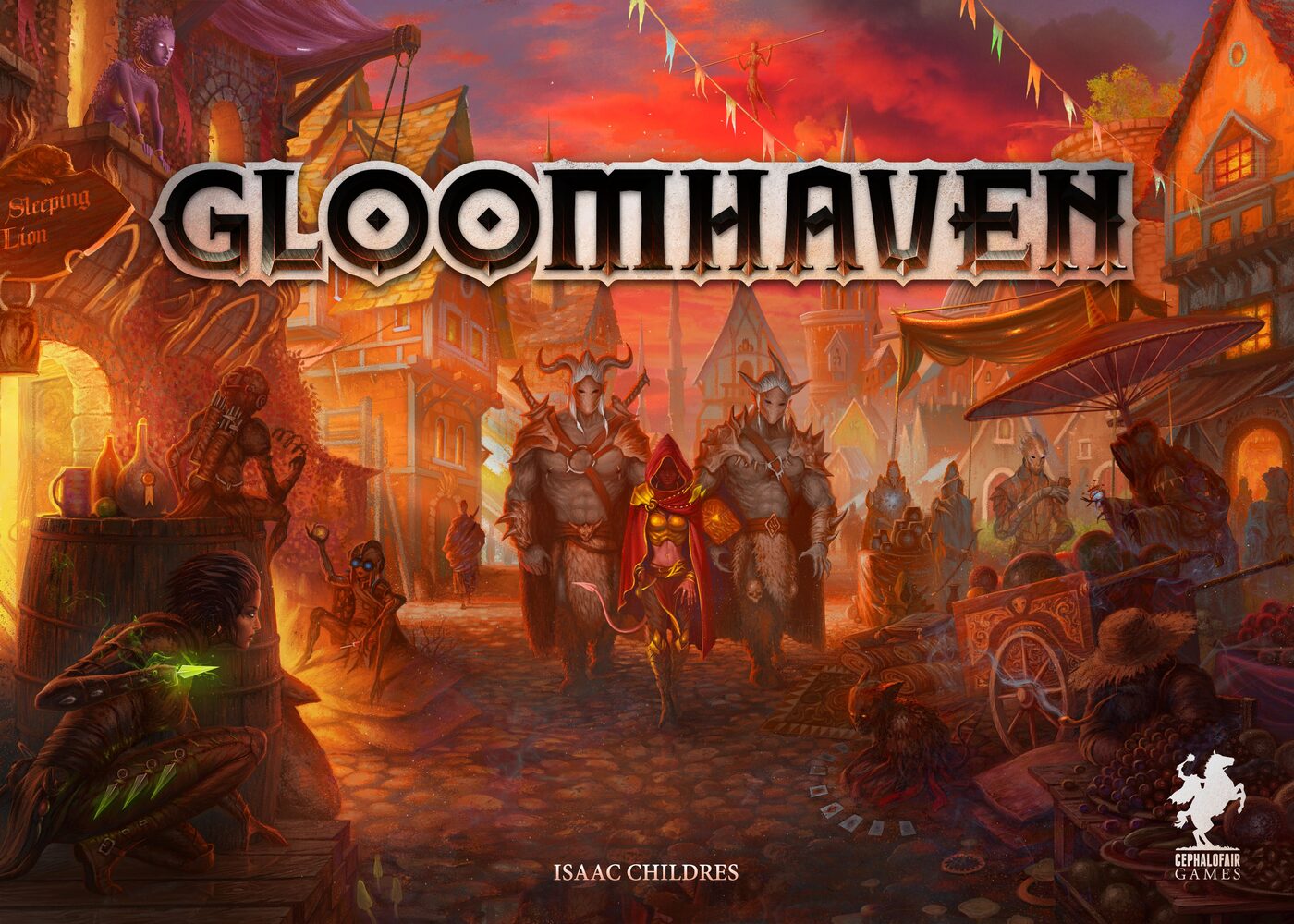
Gloomhaven is currently ranked #4 on BoardGameGeek, rated 8.53 by over 67,000 players, and widely considered one of the greatest cooperative games ever made. It also sits unplayed in more collections than almost any other game in the hobby.
You probably know this because yours is one of them.
The box is enormous. The rulebook is 56 pages. There are hundreds of punch-out components. And every time you’ve thought about setting it up, something has come up or something less daunting has gone on the table instead.
This article is the rescue plan. Not a review - the game doesn’t need one. What it needs is for you to understand exactly what’s keeping it on the shelf, and to have a specific, actionable plan to fix that tonight.
The Real Diagnosis
Most people assume Gloomhaven stays unplayed because it’s too complex. That’s partially true, but it’s not the whole story. The actual barriers are more specific - and more solvable.
1. The Rulebook Is Organised Terribly
Gloomhaven’s rulebook isn’t just long. It’s structured for reference, not for learning. It opens with setup procedures for the entire campaign before explaining a single game concept. New players read three pages and immediately have questions that won’t be answered until page twelve. The experience is actively demotivating.
The game itself, though, is not that complex. On your turn, you play two cards from your hand. Each card has a top action and a bottom action - you use the top of one and the bottom of the other. That’s the core. The monster AI, the room cards, the scenario conditions - all of it layers cleanly onto that foundation once you’re actually playing.
The rulebook makes the game look harder than it is. That’s a design failure, not a reflection of the game you’ll actually experience.
2. The Campaign Commitment Feels Overwhelming
Gloomhaven has 95 scenarios. People look at that number and think: this is a multi-year commitment. They’re not wrong, exactly - completing the full campaign is a long project. But that framing is the problem.
You don’t need to commit to the campaign tonight. You need to commit to Scenario 1. It’s a self-contained dungeon. It takes 60-90 minutes for first-timers. You can stop after it, put everything away, and you’ll have actually played Gloomhaven. The campaign continues whenever you want.
The mistake is treating Gloomhaven like a TV series you need to start from the beginning and watch to the end. Think of it more like a national park - you can visit for an afternoon and get real value, even if you don’t see the whole thing.
3. Setup Time Kills Momentum
The physical setup for a Gloomhaven scenario - pulling the right map tiles, finding the correct monster decks, tracking enemy health and status - adds 30-45 minutes before a card is played. After a work week, that’s often enough friction to kill the session before it starts.
This is entirely solvable. We’ll cover exactly how below.
4. Fear of Permanent Decisions
Gloomhaven uses stickers. You mark achievements, retire characters, unlock new content. People worry about making wrong choices and wasting something.
Here’s a more grounded view of this: the game is designed around those permanent changes. There’s no “wrong” path through the campaign. The retirement system is specifically built to push you toward experimenting with different characters, which is a feature. The first few scenarios are also the lowest-stakes part of the game - whatever you do won’t lock you out of anything significant.
The Rescue Plan
Here’s what you’re actually doing tonight.
Step 1: Download Gloomhaven Secretary (Free, Browser-Based)
Go to gloomhavensecretarygame.de. This is a free, open-source web app that handles almost everything that makes setup painful:
- It knows the exact map tiles and monster setup for every scenario
- It runs the monster AI automatically (no more flipping ability cards and cross-referencing stat blocks)
- It tracks enemy health, conditions, and turn order
- It runs entirely in your browser - no download, no login
This single tool cuts your setup time from 45 minutes to under 20. It also eliminates 80% of the rulebook lookups during play, because the app just tells you what the monsters do.
There’s also Gloomhaven Helper (available on Android and iOS) which does similar tracking if you prefer a tablet setup.
Step 2: Pick Two Characters on Vibes Alone
Gloomhaven has six starting character classes, deliberately printed with cryptic icons rather than names. You’ll find walkthroughs that rank them by power level and synergy. Ignore those for now.
Pick two characters you find visually interesting or thematically appealing. Read the brief flavour text on each character card. Go with your gut. The starting characters are all competent enough to complete the campaign, and first-time character choice has essentially no long-term consequence.
If you want the briefest possible summary: the Brute (fist icon) hits things hard and tanks damage, the Cragheart (oval rocks icon) is a flexible hybrid who handles multiple situations, and the Spellweaver (snowflake icon) deals massive area damage but burns out quickly. Any two of these work fine as a starting pair.
Step 3: Watch a 15-Minute Tutorial Instead of Reading the Rulebook
Search YouTube for “Gloomhaven how to play Scenario 1.” There are excellent walkthrough videos that get you table-ready in a quarter of the time the rulebook takes - and they show the game in motion rather than describing it abstractly.
The rulebook will still exist when you have specific questions mid-scenario. It’s a reference document, not a teaching tool. Stop trying to read it as one.
Step 4: Commit Only to Scenario 1
Open the Scenario Book to page 4. Read the setup for Scenario 1: Black Barrow. Set up your Gloomhaven Secretary session for this scenario. Place your characters at the entrance.
That’s the scope for tonight. One scenario. You’re not starting a campaign - you’re proving to yourself that this game is playable. Everything else is tomorrow’s problem.
Step 5: Don’t Stress the Rules
Gloomhaven has a lot of edge cases. During your first session, some of them will come up and you won’t know the answer. Make a ruling, note it, look it up later.
The BGG forums have a dedicated rules Q&A thread for Gloomhaven that has answered essentially every question the community has ever had. If you got it slightly wrong, you’ll correct it next session. The game survives imperfect first plays - and so does the campaign.
What People Say After They Finally Play It
The community reaction after first sessions is remarkably consistent. A BGG user going by -Johnny- captured it perfectly in a review that listed legitimate complaints - “10/10 fiddliness,” “the monster AI system is very messy and unintuitive,” “20 games in, we were still checking the rulebook constantly” - and then ended with: “I keep wanting to play.”
That tension is Gloomhaven in a sentence. It’s fiddly. Setup is annoying. The rules have exceptions to exceptions. And once you’ve played a scenario, you want to play another one.
The BGG forum threads on the game are full of people who waited 18 months to open their copy and then couldn’t stop. The barrier is almost always getting over the initial friction of that first session - not the game itself.
Consider Gloomhaven: Jaws of the Lion
If you’ve read this far and still feel daunted by the full box, there’s a completely legitimate alternative: Gloomhaven: Jaws of the Lion (BGG ID: 291457). It’s a standalone prequel specifically designed to teach the Gloomhaven system from scratch, with a built-in tutorial campaign of 25 scenarios.
Jaws of the Lion costs significantly less, sets up in minutes, and was designed precisely for people who found the original box intimidating. If your main barrier is the rulebook complexity, this is the recommended entry point - and it connects thematically to the full game if you want to continue.
The Tonight Test
Can you realistically play Gloomhaven tonight? Here’s the checklist:
Setup you need:
- Gloomhaven Secretary open in a browser tab (5 minutes)
- Two characters chosen (5 minutes)
- Scenario 1 setup configured in the app (10 minutes)
- Map tiles found and laid out (10 minutes)
Total setup time: approximately 25-30 minutes if you use the app. Without it: 45+ minutes.
Session length: Scenario 1 runs 60-90 minutes for first-timers who are looking things up.
Total time needed tonight: 2-2.5 hours.
Prerequisites: 2 or more players (the game is also playable solo - you run two characters). No prior knowledge required beyond the 15-minute tutorial video.
Verdict: Yes. If you have a free evening, you can play Gloomhaven tonight. The box is not the obstacle. The plan you didn’t have was.
Now you have one.
Gloomhaven is available from BoardGameGeek, major retailers, and the publisher Cephalofair Games. BGG weight: 3.92/5. Designed by Isaac Childres.