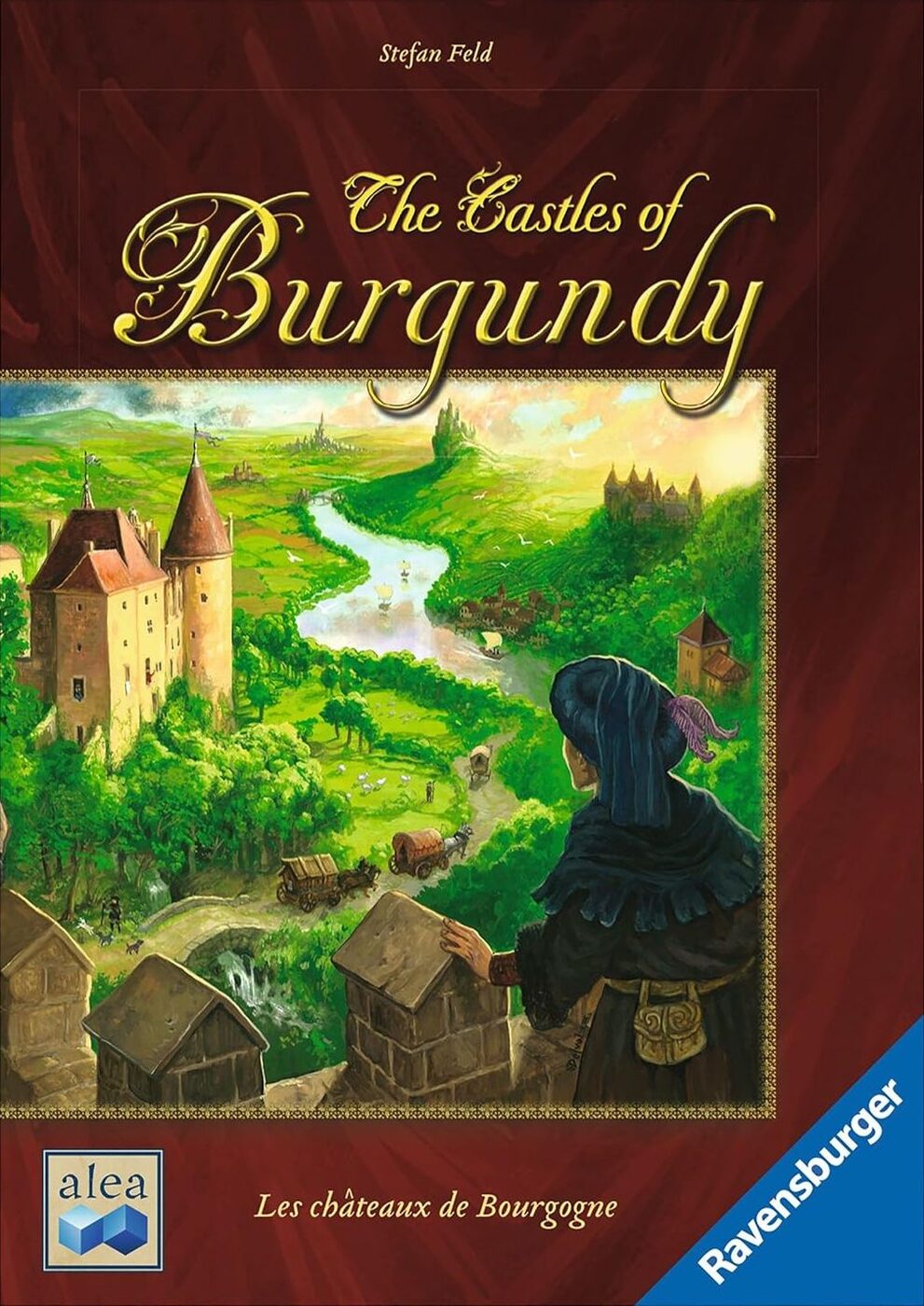
The Castles of Burgundy is ranked #17 on BoardGameGeek. It has received over 100,000 ratings and sits alongside Gloomhaven, Brass: Birmingham, and Twilight Imperium in the hobby’s upper echelon. Stefan Feld’s 2011 tile-placement game has earned this reputation - just not on the first play.
If you’ve tried it once, the ranking probably baffled you. The original box has the visual appeal of a government form. The tiles are covered in cryptic little symbols you’ll spend half the game decoding. Your first four-player session almost certainly ran two and a half hours and ended with someone quietly wondering what all the fuss is about.
That person is not wrong about the first play. But they are wrong about the game.
The Bad First Play
Let’s be clear-eyed about what makes the first game of Castles of Burgundy genuinely rough.
The Iconography Wall
The original 2011 edition - the one most people own - has notoriously poor tile iconography. Every tile has a different function depending on its colour and symbol, and the rulebook’s icon legend is small, crowded, and consulted constantly. Within a single round, you’ll ask “what does the green tile do again?” more times than seems reasonable for a game ranked in the top 20 of all time.
One BGG reviewer captured it precisely: “Figuring out what all the buildings do took a while.” That’s the diplomatic version. The undiplomatic version is that first-time players spend the entire game flipping between the rulebook, the player aid, and their tiles, never quite feeling in control of their own decisions.
The Four-Player Crawl
The game plays 2-4 players. Most people’s first experience is at three or four, because that’s how game nights work. This is a mistake.
At four players, each round has four full turns of tile selection and placement before it loops back to you. Combined with the tile-lookup problem above, downtime stretches. Players disengage. The game that’s supposed to take 30-90 minutes edges past two hours. BGG’s own poll data flags the game as “Not Recommended” at four players - a fact most newcomers discover the hard way, after the damage is done.
The Wrong Mental Model
Castles of Burgundy is often explained - and received - as a builder game with some competition. Players share a central market board and race to grab tiles. But the game’s actual identity is a personal optimisation puzzle played mostly in parallel. There’s no territory to contest, no combat, no meaningful blocking. You’re each solving your own hexagonal jigsaw against the clock.
First-timers expecting interaction come away feeling like the game is broken. People expecting a solo puzzle come away feeling like the others were irrelevant. Neither framing is correct, but both produce the same outcome: the box goes back on the shelf.
The Turning Point: Play Three
Something significant shifts around the third game. Not the second - that’s usually when you understand the mechanics but still spend too long on decisions. The third game is where Castles of Burgundy stops being a puzzle you’re solving and starts being a puzzle you’re enjoying.
The Tiles Stop Being a Mystery
By play three, you know what a green building does without checking. You know the yellow tiles generate bonus actions. You’ve internalised that mines are early-game gold and that knowledge is power. The lookup friction - the thing that made play one feel like reading assembly instructions - evaporates almost entirely.
This is not a minor improvement. It restructures the entire experience. When you stop spending cognitive energy on what you can do, you start spending it on why - and that’s where the game lives.
As BGG user @LudoRexAl noted after getting through the learning curve: “Figuring out what all the buildings do took a while but, after that, it was smooth sailing. The winner was in doubt until the very end.” That last sentence matters. The close endings are a feature, not a coincidence - Feld designed tight point spreads deliberately.
The Dice Become Strategy, Not Restriction
New players experience the two dice as a limitation. You rolled a 3 and a 5; you’re stuck with those numbers. But experienced players understand that the dice are a constraint system, not a luck system. They push you toward a different region of the market board than you’d have chosen freely, and that pressure creates interesting decisions.
The skill of Castles of Burgundy is partly learning to build a board state that makes multiple dice values useful. When you’ve planned correctly, rolling a 2 is as good as rolling a 6 - because you’ve built something valuable at position 2. That planning layer is invisible on the first play. By the third, it’s the game.
The Scoring Reveals Its Architecture
Burgundy’s scoring is often dismissed as point salad - points for everything, no clear priority. But the scoring is actually a clever system of competing completions. Finishing a colour group of buildings scores bonus points. Finishing early scores more than finishing late. The game doesn’t reward doing many things - it rewards doing things first and completely.
Once you understand this, the racing element of the game emerges. You’re not just collecting tiles; you’re watching your opponents’ boards for which colour groups they’re close to completing, adjusting your own priorities in response. The tension that seemed absent in play one is there all along - you just needed enough fluency to see it.
What the Community Says
The BGG forums have a reliable thread type: the “I finally get it” post. Castles of Burgundy generates more of these than almost any other game in the top 20.
The pattern is consistent: initial dismissal (usually after a four-player game with new players), followed by a two-player session with an experienced player, followed by conversion. The two-player game removes the downtime completely. Learning the tiles in advance removes the friction. The game that felt slow and opaque suddenly reveals itself as one of the tightest optimisation puzzles in the hobby.
The 2019 Special Edition - released for the game’s unofficial anniversary - addresses the original’s biggest material flaw with a complete visual overhaul. Clearer tile art, updated iconography, and a much more readable layout. If the ugly tiles were your primary obstacle, the updated edition removes that barrier almost entirely.
Who This Game Still Isn’t For
The counter matters here. Some people are right not to like Castles of Burgundy, even after giving it a fair shot.
If you need player interaction, this game will never fully satisfy you. The competition is indirect - you might grab a tile someone wanted, you might trigger a phase end that catches them unprepared - but Castles of Burgundy is fundamentally a multiplayer solitaire experience. That’s not a flaw in the design; it’s the design. But if your game nights thrive on direct conflict, the best plays of this game will still feel lonely.
If theme matters to you, the medieval French countryside never fully materialises on the table. You’re moving coloured hexagons and tracking abstract scoring categories. Stefan Feld designs games where theme is a veneer over pure mechanism, and Castles of Burgundy is one of his most mechanism-forward designs.
If you’re an AP sufferer, the density of decisions may work against you rather than for you. The optimisation space is wide enough that players prone to analysis paralysis can make four-player sessions genuinely gruelling for the table.
The Rescue Plan
Here’s how to give it a fair second chance:
Play two players. The game is objectively best at two. Downtime disappears. The back-and-forth of dice selection becomes a genuine strategic exchange. If you only ever play this at three or four, you’re playing a worse version of the game by design.
Pre-teach the tiles. Before the game starts, spend five minutes walking through the tile types: mines give gold, knowledge gives a turn bonus, castles trigger an action, etc. Avoid all mid-game lookups. The game plays two hours faster when people know what they’re doing.
Use the reference cards. The game comes with player aids. Put them on the table. Use them without guilt. This isn’t a memory test.
Give it three plays before judging. Not because you need three plays to understand the game, but because you need three plays to stop understanding the game and start playing it.
The Verdict
The Castles of Burgundy is not the most visually exciting game on the shelf. It doesn’t escalate to a dramatic finale or produce the kind of stories you retell at the next game night. What it does - better than almost anything else in the hobby - is create a satisfying, close, tightly-constructed puzzle that rewards planning and punishes nothing except carelessness.
BGG #17 is not an accident of hype. It’s the accumulated judgement of hundreds of thousands of plays, most of them not the first one.
Drag it out. Play it with one other person. Know your tiles. Give it the third game.
BGG: The Castles of Burgundy | Rating: 8.16 | Weight: 2.97/5 | Players: 2-4 | Time: 30-90 mins | Rank: #17
Images: Ravensburger / BoardGameGeek