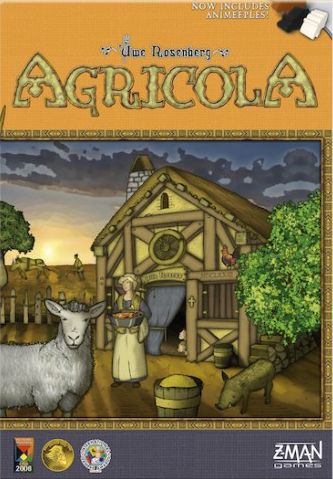
Your first game of Agricola probably went something like this: you stared at a hand of seven occupation cards you didn’t understand, spent six rounds desperately collecting wood while your opponents built fences, forgot to plan for the first harvest, took two begging cards worth negative six points, and finished with a score that made you wonder why anyone would voluntarily subject themselves to this.
You’re not alone. Agricola has earned its nickname - Misery Farm - for a reason. But there’s an equally strong consensus among the hobby’s most experienced players: this is one of the greatest board games ever made, and it only reveals itself after you stop drowning.
The Bad First Play
Let’s talk plainly about what goes wrong the first time.
The Begging Card Trauma
Nothing in modern board gaming feels quite as punishing as taking your first begging card. Each one costs you negative three points in a game where winning scores hover around 30-40. Missing a single harvest can cost you 10% of your final score. First-time players, who don’t yet understand how the food engine works, routinely take two or three begging cards and finish with scores in the teens.
As one first-timer memorably put it: “The first rules explanation was absolutely overwhelming. That confused fog followed us through about the first half of the game.” That fog is real, and it’s universal.
The Negative Points Everywhere
Agricola’s scoring doesn’t just reward what you build - it punishes what you neglect. No grain? Minus one point. No vegetables? Minus one. Empty spaces on your farm board? Minus one each. No sheep, boar, or cattle? Minus one per type. First-time players who focus on one strategy discover at scoring that they’ve been haemorrhaging points in five other categories they forgot existed.
This scoring system feels hostile on first contact. It’s actually brilliant - but you can’t see that until you understand why.
The Overwhelming Card Hand
The full game deals each player seven occupation cards and seven minor improvement cards. For a new player, these 14 cards are a wall of text describing abilities for a game they don’t yet understand. Most new players either ignore the cards entirely (missing the game’s best feature) or play random ones at bad times (wasting precious actions).
The Turning Point: Play Three
Something shifts around the third play of Agricola. Not the second - that’s usually when you start understanding the mechanics but still finish poorly. The third game is where it clicks.
You Stop Fighting the Harvest
The single biggest mental shift is accepting that feeding your family is not a problem to solve - it’s a cost of doing business. New players treat the harvest like a crisis. Experienced players plan for it like rent. The difference is everything.
Once you’ve internalised the harvest rhythm (rounds 4, 7, 9, 11, 13, 14), you stop scrambling and start planning. You grab a Cooking Hearth or Fireplace early. You time your sheep acquisition to hit before a harvest so you can immediately cook them. The panic evaporates, replaced by calm resource management.
The Cards Come Alive
This is where Agricola transforms from a stressful puzzle into something extraordinary. Those 14 cards you were dealt? They’re not decoration - they’re your unique strategic identity.
Each combination of occupations and minor improvements creates a different puzzle. One hand might push you toward a grain-heavy strategy with early ploughing. Another might reward animal breeding with bonus food from cattle. A third might let you break fundamental rules - collecting extra resources, paying less for improvements, or feeding your family with unconventional methods.
By your third game, you can actually read your hand and see the synergies. That feeling of discovering a three-card combo that perfectly solves your food problem while generating bonus points? That’s when Agricola becomes addictive.
The Tension Becomes the Point
Your first game, the tension feels oppressive. Everything is scarce. There’s never enough wood. Someone always takes the action space you needed. The harvests come faster and faster.
By play three, you realise the scarcity IS the game. Agricola is a 150-minute exercise in making impossible choices between things you desperately need. Every round asks: do you take the eight wood that’s been accumulating for three rounds, or do you grab the sheep before your opponent does? Do you grow your family now for more actions, or wait until you can actually feed the extra mouth?
These decisions are agonising. They’re also deeply satisfying once you know enough to make them intelligently.
Why It’s Actually a Masterpiece
The Perfect Information Tension
Unlike games that create tension through hidden information or dice rolls, Agricola’s tension comes from competition over a shared, fully visible action space. Every resource on the board is public. You can see exactly what your opponents need. You know what round cards are coming. The anxiety isn’t from uncertainty - it’s from knowing exactly how painful the next few rounds will be and having to choose your suffering.
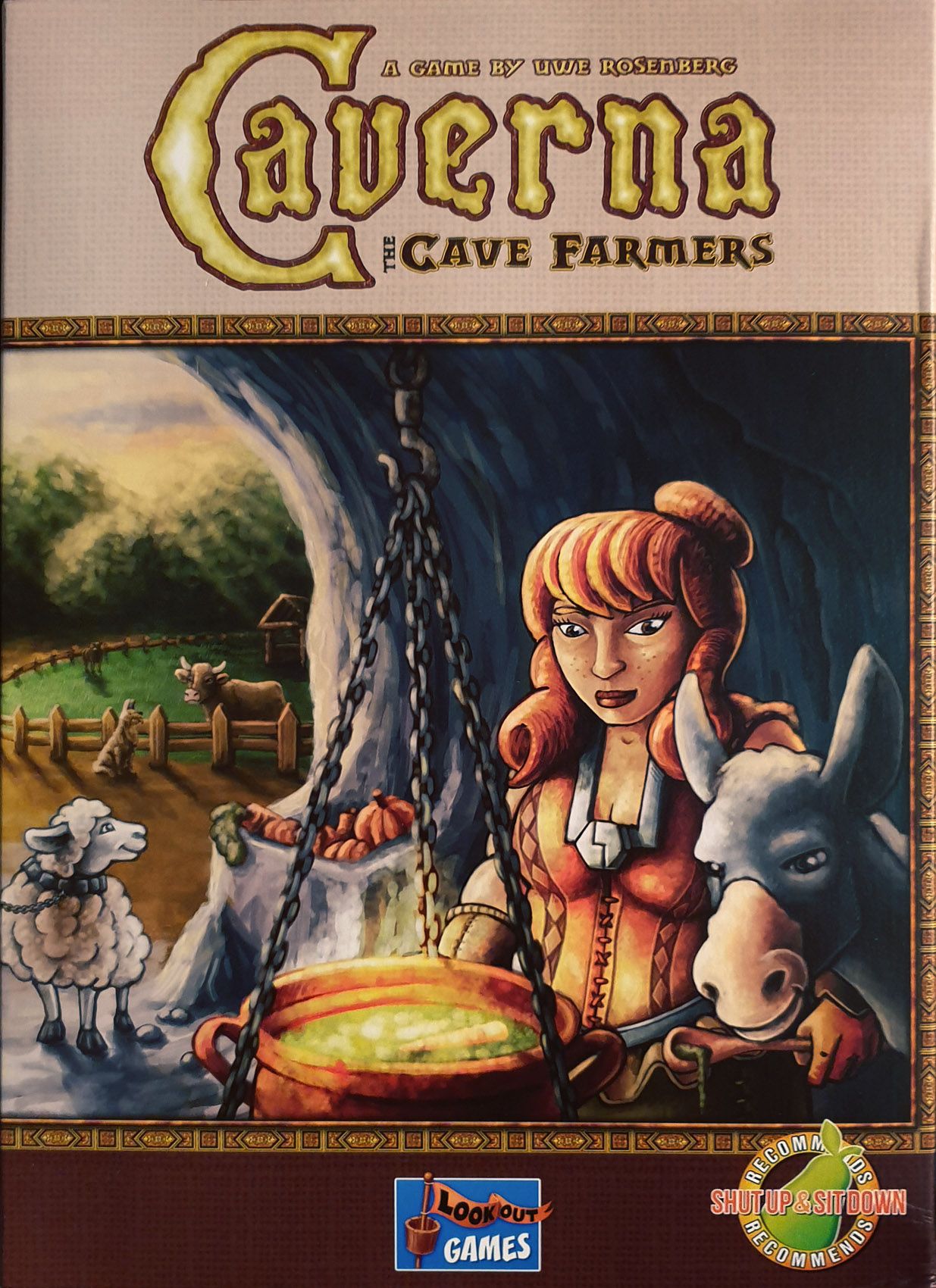
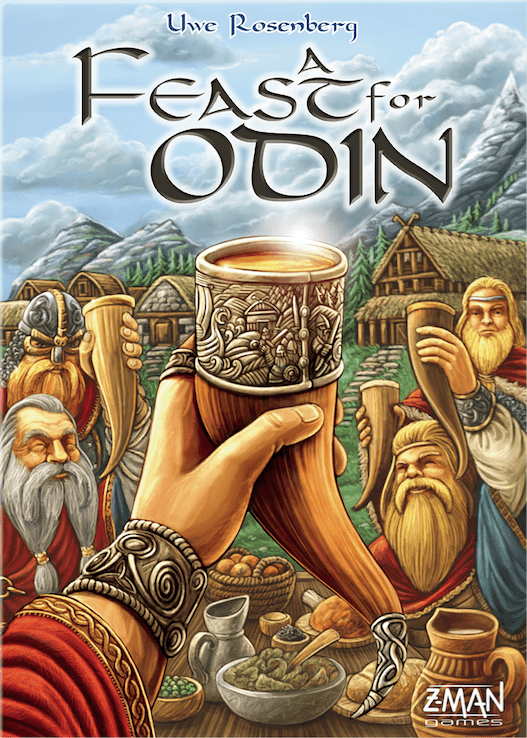
At a BGG weight of 3.64, Agricola sits comfortably in the medium-heavy range - lighter than Caverna (3.78) and significantly lighter than A Feast for Odin (3.87). The complexity is approachable once you’ve survived the learning curve.
The Infinite Replayability
The original Agricola shipped with over 300 unique cards. The Revised Edition curated these into tighter, more balanced decks - but still contains well over 100 occupations and 100 minor improvements. With seven of each dealt per player, the combinatorial space is staggering.
This isn’t theoretical variety. Each hand of cards genuinely creates a different game. A hand with the Taster (convert animals to food anytime) plays completely differently from one with the Clay Mixer (get clay when others take certain actions). After dozens of plays, experienced Agricola players still encounter fresh strategic puzzles.
The Elegant Scaling
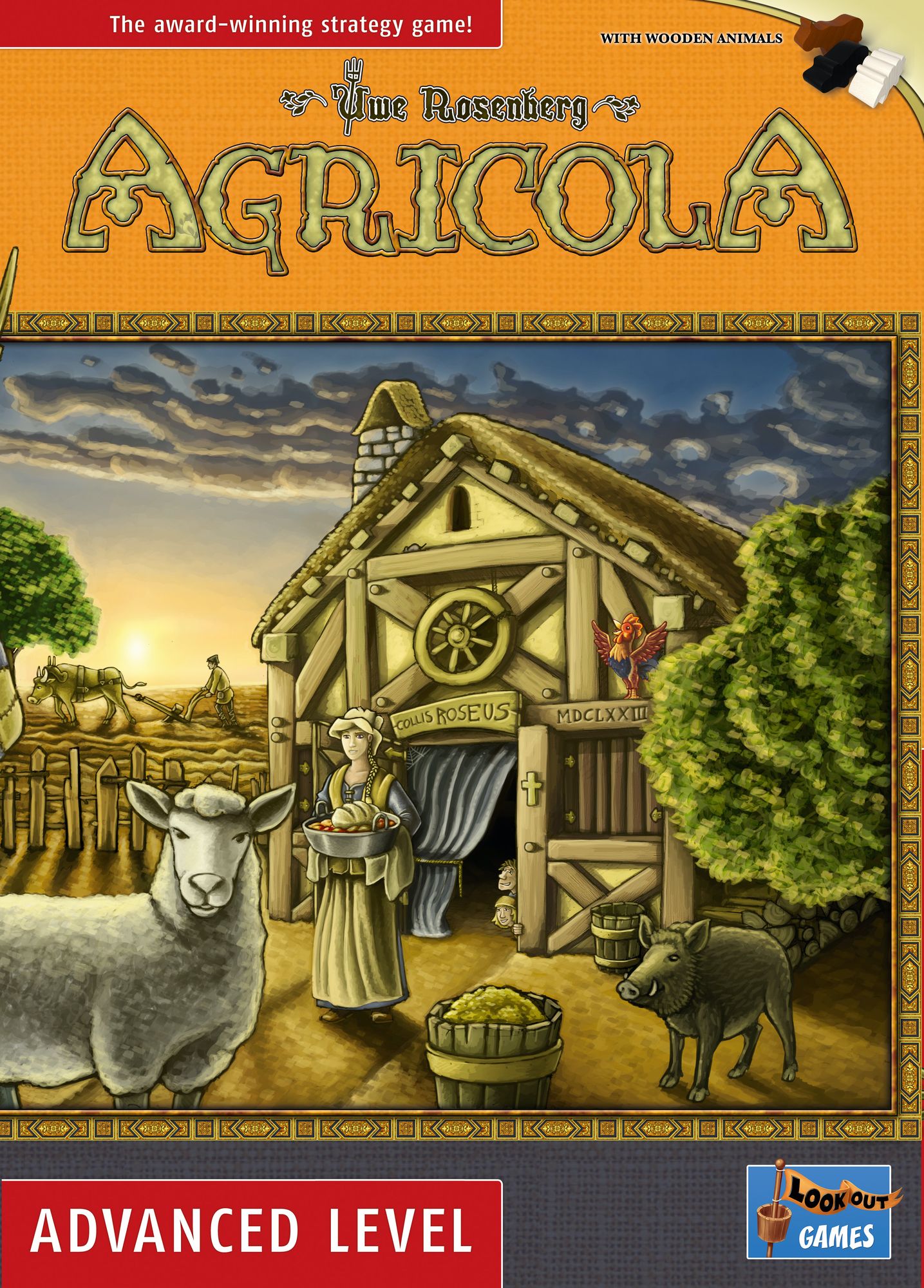
Agricola plays 1-5 players (1-4 in the Revised Edition), and the action space adjustments per player count are remarkably well-calibrated. The game is tighter at higher counts (more competition for spaces) and more puzzly at lower counts (more freedom but stricter timing). The solo mode is genuinely excellent - a pure optimisation puzzle against a target score.
The Counter: Who This Game Still Isn’t For
Agricola is not going to click for everyone, even after three plays. Know yourself:
If you hate negative-sum scoring - Agricola’s “punish what you lack” approach is fundamental to the design, not a rough edge that smooths out. If the feeling of losing points for things you didn’t do makes you miserable regardless of the strategy involved, this game will always grate.
If you want a sandbox - Agricola is the opposite of an open playground. It’s a pressure cooker with a timer. If you prefer A Feast for Odin’s generous smorgasbord of options or Caverna’s gentler, more varied action space, Rosenberg himself built those games as responses to Agricola’s intensity. They’re valid alternatives, not lesser ones.
If analysis paralysis is a real problem for your group - Agricola’s decision space grows significantly with the full card game. The family version mitigates this, but the cards are where the magic lives. If someone at your table takes five minutes per worker placement, a four-player game will stretch well past two hours.
How to Give It a Second Chance
If your copy has been gathering dust since that brutal first play, here’s the path back in:
Start with the Family Game again - but this time, you understand the harvest timing. No cards, no occupations. Pure worker placement. This is your warm-up, not your destination.
Play the full game at two players - lower player counts mean less blocking, more room to breathe, and faster turns. Two players is arguably Agricola’s sweet spot for learning.
Draft the cards - instead of dealing seven random occupations and improvements, deal ten and draft down to seven. This prevents the frustration of getting a hand with no synergy.
Accept the first harvest will still hurt - but this time, you’ll have a Fireplace ready. The difference between a planned sacrifice (cooking one sheep for food) and an unplanned disaster (three begging cards) is everything.
Play online first if needed - Board Game Arena has an excellent Agricola implementation. Playing a few async games removes the social pressure and lets you learn the card pool at your own pace.
The Verdict
Agricola earned its place at #64 on BGG’s all-time rankings with a rating of 7.86 across over 76,000 ratings not because it’s pleasant on first contact, but because it rewards investment like almost no other game in the hobby. The first play is a hazing ritual. The third play is a revelation. The twentieth play is when you realise you’ve barely scratched the surface of what those 300+ cards can do.
Uwe Rosenberg designed a game that feels like it hates you - until you realise it’s just expecting you to be better. And the moment you are? Misery Farm becomes the most satisfying 150 minutes you can spend at a table.
Give it three plays. You owe yourself that much.
Agricola is designed by Uwe Rosenberg, published by Lookout Games. It plays 1-5 players in 30-150 minutes with a BGG weight of 3.64/5. The Revised Edition (2016) plays 1-4 players and is the recommended starting point for new players.