There’s a specific kind of satisfaction that tile placement delivers that almost no other mechanic can match. You take a small cardboard square, you fit it against the pieces already on the table, and suddenly - click - it belongs there. The world grows one piece at a time. That feeling scales from a five-year-old playing with Carcassonne to a veteran angling for a perfect Cascadia ecosystem. The mechanic is the same. The depth is not.
Tile placement is one of gaming’s oldest and most versatile mechanics, and it sits inside a huge range of games - from thirty-minute gateway fillers to ninety-minute brain-burners. This deep dive covers how it actually works, the different ways designers use it to create tension, and six games that demonstrate the mechanic at its best.
What Tile Placement Actually Is
The mechanic sounds trivial to explain: on your turn, you place a tile. But what makes tile placement interesting is everything around that act:
- Constraint: tiles have rules about where they can go (matching edges, adjacency limits, grid requirements)
- Competition: you and other players are building the same shared space, or competing for position on it
- Incompleteness: at placement, you rarely know if a move was good - the value only reveals itself over time
- Irreversibility: once a tile is down, it’s down
That last point is what gives tile placement games their texture. Every good tile placement game asks you to make a permanent decision with incomplete information. You can see what’s there now, but not what will come later. The board is a record of everyone’s bets, paying out over the course of the game.
The Three Modes of Tile Placement
Designers have found three quite distinct ways to make tile placement matter:
Pattern Building - you score for completing shapes, networks, or ecosystems. Carcassonne’s roads and cities, Cascadia’s animal groupings, Azul’s wall patterns. The tile goes down; you’re investing in a future that may or may not materialise.
Grid Coverage - you’re trying to fill space efficiently. Patchwork’s quilts, Barenpark’s animal enclosures. The question isn’t just where to place, but which shape to use and what it costs.
Territory Control - tiles define who owns what. Isle of Skye builds a kingdom, and the king scores the kingdom. Position on the map translates directly to power.
Most tile games blend two of these modes. That layering is usually where the depth comes from.
The Games: Simplest to Most Complex
Kingdomino (2016)
BGG Weight: 1.24 | Rating: 7.29 | Rank: #333 | 2-4 players | 15-25 min
Cover: © Blue Orange Games / BGG
© Blue Orange Games / BGG
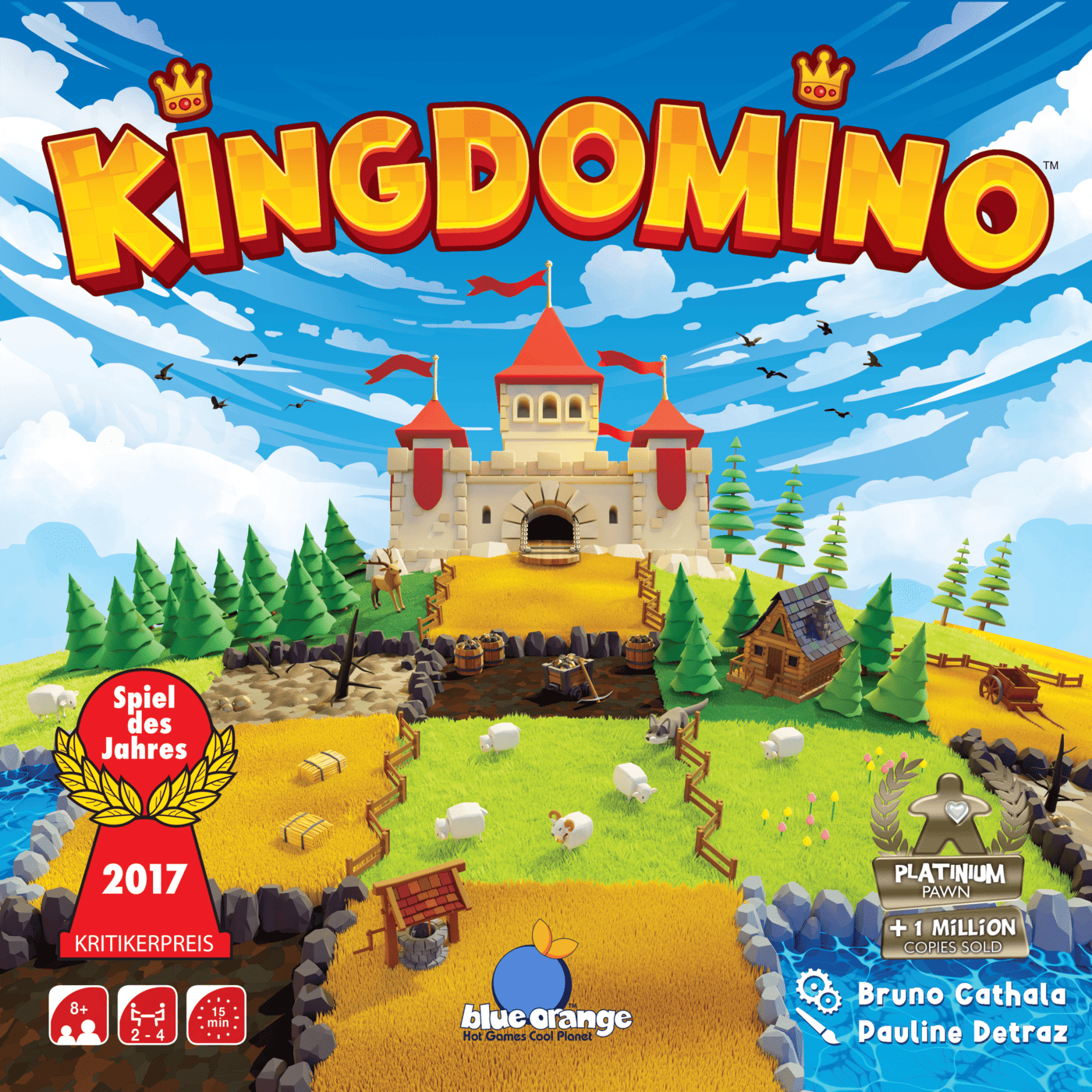
Kingdomino is the perfect gateway into tile placement - and a 2017 Spiel des Jahres winner that earns that award every time it hits the table.
The premise: you’re building a 5×5 kingdom by drafting dominoes (tiles with two terrain squares) and connecting them to matching terrain in your grid. Mountains, wheat, forests, lakes, swamps - each has a crown printed on some tiles, and crowns multiply terrain size into points. That’s the whole system.
What makes Kingdomino work as a teaching game is that it makes adjacency constraints feel obvious rather than arbitrary. Of course your forest tiles should connect to other forests. Of course more crowns on a big terrain is better. The rules are logical, so new players grasp them in one round rather than three.
The draft mechanism adds a clever wrinkle: higher-value tiles go last in the next round. Grab the best tile now, and you’re choosing late next time. It’s a lightweight but real tradeoff that keeps everyone engaged even on other players’ turns.
Playable with non-gamers in twenty minutes, yet interesting enough for experienced players to want to optimise. That’s a genuinely difficult balance to strike, and Kingdomino nails it.
Best for: introducing tile placement to new players, quick family games, anyone who wants a satisfying puzzle that packs in a small box.
Patchwork (2014)
BGG Weight: 1.60 | Rating: 7.58 | Rank: #149 | 2 players only | 15-30 min
© Lookout Games / BGG
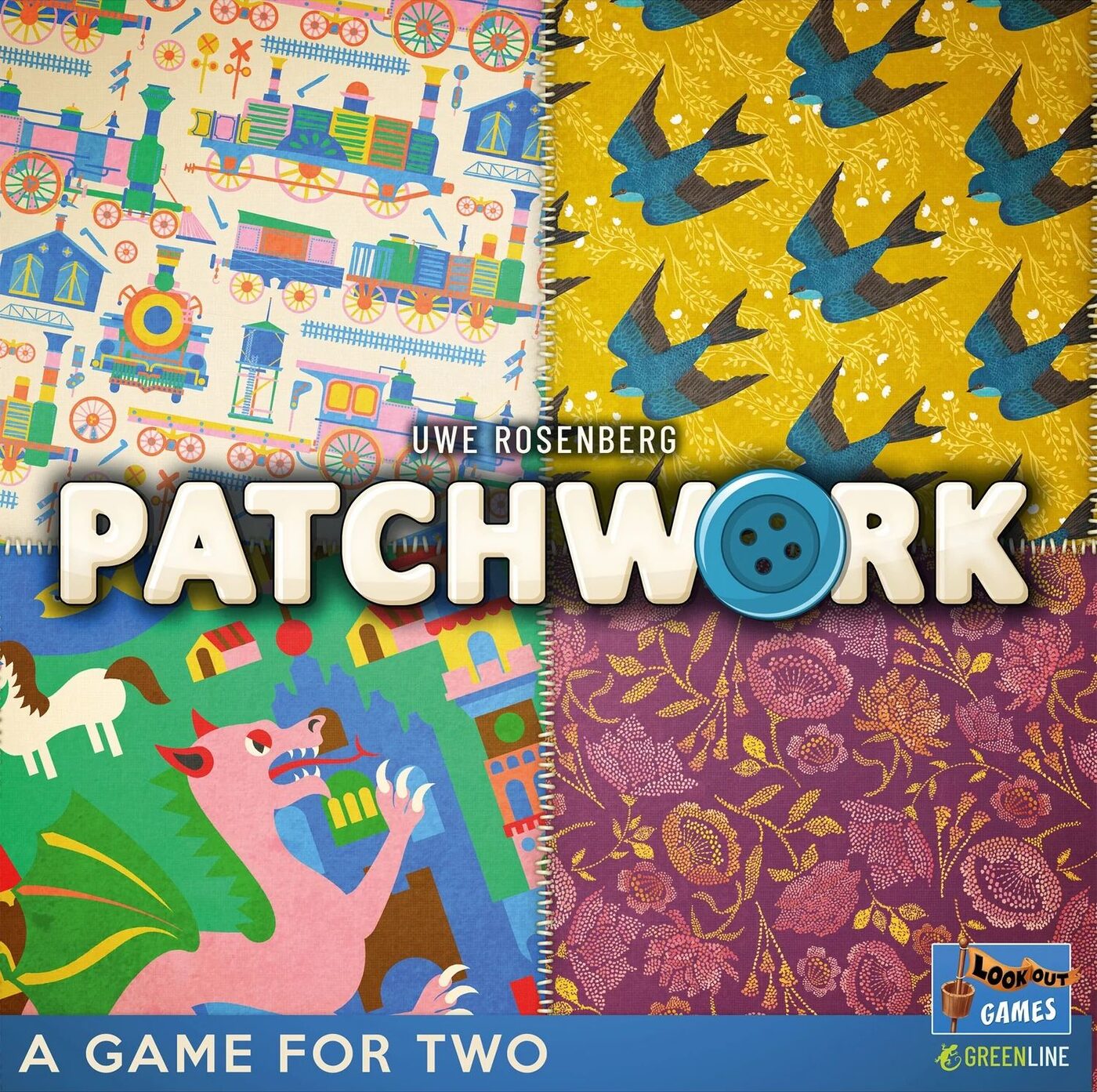
Patchwork is a two-player masterclass in polyomino grid coverage, and it has no business being as tense as it is.
You and your opponent are filling a personal 9×9 quilt with Tetris-like fabric patches. Patches have two costs - buttons (currency) and time - and advancing further along the time track means your opponent gets more turns. There’s a button income mechanic layered on top: some patches generate buttons when you pass income markers, which you reinvest in more patches.
The tile placement question here is different from Carcassonne or Cascadia. You’re not placing into a shared space - you’re filling your own grid, and the enemy is inefficiency. Every gap at the end of the game costs you two points. So the puzzle is: which shapes can I actually fit together? Which patch is worth the time cost? When should I grab the 1×2 neutral tile to advance the track rather than wait for a better patch?
Patchwork is a genuine two-player puzzle that rewards both spatial thinking and tempo management. Uwe Rosenberg is a designer who can find hidden depth in apparently simple systems, and Patchwork is one of his cleanest designs.
Best for: two-player sessions, anyone who likes spatial puzzles, couples who want a game that generates real decisions without rules overhead.
Azul (2017)
BGG Weight: 1.77 | Rating: 7.71 | Rank: #99 | 2-4 players | 30-45 min
© Next Move Games / BGG
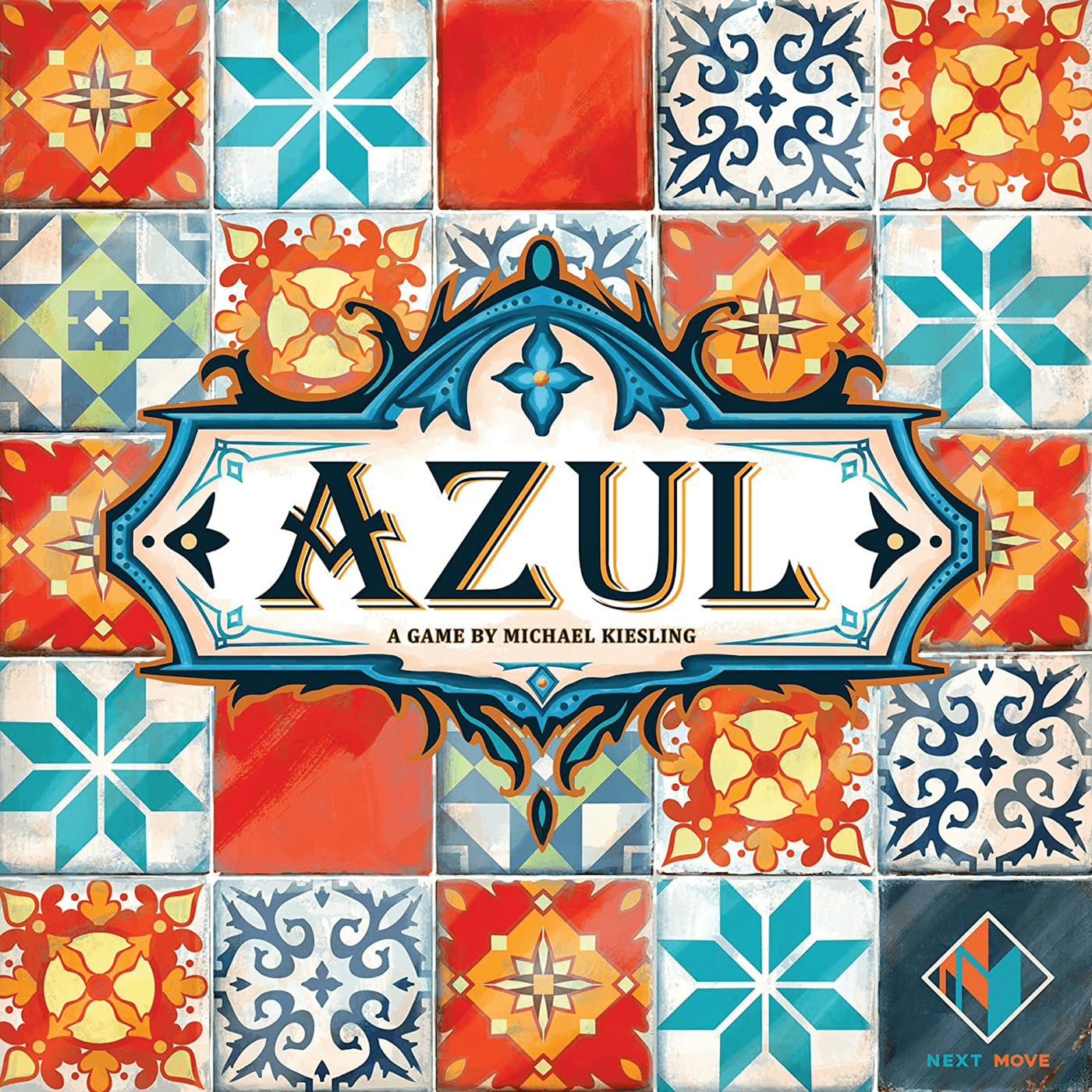
Azul is the most awarded tile placement game of the last decade - Spiel des Jahres 2018, German Game of the Year, and it deserved both. It also demonstrates that tile placement and tile drafting can be two different but equally important mechanisms in the same game.
The premise: you’re a Portuguese tile-layer decorating the walls of the Royal Palace of Evora. On each turn, you draft tiles from central factory displays and place them in rows on your personal player board. At the end of each round, completed rows tile across to the right-hand wall - the actual scoring grid, where full rows, columns, and colour sets score bonus points.
The elegance is in the negative feedback. Draft more tiles than your rows can absorb, and the overflow goes to your floor - subtracting points. Grabbing five blue tiles sounds great until you realise your blue row only holds three. Azul constantly asks you to choose between what you want and what you can actually use, while simultaneously trying to deny your opponents the tiles they need.
The plastic tiles are a legitimate selling point. Azul has one of the best tactile experiences in board gaming - the weight of the pieces, the click of placing them, the colour blocking. For a strategy game, it’s genuinely beautiful to look at and to handle.
Best for: 2-4 players who want a visually stunning game with real strategy, good as a mid-weight gateway for people who find Carcassonne too luck-dependent.
Cascadia (2021)
BGG Weight: 1.84 | Rating: 7.88 | Rank: #61 | 1-4 players | 30-45 min

© Flatout Games / BGG
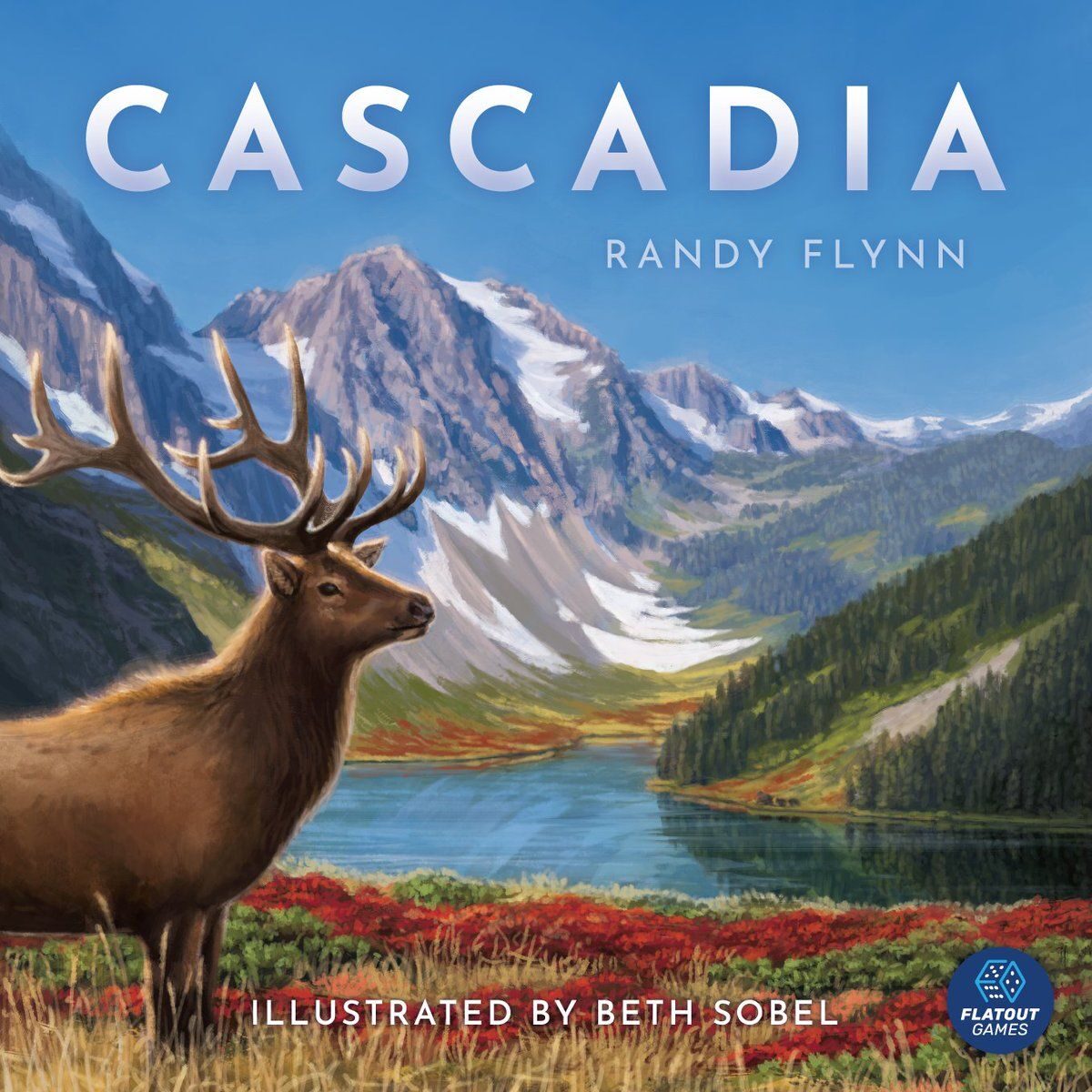
Cascadia is the best tile placement game released in the last five years, and for many players it’s become the default answer to “what tile placement game should I own?”
You’re building a Pacific Northwest landscape by placing hexagonal habitat tiles (forests, mountains, prairies, wetlands, rivers) and placing wildlife tokens on them. Bears need to be in pairs. Elk need to form lines. Salmon want to be in long chains. The scoring cards - which vary every game - tell you exactly what patterns score for each animal. Your goal is to build terrain that lets wildlife tokens land in the right positions.
Cascadia does two clever things with the tile placement formula. First, the hex grid means every tile touches up to six others, creating far more adjacency decisions than a square grid. Second, the tile-and-token pairing during drafting adds a real constraint: each draft option is a habitat tile plus a specific wildlife token. You may want the forest tile but not the elk that comes with it - or desperately need the bear but not the wetland it’s attached to. That pairing tension is the heart of the game.
The solo mode is excellent (using a target score from BGG’s recommended difficulty scale), and it scales cleanly from 1-4 players without the experience degrading. The 2021 Spiel des Jahres win was well-deserved.
Best for: solo players, families wanting a step up from Carcassonne, anyone who likes nature themes and clean puzzle design.
Carcassonne (2000)
BGG Weight: 1.88 | Rating: 7.42 | Rank: #240 | 2-5 players | 30-45 min
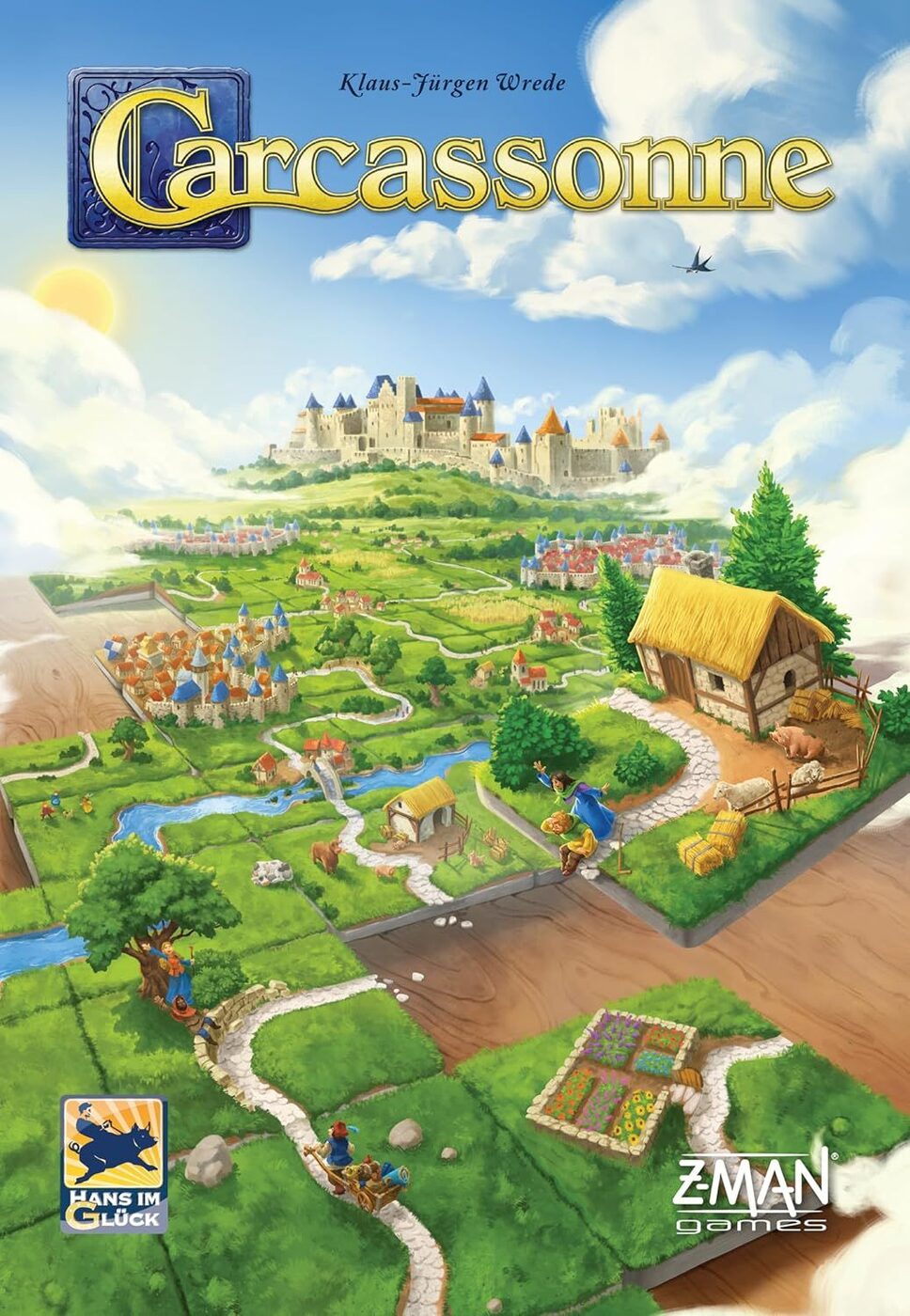
© Hans im Glück / BGG
Carcassonne has been teaching people tile placement for twenty-six years, and it remains one of the most elegant introductions to the mechanic ever designed.
The system is minimal: draw a tile, place it (edges must match - road to road, city to city, field to field), optionally place a follower (meeple) to claim a feature. Score when features complete. That’s Carcassonne. In its first game, a table of non-gamers will understand all of it within two turns.
What the rules don’t tell you is that Carcassonne is secretly a territory control game with meaningful conflict. When you extend your road into someone else’s city, you’re potentially co-completing their feature - or stealing points if you place a follower inside and match their count. The farmers scoring at game end (followers in fields worth two points per completed city touching them) is completely invisible to new players and suddenly obvious to veterans, which is a design achievement in itself.
Carcassonne rewards repeated play in a way that few gateway games do. The first game is about figuring out the rules. The fifth game is about roads vs cities vs farms. The fifteenth game is about reading the board state for farmer wars and timing meeple retrieval. Same rules, deepening experience.
It does have more luck than the other games on this list - you draw blind from the tile stack and sometimes what you draw simply doesn’t fit well. That’s a fair criticism. But the base game costs under £25, plays in thirty minutes, and has introduced more people to modern board games than almost anything else in the hobby.
Best for: introducing new players to tile placement, families, anyone who wants a short game with just enough edge to reward skill.
Isle of Skye: From Chieftain to King (2015)
BGG Weight: 2.26 | Rating: 7.39 | Rank: #296 | 2-5 players | 45-55 min
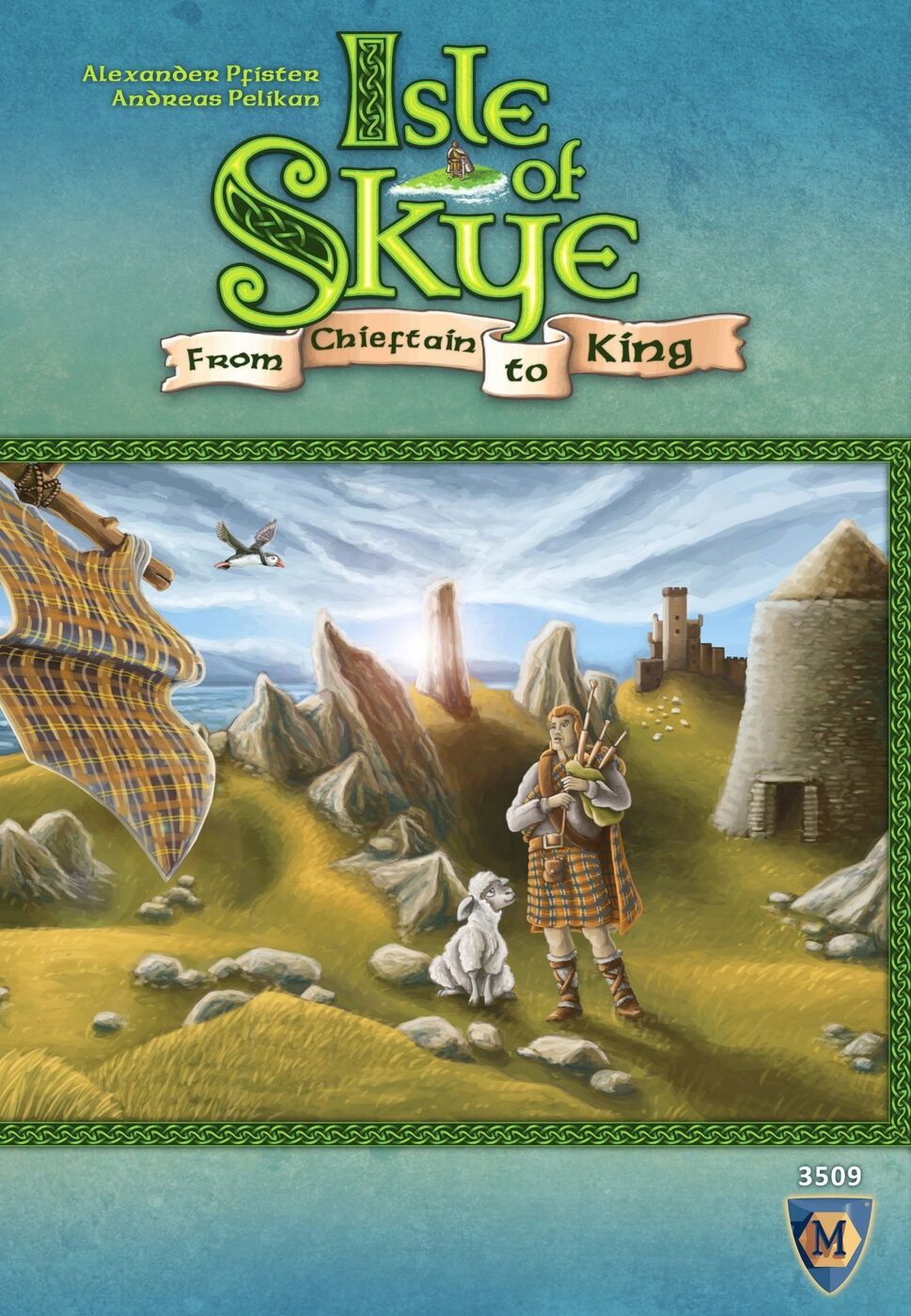
© Lookout Games / BGG
Isle of Skye is the most mechanically ambitious game on this list, and the one that uses tile placement in the most surprising way - as the output of an auction, not the main event.
Each round, every player draws three landscape tiles and secretly prices two of them for sale while discarding one (spending money to discard). Then players in turn buy tiles from each other at the listed price. After the auction, everyone places whatever tiles they own into their personal kingdoms.
That auction layer fundamentally changes how tile placement feels. In every other game on this list, you know what tile you’re getting before you decide where to place it. In Isle of Skye, you know what tiles you might get (the open display), but whether you get them depends on whether someone else pays your price - and whether you can afford theirs. You price tiles to manipulate opponents: set a price too low and someone buys your valuable piece; set it too high and you’re stuck with it (at the cost of the discard fee).
The kingdom-building itself scores against a rotating set of objectives. Three scoring criteria are active each game from a larger pool, and different criteria incentivise different territory shapes and compositions. Your kingdom in one game might want long roads; in the next, it wants multiple whisky barrels.
Isle of Skye is a richer, trickier experience - the auction adds genuine deduction and bluffing to what is otherwise a puzzle game, and the variable scoring keeps the meta fresh across repeated plays.
Best for: players who’ve exhausted Carcassonne and want a genuine strategic tile game, groups who like the psychological element of pricing and bidding.
The Spectrum in Summary
Here’s the six games ranked by BGG weight - a reliable proxy for complexity:
| Game | Weight | BGG Rank | Players | Time |
|---|---|---|---|---|
| Kingdomino | 1.24 | #333 | 2-4 | 15-25 min |
| Patchwork | 1.60 | #149 | 2 | 15-30 min |
| Azul | 1.77 | #99 | 2-4 | 30-45 min |
| Cascadia | 1.84 | #61 | 1-4 | 30-45 min |
| Carcassonne | 1.88 | #240 | 2-5 | 30-45 min |
| Isle of Skye | 2.26 | #296 | 2-5 | 45-55 min |
The weight range here is deliberately modest - this is tile placement, not heavy euro territory. But notice how much variety sits inside that 1.24-2.26 range. Kingdomino plays in twenty minutes and works with children. Isle of Skye involves an auction, variable scoring criteria, and meaningful player interaction that requires real reading of opponents. Same core mechanic, genuinely different games.
Why Tile Placement Endures
Most mechanics age. Dice-rolling as a primary mechanism has largely been replaced by better systems. Card drawing with no agency looks dated next to modern drafting designs. But tile placement keeps finding new expressions because the core constraint - fit this piece into the growing world - is permanently satisfying in a way that doesn’t depend on complexity.
Part of this is physical. Picking up a tile, rotating it, finding where it clicks - there’s a tactile feedback loop that most purely card-based games can’t replicate. Cascadia’s hex tiles feel different from Carcassonne’s squares, which feel different from Patchwork’s polyominoes, but all of them deliver that physical “it belongs here” moment.
Part of this is cognitive. Tile placement games are always asking you to hold a mental model of what’s currently on the table and what might come next. That spatial reasoning challenge sits at a level of difficulty that’s accessible to most players but rewarding enough to keep skilled players engaged.
And part of this is just the joy of building something. At the end of a tile placement game, there’s a world on the table that didn’t exist an hour ago. Everyone at the table made that world together. That’s not a bad thing to feel at the end of a game.
All data from BoardGameGeek. BGG ratings and ranks reflect live data at time of writing.