Every round of Ticket to Ride ends with the same quiet satisfaction: your railway connects two distant cities, the route card flips face up, and you bank the points. Simple. Clean. Deeply pleasant.
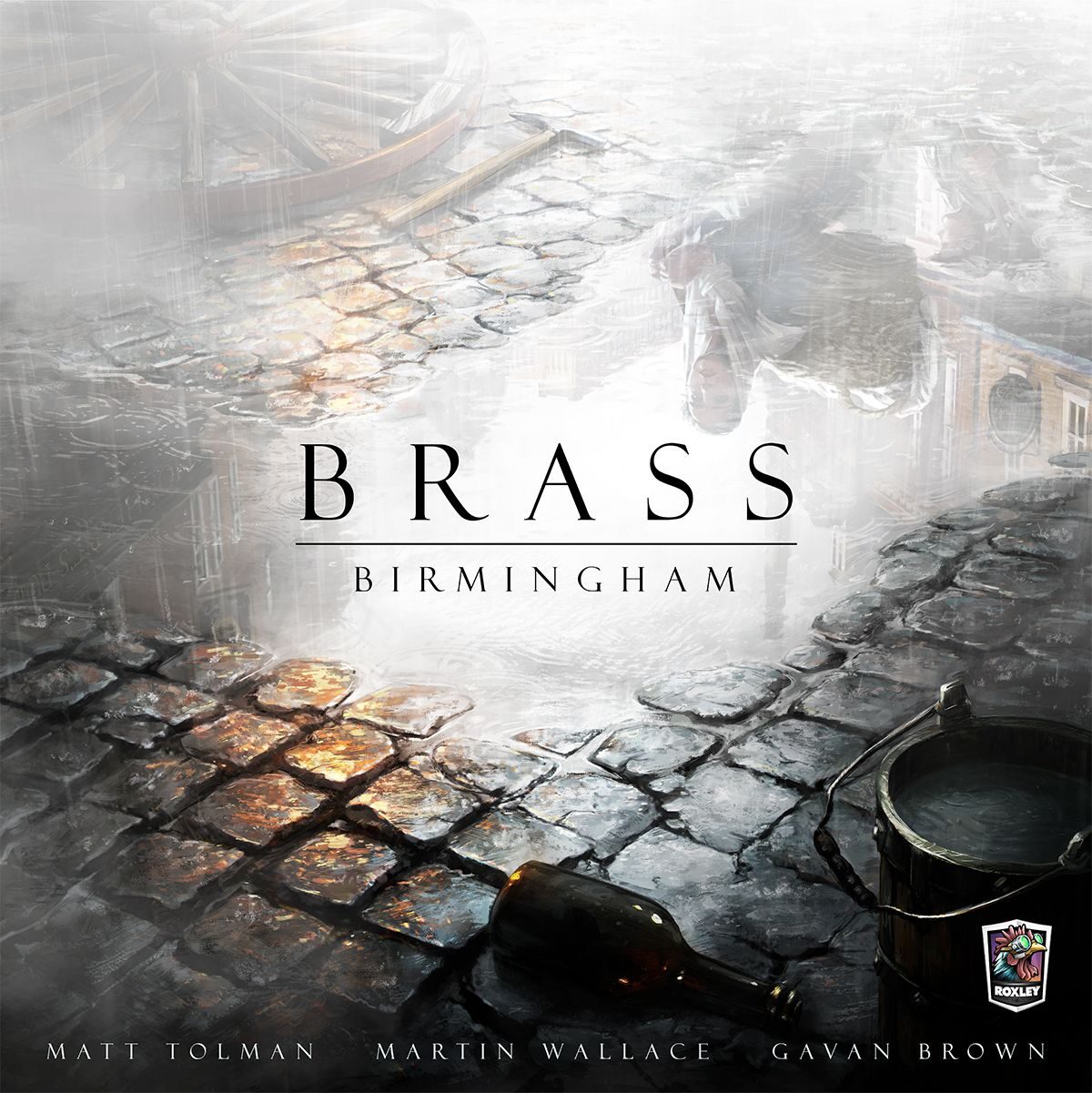
Now look at Brass: Birmingham - the #1 game on BGG. Your coal mines feed your ironworks. Your canal links carry goods to distant markets. The network you build isn’t just about geography; it’s a living supply chain where every connection either opens new possibilities or exposes a dependency your opponents will immediately exploit.
Both games are built around network-building. The mechanic is barely recognisable across these two designs.
That range - from elegant simplicity to layered economic complexity - is exactly what makes network building one of the most fertile mechanics in modern board gaming.
What Network Building Actually Is
Strip it back to first principles: network building is a mechanic where players create systems of connected nodes (cities, locations, factories) and edges (roads, rails, canals, cables). The connections you build determine what actions are available to you. Disconnect your supply chain and you’re stuck. Extend your reach and new options open up.
The mechanic appears in almost every weight class and genre - train games, economic games, civilisation games, even deckbuilders. What varies is what the network does:
- In some games, the network scores points based on the routes completed
- In others, it enables actions (you can only build where you’re connected)
- In the heaviest designs, it creates dependencies - a supply chain where every node relies on others
Understanding these three flavours is the key to understanding why the same mechanic produces such different experiences.
Ticket to Ride - The Route Completion Model
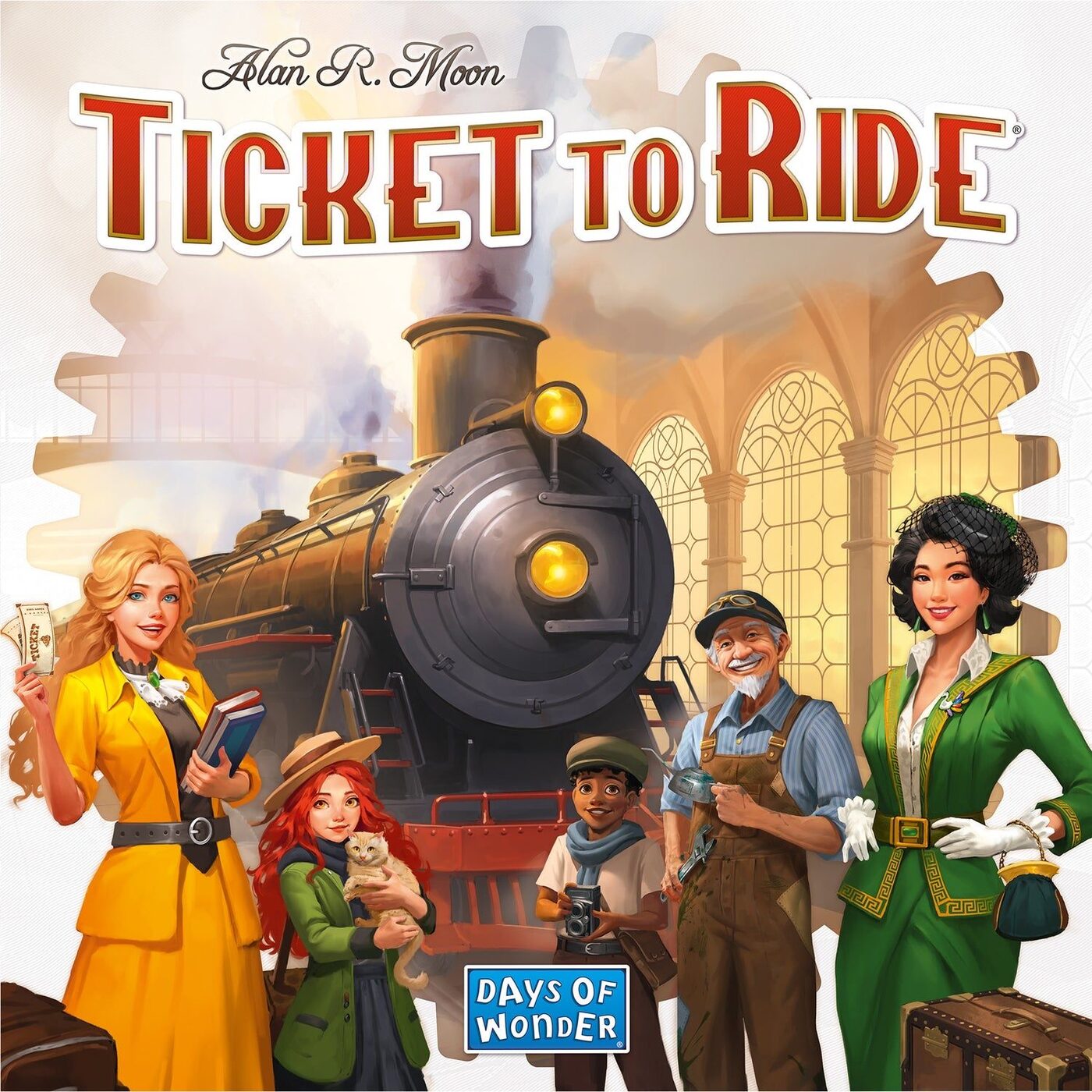 Ticket to Ride - Image © Days of Wonder
BGG Rating: 7.38/10 (Rank #262) | Weight: 1.82/5 | Players: 2-5 | Time: 45-75 min
Ticket to Ride uses the purest form of network building: complete a route between two named locations, score points. Your route cards give you secret objectives - connect Seattle to New York, Los Angeles to Miami - and your turns are spent collecting coloured train cards and claiming routes on the map.
The network-building element here is almost entirely in service of route completion. Your trains don’t do anything once placed; they just form the path that satisfies a destination ticket. The interaction comes from blocking: other players claiming routes you need forces costly detours and frequently kills your longest planned path.
This is why Ticket to Ride works brilliantly as a gateway game. The mechanic is legible immediately - you can see the path you need to build, you can see what’s being threatened, the scoring is visible on the board. Network building here is a means to a clear, visible end.
What it teaches: The concept of routes as assets. The tension between claiming routes early (blocking opponents) versus collecting more cards for efficiency. The pain of a broken path.
Power Grid - The Economic Network
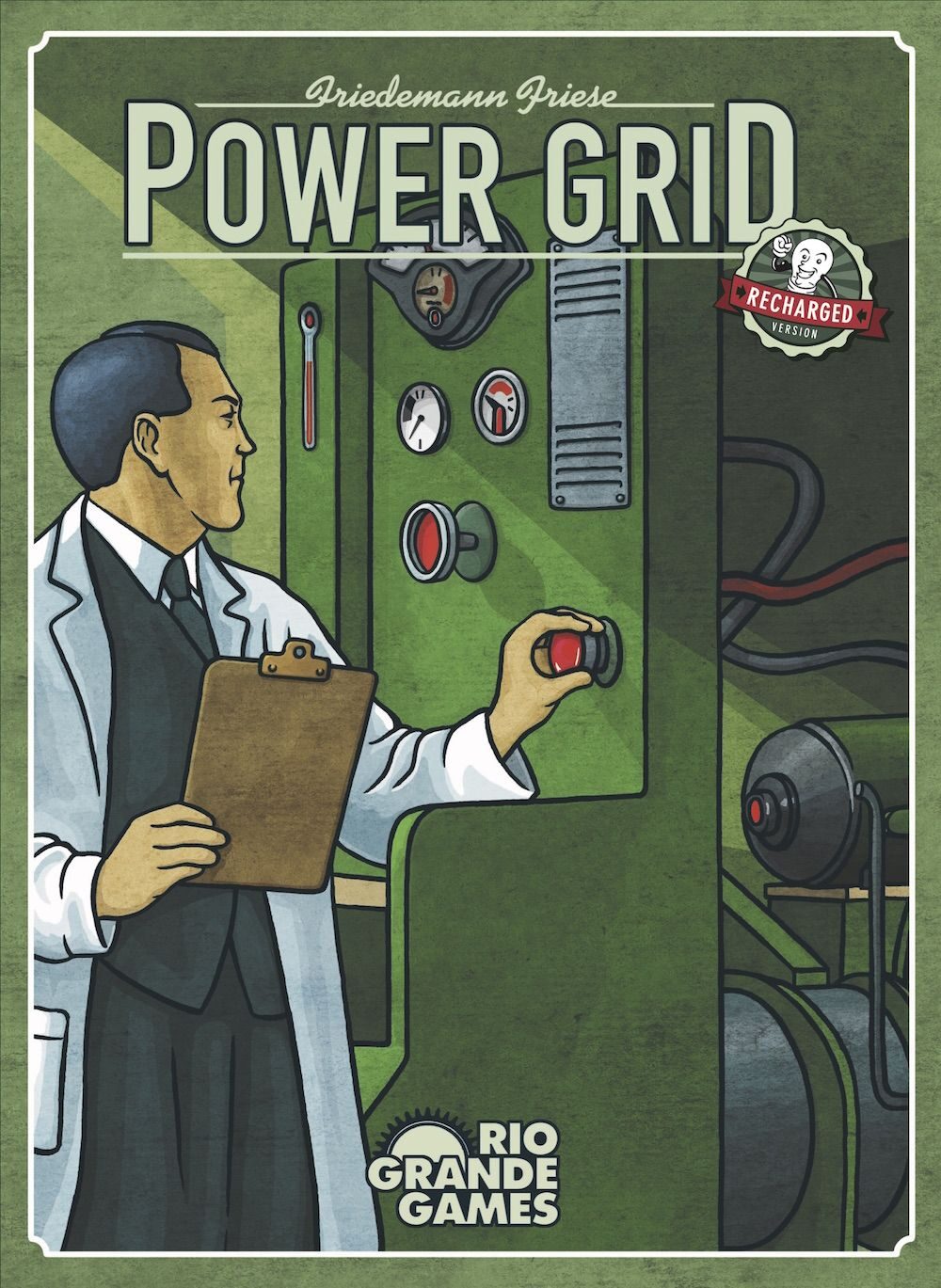 Power Grid - Image © Recharged Research
BGG Rating: 7.80/10 (Rank #76) | Weight: 3.25/5 | Players: 2-6 | Time: 120 min
Power Grid layers economics on top of the network. Players buy power plants, purchase fuel to run them, and - crucially - build a network of cities that determines how many homes they can supply. Each city you connect to your grid costs money, and those costs increase as more players enter the same region. The network is your delivery infrastructure, not your scoring mechanism.
This shift changes everything. In Ticket to Ride, a blocked route is an obstacle to circumvent. In Power Grid, a contested city is a bidding war with real financial consequences, because the city you don’t enter is one fewer consumer you can supply at end-of-round. Your network directly determines your revenue ceiling.
Power Grid also introduces expansion order as a strategic lever. The player with the fewest cities on their network moves first in city-building - good for placing before others raise costs - but draws last in power plant auctions, which means worse selection. Turn order tension is built directly into the network-building decisions in a way Ticket to Ride never attempts.
What it teaches: Networks as economic infrastructure. The compounding value of early expansion versus the cost pressure it creates. How network decisions and resource decisions are inseparable.
Age of Steam - The Delivery Engine
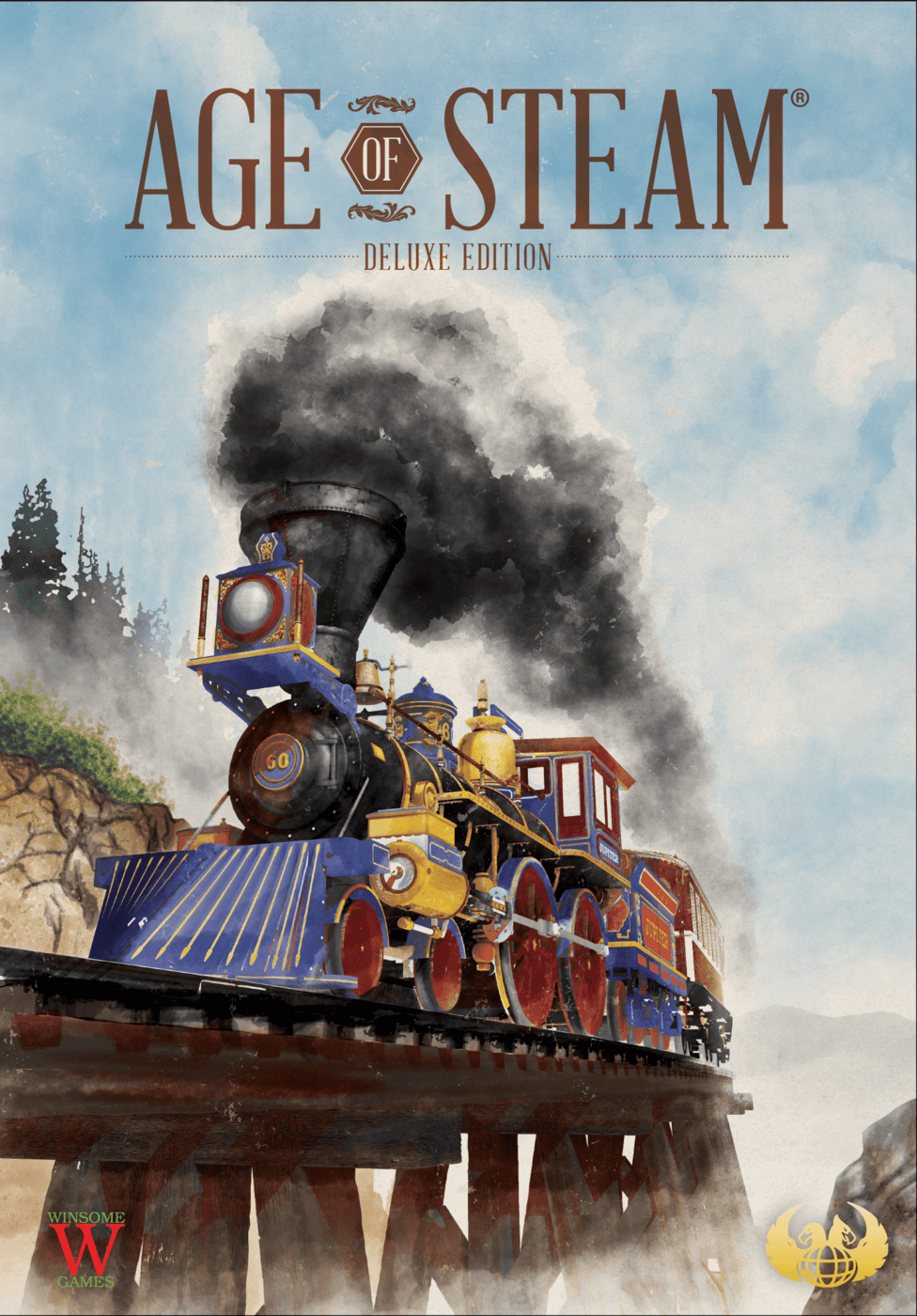 Age of Steam - Image © Winsome Games / Eagle-Gryphon Games
BGG Rating: 7.87/10 (Rank #138) | Weight: 3.85/5 | Players: 2-6 | Time: 120 min
Age of Steam by Martin Wallace is brutal by design, and its brutality is inseparable from the network-building mechanic. You issue shares to fund rail construction (each share costs income), build tracks, and then deliver goods - cubes on the board - across the network for income. Income determines how much you can spend next round. Debt is punishing. Bankruptcy eliminates players.
The genius of Age of Steam is that your network is only valuable when it enables deliveries. A beautiful rail system that nobody can ship goods across is worthless. This creates a different kind of spatial pressure: you’re not just racing to connect cities, you’re building tracks that intercept existing goods flows, positioning yourself as the most efficient shipper in a region.
Where Ticket to Ride rewards completing your own routes and Power Grid rewards expanding your coverage, Age of Steam rewards intercepting the board’s existing economic geography. The goods cubes are placed randomly at game start, and the network you build is your response to that specific map state. Every game is different; every network is a puzzle.
This is the mechanic at near-maximum cognitive demand - the point where network-building decisions and income projections and debt management all collapse into one complicated mass of tradeoffs.
What it teaches: Networks as engines for income generation. The relationship between track layout and goods delivery. Why financial discipline matters as much as spatial strategy.
Brass: Birmingham - The Interdependent Supply Chain
 Brass: Birmingham - Image © Roxley Games
BGG Rating: 8.56/10 (Rank #1) | Weight: 3.86/5 | Players: 2-4 | Time: 60-120 min
Brass: Birmingham does something none of the other games on this list attempt: it makes the network itself part of the resource economy.
In Brass, your canal and rail links don’t just enable movement - they determine which coal mines and iron works are accessible to you and your opponents. Coal from a mine can be used by anyone connected to it through the shared network. This means that building an opponent’s coal mine isn’t just acceptable, it’s sometimes strategically correct - because they flip their tile (scoring them points) but you get the coal you needed to build your next industry.
That single design decision creates a game where every network choice has second-order effects. Your link into Birmingham isn’t just about reaching Birmingham - it’s about which of your opponents’ resources you now share access to, and which of yours you’re now exposing to them.
The two-era structure compounds this. The canal era wipes the board of links and level-1 industries between halves. The network you painstakingly built is gone. The rail era begins faster, more expensive, and with a longer memory of where the economic value is. Your canal-era network was a learning exercise; your rail-era network is the exam.
What it teaches: Networks as mutual dependencies. The value of reading the entire table’s supply chains, not just your own. Why helping opponents sometimes serves your strategy.
Choosing Your Entry Point
The same mechanic, four radically different experiences. Here’s where to start:
| Game | Weight | Entry Point? | What You’re Building |
|---|---|---|---|
| Ticket to Ride | 1.82 | ✅ Perfect gateway | Route completion paths |
| Power Grid | 3.25 | 🟡 After a few heavier games | Economic supply infrastructure |
| Age of Steam | 3.85 | 🔴 Comfortable with heavy euros | Delivery engine optimization |
| Brass: Birmingham | 3.86 | 🔴 Expect a rough first play | Interdependent supply chains |
If you’ve exhausted Ticket to Ride and want the next step up, Power Grid is the move - it adds an economic layer without changing the core spatial logic. If you want the complete expression of what network building can do, Brass: Birmingham is the destination, but plan for that first play to be confusing in all the right ways.
Network building works because space is inherently competitive. Every connection you make forecloses options for your opponents. Every gap in your network is a vulnerability. The mechanic creates friction between players without requiring direct conflict - you’re not attacking each other, you’re competing to occupy the same limited geography.
That’s why it keeps appearing in great games at every weight class. It’s not a gimmick - it’s geography as strategy.
Data from BGG (July 2026): Ticket to Ride rated 7.38/10 (rank #262, weight 1.82); Power Grid rated 7.80/10 (rank #76, weight 3.25); Age of Steam rated 7.87/10 (rank #138, weight 3.85); Brass: Birmingham rated 8.56/10 (rank #1, weight 3.86).