
There’s a specific moment that every engine builder chases. You’re three or four rounds in, your tableau is starting to fill out, and suddenly - instead of scratching for one resource at a time - you take a single action and it cascades. Cards trigger cards. Resources multiply. Points flow. Your engine is running.
That feeling is what engine building is all about.
It’s one of the most widely loved mechanics in modern board gaming, and it shows up everywhere - from accessible 30-minute card games to 120-minute strategic giants. But “engine building” is also one of the most misunderstood labels, slapped onto games that are really something else, and skipped by players who assume it means complexity. So let’s pull it apart properly.
What Actually Makes a Game an Engine Builder?
An engine builder is a game where your primary activity is constructing a personal system that becomes more powerful over time. The key word is personal - your engine is yours, built from the specific cards, tiles, or upgrades you’ve chosen, and it plays differently from everyone else’s at the table.
The core loop looks like this:
- Acquire components (cards, tiles, upgrades) that do things
- Activate your components to generate resources, points, or further actions
- Use those outputs to acquire more components that do bigger things
- Repeat, with each turn more productive than the last
The beautiful tension in a well-designed engine builder is that you’re always balancing investment against return. Taking that card now makes your engine stronger - but it also means you’re not scoring points yet. And the player who spends the whole game building a perfect engine while never converting it into points will lose to the player with a scrappier but better-timed machine.
Engine building is not the same as:
- Deck building (Dominion-style games where your shuffled deck is the engine - that’s a specific subset)
- Resource management (where resources are means to an end, not self-generating systems)
- Set collection (where you’re matching things, not building interdependencies)
There’s overlap in all three directions, but the engine-building heart is those cascading activations that make mid-to-late game feel like you’re steering something alive.
The Spectrum: From First Gear to Full Throttle
Engine builders span an enormous weight range. Here’s the full picture, ordered from lightest to heaviest based on verified BGG complexity data.
Splendor - BGG Weight: 1.77 | Rating: 7.42 | Rank: #243
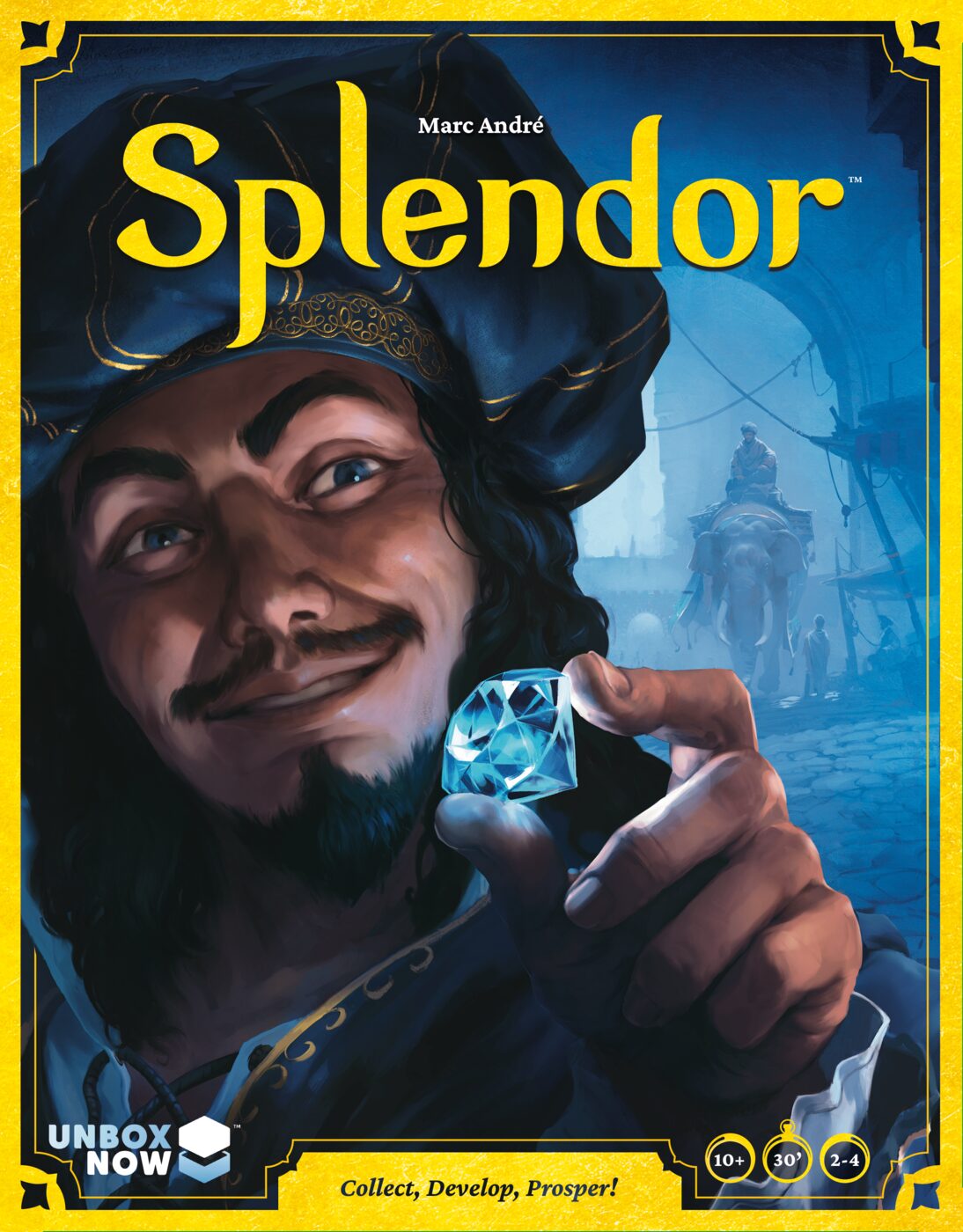
Splendor by Space Cowboys - the purest gateway into engine building. Image © Space Cowboys via BGG.
2-4 players | 30 min
Splendor is engine building stripped to its skeleton, and that’s a compliment. You’re collecting gem tokens to buy development cards, which then act as permanent discounts (gem substitutes) for future purchases. Buy enough cards and you’re essentially getting things for free.
There’s no tableau activation, no cascading triggers - just accumulating buying power. But that accumulation is the engine. By turn 10 you’re acquiring cards that would have cost seven gems on turn one, and it costs you two.
It’s minimal, even thin. Some experienced players find it too stark. But as a first engine-building experience - especially with non-gamers - it’s close to perfect. The rules fit on one page, the turns are fast, and the engine metaphor is crystal clear even to people who’ve never heard the term.
Best for: First-timers, mixed groups, people who want a 30-minute game with genuine strategic depth underneath.
Gizmos - BGG Weight: 2.06 | Rating: 7.36 | Rank: #419
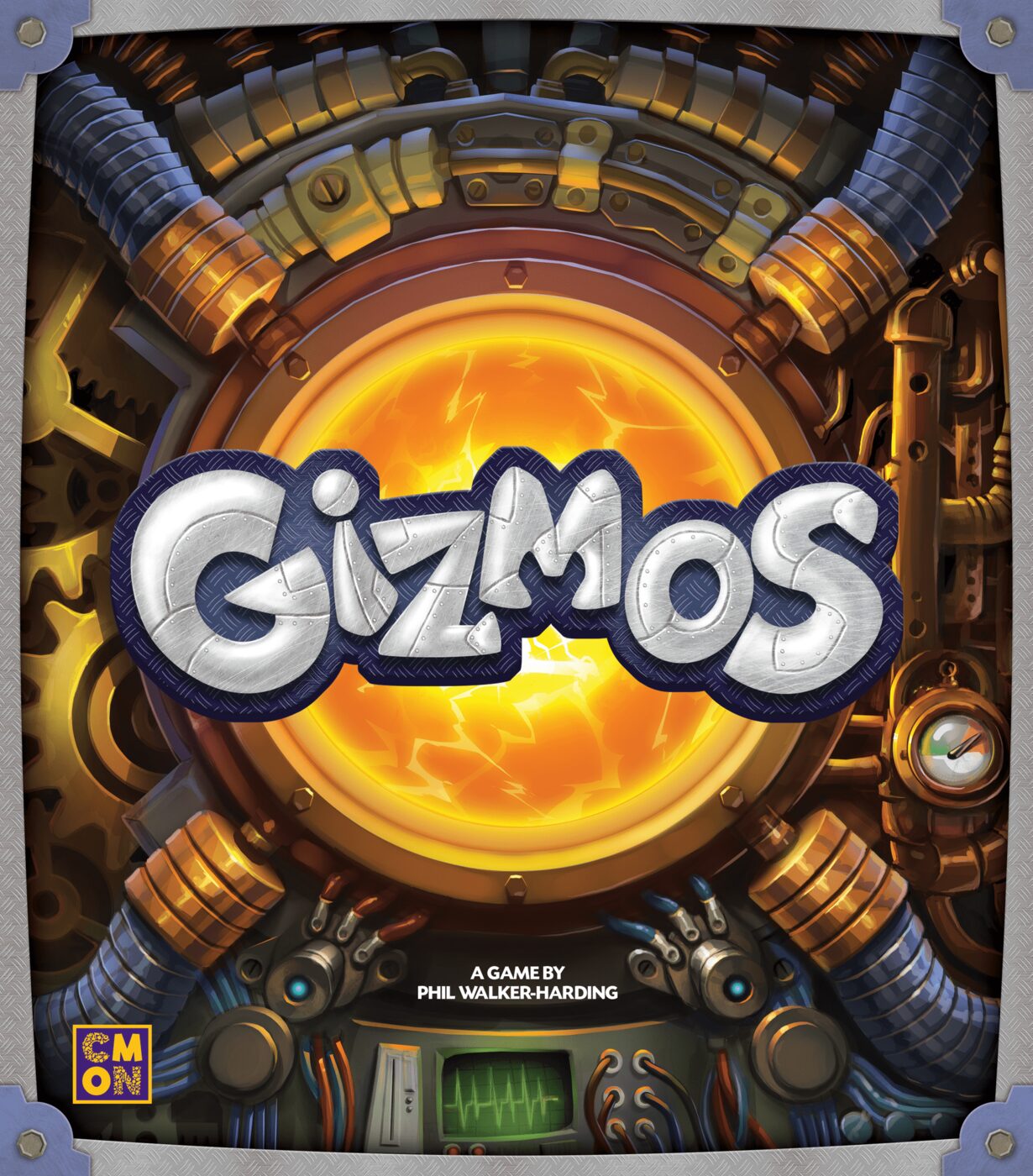
Gizmos by CMON - chains of triggers in a satisfying, tactile package. Image © CMON via BGG.
2-4 players | 40-50 min
Gizmos takes the Splendor skeleton and adds the thing Splendor is missing: triggers. Every gizmo card you add to your machine can fire when a specific event occurs - when you pick a marble of a certain colour, when you build something, when you convert resources. Chain the triggers correctly and a single marble-grab becomes a five-step sequence.
This is the first rung where players truly feel the engine. The marble dispenser (a physical ball-bearing machine) is a tactile delight, but the real satisfaction is watching your constructed chain fire: pick a marble → trigger a converter → trigger a builder → trigger a scorer → pick a bonus marble.
Gizmos is slightly underrated on BGG (Rank #419 seems harsh for what it delivers). It’s snappier than its weight suggests, and it genuinely teaches the core engine-building instinct - identify what your cards want, then feed them.
Best for: Players who liked Splendor but wanted more going on; families with older kids; an ideal step-two engine builder.
Wingspan - BGG Weight: 2.48 | Rating: 7.99 | Rank: #38

Wingspan by Stonemaier Games. Image © Stonemaier Games via BGG.
1-5 players | 40-70 min
Wingspan is the game that brought engine building into the mainstream conversation. It helped that it’s beautiful - illustrated bird cards, wooden eggs, a bird feeder dice tower - but the mechanics earned the success.
Your birds activate in a row within one of three habitats (forest, grassland, wetland). Activating a habitat fires every bird in that row from right to left. Early game, that chain is short; by round four, a single action fires six birds, each with chained effects. You’re gaining cards, tucking cards under others to score later, caching food, storing eggs.
The stroke of genius is that the engine builds the engine. You’re not spending turns acquiring components separately - birds come with food or eggs baked into their powers. The whole system accelerates naturally.
What makes Wingspan interesting analytically is the focus requirement. There are three rough engine archetypes (egg-laying/laying speed, point-on-bird, end-of-round-goal racing), and trying to do all three usually loses to someone who committed. Good Wingspan play means reading the available cards, picking a direction early, and not getting distracted by shiny birds that don’t fit.
Solo mode: Wingspan’s Automa is well-regarded - a card-driven opponent that competes for round goals without full simulation. It’s one of the better solitaire implementations in the weight class. BGG solo poll data: Best at 1 player is a minority opinion, but Recommended is the majority at 1-3.
Best for: Gamers and non-gamers alike; a genuine crossover title; players who want engine building with strong visual and thematic payoff.
Res Arcana - BGG Weight: 2.66 | Rating: 7.61 | Rank: #185
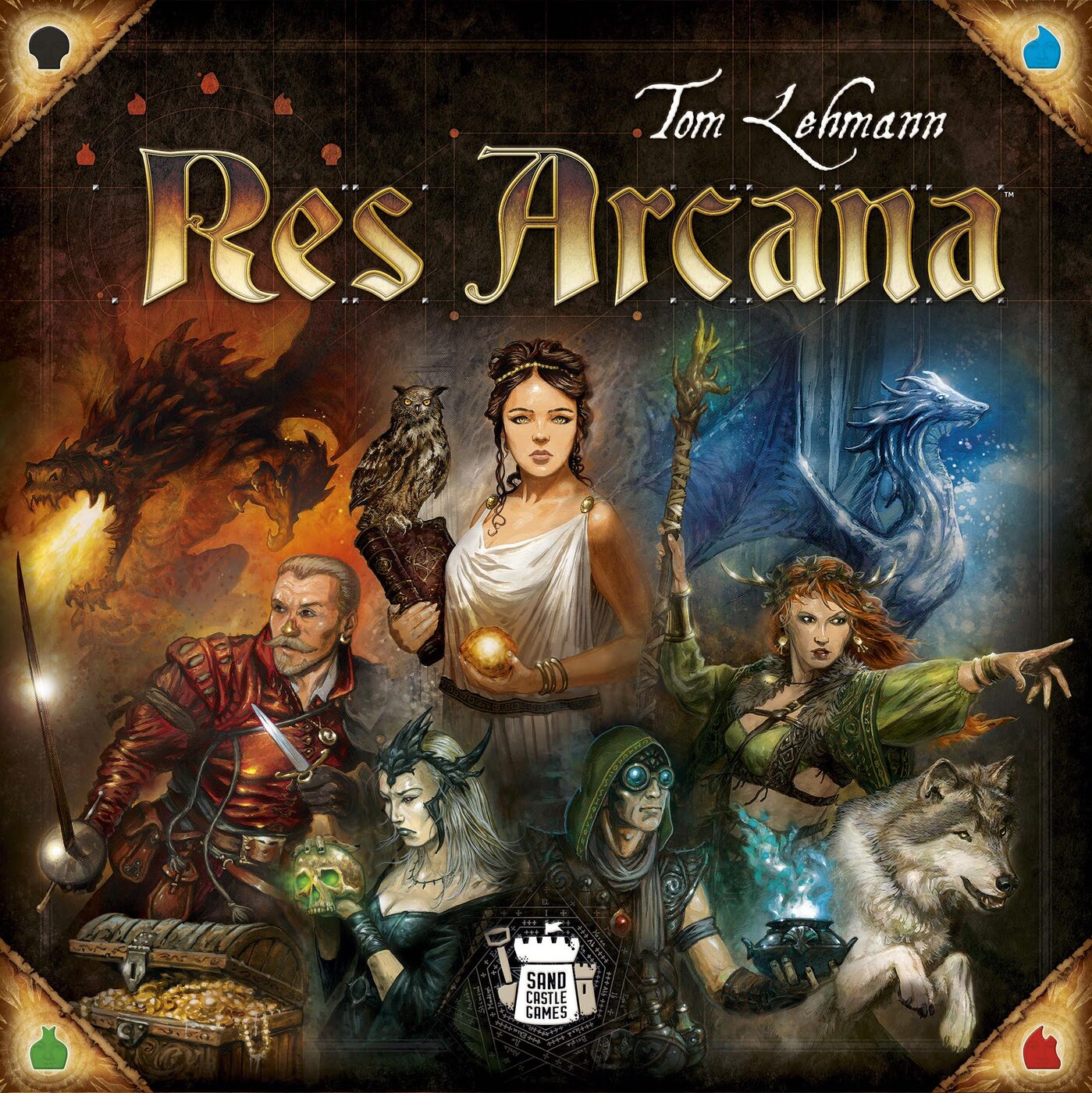
Res Arcana by Sand Castle Games - small box, enormous decision density. Image © Sand Castle Games via BGG.
2-4 players | 30-60 min
Res Arcana is the outlier on this list: a tiny box containing one of the highest decision-density engine builders around. You draft a hand of 8 artifact cards, pick a mage, and then race to 10 points - usually in about 30-45 minutes.
The engine is built from your 8-card hand, full stop. No mid-game acquisition (mostly). You’re working with what you drafted, figuring out the best combination of production, conversion, and scoring. The game has the feel of a puzzle: “what does this specific set of cards want to do?”
What pushes Res Arcana above its weight: the resource types (life, death, elan, calm, gold) create interesting conversion chains, and the monuments/places of power act as accelerants or finishers that players race to claim. Games are tense because everyone’s engine fires quickly - you can’t afford a slow start.
The catch: teaching Res Arcana is harder than its runtime implies. Card icons are dense, the resource types take a game to internalise, and first-timers often feel they lost before understanding why. The engine-building satisfaction is real, but it requires the table’s patience for game one.
Best for: Two-player game nights (shines brightest at 2); experienced gamers wanting a sharp, fast engine puzzle; players who loved Splendor but want their brain hurt.
Race for the Galaxy - BGG Weight: 2.99 | Rating: 7.74 | Rank: #94
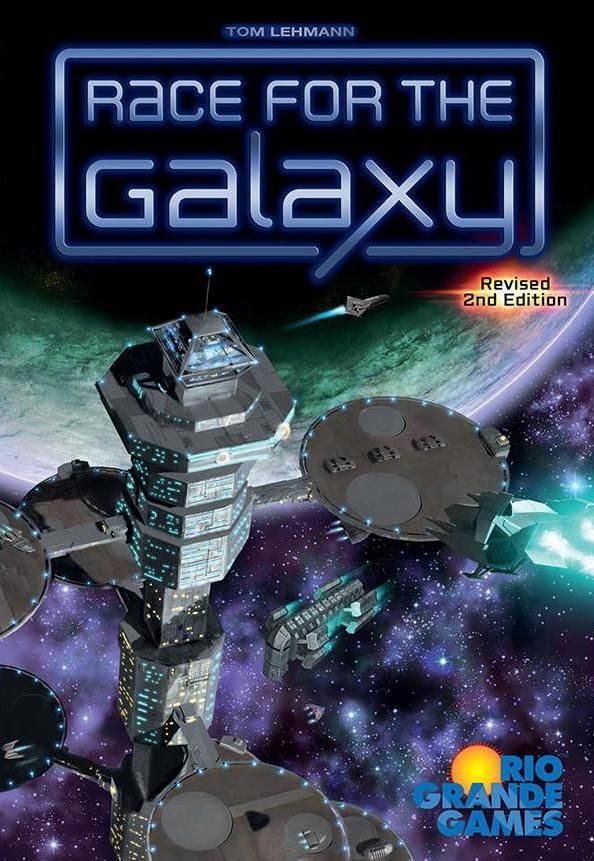
Race for the Galaxy by Rio Grande Games - a 2007 classic with a notoriously steep entry curve. Image © Rio Grande Games via BGG.
2-4 players | 30-60 min
Race for the Galaxy is a 2007 card game that remains one of the most elegant engine builders ever designed - and one of the most hostile to new players.
The barrier isn’t complexity in the traditional sense. It’s iconography. Every card in Race communicates its powers through a dense symbol language that takes 2-3 plays to read fluently. First game, you’re essentially decoding hieroglyphics. Third game, the symbols click and the game reveals itself as a masterwork of parallel play and engine synergy.
The engine here isn’t a tableau you activate - it’s a civilization you build. Worlds produce goods, developments multiply those goods’ values, and military strength lets you settle planets without paying. Different civilizations emerge naturally from different card draws and choices: military conquest decks, production-trade loops, development chains.
The simultaneity is the critical design insight: all players select their actions secretly and reveal simultaneously, so you’re trying to predict what others will choose (since their phase choice activates your cards too). You’re playing your own engine and leeching off others’ decisions at the same time.
This is also a brilliant two-player game - most sessions run under 45 minutes once players know the icons.
Best for: Card game enthusiasts willing to invest 2-3 teaching games; couples (excellent at 2); players who want a game that rewards deep repeat play.
Terraforming Mars - BGG Weight: 3.27 | Rating: 8.33 | Rank: #9
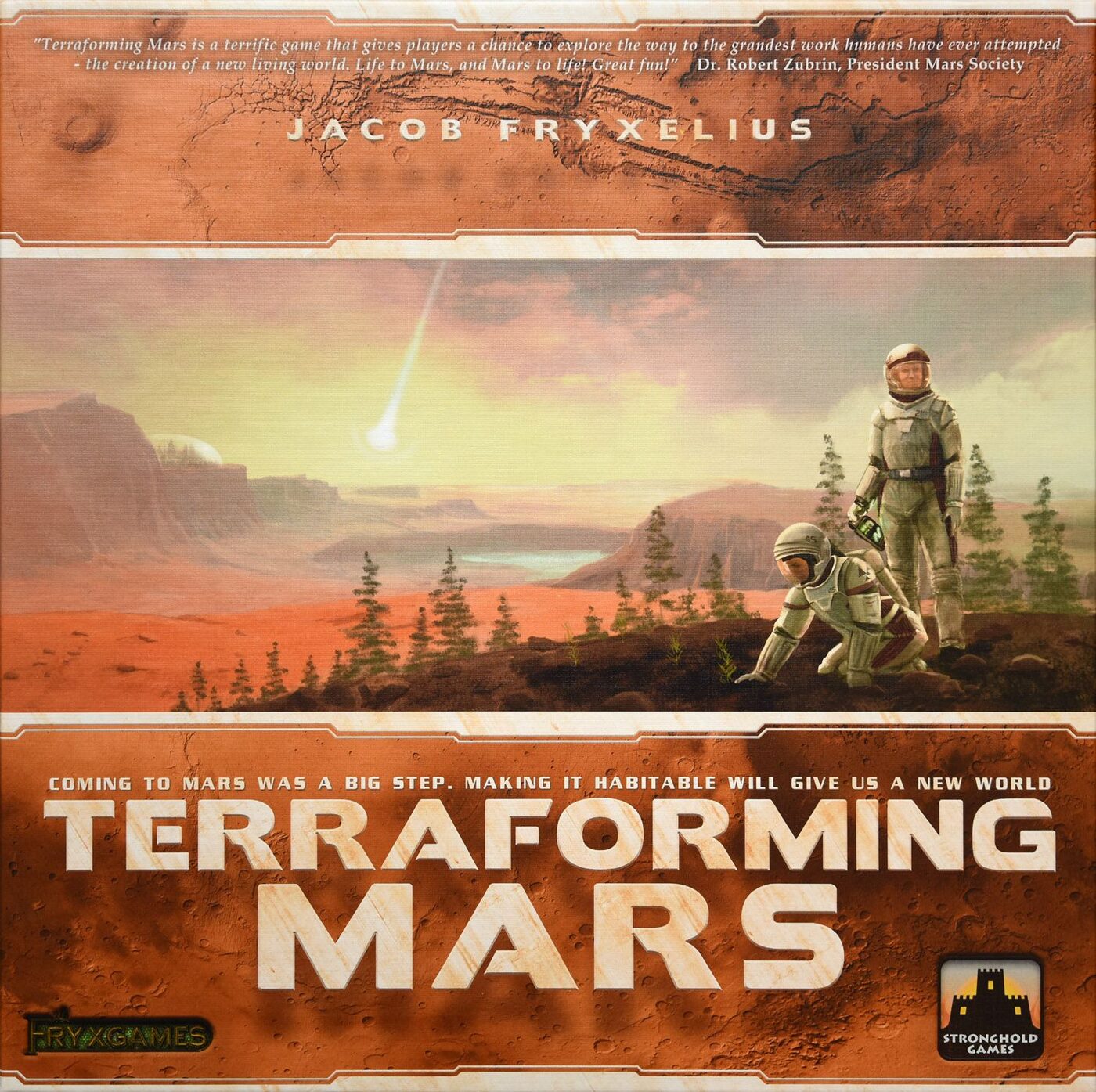
Terraforming Mars by FryxGames - the engine builder at the top of the mountain. Image © FryxGames via BGG.
1-5 players | 120 min
Terraforming Mars is the engine builder’s engine builder. Ranked #9 on BGG overall, it combines a sprawling card engine with a shared board, resource management, and four separate tracks to push upward. The engine you build is yours; what you do with it matters for everyone.
The project card pool is enormous (200+ cards in the base game), and every corporation starts you on a different strategic footing. Some want to focus on plants and greenery; others on heat and temperature; others on building cities or playing science cards. Your engine forms around what the cards let you do, not a predetermined path.
What makes Terraforming Mars genuinely hard is efficiency. With 120 minutes and a limited number of generations, the gap between building a perfect engine and actually converting it into terraforming actions (which score points) matters enormously. Runaway engine builders who never push the tracks will lose to a scrappier corporation that moved the global markers.
The legitimate criticisms: production play can feel slow, the card art varies wildly in quality (the community ares project redesign exists for good reason), and 5-player games can drag. But at 2-3 players, Terraforming Mars is as good as engine builders get.
Solo mode: the solo campaign is a full ruleset variant where you race to terraform Mars in 14 generations. It’s demanding, satisfying, and replayable. BGG solo poll shows clear “Best” majority at solo.
Best for: Gamers who want the full engine-building experience; groups comfortable with 120-minute games; players who want something to master over many plays.
What Separates Good Engine Builders From Great Ones
Not every game that calls itself an engine builder sticks the landing. A few principles separate the memorable from the mediocre:
Engines need a governor. The best engine builders put a natural cap on runaway leaders - whether that’s a point threshold that ends the game (Splendor, Res Arcana), a shared board that compresses opportunity (Terraforming Mars), or round goals that force everyone to pivot (Wingspan). Without a governor, the player who builds the best early engine wins on autopilot.
The engine should fight itself. In Terraforming Mars, investing in cards conflicts with pushing the global tracks. In Wingspan, laying eggs conflicts with gaining new birds. That internal tension - do I feed the machine, or use what it’s already producing? - is the source of interesting decisions.
First plays should give a taste. Res Arcana and Race for the Galaxy struggle here: their first games are confusing, which drives players away before the good stuff. Wingspan and Splendor get this right: even a losing first game teaches you why you lost, and makes the next game feel better.
Where to Start
| Your situation | Start with |
|---|---|
| First engine builder, mixed group | Splendor |
| Want to feel the trigger chain | Gizmos |
| Beautiful game, thematic hook | Wingspan |
| Small box, expert table | Res Arcana |
| Committed card game player | Race for the Galaxy |
| Ready for the big leagues | Terraforming Mars |
The order above isn’t arbitrary - it tracks BGG complexity weight precisely (1.77 → 3.27). If you can play and enjoy a game at weight N, you’re probably ready for N+0.5 next.
Engine building rewards patience. The genre’s best games don’t reveal themselves on first play - they reveal themselves on the fifth, when you finally understand what your engine was trying to do all along.
All ratings, rankings, and complexity scores sourced from BGG XML API, August 2026. BGG links: Splendor · Gizmos · Wingspan · Res Arcana · Race for the Galaxy · Terraforming Mars