There’s a moment, somewhere around turn seven of your first game of Dominion, where something clicks. You’ve been buying Silver and the occasional Province, letting your opponents snap up the Action cards - and suddenly you realise your deck is clean, efficient, and firing perfectly. You draw five cards that work together like they were designed to.
They weren’t. You designed them. That’s deck building.
Since Donald X. Vaccarino introduced the mechanic in 2008, deck building has spread into hundreds of games, spawned countless hybrids, and permanently changed what we expect from card games. This deep dive explains exactly how the mechanic works, why it’s so psychologically satisfying, and where to go once you’re hooked.
What Deck Building Actually Is
The mechanic has a deceptively simple premise: you start with a small, weak deck and spend the game making it better.
Every player begins with an identical starter deck - usually ten cards of low-powered currency. On your turn you draw a hand, play cards to generate resources (money, actions, points), spend those resources to buy better cards from a central market, and discard everything. When your draw pile runs out, you shuffle your discard pile and start again.
That shuffle is the heartbeat of deck building. Every card you buy will keep cycling back through your hands. Buy garbage, you’ll keep drawing garbage. Build a focused engine, and eventually the deck pays dividends.
There are three decisions shaping every deck builder:
- What to buy - which cards from the market serve your strategy
- What to prune - some games let you remove weak cards (“trashing”), which speeds the cycle
- When to pivot - shifting from engine-building to scoring before the game ends
The interplay of these decisions is what separates a good run from a great one.
Why It’s So Addictive
Deck building taps into something deep. Psychologists call it the “hot hand” fallacy in reverse - you’re not imagining your luck is better than it is, you’re engineering your luck to be exactly as good as you built it. Every good turn feels earned, because it literally was.
The other hook is the feedback loop. Unlike most card games where your hand is fixed by a static pool, deck builders reward learning. Your second game is better than your first. Your tenth game is radically better than your second. Skill compounds in a way that keeps players coming back.
There’s also the pacing structure. A typical deck builder has three natural phases:
- Early game: Buying efficiently, establishing a direction
- Mid game: The engine firing, trying to outpace opponents
- End game: The race to score before the piles run out
That three-act structure gives even a 30-minute session dramatic shape. You feel the tension build.
The Games That Define the Mechanic
The BGG weight scores below are verified from the BGG API - these are real complexity ratings from thousands of player votes.
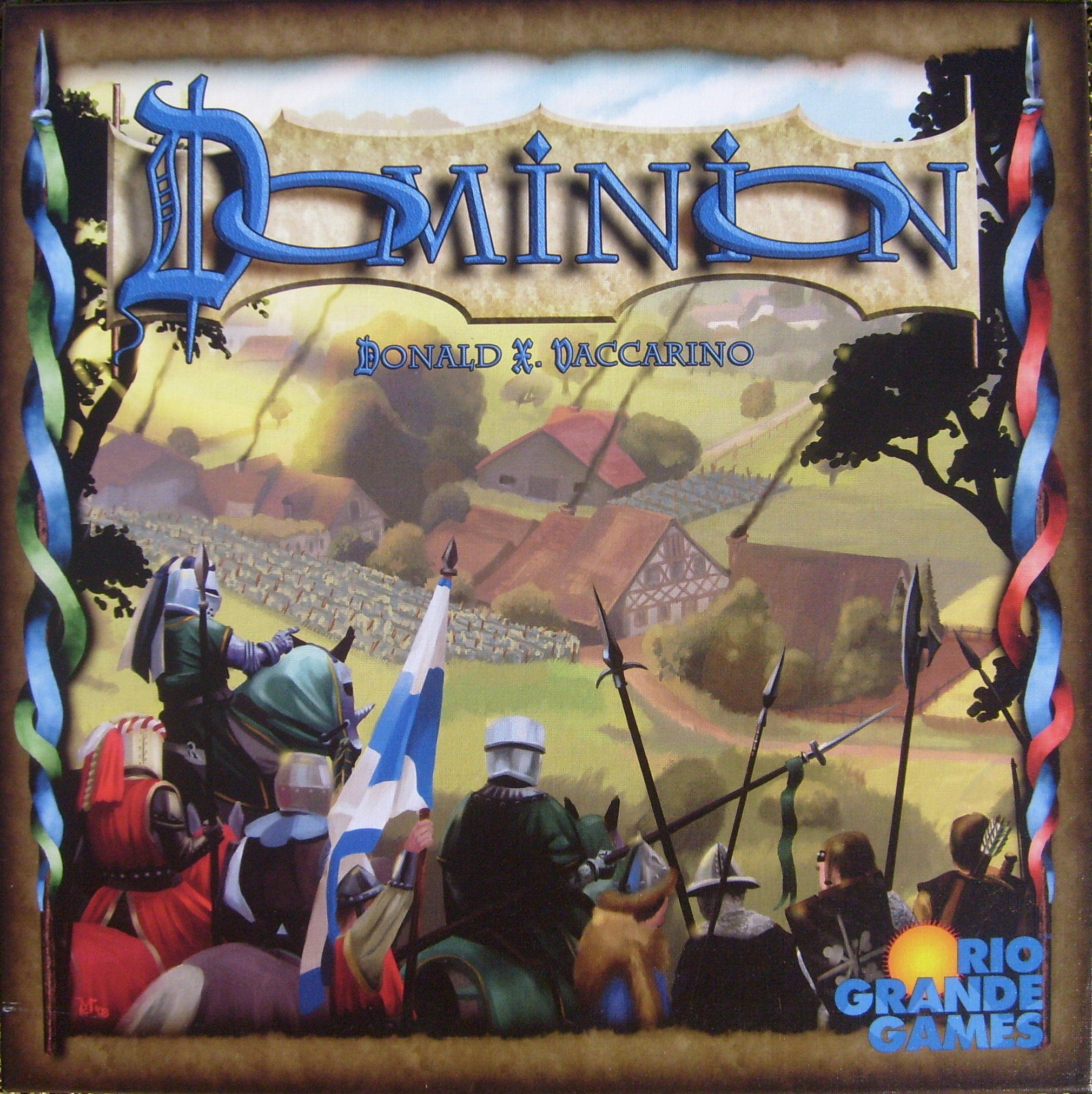
1. Dominion - The Original (Weight: 2.34)
 © Rio Grande Games - BGG #145, rating 7.60
BGG ID: 36218 | Players: 2-4 | Time: 30 min | Rank: #145 overall
Dominion invented the mechanic, and it remains the cleanest expression of it. There’s no board. No moving pieces. Just 500 cards, a market of ten Kingdom cards selected per game, and two players (or up to four) racing to claim Victory Point cards.
Its genius is modularity. With 26 Kingdom card sets in the base game (and expansions numbering in the dozens), no two games need look alike. The “Witch/Smithy rush” is a classic first meta to break; the “Big Money vs. Engine” debate has occupied forums for 18 years.
The knock on Dominion is that it can feel abstract - there’s no narrative, no theme beyond the name. That’s a fair criticism. But for understanding how deck building works at a fundamental level, nothing teaches it better.
Who it’s for: Anyone who wants to understand the mechanic in its purest form. Strategy game lovers who don’t need thematic gloss.
2. Star Realms - The Streamlined Duel (Weight: 1.91)
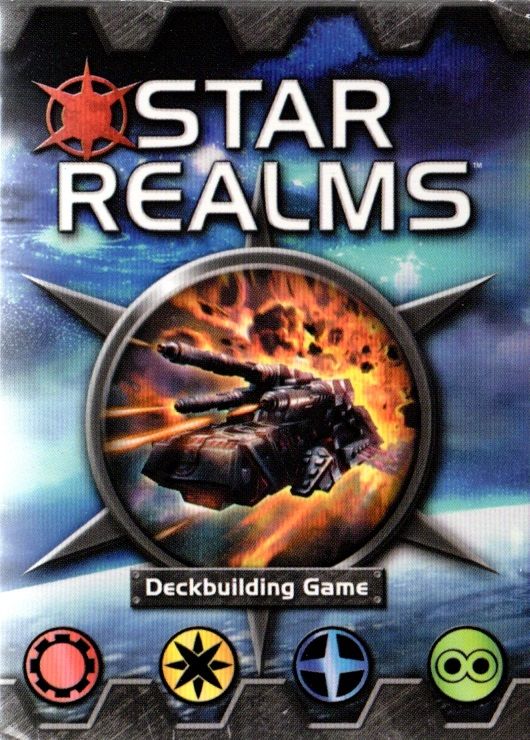 © White Wizard Games - BGG #176, rating 7.55
BGG ID: 147020 | Players: 2 | Time: 20 min | Rank: #176 overall
Star Realms strips deck building to its bones and adds a direct combat layer. You and one opponent both start at 50 Authority (hit points). Buy ships and bases. Deal damage. Win when they hit zero.
The entire game fits in a card box the size of a paperback novel. A game takes 20 minutes. The faction synergies (Blob, Trade Federation, Star Empire, Machine Cult) create meaningful decisions from your first buy.
What makes Star Realms special is how aggressive it feels. Dominion is about optimising; Star Realms is about obliterating. The combat focus gives every turn a sense of stakes.
Lightest game in this guide at 1.91 weight - an ideal entry point.
Who it’s for: Two players who want a fast, aggressive experience. Travel gaming. Couples who like competitive games.
3. Clank!: A Deck-Building Adventure - The Hybrid (Weight: 2.23)
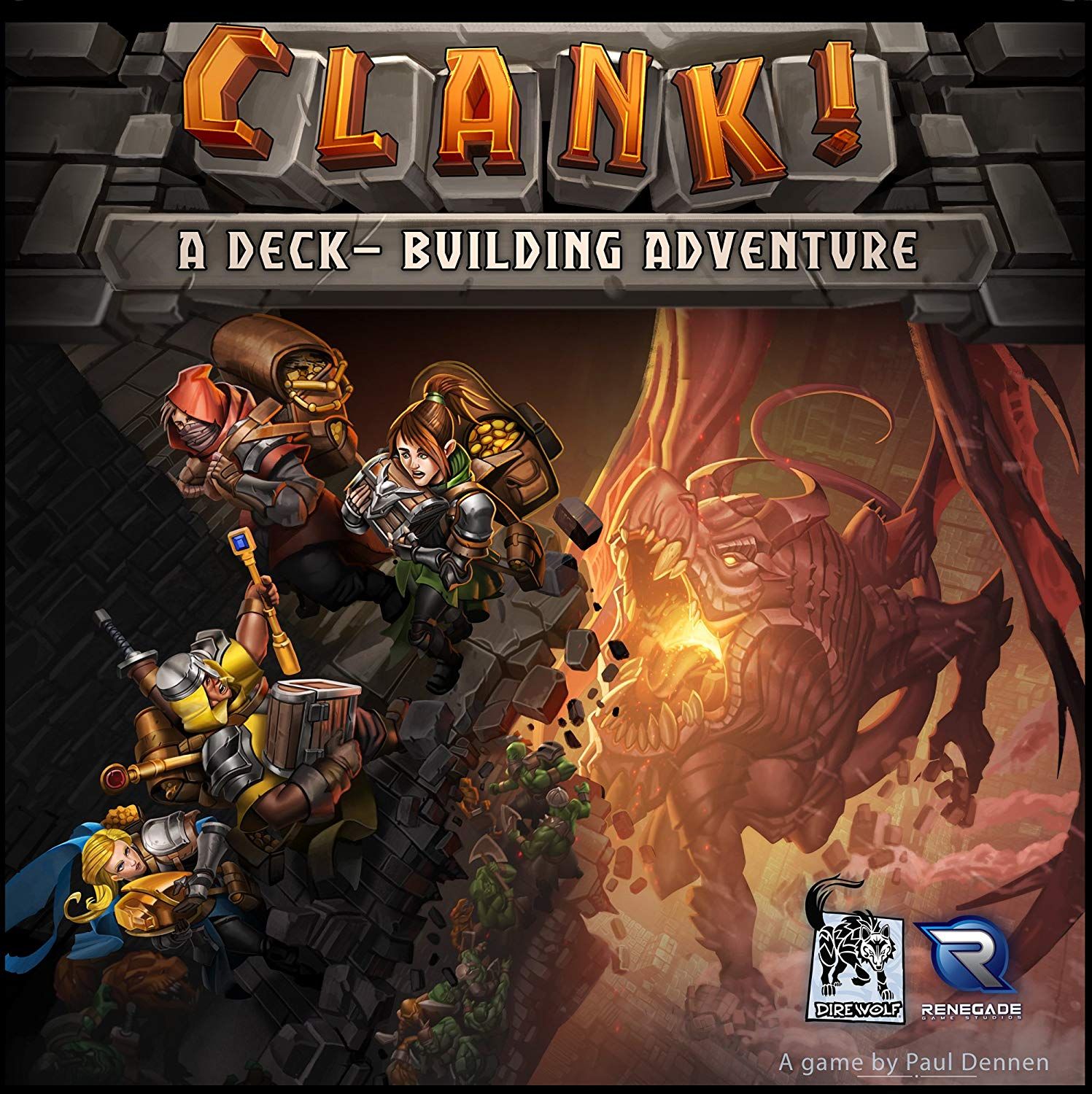 © Renegade Game Studios - BGG #101, rating 7.76
BGG ID: 201808 | Players: 2-4 | Time: 30-60 min | Rank: #101 overall
Clank! grafts deck building onto a dungeon crawl board and produces something genuinely greater than the sum of its parts. You’re a thief sneaking into a dragon’s lair. Your deck generates Skill (for buying cards), Swords (for fighting monsters), and Boots (for movement). And every time you make noise - every time you “clank” - you add cubes to a bag.
The dragon periodically draws from that bag. If your colour comes up, you take damage. The tension is exquisite. You need to go deeper for better loot, but every step risks that fatal draw.
At BGG weight 2.23, it sits between Star Realms and Dominion in complexity, but the thematic payoff is much higher. It’s the game most likely to generate stories afterward.
Who it’s for: Groups who want theme and narrative alongside mechanics. Anyone who found Dominion too abstract.
4. Dominion (weight 2.34) vs. Legendary: A Marvel Deck Building Game (Weight: 2.43)
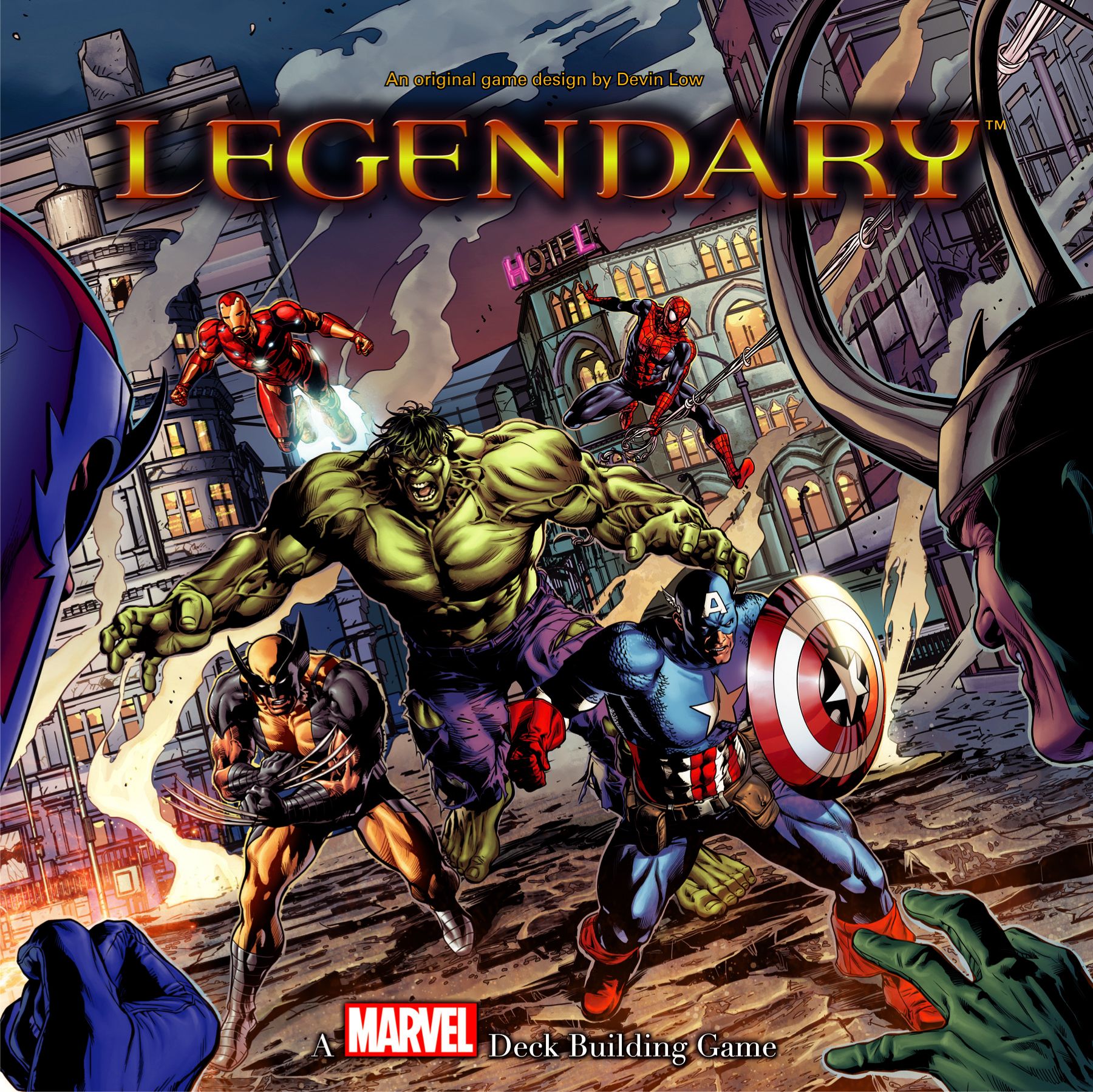 © Upper Deck Entertainment - BGG #282, rating 7.52
BGG ID: 129437 | Players: 1-5 | Time: 30-60 min | Rank: #282 overall
Legendary is what happens when deck building meets a licensed property and a semi-cooperative ruleset. You and up to four friends play Marvel heroes. Each hero has their own distinct deck. You’re all building together against a Mastermind (think Red Skull or Magneto) who’s executing a Scheme.
The cooperative angle is a meaningful change: instead of racing against each other, you’re racing against the game. The Mastermind drops Villains onto a city board; let too many escape and you lose.
At 2.43, it’s the most complex game in this guide - not because it’s harder to learn, but because there are more moving parts to track. The city board, the Bystander deck, Wound cards, the Mastermind’s tactics… setup alone takes 20 minutes your first time.
The reward is a game that feels like a Marvel event comic. You’re genuinely doing heroic things with heroic cards.
Who it’s for: Marvel fans. Groups who like co-ops. Players who’ve played a few other deck builders and are ready for more complexity.
5. Friday - Solo Deck Building in Its Purest Form (Weight: 2.16)
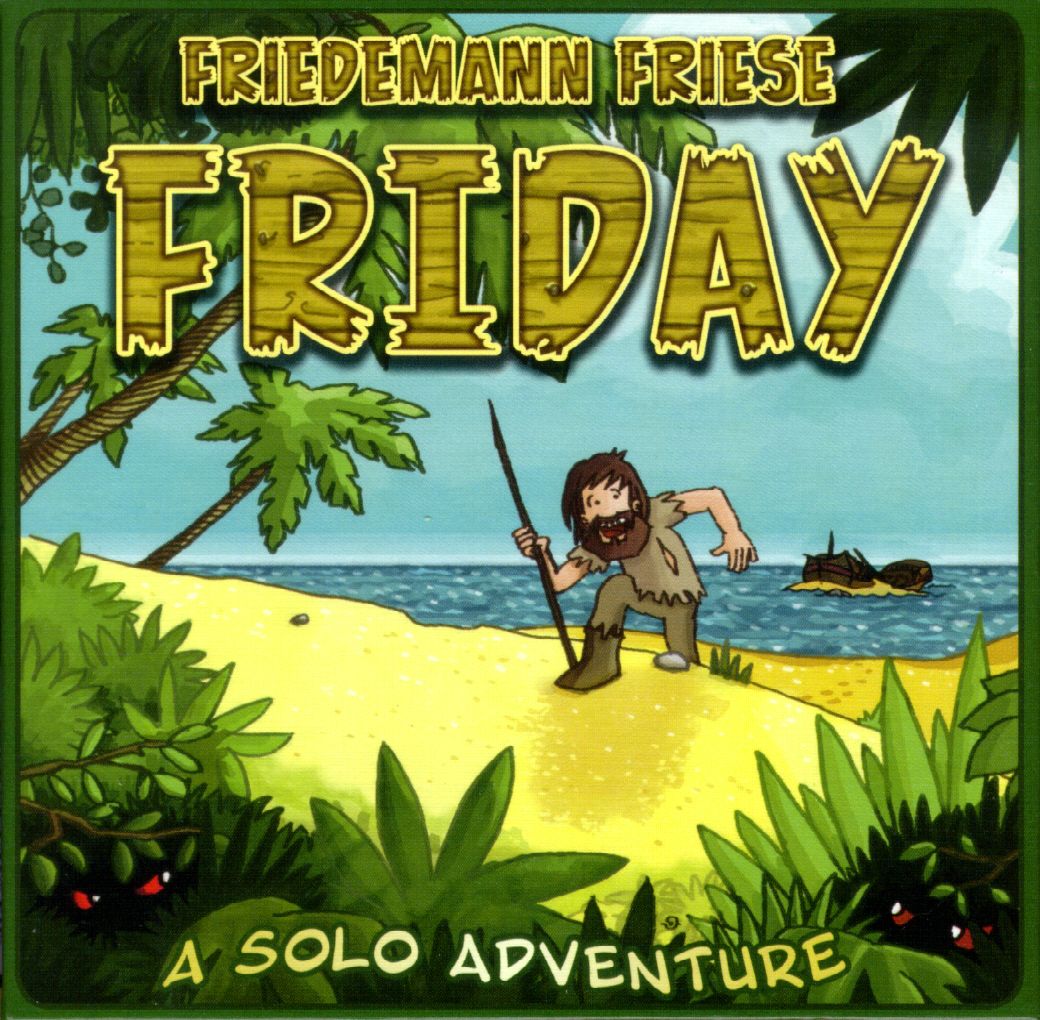 © Rio Grande Games - BGG #591, rating 7.11
BGG ID: 43570 | Players: 1 only | Time: 25 min | Rank: #591 overall
Friday (Freitag in the original German) is Robinson Crusoe in card form. You are Friday, helping a stranded Robinson survive on a deserted island. Robinson keeps encountering hazards. You manage his evolving deck of skills, trying to trim the dead weight (the “Aging” cards that clog his draws) before the pirates arrive.
What makes Friday remarkable is the deck pruning at its centre. Losing a hazard is intentional - it means you can remove a bad card from Robinson’s deck. That’s the core tension: let Robinson fail strategically to thin his deck, then conquer the pirates with a lean, powerful hand.
It plays in 25 minutes. It teaches the concept of “deck cycling” and “dead card removal” better than anything else. And it’s genuinely solo - no solitaire mode tacked on, just a complete one-player game.
Who it’s for: Solo gamers. Players who want to understand deck pruning before trying more complex games. A perfect lunch-break game.
Complexity Order (Verified BGG Weights)
If you want to move through the genre from easiest to hardest, here’s the verified order:
| Game | BGG Weight | Players | Best For |
|---|---|---|---|
| Star Realms | 1.91 | 2 | Fast, aggressive, travel |
| Paperback | 2.00 | 2-5 | Word game lovers |
| Friday | 2.16 | 1 | Solo, short sessions |
| Clank! | 2.23 | 2-4 | Thematic dungeon fun |
| Dominion | 2.34 | 2-4 | Pure mechanic mastery |
| Legendary | 2.43 | 1-5 | Marvel fans, co-op |
Note on Paperback (BGG #749, weight 2.00, rating 7.09): it uses deck building as a scaffold for a word game - you’re building a deck of letter cards to spell words. It’s deliberately lightweight and works brilliantly as a crossover for non-gamers. Worth knowing about even if it’s not in the main writeups above.
Which Should You Play First?
New to deck building? → Star Realms. It teaches every core concept in 20 minutes with almost no setup. If two players want the same experience, grab Dominion base set.
Want theme and board game feel? → Clank! No other game in the genre marries mechanics and narrative this naturally.
Solo gamer? → Friday. It’s the right length, the right complexity, and teaches you something.
Group of 3-5 with Marvel fans? → Legendary. Yes, setup takes a while. No, you won’t regret it.
The Mechanic’s Legacy
Deck building didn’t stay contained to its own genre for long. It seeped into everything: Dominion-style sub-games appear in Arkham Horror, the mechanic underpins Witcher: Old World, and the digital descendants (Slay the Spire, Monster Train, Balatro) have created an entirely new genre of roguelite card games.
The core insight - that earning better tools through play, then watching those tools synergise - turns out to be one of the most compelling feedback loops in gaming. Vaccarino didn’t just design a game in 2008. He wrote a sentence that the industry has been quoting ever since.
All BGG data verified via the BGG XML API. Weights and ratings current as of June 2026.