You’re holding five cards. You need one. But the person to your left - the one building military - also needs one of these cards. Do you take what you need, or burn what they want?
That’s card drafting in a single moment. And it’s why, three decades after the mechanic entered the mainstream, designers keep coming back to it. Card drafting is simple enough to explain in ten seconds (“pick one, pass the rest”) but deep enough to sustain thousands of plays.
Let’s break down why it works, how designers twist it into wildly different experiences, and which games do it best.
What Is Card Drafting?
At its core, card drafting means players simultaneously select cards from a shared pool, keeping their pick and passing the remainder. The most common flavour is open drafting from hand - you receive a hand of cards, pick one, and pass the rest clockwise (or anti-clockwise). Repeat until the cards run out.
The magic lies in what this creates:
- Perfect information decay. You know exactly what you passed, so you can deduce what your neighbours took. But two seats away? That’s fog of war.
- Meaningful interaction without direct conflict. You’re not attacking anyone. You’re just… not giving them what they want. It’s passive-aggressive game design at its finest.
- Compressed decision space. Instead of a deck of 100 cards where you draw randomly, you see 7 and pick 1. Every choice is curated. No “I drew badly” excuses.
- Simultaneous play. Everyone picks at the same time. No downtime. No phone-checking. The whole table is engaged.
The Drafting Spectrum
Not all card drafting is created equal. Games use the mechanic at different intensities, and that intensity fundamentally changes the experience.
Pure Drafting: The Whole Game Is the Draft
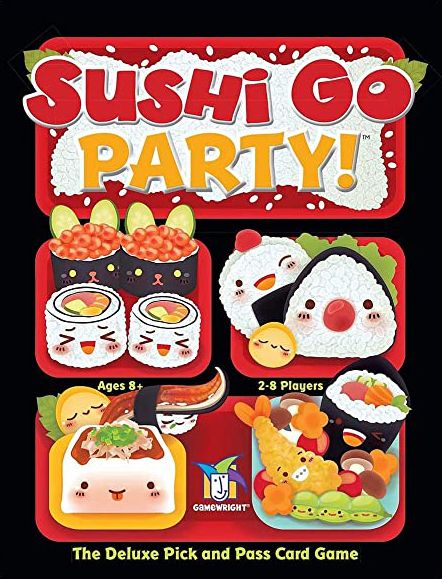
Sushi Go Party! (2016) is the purest expression. The entire game is the draft - pick a card, score it, done. There’s no engine, no tableau management, no resource conversion. Just drafting distilled to its essence.
That purity makes it the single best gateway into the mechanic. At a BGG weight of 1.32, it’s lighter than most party games, plays 2-8, and wraps up in 20 minutes. The modular menu system means you can scale complexity by swapping in different card sets. Start with Nigiri and Maki, graduate to Temaki and Edamame.
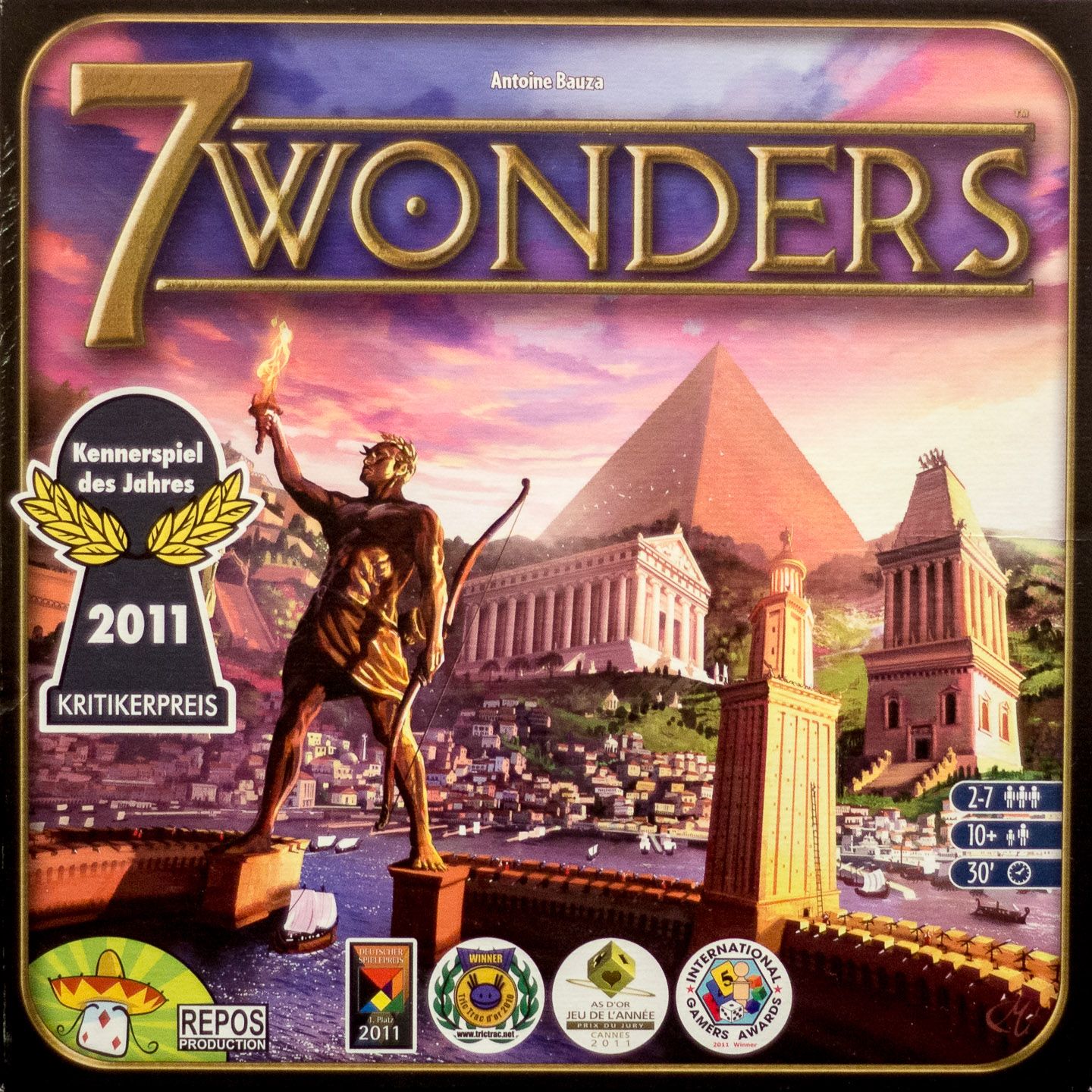
At the opposite end of the purity spectrum sits 7 Wonders (2010) - still fundamentally a drafting game, but layered with civilisation-building, resource chains, and military conflict. Its BGG weight of 2.31 reflects that added depth, and its current rating of 7.66 after sixteen years shows remarkable staying power. This is the game that proved card drafting could carry a “proper” strategy game, not just a filler.
The key innovation in 7 Wonders is that what you draft matters differently depending on your tableau. A Science card is worthless to a military player. A resource card is vital early, pointless late. The draft isn’t just “pick the best card” - it’s “pick the best card for you, right now, given what you’ve already built.”
Drafting as Gateway: The Opening Act
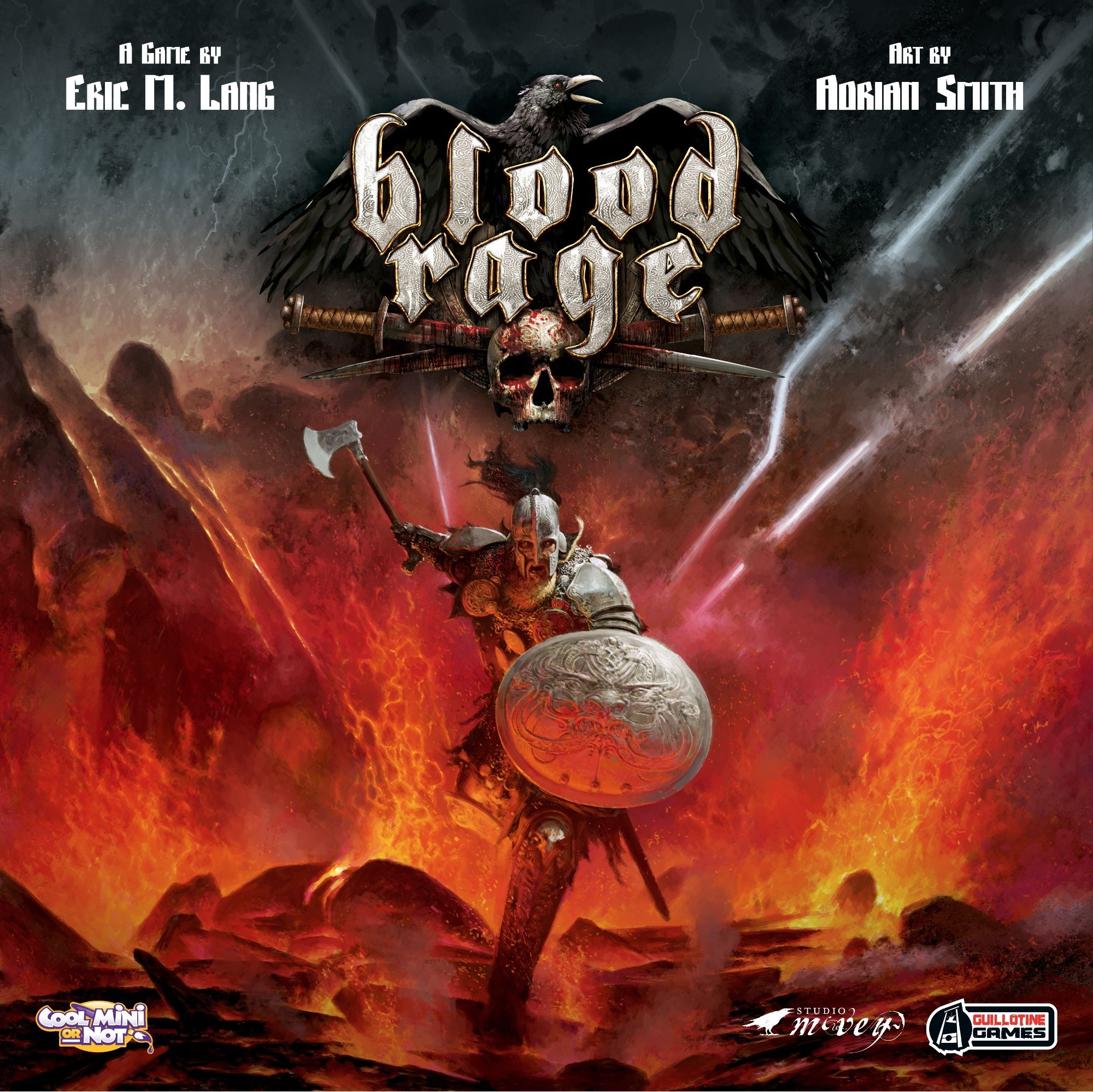
Some games use drafting as a prelude rather than the main event. Blood Rage (2015) drafts cards at the start of each Age, then plays out an area-control miniatures game. The draft is where your strategy forms - grab the Loki cards and play a pillage-denial game, or draft combat upgrades and go full Viking berserker.
Blood Rage (weight 2.88, rating 7.90) demonstrates how drafting creates asymmetry from identical starting positions. Everyone begins equal. By the time the draft is done, every player is running a different engine. That’s elegant.
Inis (2016) takes this further. Its draft is deceptively simple - just four cards - but those four cards define your entire round. With only 17 Action cards in the game, experienced players know the full pool. The draft becomes a negotiation: “If I take Conquest, they can’t stop my expansion… but if I take Geis instead, I can block their win condition.”
At a weight of 2.94 and rating of 7.81, Inis is arguably the most strategically dense drafting game per card count. It proves you don’t need a big hand to make drafting sing - you just need every card to matter enormously.
Drafting as Engine Fuel

It’s a Wonderful World (2019) represents the modern evolution: drafting as resource engine. You draft cards, then decide which to build (feeding resources into them over multiple rounds) and which to recycle for instant resources. The draft feeds a conversion engine, and the engine determines what you should draft next.
At weight 2.33 and rating 7.63, it sits in the same complexity band as 7 Wonders but feels completely different. Where 7 Wonders is about reading your neighbours, It’s a Wonderful World is about reading your own engine. What do I need three turns from now? Which card funds itself?
Seasons (2012) does something similar with its initial mega-draft: you draft 9 cards before the game even starts, splitting them into three groups - one for each year. The draft is where you build your combo. The game is where you execute it. Weight 2.78, rating 7.33.
Why Drafting Works: The Psychology
Card drafting hits several psychological sweet spots simultaneously:
The agony of choice. Behavioural economists call it “loss aversion” - we feel losses more sharply than equivalent gains. Every card you pass is a tiny loss. Every draft round is a micro-torture of giving up good options. That emotional engagement is what keeps players leaning forward.
Readable opponents. Because you see what you pass and (sometimes) what comes back, you can build a mental model of your neighbours. “I passed them a military card… they passed it on… they’re not going military.” This creates a social game within the card game. Drafting rewards attention and empathy - skills that aren’t tested by random draw.
Skill expression without analysis paralysis. The time pressure of simultaneous selection - everyone’s waiting for you - keeps decisions crisp. You can’t spend five minutes optimising. You’ve got to trust your gut, informed by your knowledge. That blend of intuition and information is deeply satisfying.
Catch-up through hate-drafting. Falling behind? You can still deny the leader their key cards. This self-balancing property is baked into the mechanic. No catch-up mechanism bolted on - it’s structural.
The Variants: How Designers Twist the Formula
The “pick and pass” core has spawned dozens of variants:
| Variant | How It Works | Example Games |
|---|---|---|
| Open draft | Cards visible to all, picked from a shared pool | Azul (weight 1.77, rating 7.72) |
| Closed draft | Cards hidden in hand, picked secretly | 7 Wonders, Sushi Go |
| Rochester draft | Cards laid face-up, picked in turn order | Many TCG formats |
| Winston draft | Cards in face-down piles, look and take or pass | 2-player Magic variants |
| Tableau draft | Drafted cards placed face-up, building visible engine | Bunny Kingdom (weight 2.30, rating 7.41) |
Azul deserves special mention. It’s technically tile drafting from factory displays - a spatial, open variant where everyone sees every option. The hate-drafting in Azul is vicious. Taking tiles you don’t need to dump negatives on your opponent is a viable strategy. It’s the mechanic at its most combative, wrapped in gorgeous Moorish aesthetics.
Building a Card Drafting Collection
If you’re sold on the mechanic, here’s how to build a collection that covers the full spectrum:
The Gateway (Weight < 1.5)
Sushi Go Party! - Weight 1.32 | 2-8 players | 20 min The definitive teaching game. Plays in 20 minutes, scales to 8, and the modular menu means it grows with your group.
The Classic (Weight 2.0-2.5)
7 Wonders - Weight 2.31 | 2-7 players | 30 min The game that put card drafting on the map. Still plays remarkably well after sixteen years, especially at 4-5 players.
The Engine Builder (Weight 2.0-2.5)
It’s a Wonderful World - Weight 2.33 | 1-5 players | 45 min Modern and crunchy. If 7 Wonders is about reading your opponents, this is about reading your own engine.
The Thinker (Weight 2.5-3.0)
Blood Rage - Weight 2.88 | 2-4 players | 60-90 min Drafting meets area control meets Viking rage. The draft is the strategy layer; the board is the execution layer.
The Knife Fight (Weight 2.5-3.0)
Inis - Weight 2.94 | 2-4 players | 60-90 min Just four drafted cards per round, but each one is a political weapon. Cerebral, tense, beautiful.
The Abstract (Weight 1.5-2.0)
Azul - Weight 1.77 | 2-4 players | 30-45 min Not cards, but tiles - yet the drafting psychology is identical. The most visually stunning entry in the genre.
The Bottom Line
Card drafting endures because it solves game design’s oldest problem: how do you give players meaningful choices without drowning them in options? The answer is elegant - show them a curated hand, make them pick, and pass the rest to someone who wants different things.
It’s a mechanic that rewards experience without punishing newcomers. That creates social interaction without mandating conflict. That eliminates downtime without sacrificing depth.
If you’ve never tried a card drafting game, start with Sushi Go Party and a group of friends. If you’re already a convert, try Inis - a game that proves four cards can contain an entire political drama.
Either way, you’ll never look at “pick one, pass the rest” the same way again.
All game data sourced from BoardGameGeek. Ratings and rankings current as of May 2026.