There’s a moment in almost every auction game where someone bids just a little more than you expected, and you have to decide in under five seconds whether to match them or let it go. That moment - suspended, charged, slightly humiliating - is what makes auction mechanics uniquely powerful in board games.
No other mechanism puts social reading and maths in the same room quite like a well-designed auction. You’re not just calculating value; you’re calculating what other people think the value is, what they can afford, and whether they’re bluffing. It’s negotiation with numbers.
But “auction game” covers a huge range of designs. Ra plays nothing like Power Grid. For Sale is barely recognisable as the same species as Keyflower. This piece breaks down the major auction archetypes - how they work mechanically, where the tension lives, and the best examples of each.
The Classic Lot Auction: Ra
Ra (1999, Reiner Knizia) | 2-5 players | 45-60 min | Weight: 2.30/5 | BGG Rank: #113

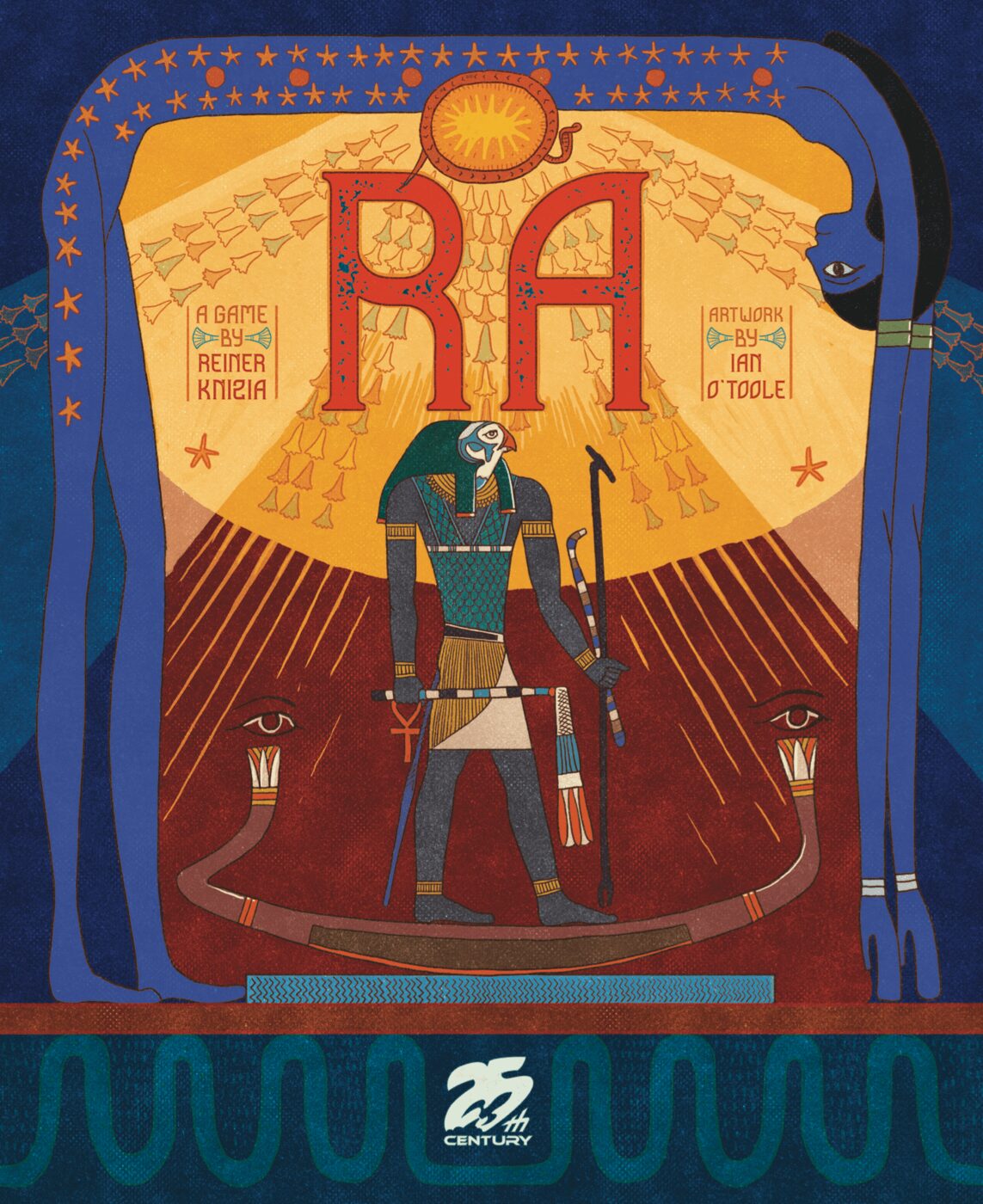
Ra’s sun token system elegantly solves the ‘pass’ problem in auctions. Image © Ravensburger / BGG
Ra is the cleanest auction game ever designed. That’s not hyperbole - it’s just a clean argument that holds up across 25+ years of competition.
The setup is simple: tiles get drawn and placed on a track. When someone invokes Ra (or a Ra tile is drawn), whoever has the highest-value sun token wins the lot - and swaps their sun for the one in the middle. The elegance is in what happens when you don’t want to bid: you can pass, but then you lose priority and your sun’s value becomes dead weight until next round.
What makes it tick: The lot composition. You never bid on one thing; you bid on a chaotic cluster of tiles accumulated over several draws. A set might include a monument, two civilisations, a flood tile, and a catastrophe. The auction creates the value - there’s no fixed price list. This means psychological reads matter enormously: is your opponent bidding for the Nile tiles or the monuments?
The mechanism’s genius: Your sun token is both your bid and your currency for future rounds. A high-value sun wins auctions easily but disappears into the centre pool when you use it. You might choose to pass on a great lot specifically to keep your high-value sun for a later, better one. That tension - bid now or stay liquid - is what puts Ra in a category of its own.
Five Auctions in One Box: Modern Art
Modern Art (1992, Reiner Knizia) | 3-5 players | 45 min | Weight: 2.28/5 | BGG Rank: #222
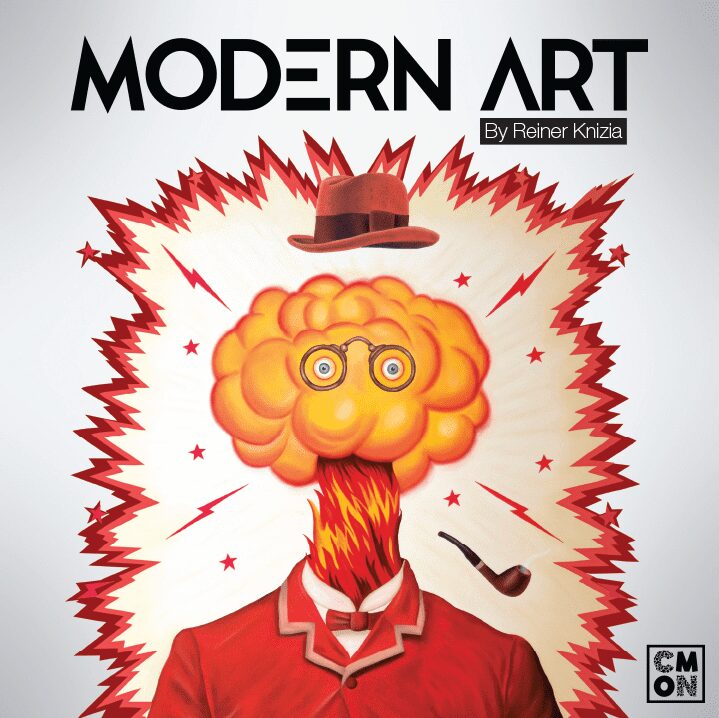
Modern Art teaches five distinct auction types in a single rulebook. Image © CMON / BGG
Knizia again - this time with a lesson in taxonomy. Modern Art is a teaching tool disguised as a game. The premise: players are art dealers auctioning paintings by five fictional artists, with end-round valuations based on how many paintings of each artist sold.
The twist is that each card specifies its own auction type:
- Open (English) auction - classic ascending bids, last bidder wins
- Once-around auction - one bid per player, clockwise, highest wins
- Fixed price auction - seller names a price; first taker wins, or seller must buy it themselves
- Sealed bid - everyone bids simultaneously, highest revealed wins
- Double auction - two players co-auction and split the proceeds
That last one is particularly nasty. The auctioneer sets a price; if anyone pays it, the auctioneer and buyer split the cash. If nobody bids, the auctioneer has to buy it themselves.
What makes it tick: Every auction type has a different psychological texture. Sealed bids reward calculation; open auctions reward reading faces. Fixed price creates pure social pressure on the seller. Playing through all five types in a single session is genuinely instructive - and shows how much the mechanism shapes the experience even when the underlying content (paintings) is identical.
The mechanism’s genius: Value is entirely relative and market-driven. A painting is worth something only if enough of that artist’s work sells in the round. You’re not just bidding on current value - you’re placing a bet on which artists you’ll be able to push into high value through your own future auctions. It’s a stock market with ego.
The Elimination Trap: High Society
High Society (1995, Reiner Knizia) | 3-5 players | 15-30 min | Weight: 1.48/5 | BGG Rank: #535

High Society’s killer rule: the richest loser is eliminated. Image © Osprey Games / BGG
Knizia’s third appearance in this article - at this point it becomes clear that the man simply gets auction mechanics better than anyone who has ever lived.
High Society is absurdly simple: cards representing luxury items (and a few negative event cards) are flipped one at a time. Players bid using numbered cards from their hand to acquire them. Highest bidder wins the item, and their bid cards are gone - you can’t get them back. At the end, whoever has the most prestige points wins, unless they’ve spent the most money, in which case they’re eliminated immediately and can’t win.
What makes it tick: The money you spend is gone forever, and spending the most is an automatic loss condition. This inverts the usual “spend to win” logic. Every bid is simultaneously an investment and a potential self-elimination. You want nice things, but you need to be careful you’re not the greediest player at the table.
The mechanism’s genius: High Society creates the purest form of spend-tracking tension in all of board gaming. You always know exactly what everyone else has spent (cards are public), so you can calculate relative positions in real time. The result is an extraordinary amount of drama for a 15-minute game. It’s the auction game to recommend to people who say they don’t like auction games.
Two-Phase Auctions: For Sale
For Sale (1997, Stefan Dorra) | 3-6 players | 30 min | Weight: 1.25/5 | BGG Rank: #359
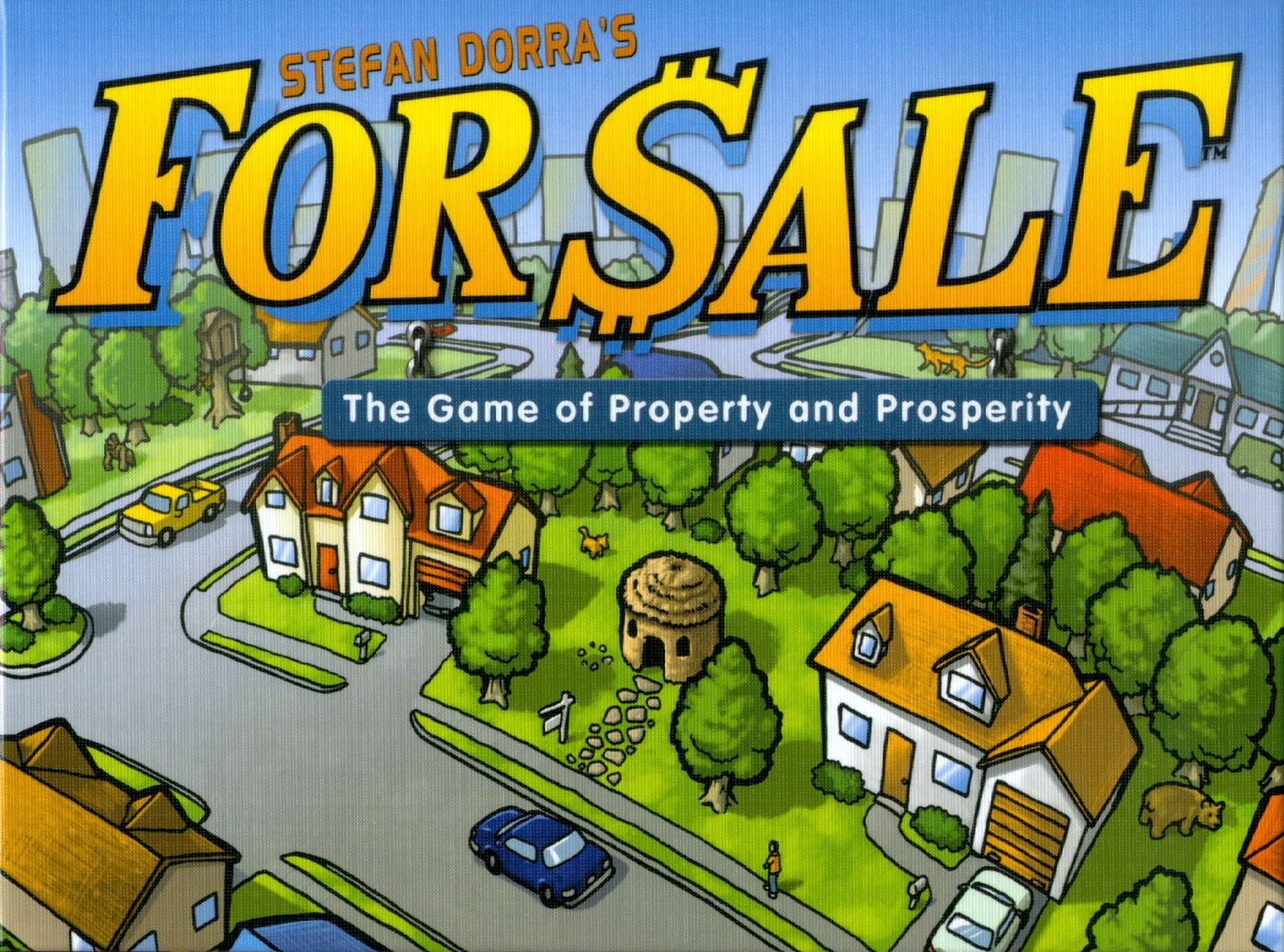
For Sale splits the auction into buy and sell phases - a simple idea with surprisingly sharp play. Image © Gryphon Games / BGG
For Sale has the lowest weight of any game in this article (1.25), and it earns its place here because it demonstrates something no other auction game does as clearly: the two-phase structure.
Phase 1 (buying): Property cards are flipped face-up - one per player, plus one extra. Players bid in turn-order using coins. On your turn, either raise or fold. If you fold, you take the cheapest remaining property and half your last bid back (rounded down). The last player standing wins the most expensive property for their full bid.
Phase 2 (selling): Currency cards are dealt, and players simultaneously play one property card face-down to claim them. Reveal simultaneously; highest property takes the highest currency, and so on down.
What makes it tick: The buying phase creates asymmetric pressure - folding early costs you less but gets you a worse property. The selling phase turns those rough assets into real money, which means the player who “lost” the buying auction (and got a cheap property) might still win the game by timing their sale well.
The mechanism’s genius: The two-phase split means auctions in Phase 1 are always forward-looking - you’re not buying the property, you’re buying a selling option. This adds a layer of strategic depth that’s completely invisible in the rules. It’s why For Sale has stayed in print for almost 30 years.
Auctions in Service of a Bigger Engine: Power Grid
Power Grid (2004, Friedemann Friese) | 2-6 players | 120 min | Weight: 3.25/5 | BGG Rank: #77
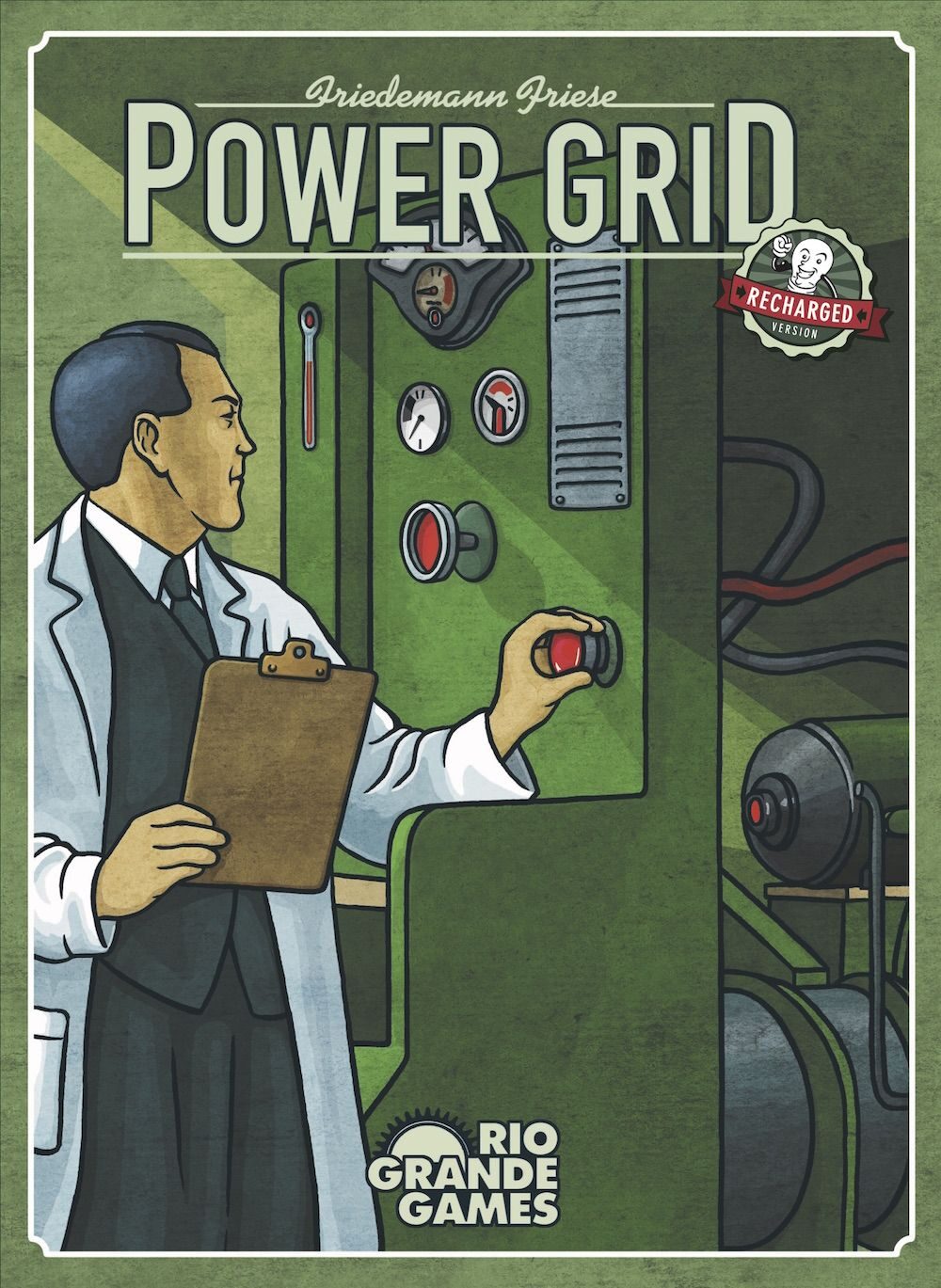
Power Grid’s plant auction feeds into a multi-system economy. Image © 2F-Spiele / BGG
Power Grid is a logistics and economics game that happens to contain an auction. This matters: the auction here isn’t the experience - it’s a tool for resource acquisition within a larger network-building game.
Each turn, a market of power plant cards is available. Players bid in reverse turn-order (the leader bids last, which is the game’s elegant catch-up mechanism). Each player may buy one plant per turn. The auction is once-around ascending, and prices can get punishing late in the game as players compete for the same plant types.
What makes it tick: Plant value is entirely context-dependent. A coal plant that’s worthless mid-game (because coal is expensive) becomes valuable later when you’ve locked up the coal supply. Bidding isn’t just about what a plant does now - it’s about what it does in your specific engine, against their network expansion.
The mechanism’s genius: The reverse turn-order bidding is quietly brilliant. The worst-positioned player (last in expansion) bids first and gets first access to plants. The leader bids last with the worst remaining options. This built-in balancing means Power Grid almost never has a runaway leader - until the final round when it suddenly does, because that’s when the advantage of a well-built engine crystallises.
For heavier gamers, Power Grid’s auction is the most interesting here precisely because it doesn’t feel like an auction game. It feels like infrastructure planning, and you occasionally have to fight someone for a plant.
Workers as Currency: Keyflower
Keyflower (2012, Sebastian Bleasdale & Richard Breese) | 2-6 players | 90-120 min | Weight: 3.33/5 | BGG Rank: #136
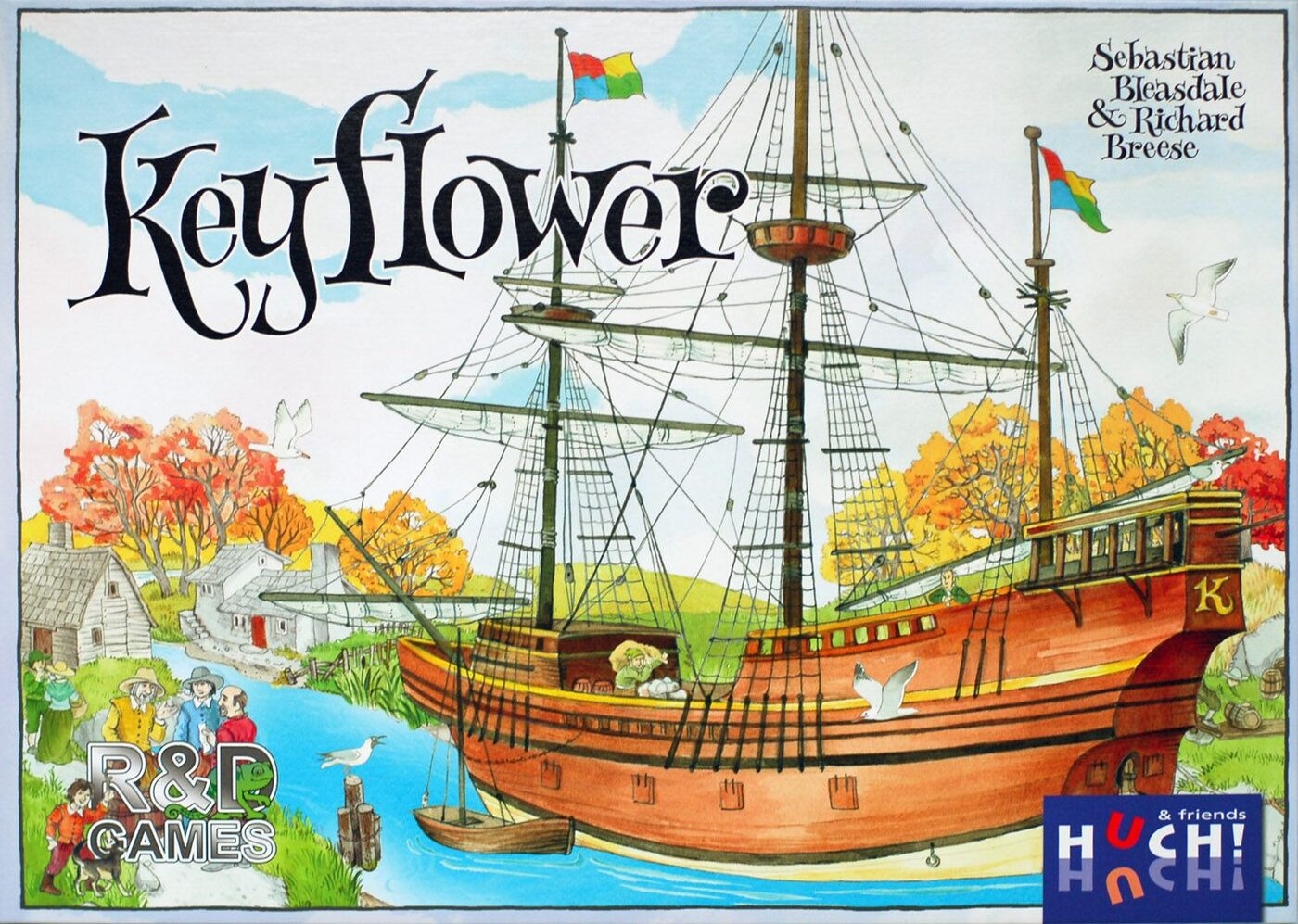
Keyflower’s workers are simultaneously your bidding resource and your production workforce. Image © R&D Games / BGG
Keyflower is the oddity on this list - a game where the “auction” mechanic is so deeply embedded in everything else that calling it an auction game feels reductive. But it belongs here because it does something genuinely clever with the auction concept: your bids are also your workers.
Each tile drawn into the village can be won (via bidding) or used (as a worker placement action). To bid on a tile, you place workers on it - workers that are then locked there for the rest of the round. You can also use already-auctioned tiles for their production bonus, by placing workers on them rather than bidding. The key rule: all workers on any given tile must match in colour.
This creates a constant tension: bid aggressively and you lose the workers you needed for production; conserve workers for production and you lose tiles to opponents. Worse, opponents can block your tile access by placing a single matching worker - forcing you to overbid to reclaim priority or abandon the tile entirely.
What makes it tick: The winter season tiles (distributed secretly at game start) define what’s worth fighting for - but nobody else knows your goal. Bluffing and misdirection are central. Someone bidding aggressively on a smithy might be building a long-term plan or might be trying to drain your workers before the key winter tile you both need appears.
The mechanism’s genius: Keyflower eliminates the “safe follower” problem in many auction games, where a player can consistently pass and free-ride on others’ information. Here, passing costs you worker efficiency - you needed to send those workers somewhere, and not sending them means lost production. Every auction is also an opportunity cost.
Quick Comparison
| Game | Auction Type | Weight | Time | BGG Rank | Best For |
|---|---|---|---|---|---|
| High Society | Ascending + elimination | 1.48 | 15-30 min | #535 | Gateway players |
| For Sale | Two-phase sealed/ascending | 1.25 | 30 min | #359 | Family and filler |
| Modern Art | 5 types in one game | 2.28 | 45 min | #222 | Teaching the mechanic |
| Ra | Lot auction with token swap | 2.30 | 45-60 min | #113 | Core gamers |
| Power Grid | Once-around in a larger engine | 3.25 | 120 min | #77 | Heavy gamers |
| Keyflower | Workers-as-bids | 3.33 | 90-120 min | #136 | Heavy gamers |
What All These Games Share
The auction mechanic works because it creates imperfect information pricing. In a fixed-economy game, the designer tells you what something is worth. In an auction, the players collectively decide - and that decision is shaped by psychology, table dynamics, and who needs what desperately right now.
The best auction games understand that the tension isn’t really about the thing being auctioned. It’s about reading the room, managing your exposure, and knowing when to let go.
That moment where someone bids a little more than you expected? That’s not a bug. That’s the whole design.
What’s your favourite auction game not on this list? Leave a comment or find us on BoardGameGeek.