There’s a moment in every area control game where you look at the board, count your pieces, count your opponent’s pieces, and realise you’re one move away from either a masterful territorial sweep or a catastrophic overextension. That tension - the knife-edge between dominance and collapse - is why area control has been a cornerstone of board game design for decades.
But “area control” is deceptively simple as a label. It covers everything from the elegant medieval politics of El Grande to the asymmetric woodland warfare of Root, from the mythological brawling of Kemet to the Darwinian survival of Dominant Species. What unites them isn’t just “put your stuff on the map” - it’s a deeper design philosophy about shared spaces, visible competition, and the impossibility of defending everything at once.
Let’s dig in.
What Actually Is Area Control?
At its core, area control (sometimes called area majority) is simple: the player with the most presence in a region scores it. That’s it. The mechanic is easy to grasp because it mirrors something deeply human - territorial instinct.
But simplicity of concept doesn’t mean simplicity of play. The magic happens in the questions that flow from this one rule:
- How do I get presence? Direct placement? Movement? Combat? Card play?
- When does scoring happen? Every turn? End of round? Only when triggered?
- What’s the cost of spreading thin? Can I defend what I hold, or must I choose?
- How visible is information? Can I count everyone’s strength, or is there hidden deployment?
Each area control game answers these questions differently, and those answers define the entire experience.
The Godfather: El Grande (1995)

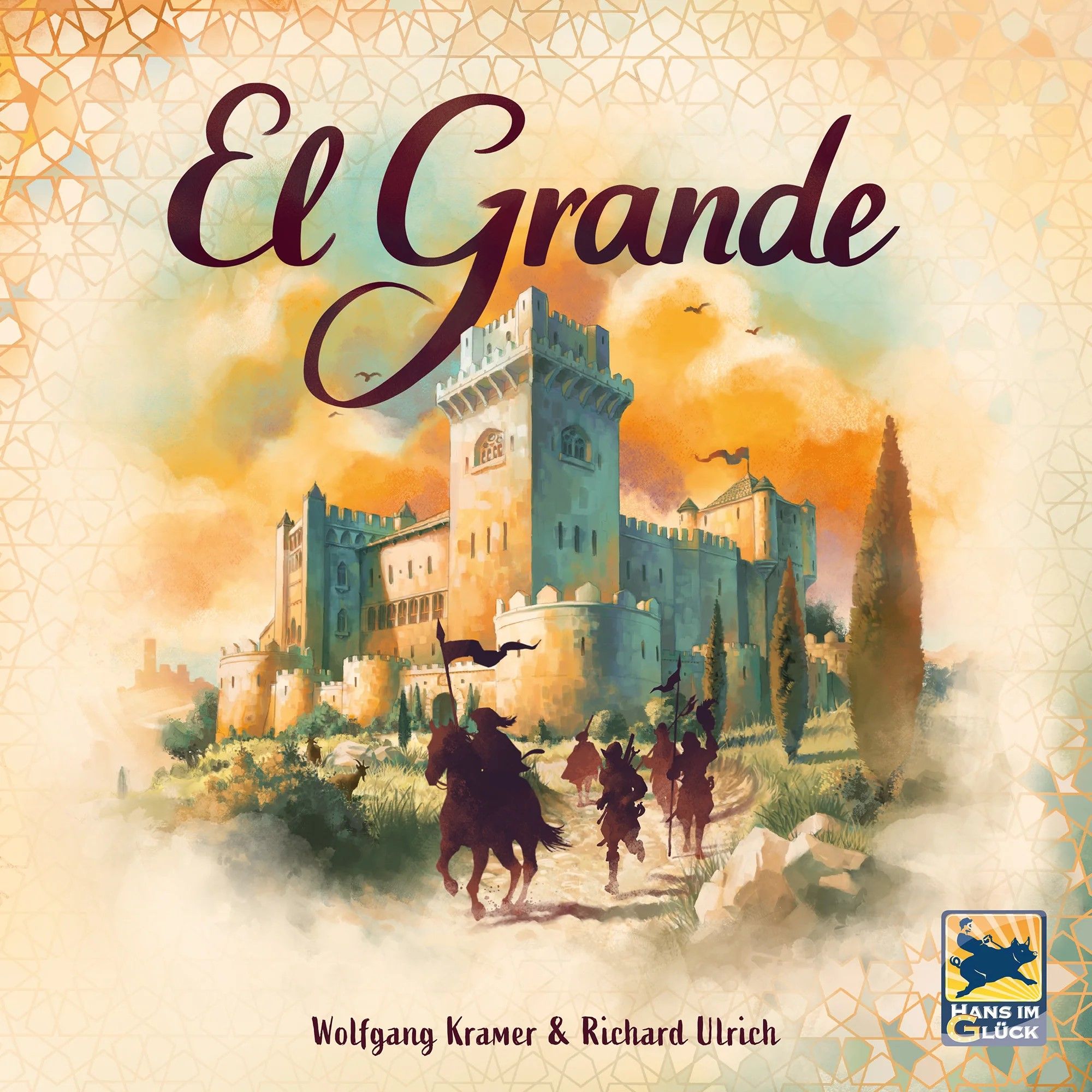
El Grande (1995) - BGG Rank #101, Weight 2.93/5, 2-5 players, 60-120 min. Published by Hans im Glück.
You cannot discuss area control without starting here. El Grande didn’t invent the mechanic, but it refined it into something close to perfection and won the Spiel des Jahres in 1996.
The genius of El Grande is the power card system. Each round, you secretly choose a power card numbered 1-13. Higher numbers give you first pick of action cards - but lower numbers let you deploy more caballeros from your province onto the board. It’s a beautifully clean tension: do you want priority, or do you want troops?
Then there’s the Castillo - a physical tower in the centre of the board where you can secretly drop caballeros, only revealing them during scoring rounds when they spill out into a region of your choice. It’s hidden information embedded in a game of open calculation, and it makes every scoring round genuinely nerve-wracking.
Why it matters for the mechanic: El Grande proves that area control doesn’t need combat dice, miniatures, or complex action systems. A clean deployment/scoring loop, combined with meaningful timing decisions, is enough to create a masterpiece. At weight 2.93, it’s the most accessible game on this list without sacrificing depth.
The Brain-Burner: Tigris & Euphrates (1997)
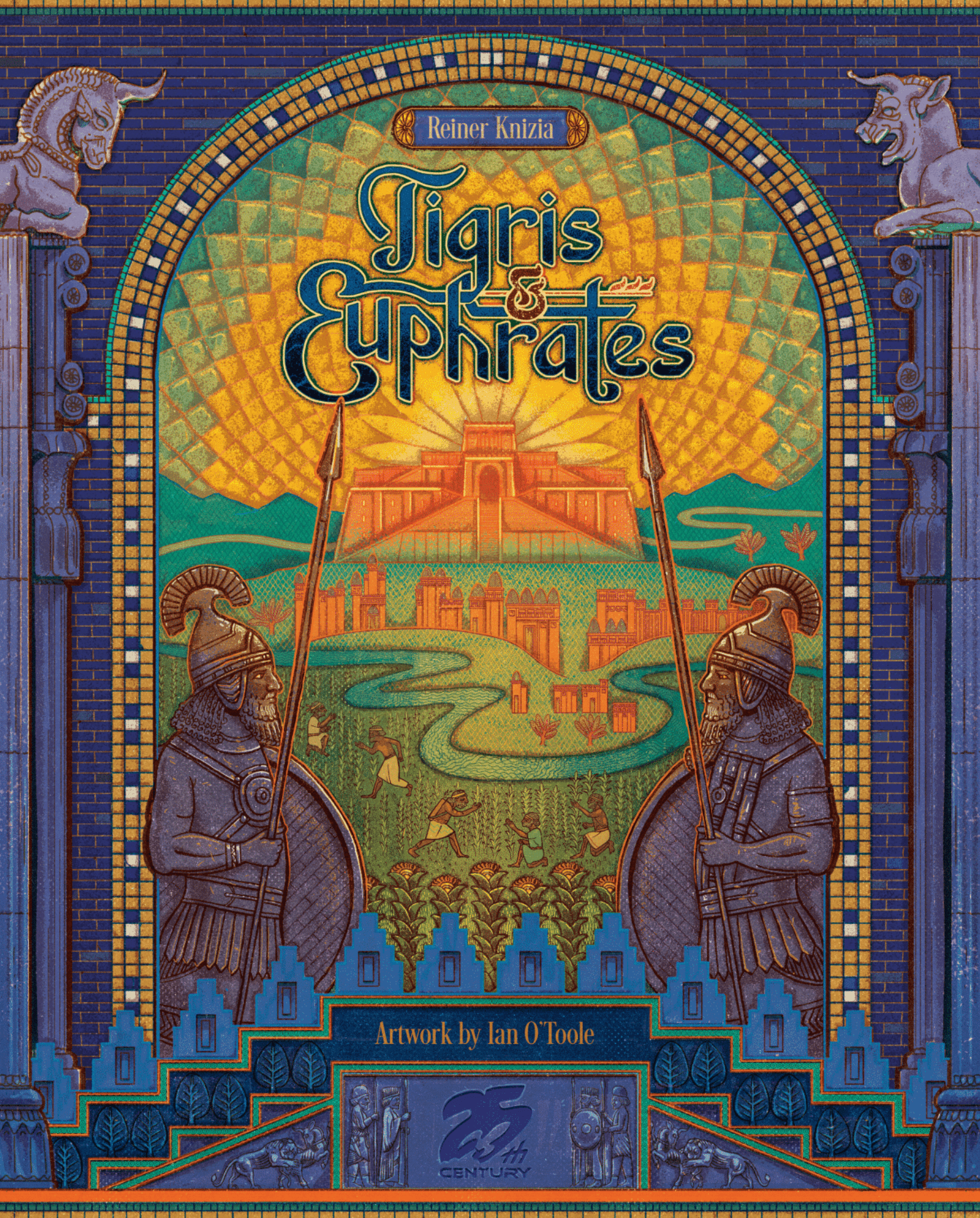
Tigris & Euphrates (1997) - BGG Rank #131, Weight 3.48/5, 2-4 players, 60-120 min. Published by Hans im Glück.
If El Grande is area control at its most elegant, Tigris & Euphrates is area control at its most devious. Reiner Knizia’s Mesopotamian civilisation game doesn’t just ask “who has the most pieces?” - it asks “whose kingdom is this, anyway?”
The twist: you score in four colours (farming, trading, religion, government), and your final score is your lowest colour. This single rule transforms the entire game. You can’t just dominate one area - you need balance across all four spheres. And when two kingdoms collide, the resulting internal and external conflicts are some of the most dramatic moments in all of board gaming.
T&E is area control filtered through tile-laying and civilisation-building. Your leaders attach to kingdoms, not specific tiles, so the map is constantly shifting. A single tile placement can merge two kingdoms, trigger a war, and completely reshape the scoring landscape.
Why it matters for the mechanic: Knizia showed that area control doesn’t have to be about soldiers on a map. By abstracting “control” into coloured tiles and leader influence, T&E expanded what the mechanic could do - and proved that the most interesting form of area control might be the one where you’re not entirely sure what you’re controlling.
The Brawler: Kemet (2012)
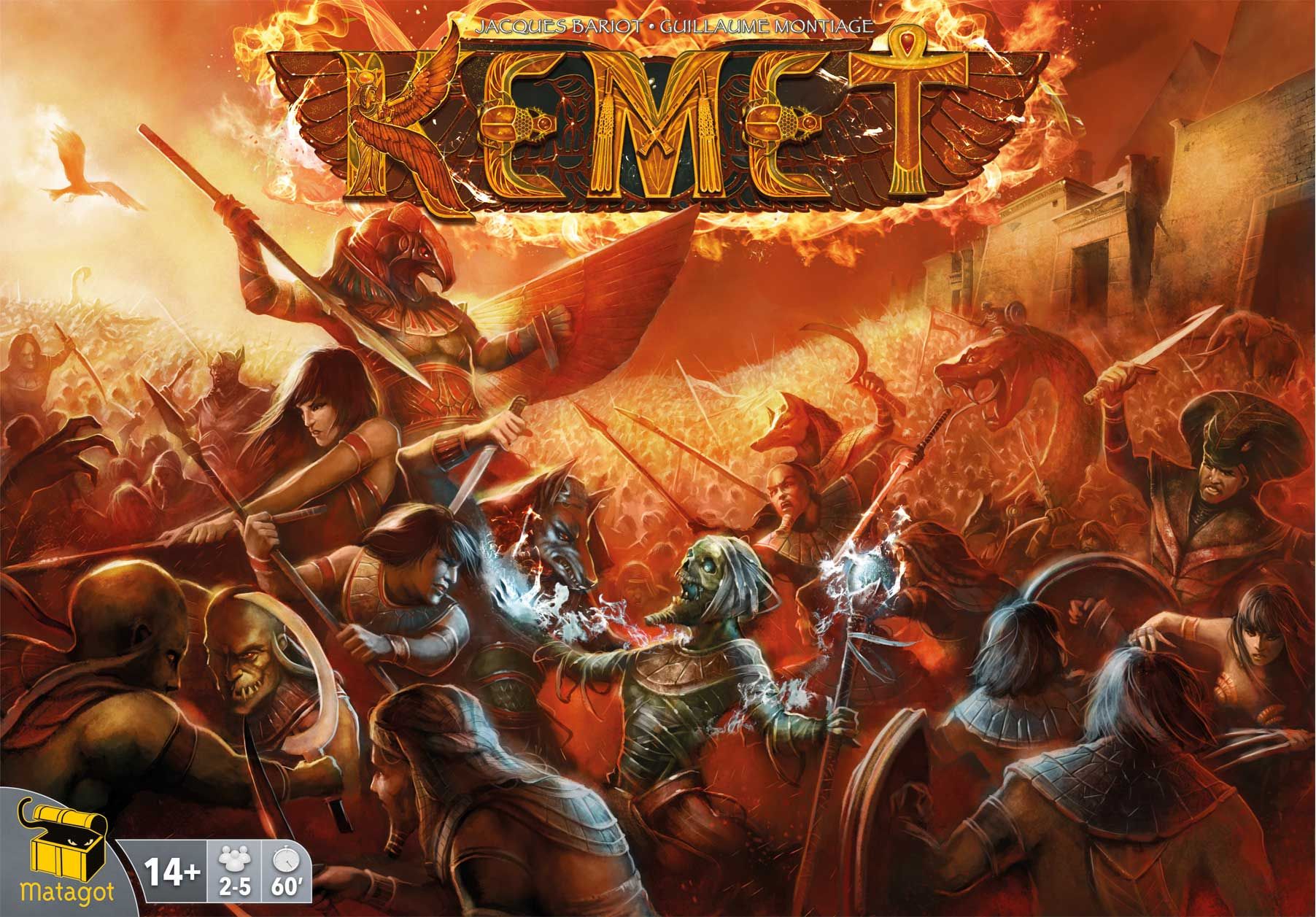
Kemet (2012) - BGG Rank #199, Weight 3.00/5, 2-5 players, 90-120 min. Published by Matagot.
Kemet looks at the “should I attack?” question that plagues most area control games and answers it definitively: yes, always. The game actively rewards aggression through its victory point system - you gain permanent points for winning attacks, but not for turtling.
The tech tree is the star here. Spending prayer points to buy power tiles gives you mythological creatures, combat bonuses, economic engines, and special abilities. Each tile is unique, so there’s a race to grab the best ones - which feeds back into the area control loop, since many tiles require you to control specific temple types.
Teleportation between pyramids means there’s no “safe” backline. Any position can be threatened at any time. This creates a game where area control is less about slow territorial expansion and more about explosive, decisive strikes.
Why it matters for the mechanic: Kemet solved the “turtling problem” that drags down many area control games. By making defense less rewarding than attack, it proved that area control can be fast, aggressive, and decisive rather than slow and defensive.
The Storyteller: Inis (2016)
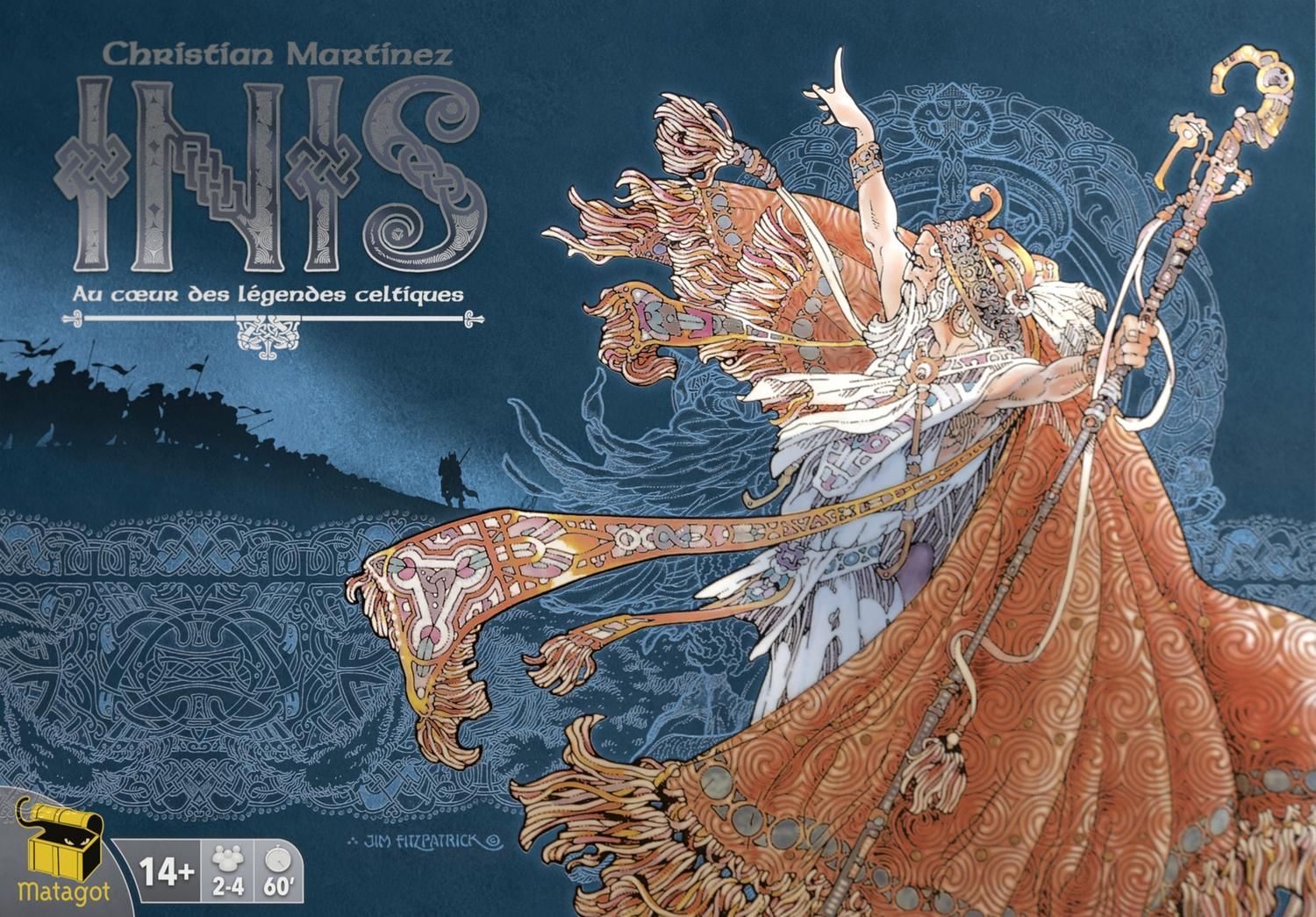
Inis (2016) - BGG Rank #125, Weight 2.94/5, 2-4 players, 60-90 min. Published by Matagot.
Inis is what happens when area control meets card drafting and Celtic mythology. It’s the most negotiation-heavy game on this list - battles are rarely about raw numbers, because combat is resolved through a card-based standoff where both sides choose to attack, defend, or withdraw each round. This means conflicts are conversations, not calculations.
The victory conditions are what make Inis special. You can win by being present in six different territories (exploration), by being present in territories containing six sanctuaries (religion), or by being chieftain over six opposing clans (domination). Multiple paths to victory mean the map reads differently depending on each player’s strategy.
And the Brenn (first player) token matters enormously - its holder breaks ties in their favour, making the jockeying for first player position a game within the game.
Why it matters for the mechanic: Inis showed that area control can be deeply diplomatic without losing its strategic teeth. The multiple win conditions mean you’re not just fighting over the same resource - each player might be trying to control the map in fundamentally different ways.
The Ecosystem: Dominant Species (2010)
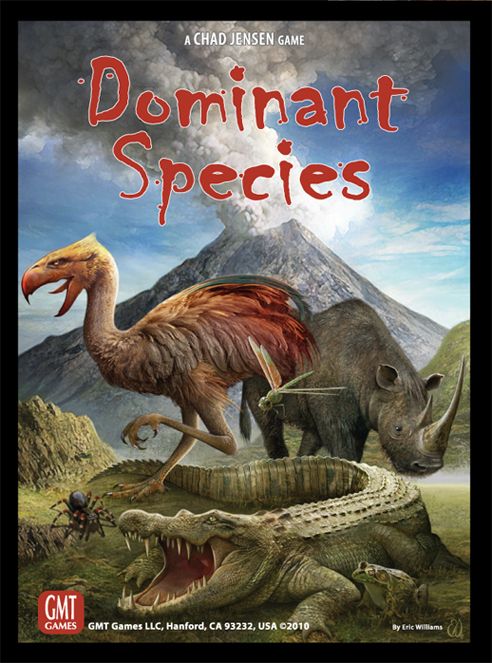
Dominant Species (2010) - BGG Rank #113, Weight 4.04/5, 2-6 players, 120-240 min. Published by GMT Games.
Dominant Species takes area control to its logical extreme: you’re not just fighting over territory, you’re reshaping the very environment to favour your species. As a class of animal (mammals, reptiles, birds, insects, amphibians, or arachnids), you place elements on the board that determine which species can thrive in each hex.
The worker placement system (yes, it’s also a worker placement game) controls which actions you can take - from migration and speciation to glaciation and the devastating Domination action, which scores individual hexes. The interaction between the worker placement layer and the area control map creates a game of extraordinary depth.
At weight 4.04 and playtimes regularly hitting 3-4 hours, this is the heaviest game here. It’s also arguably the most thematic - watching an ice age sweep across the board, wiping out species from their former strongholds, is board gaming at its most dramatic.
Why it matters for the mechanic: Dominant Species proved that area control can be layered with other heavy mechanisms (worker placement, environmental manipulation) to create something genuinely unique. It’s the game that answers “what if the map fought back?”
The Phenomenon: Root (2018)
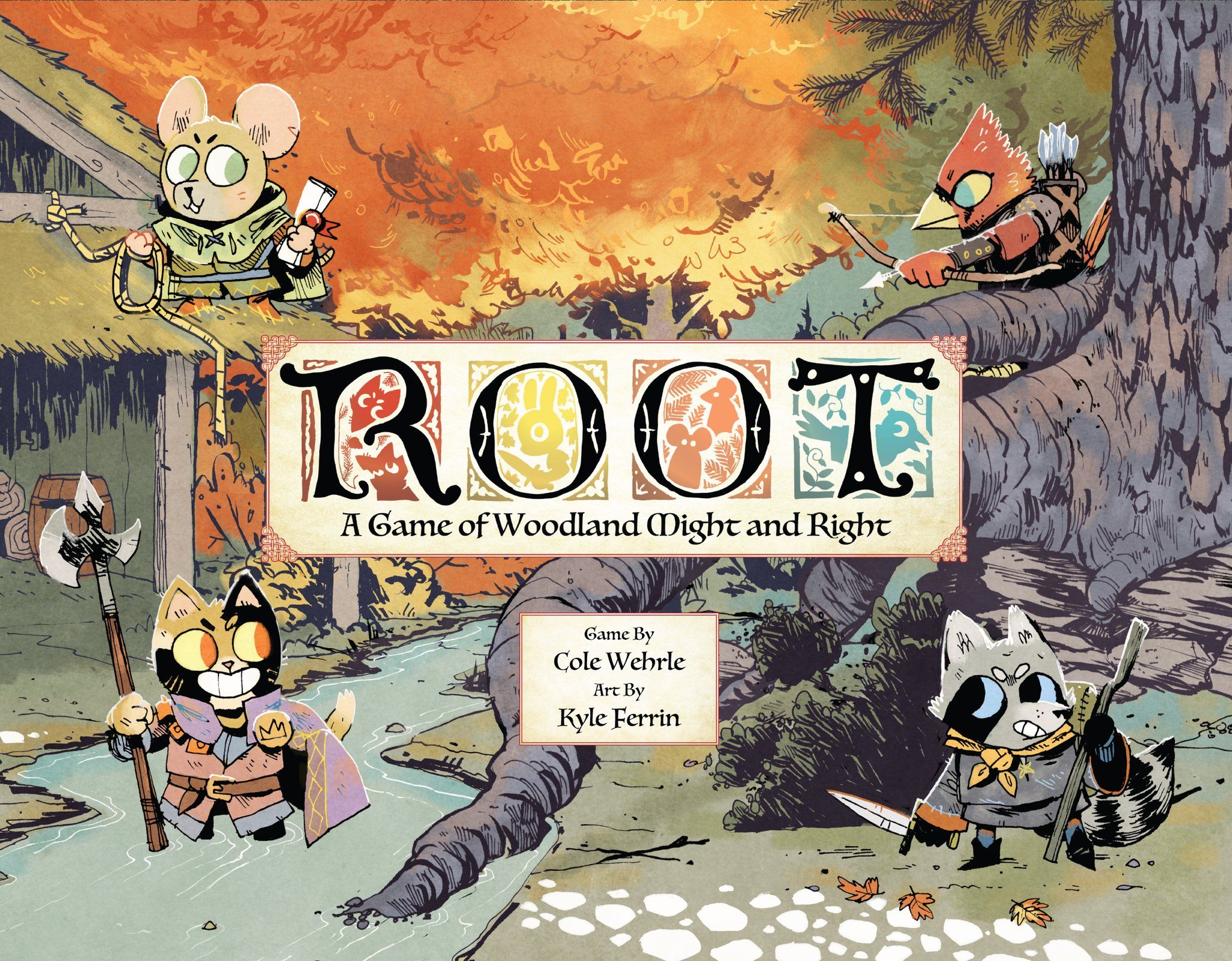
Root (2018) - BGG Rank #34, Weight 3.84/5, 2-4 players, 60-90 min. Published by Leder Games.
Root is the game that proved area control could go mainstream without dumbing down. Cole Wehrle’s woodland war game is deeply asymmetric - each faction plays by fundamentally different rules, scores differently, and interacts with the map in unique ways.
The Marquise de Cat spreads sawmills and workshops across clearings. The Eyrie builds a programmed decree that grows more powerful but increasingly fragile. The Woodland Alliance foments sympathy and revolution. The Vagabond explores, trades, and plays factions against each other. Every game is a negotiation about who the real threat is and when to act.
Area control in Root isn’t just about having warriors in clearings - it’s about rule. You rule a clearing if you have the most pieces there (warriors + buildings + tokens), and ruling matters because it determines who can craft cards, build, and recruit. The map is small enough that every clearing matters, and the asymmetric victory conditions ensure no two games feel the same.
Why it matters for the mechanic: Root showed that area control can support radically different player experiences within the same game. It’s not just “we all do the same thing in different colours” - each faction’s relationship with the map is genuinely unique.
Honourable Mentions
The area control family is enormous. A few games that deserve a nod:
- Rising Sun (Weight 3.30, Rank #153) - CMON’s feudal Japan epic pairs area control with alliance negotiation and a brilliant combat system where you bid on war advantages secretly. Gorgeous but polarising.
- Small World (Weight 2.35, Rank #404) - The gateway drug. Fantasy races with unique powers rise, expand, and deliberately go into decline to make room for your next civilisation. Philippe Keyaerts’ masterclass in accessible design.
- Cyclades (Weight 2.82, Rank #270) - Greek mythology meets auction-driven area control. You bid for the favour of gods, each granting different powers. The surprise monster attacks and Metropolis victories keep everyone on edge.
The Spectrum of Control
What’s fascinating about area control as a mechanic is its range. Plotting these games by weight reveals how the mechanic scales:
| Game | BGG Weight | Aggression Level | Key Pairing |
|---|---|---|---|
| Small World | 2.35 | Medium | Race powers + decline |
| Cyclades | 2.82 | Medium-High | Auction + mythology |
| El Grande | 2.93 | Low-Medium | Power selection + hidden deployment |
| Inis | 2.94 | Medium | Card drafting + negotiation |
| Kemet | 3.00 | Very High | Tech tree + teleportation |
| Rising Sun | 3.30 | High | Alliance + blind bidding |
| Tigris & Euphrates | 3.48 | High | Tile-laying + civilisation |
| Root | 3.84 | High | Asymmetric factions |
| Dominant Species | 4.04 | Medium-High | Worker placement + environment |
The lightest entry (Small World at 2.35) is a game you can teach in ten minutes. The heaviest (Dominant Species at 4.04) is a four-hour brain-melter. Yet both are unmistakably area control games. That’s the mark of a great mechanic - it scales without breaking.
Why Area Control Endures
Area control has survived and thrived through decades of board game evolution for one simple reason: it creates stories. When you look at a map full of competing forces, you’re not just seeing game state - you’re seeing a narrative. The kingdom that overextended. The defensive player who waited too long. The surprise attack that changed everything.
Unlike engine-building (which can become solitary optimisation) or worker placement (which can feel like parallel puzzles), area control forces interaction. You are, by definition, competing for the same spaces. There is no ignoring your opponents. There is no building your own little engine in your corner and hoping for the best.
That’s what makes it timeless. Humans are territorial creatures. We understand “this is mine, that is yours, and we both want what’s in the middle.” Area control takes that instinct and elevates it into art.
What’s your favourite area control game? The one that keeps dragging you back to the map? Let us know - we’re always looking for the next territorial obsession.