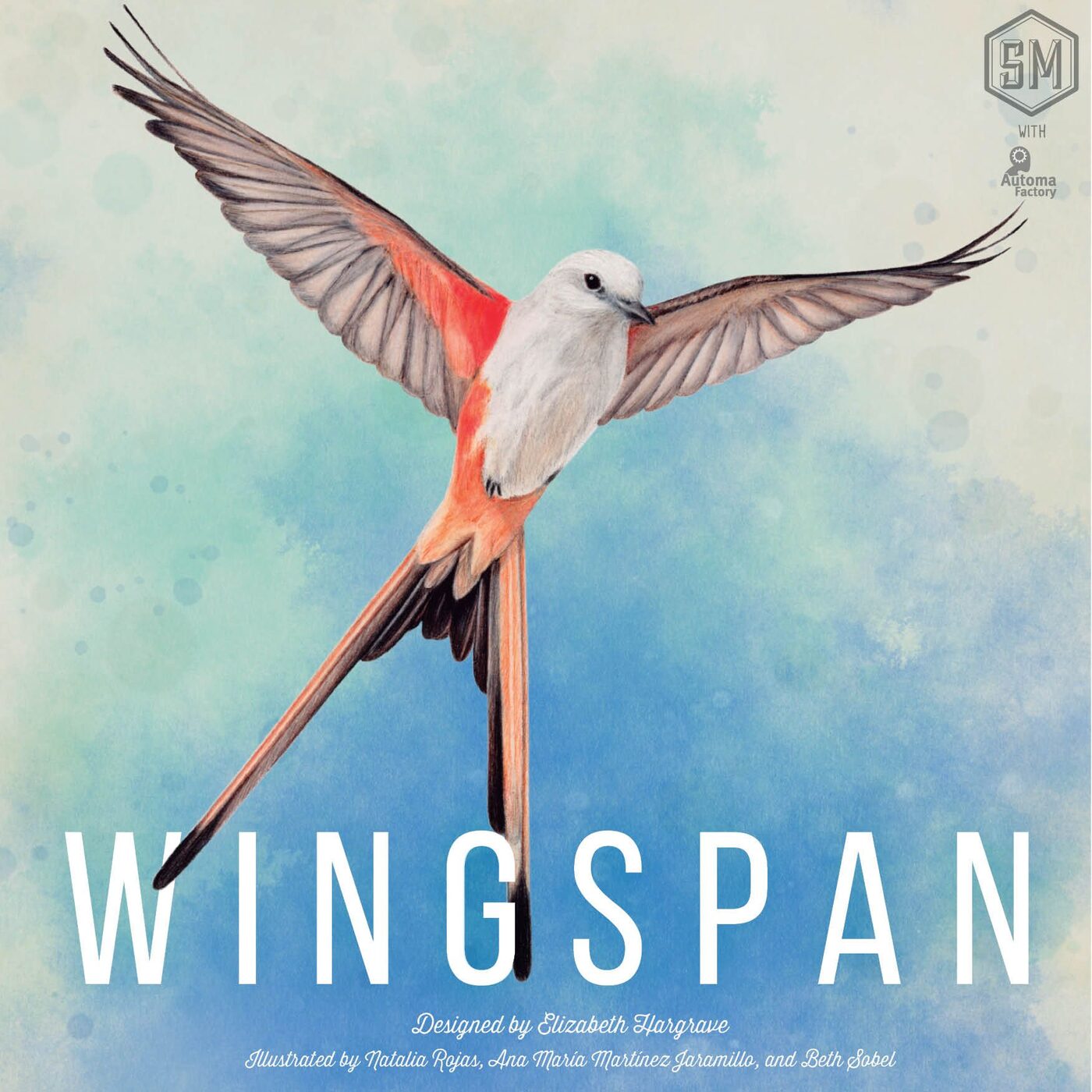
BGG Rank: #38 | Rating: 7.99 | Weight: 2.48/5 | Players: 1-5 | Time: 40-70 min | Age: 10+
Wingspan has a peculiar reputation. It sits at #38 on BGG with nearly 115,000 ratings. It won the Kennerspiel des Jahres in 2019. It’s probably the most-gifted hobby board game of the last decade. And it also generates a specific brand of irritated pushback from experienced gamers who find it shallow, lucky, and overhyped.
So who’s right? Is Wingspan worth its ~£55-65 price tag, or is it beautiful furniture that stops being fun after a few plays?
The answer depends entirely on what you’re buying it for. This article lays out exactly what Wingspan is, who it genuinely suits, and where it falls short - so you can make that call with clear eyes.
What You’re Actually Getting in the Box
Let’s start with the components, because they matter here more than in most games.
Wingspan is a Stonemaier Games production, and Stonemaier goes further than most publishers on tactile quality. The base box includes:
- 170 unique bird cards - each with full-colour artwork and a real fun fact about the species
- A custom bird feeder dice tower - an actual hollow wooden cylinder that holds dice; it’s a prop, but a delightful one
- Silicone egg tokens in pastel colours - they feel good to handle and look genuinely lovely on the tableau
- Food tokens in five types (seed, invertebrate, fruit, fish, rodent) made from chunky brown plastic - functional but not the highlight
- Player mats and a cardboard tray for the bird cards
The production quality is real. The bird card art (by Natalia Rojas, Ana Maria Martinez Jaramillo, and Beth Sobel) is consistently excellent - painterly, detailed, unsentimental. First-time players usually spend a few seconds reading each card they draw, not just evaluating its power, because the illustrations earn that attention.
If components and shelf presence factor into your buying decisions, Wingspan earns its price tag on that basis alone.
How Wingspan Actually Plays
Each round, you take one action per turn from four options on your player mat:
- Play a bird from your hand into one of three habitat rows (forest, grassland, wetlands), paying food and egg costs
- Gain food from the central bird feeder (a dice roll sets what’s available)
- Lay eggs on birds already in your tableau
- Draw bird cards from a central display or the deck
The crucial mechanic: when you activate a habitat, every bird in that row triggers its power from right to left. Early game, you might activate forest and trigger one bird. By round three or four, the same action might cascade through five or six birds, each generating food, eggs, cards, or bonus interactions. That’s the engine clicking into gear.
End-game scoring counts birds, eggs, food tucked under cards, cards cached under birds, and any round-end bonus goals that all players compete for simultaneously.
A full game runs 40-70 minutes depending on player count. At two or three players, it hums along. At five, the downtime between turns noticeably drags.
Where It Genuinely Shines
The engine-building payoff is real
The satisfaction of watching a habitat chain fire across six birds - each triggering the next - is something Wingspan delivers consistently well. It’s not the deepest engine you’ll ever build, but the feedback loop from turn to turn is clean and rewarding.
It’s an outstanding gateway game
Wingspan sits at weight 2.48 - medium-light by hobby standards. The turn structure is simple (one action per turn), the iconography is clear, and new players get something meaningful to do from round one without being paralysed by choice. For bringing partners, parents, or curious newcomers into the hobby, Wingspan is close to ideal.
One BGG user rated it 8/10 and wrote: “It’s short enough and streamlined enough to be enjoyable. Gets to the heart of something like Terraforming Mars in about a third of the time.” That’s the pitch in a sentence.
The solo mode is genuinely good
The Automa (bot opponent) is well-designed. It adjusts difficulty across five levels and plays fast - you can solo a game in 30-40 minutes with practice. If you regularly play alone, Wingspan delivers here in a way many games don’t.
170 cards means serious replayability
No two games start with the same bird pool available. The variety across 170 unique birds - each with distinct powers - keeps the puzzle fresh across many plays. The Oceania, European, Asia, and Americas expansions each add 100+ more birds if you want to extend the life significantly.
Where It Falls Short
Player interaction is close to zero
This is the most repeated criticism, and it’s accurate. Your tableau is your own. Other players affect you only marginally - competing for the same bird feeder food, or racing for bonus cards. You could remove the other players from the table and your decisions would barely change.
If you love games with negotiation, blocking, or direct conflict, Wingspan will feel like competitive patience. BGG reviewer after BGG reviewer reaches for the same phrase: “multiplayer solitaire.”
That’s a fair description. It’s not a bug for everyone - many players prefer low-conflict games - but it’s worth knowing upfront.
Luck can swing outcomes noticeably
Your starting hand of five birds is random. The bird feeder dice determine what food is available. The card display refreshes randomly. A player who draws a pair of synergistic birds in round one has a real advantage that good play can’t always overcome.
For casual play, this is fine - variance keeps things interesting. For competitive players who want to be rewarded primarily for decision quality, the luck ceiling is frustrating.
Advanced players outgrow it
Weight 2.48 is the other side of that accessibility. Once you’re comfortable with heavy euros - Brass, Great Western Trail, Ark Nova - Wingspan’s decision space starts to feel thin. Most turns, there’s a fairly obvious best move. The game rarely puts you in genuinely difficult positions.
One well-articulated BGG review nails it: “Your strategy is largely prescribed by whichever birds you happened to draw. The game rewards you for following a narrow path rather than adapting to what opponents are doing.”
Wingspan vs the Competition
If you’re weighing Wingspan against similar games:
| Game | Weight | Players | Time | What It Does Differently |
|---|---|---|---|---|
| Wingspan | 2.48 | 1-5 | 40-70 min | The accessible benchmark |
| Cascadia | 1.84 | 1-4 | 30-45 min | Lighter, faster, more interaction |
| Ark Nova | 3.80 | 1-4 | 90-150 min | Heavier, more complex, better for serious gamers |
| Everdell | 2.83 | 1-4 | 40-80 min | More worker placement structure, more interaction |
Cascadia is the stronger practical pick for groups that find Wingspan too long or too luck-dependent. It plays faster, costs less, and delivers a similar “pleasant nature puzzle” experience with slightly more variability in how you score.
Ark Nova is the upgrade path for players who love Wingspan’s biology theme but want deeper decisions and more mechanical weight.
The Price Calculation
Wingspan retails at around £55-65 in the UK, ~$65-70 in the US. That’s in the upper range for a gateway game.
Here’s how to think about it:
- If you’ll play it 10+ times across a mix of 2, 3, and 4 player games, the per-play cost drops below £5. For a game of this production quality, that’s excellent value.
- If you’re buying it for one partner who’s never played hobby games, and it succeeds in bringing them in, the value is enormous - Wingspan has a track record as a genuine bridge into the hobby.
- If you want it for experienced gamers who already own 20+ games, the odds of it getting frequent plays are lower. Something like Brass: Birmingham or Everdell might see more use.
The expansions are worth noting: Oceania (the most beloved) adds new mechanics and refreshes the bird pool significantly. But the base game alone provides 20-30+ sessions of content before needing reinforcement.
The Verdict
Yes - for the right buyer.
Wingspan is worth it if:
- You want a gateway game with premium production quality that genuinely impresses newcomers
- Your group enjoys low-conflict, puzzle-style games with beautiful components
- You’ll play solo or with 2-3 players regularly
- You want the most accessible entry point into nature-themed engine building
Wingspan is not worth it if:
- You primarily play with experienced gamers who want deeper, more interactive experiences
- You’re bothered by luck-driven outcomes and limited agency
- You already own Cascadia and are looking for something that plays differently (rather than just bigger)
The backlash Wingspan receives from hobby veterans is real, but it’s also somewhat misdirected - the game was never designed for that audience. Within its actual target - families, couples, and new hobbyists who want something beautiful and approachable - it remains one of the best-designed games of the last decade.
Elizabeth Hargrave built something that sold the hobby to people who would never have picked up a euro game otherwise. That achievement holds up, even if the game’s strategic ceiling doesn’t impress power gamers.
At its best, Wingspan is 45 minutes of building something that feels like yours, surrounded by beautiful bird art, with a satisfying engine clicking away by the end. For a lot of people, that’s exactly worth it.
Wingspan is published by Stonemaier Games. BGG data: Rank #38, Rating 7.99, Weight 2.48 - verified July 2026 via BGG XML API.