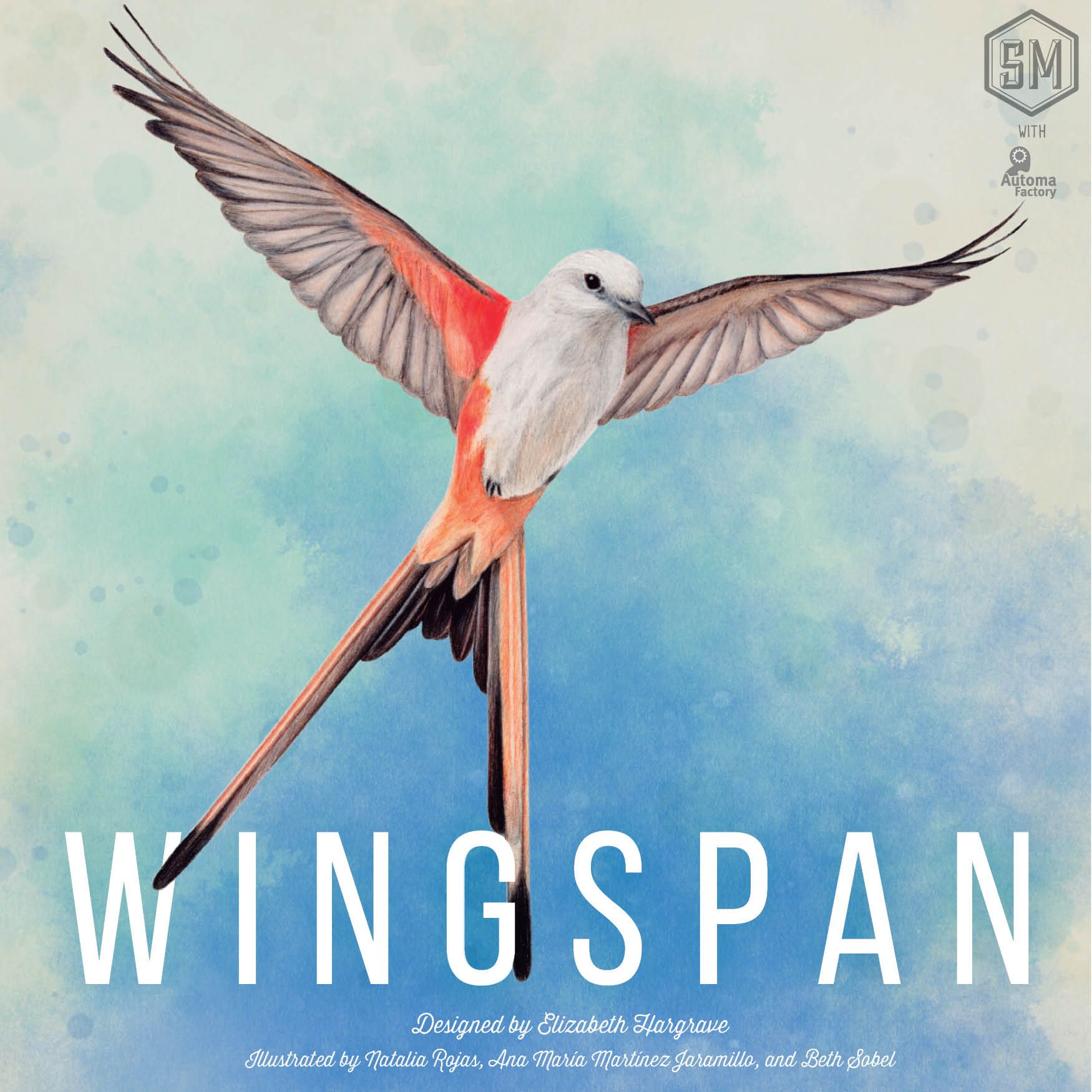
Few board games in the last decade have landed the way Wingspan did. Elizabeth Hargrave’s birdwatching engine-builder has accumulated over 115,000 ratings on BoardGameGeek, sits at #38 all-time, and regularly tops “gateway game” recommendation lists. It’s the kind of game that gets non-gamers into the hobby and, sometimes, disappoints the hardcore crowd expecting more bite.
So: is it worth your money? That depends entirely on what you want from a game - and it’s worth being clear-eyed about both sides.
Quick stats: Wingspan | 1-5 players | 40-70 min | Weight 2.48/5 | BGG Rating 7.99 | BGG #38
What Kind of Game Is Wingspan?
Wingspan is a card-driven engine-builder. You draft birds into three habitats - forest, grassland, and wetland - and over four rounds, those birds generate cascading effects that score points in different ways. Think of it as building a tableau where each row becomes more powerful as you play into it.
The mechanical loop is tight: play a bird, activate a habitat, gain resources (food, eggs, cards), repeat with increasing efficiency. There’s a racing element via end-of-round goal tiles, and most of your scoring comes from the birds themselves - each card carries its own point value and bonus conditions.
What it isn’t: a confrontational game. You share a central bird feeder tray (a custom wooden dice tower) and a face-up card row, so you’re blocking each other in a soft sense. But there’s no area control, no attacking, no direct disruption. You’re mostly running your own puzzle in parallel with everyone else.
Why Wingspan Earned BGG #38
The Components Are Genuinely Spectacular
Open the box and the production immediately justifies a chunk of the price. The bird cards are illustrated by Natalia Rojas and Ana Maria Martinez in a style that’s warm, detailed, and consistent - 170+ in the base game, each with real ornithological data (wingspan, habitat, diet). The dice tower is a wooden bird feeder. Eggs come as resin pieces in multiple colours. The round trackers are bird-shaped. The whole package signals that Stonemaier Games cared about every tactile detail.
For non-gamers joining you at the table, this stuff matters. The theme does real work in onboarding people who’d normally run from “engine-builder.”
The Engine Clicks in a Satisfying Way
Around turn 8-10 of a game, your tableau starts firing. You play a bird, trigger three or four chain effects, end up with a handful of cards and eggs you didn’t expect - and it feels good in the way that well-designed cascade systems always do. The weight sits at 2.48/5 on BGG, placing it firmly in the light-to-medium tier. It’s lighter than Everdell (2.83) and noticeably lighter than Viticulture Essential Edition (2.90), but meaningfully more interesting than something like Cascadia (1.84).
That weight sweet spot is exactly why it works as a bridge game.
It Plays Well at Almost Every Count
At two players it’s a focused duel; at three and four it’s the most comfortable zone. Five players works but slows down, which we’ll get to. The solo mode using the Automa (an automated opponent system) is genuinely good - on BGG’s solo poll, Wingspan receives a strong “Recommended” rating for solo play, and the Automa scales pressure appropriately across its difficulty levels.
The Downsides You Need to Know
Player Interaction Is Almost Nonexistent
This is the one that divides people. Veteran gamers used to Brass: Birmingham, Dune: Imperium, or Root sometimes bounce off Wingspan because it feels like four people playing separate solitaire puzzles who happen to share a table. The competition for food dice and card row spots is real but rarely decisive. If you buy Wingspan expecting a back-and-forth battle for position, you’ll be disappointed.
This isn’t a flaw for the game’s target audience - new and casual players generally prefer this style. But it’s worth naming upfront.
The Teaching Curve Is Steeper Than It Looks
Despite the 2.48 weight, Wingspan can be awkward to teach. The activation cascades make sense once you’re playing, but explaining them to someone who’s never seen a tableau builder takes time. The rulebook is well-written, but the setup - multiple resource types, custom dice, three habitat tracks, round goal tiles - has more moving parts than the light rating suggests. Budget 20-30 minutes for a first teach.
Five Players Tests Everyone’s Patience
At full count, Wingspan stretches to 70-80 minutes and downtime between turns becomes noticeable. The game works at five, but it’s clearly not the optimal experience. The game shines at three or four players.
What About the Expansions?
Two expansions are worth knowing about:
Wingspan: European Expansion (BGG Rating: 8.32) adds 81 European bird cards, new end-of-round goals, and - most importantly - a new action type. The brown powers on European birds trigger when other players take actions, injecting a small amount of the interactive energy the base game lacks. It’s a modest but noticeable improvement to the base game’s puzzle-only feel.
Wingspan: Oceania Expansion (BGG Rating: 8.45) is widely considered the best expansion. It adds a fifth food type (nectar), revamps the food supply system to reduce luck, and includes 95 new birds. The nectar mechanic adds meaningful strategic texture and makes the food economy more dynamic. If you fall in love with the base game, Oceania is a near-certain upgrade.
Neither expansion is required for a good experience - the base game stands on its own for 10-15 plays. But once you’ve internalised the core system, Oceania in particular deepens the game substantially.
Is It Worth Buying?
Buy Wingspan if…
- You want a gateway game that non-gamers will actually sit down and play with you
- You enjoy solo games - the Automa is one of the better solo implementations in the hobby
- Component quality matters to you and you appreciate thematic production design
- You like engine-builders but prefer light-to-medium weight
- You want a game that’s approachable for partners, family members, or friends who aren’t already in the hobby
Skip Wingspan if…
- You need high player interaction and direct competition
- You’re already deep into heavier euros and want more strategic crunch (try Viticulture or Everdell)
- Five players is your standard count and downtime frustrates you
- You’ve played other Stonemaier engine-builders and found them too passive
The Verdict
Wingspan is genuinely, demonstrably excellent at what it does. The BGG numbers back it up - #38 all-time with a 7.99 average across over 115,000 ratings is not fluked. It delivers a polished, beautiful, satisfying experience for the light-to-medium weight crowd.
The real “skip it” case isn’t that it’s overrated. It’s that it’s sometimes misdirected - sold to competitive gamers who want a fight when what they’re actually getting is a well-crafted individual puzzle. If you know going in what kind of game this is, you’re unlikely to regret buying it.
At this point in board gaming’s mainstream crossover moment, Wingspan sits alongside Ticket to Ride and Pandemic as a permanent fixture of the “games that actually matter to the hobby’s growth” canon. Whether you love it or find it too calm, it belongs in the conversation.
Bottom line: yes, it’s worth it - especially if you’re buying it to share with people who wouldn’t otherwise be sitting at a board game table.
Wingspan is published by Stonemaier Games. Data sourced from BoardGameGeek (115,000+ ratings, September 2026).