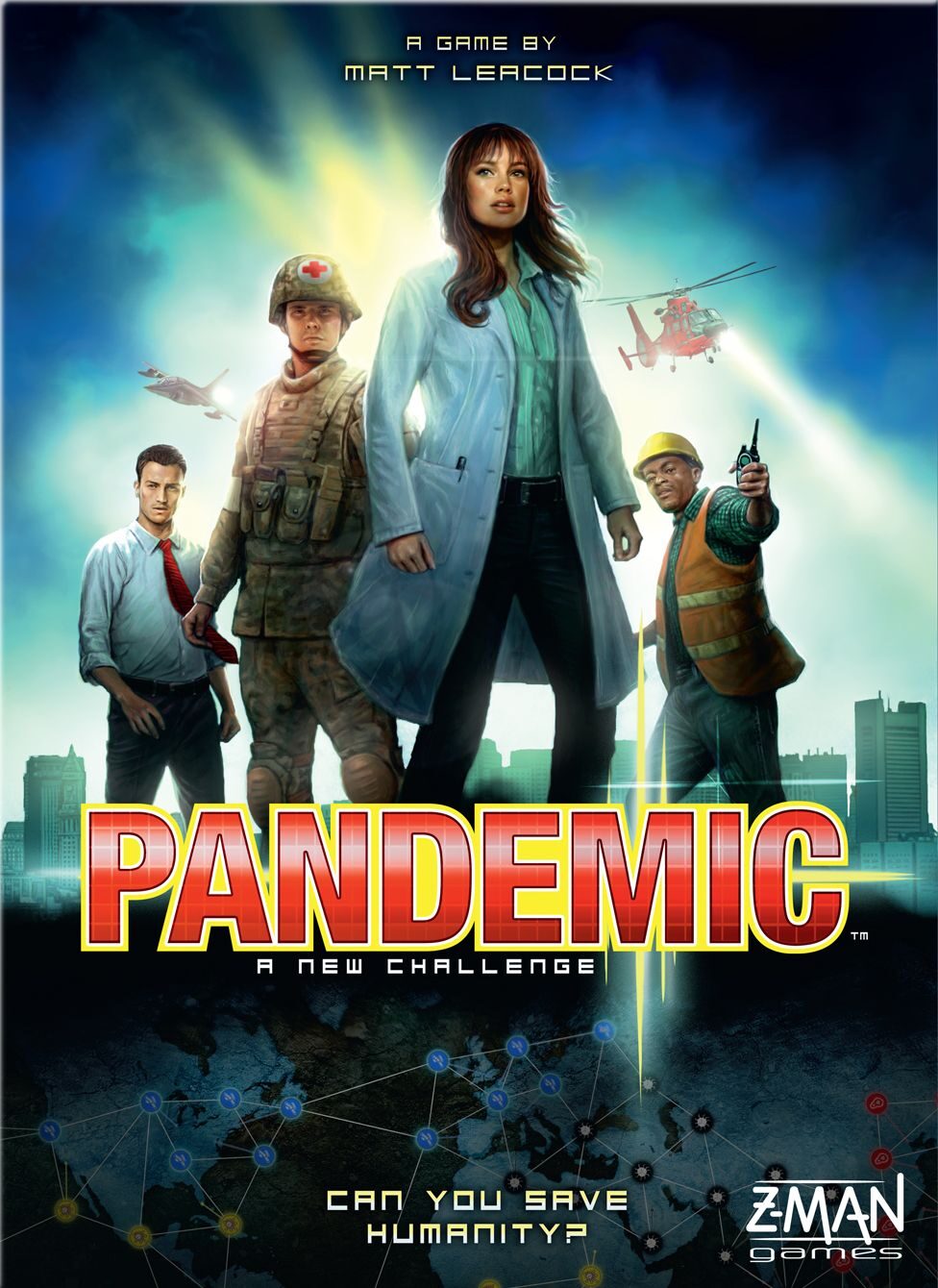
Pandemic is one of those gateway games that never quite leaves the collection. It’s the cooperative game that made cooperative games respectable - a tight, elegant puzzle about stopping viral outbreaks before the world collapses. With a BGG rating of 7.51 across nearly 136,000 ratings and a permanent spot at #174 overall, it remains one of the most-played games on the planet.
But Z-Man Games has been busy. Over the years, Pandemic has accumulated six major expansions plus a growing family of standalone spin-offs with the Pandemic brand on the box. Which ones actually improve the game? Which feel like cash grabs? And which should you buy first?
We’ve ranked every major Pandemic expansion using BGG community ratings, player weight data, and real feedback from cooperative gaming communities.
The Base Game at a Glance
Before diving into expansions, it’s worth remembering what you’re working with:
- BGG Rating: 7.51 / 10
- BGG Rank: #174 overall
- Weight: 2.39 / 5 (approachable but with genuine decisions)
- Players: 2-4 (best with 3-4)
- Play Time: 45-60 minutes
Pandemic’s core loop - draw cards, spread disease, fight outbreaks, rush toward a cure - is nearly perfect in its original form. It’s tight enough to teach in 10 minutes, deep enough to replay dozens of times. The main reason to look at expansions is variety: the base game’s four-disease structure can start to feel solved once you’ve logged 15-20 plays.
When you need more, here’s where to go.
The Expansions Ranked
🥇 #1 - Pandemic: On the Brink (2009)
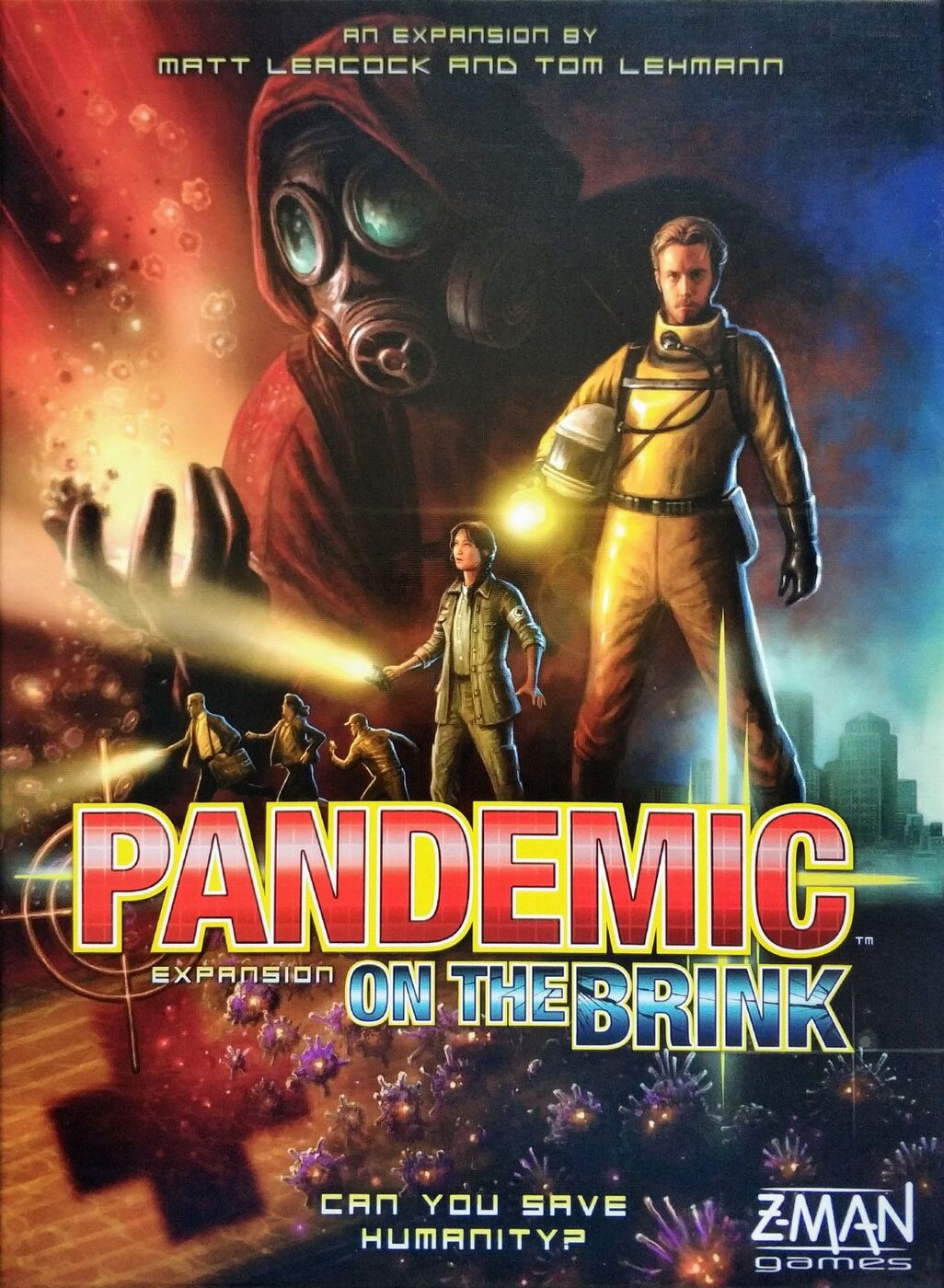 Image: Z-Man Games - BGG Rating: 8.03 | Weight: 2.65 | View on BGG
Rating: 8.03 / 10 | Weight: 2.65 | 18,440 users
Verdict: Essential. Buy this before anything else.
On the Brink is Pandemic’s definitive expansion - the one that turns a great gateway game into a great game, full stop. It’s the highest-rated expansion by a significant margin, and for good reason: it doesn’t just add more content, it adds better content.
The headline addition is five new role cards, expanding the roster from four to nine and giving you far more interesting specialist combinations. The Epidemiologist, the Contingency Planner, the Dispatcher - each feels genuinely different to play rather than just a statistical nudge.
More importantly, On the Brink introduces three new challenge modes you can layer over the base game:
- The Mutation Challenge adds a fifth disease - a purple “mutation” that behaves differently from the rest, spreading faster and requiring a new cure mechanic. This alone feels like a paid DLC that should have been in the box.
- The Virulent Strain Challenge makes one disease particularly savage - drawing epidemic cards gives that strain extra abilities, like spreading twice or becoming drug-resistant. Sessions become genuinely unpredictable.
- The Bio-Terrorist Challenge lets one player secretly work against the group, hiding in plain sight. It completely transforms the social dynamic. Games become suspicious, paranoid, and brilliant.
You can mix challenges for punishing difficulty. You don’t have to - just adding the new roles to a standard base game is worth the price.
Buy if: You own Pandemic and play it more than occasionally. This is the first purchase, every time.
🥈 #2 - Pandemic: In the Lab (2013)
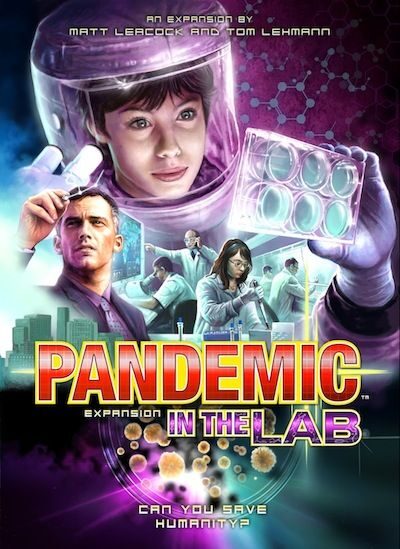 Image: Z-Man Games - BGG Rating: 7.83 | Weight: 2.89 | View on BGG
Rating: 7.83 / 10 | Weight: 2.89 | 5,766 users
Verdict: Worth it for groups wanting more complexity - but get On the Brink first.
In the Lab overhauls the curing system entirely. Instead of discarding five cards at a research station, you now collect samples, move them through a lab board, run tests, and eventually discover cures through a multi-step process. It’s thematically satisfying - the lab board genuinely evokes the feeling of scientific research - but it adds a meaningful amount of complexity and table space.
The expansion also introduces competitive Pandemic (teams racing to discover cures first) and a solo mode, though the competitive variant is controversial - splitting a cooperative game into competing factions feels philosophically at odds with what makes Pandemic special. Most groups ignore competitive mode and use In the Lab purely for its lab board overhaul.
The weight jump from 2.39 (base) to 2.89 (In the Lab) tells the story: this isn’t a small tweak. First-time players shouldn’t start here. Experienced groups will find the added depth rewarding rather than cumbersome.
Buy if: Your group has played Pandemic (with On the Brink) 20+ times and wants the cure process to feel meaningfully different. The lab board is genuinely innovative.
🥉 #3 - Pandemic: State of Emergency (2015)
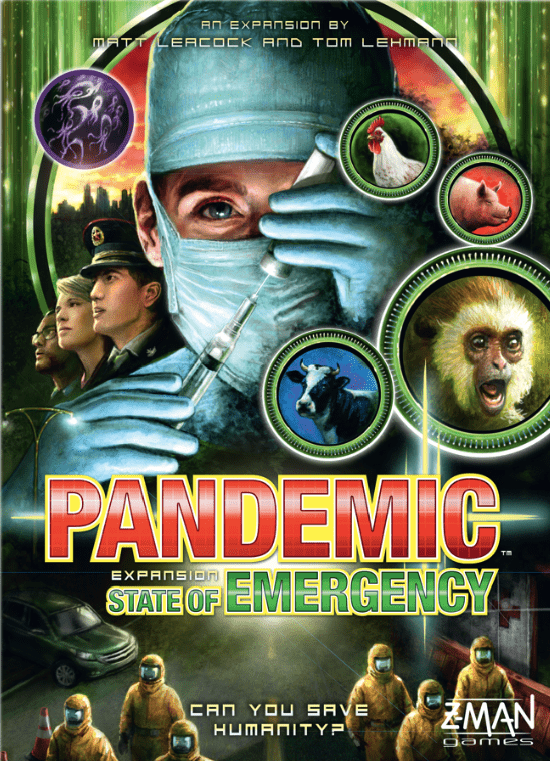 Image: Z-Man Games - BGG Rating: 7.56 | Weight: 2.65 | View on BGG
Rating: 7.56 / 10 | Weight: 2.65 | 2,027 users
Verdict: Good content, but buy last of the three core expansions.
State of Emergency is the third expansion in the main Pandemic line, and it shows signs of the well being stretched. It introduces three new challenges - Hinterlands (diseases spread from animals), Emergency Events (new crisis cards adding random events), and Superbug (one disease is incurable) - plus new role cards and equipment tiles.
The content is solid. The Hinterlands challenge in particular is well-designed, adding an animal reservoir of disease that spreads differently from the standard cube mechanics. Superbug cranks the difficulty in interesting ways.
But State of Emergency suffers from being the third expansion to a game that most groups will never take to its full complexity ceiling. If you own On the Brink and In the Lab, you already have a huge amount of variety to explore. State of Emergency is for the dedicated Pandemic group that has genuinely exhausted the earlier content.
The relatively low user count (2,027 vs On the Brink’s 18,440) reflects reality: most Pandemic groups cap out before they get here.
Buy if: You’ve fully explored On the Brink and In the Lab, still love Pandemic, and want more challenges to layer in. Don’t buy this before the other two.
4️⃣ Standalone: Pandemic: Rising Tide (2017)
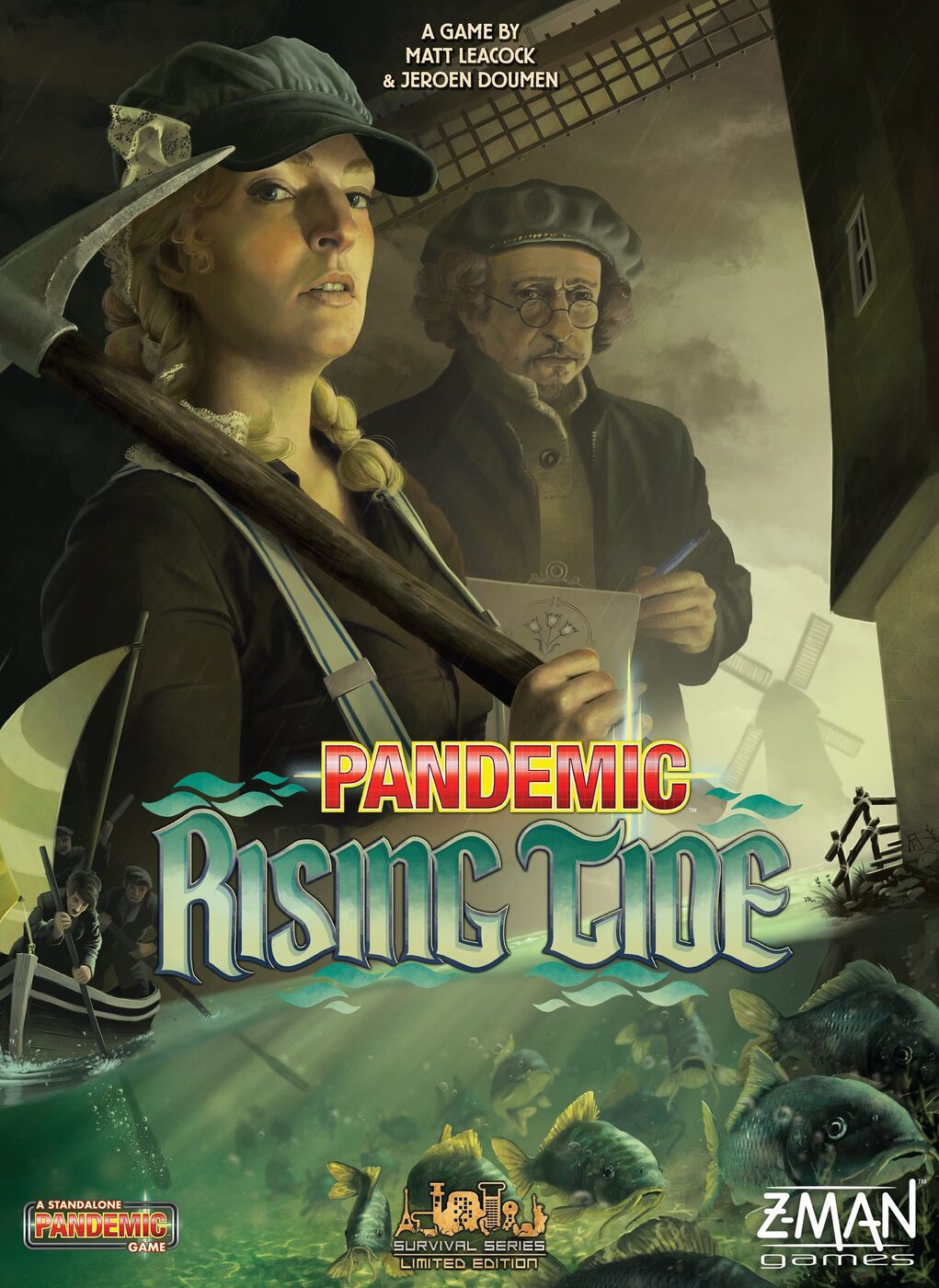 Image: Z-Man Games - BGG Rating: 7.53 | Weight: 2.54 | View on BGG
Rating: 7.53 / 10 | Weight: 2.54 | 3,142 users
Verdict: A surprisingly strong standalone that plays very differently from the original.
Rising Tide is technically a standalone game - you don’t need the Pandemic base game to play it - but it lives in the same design family. Set in 19th-century Netherlands, you’re not fighting disease this time: you’re managing a flood crisis, building dykes, and operating water pump infrastructure to keep the Dutch lowlands from drowning.
The mechanics are a genuine remix rather than a reskin. Disease cubes become water tokens. Instead of curing diseases, you’re completing infrastructure objectives. The network of canals and dykes changes how you move and what you can accomplish each turn. Crucially, Rising Tide is significantly harder than base Pandemic - the water management puzzle is less forgiving than the standard disease-cube system.
It’s the Pandemic spin-off for people who want the cooperative tension with a completely different theme. Excellent table presence, different enough to feel fresh.
Buy if: Your group loves Pandemic’s cooperative tension but wants a completely different thematic experience. Also worth owning if you have players who find disease themes off-putting.
5️⃣ Standalone: Pandemic: Hot Zone - North America (2020)
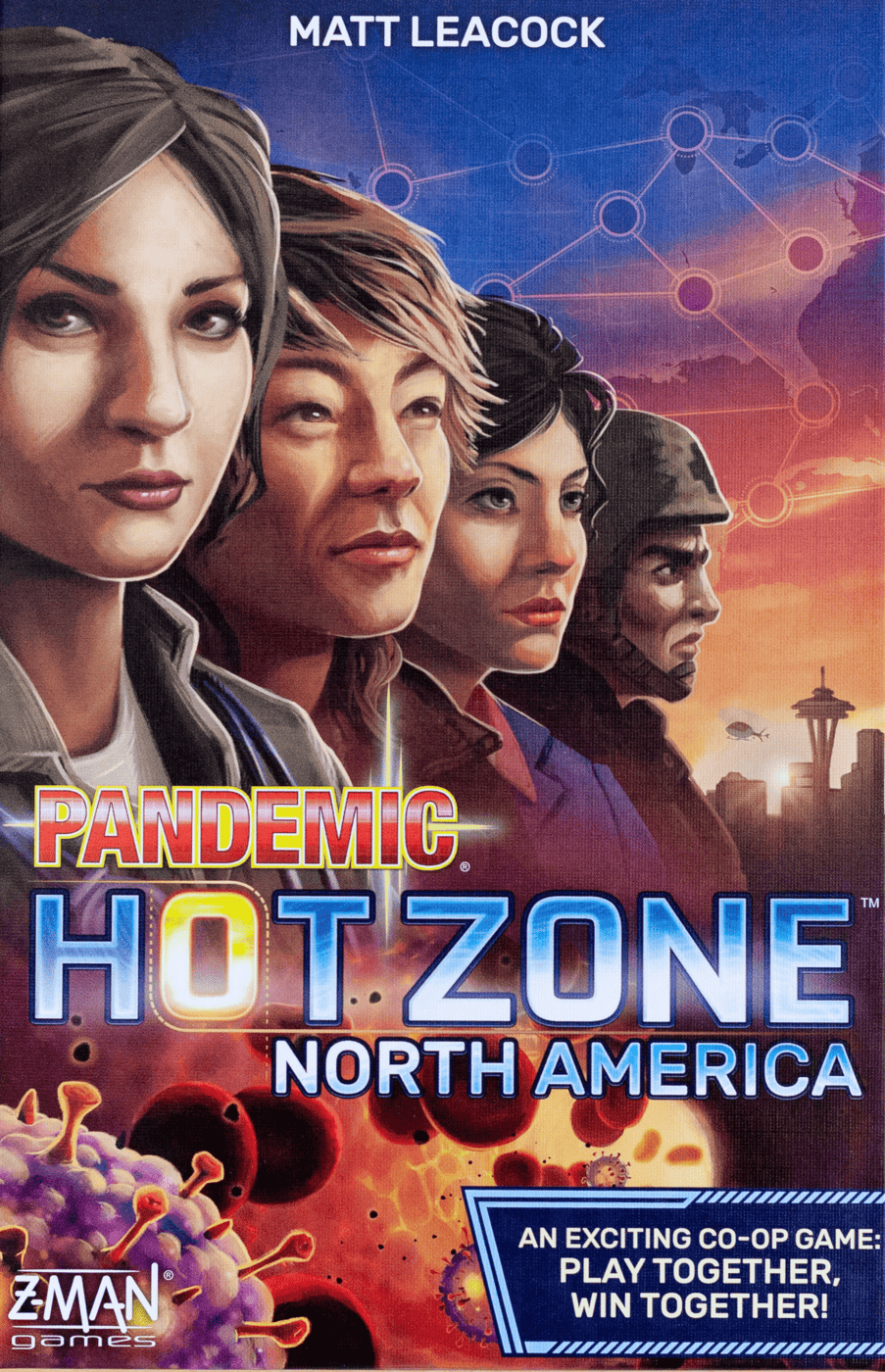 Image: Z-Man Games - BGG Rating: 6.96 | Weight: 1.87 | View on BGG
Rating: 6.96 / 10 | Weight: 1.87 | 2,666 users
Verdict: A decent travel/introductory version - not for experienced Pandemic players.
Hot Zone North America is Pandemic with the complexity dialled down and the board shrunk to just North America. The full world map becomes a regional crisis. Three diseases instead of four. Shorter box, shorter playtime (30-45 minutes), lighter weight at just 1.87.
The result is fine as a compact introduction to the Pandemic experience - it’s cheaper, lighter, and faster than the full game. But for anyone who already owns base Pandemic, it offers very little new.
The BGG rating of 6.96 accurately reflects its position: it’s competent and accessible, but it’s the Pandemic Lite rather than a genuine expansion to the Pandemic experience. The reduced weight and smaller scope mean experienced cooperative players will find it too thin.
Buy if: You’re looking for a budget entry point to Pandemic, or need a faster/lighter version for travel or younger players. Skip if you already own the base game.
6️⃣ Standalone: Pandemic: Rapid Response (2019)
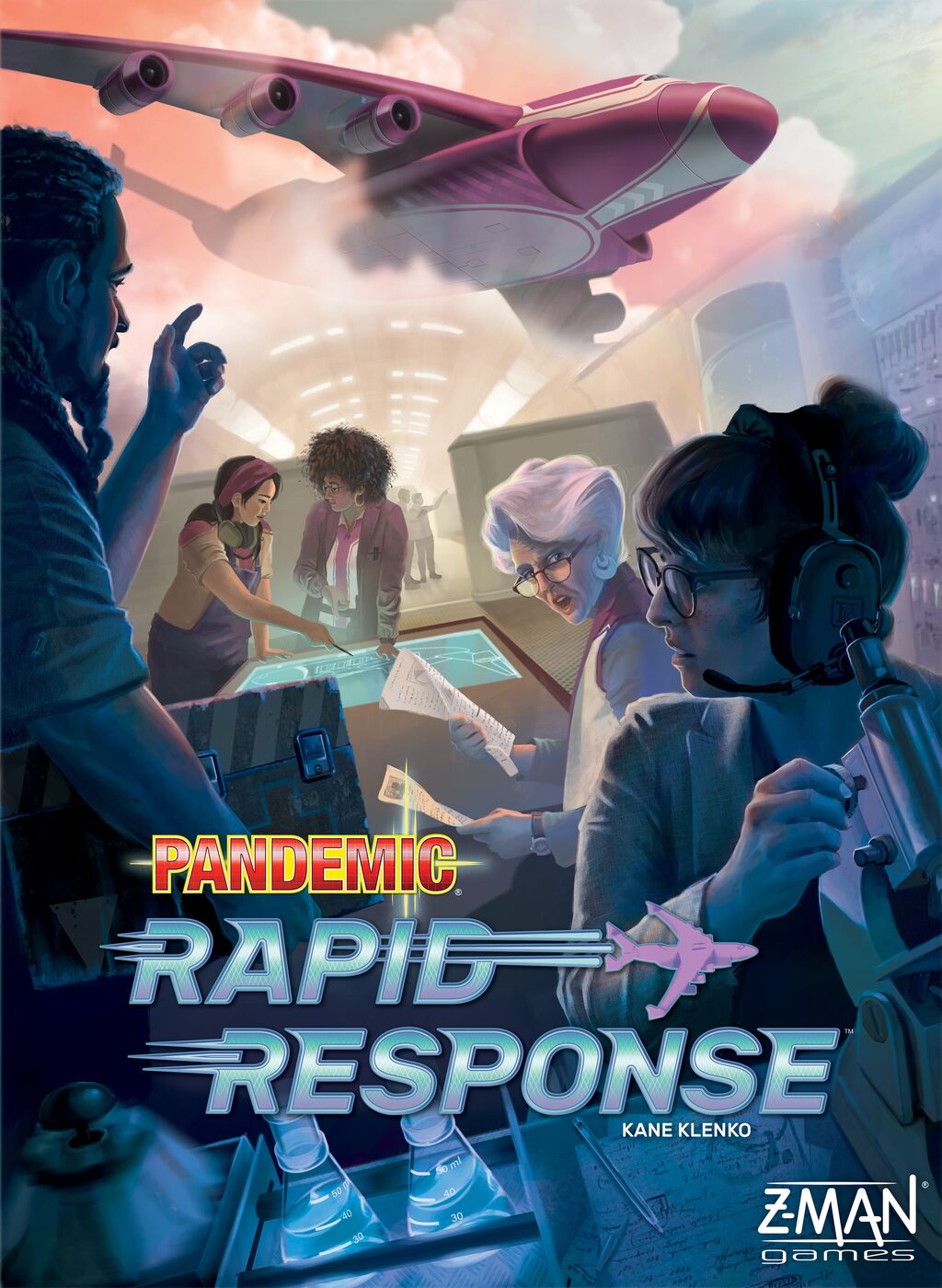 Image: Z-Man Games - BGG Rating: 6.55 | Weight: 2.12 | View on BGG
Rating: 6.55 / 10 | Weight: 2.12 | 3,173 users
Verdict: Not really Pandemic. A real-time game in Pandemic clothing - approach with caution.
Rapid Response wears the Pandemic brand but plays like a different game entirely. It’s a real-time cooperative game - there’s a countdown timer, and players are simultaneously rolling dice, assembling supplies, and flying planes to crisis locations. There’s no turn structure. Chaos is the point.
The real-time format means Rapid Response attracts or repels based on temperament rather than strategic preference. If your group likes chaotic, loud, “everyone shouting at once” cooperative experiences, it has its audience - it scratches the same itch as Space Alert or Escape: The Curse of the Temple. If you came to Pandemic for considered, thoughtful crisis management, Rapid Response will frustrate you.
The lowest BGG rating of the group (6.55) reflects how far it strays from the Pandemic DNA. It’s also the lowest-weight entry at 2.12 - the complexity comes from chaos management, not from strategic decision density.
Buy if: You specifically want a real-time cooperative game and don’t mind that it barely resembles Pandemic. Do not buy expecting a Pandemic experience.
The Complete Ranking
| Expansion | Type | BGG Rating | Weight | Verdict |
|---|---|---|---|---|
| On the Brink | Expansion | 8.03 | 2.65 | ✅ Essential - buy first |
| In the Lab | Expansion | 7.83 | 2.89 | ✅ Worth it - buy second |
| State of Emergency | Expansion | 7.56 | 2.65 | 🟡 For dedicated groups |
| Rising Tide | Standalone | 7.53 | 2.54 | ✅ Strong standalone remix |
| Hot Zone North America | Standalone | 6.96 | 1.87 | 🟡 Intro/travel version only |
| Rapid Response | Standalone | 6.55 | 2.12 | ⚠️ Different game entirely |
What to Buy and When
Playing for the first time? Just the base game. Pandemic at its purest is good enough - don’t add complexity before you understand the core.
10-15 plays in and starting to feel it’s solved? Get On the Brink. The new roles alone add replay value. The challenge modes add multiple distinct experiences. It’s the upgrade the base game was always designed for.
20+ plays and still engaged? Add In the Lab next. The lab board completely changes how cures feel - you’ll be learning the game again, in a good way.
Want something completely different thematically? Rising Tide is the answer. Same cooperative tension, completely different setting and mechanics. Pairs well with the base game rather than replacing it.
Have children or want a travel version? Hot Zone North America is the compact option. Fine for its purpose, not interesting beyond it.
Skip or special order: State of Emergency is for completionists who’ve exhausted everything else. Rapid Response is for groups who specifically want real-time chaos - know what you’re getting.
The core Pandemic experience is still the same elegant design Matt Leacock built in 2008. The expansions at their best - On the Brink especially - reveal how much room was always left in that design for more ideas. At their worst, they’re proof that slapping the Pandemic name on a different game doesn’t make it better Pandemic. Choose wisely, buy in order, and stop before State of Emergency unless you’re truly obsessed.