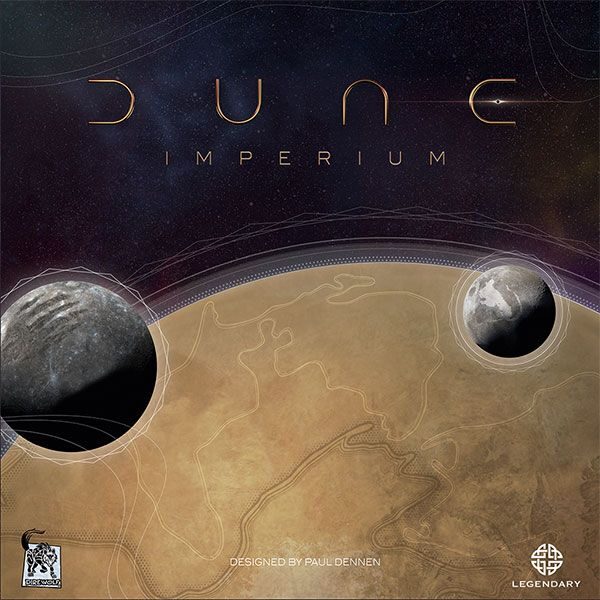
BGG Rank #6 · Rating 8.41 · Weight 3.08 · 1-4 Players · ~120 min
Dune: Imperium is one of those games that earns its position. A top-ten BGG rank is usually something to treat with suspicion - hype, recency bias, and community groupthink all distort the list. This one, though, actually deserves the spot. The question isn’t whether Dune: Imperium is good. It is. The question - especially in 2026 with a standalone sequel and an expansion in the mix - is which version you should buy, and whether any of it is right for you.
This guide gives you the straight answer.
What Dune: Imperium Actually Does
At its core, Dune: Imperium is a worker placement game with a deck-building engine attached. Your deck generates options; your workers execute them. The twist is that cards have two functions - you play one to get an agent action, but every card also contributes to your end-of-round combat “reveal” phase where you’re bidding influence to win conflict cards.
That dual-use mechanic is the game’s smartest move. It creates genuine tension in every hand: do I use this card now for its agent ability, or hold it for the reveal? Your deck’s quality matters, but so does your timing. Hidden information flows through the whole thing, because you never know exactly what cards opponents are building toward.
The Dune licence fits perfectly. Spice production, political intrigue, Harkonnen muscle versus Atreides loyalty - the theme doesn’t feel bolted on the way it does in many IP games. The factions have real mechanical differences, the board geography matters, and the combat system actually evokes the push-and-pull of Arrakis politics.
Weight sits at 3.08 on BGG - firmly medium-heavy. You can teach it to engaged casual players in one session, but it won’t click fully until round two or three. First games typically run 2.5-3 hours; experienced groups land comfortably at 90 minutes.
Who Should Buy the Base Game?
Buy Dune: Imperium if:
- You enjoy worker placement but want more decision texture than something like Ticket to Ride or Stone Age
- Your group likes deck-builders (Dominion, Clank) but wants a richer mid-game
- You want a game that works at 2, 3, and 4 players without feeling compromised at any count
- You want solid solo play - the Mentat solo automa is well-designed and genuinely challenging
Don’t buy it if:
- Your group struggles with rules overhead. A 3.08 weight means real cognitive load. Gateway gamers will hit a wall.
- You need something under an hour - this won’t reliably land there
- Political negotiation and variable power asymmetry frustrate your table
The price point (~£55 UK retail) is fair for what you get. Component quality is strong, the iconography is clear, and the rulebook - while dense - is well-indexed. You’re not paying for empty box space.
What About Dune: Imperium - Uprising?
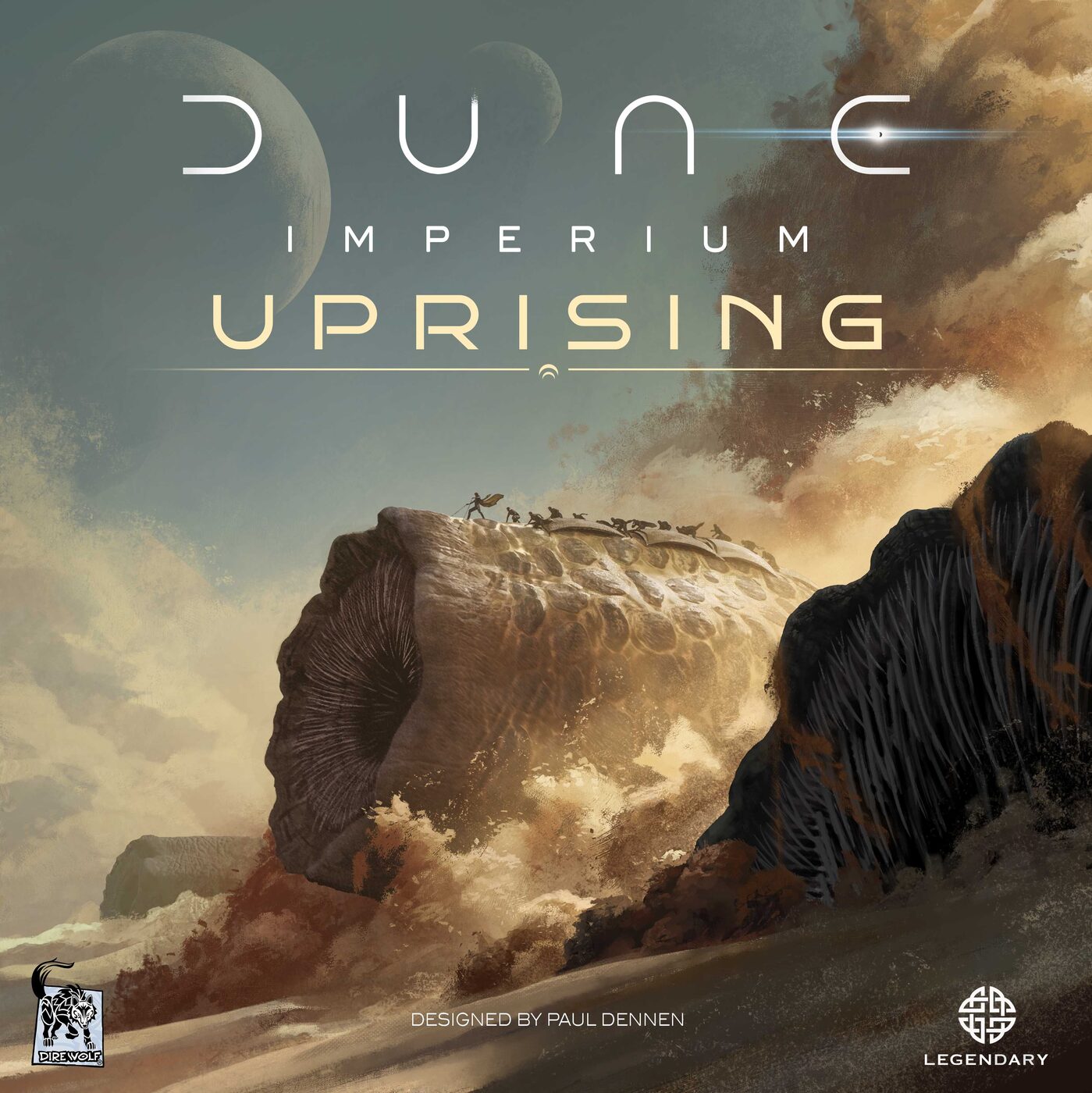
Dune: Imperium - Uprising (2023) - Standalone sequel. BGG Rank #5, Rating 8.70. Image © Dire Wolf Digital, via BGG
BGG Rank #5 · Rating 8.70 · Weight 3.52 · 1-6 Players · ~120 min
Dune: Imperium - Uprising is a standalone game - you don’t need the base game to play it. And with a BGG rank of #5 and a raw rating of 8.70, it technically outperforms the original.
Uprising adds several things the base game lacks:
- Six-player team mode - two teams of three, which fundamentally changes the dynamic and makes it work as a party game in a way the original never attempted
- Sandworms - a new Fremen-aligned mechanic where you can ride into battle; flavourful and mechanically interesting
- Contracts - mission cards that give you bonus objectives, adding another layer of engine customisation
- Infiltrators and Spies - expanded hidden information systems
The weight bump to 3.52 is real. Uprising is noticeably more complex than the base game. It’s also more replayable - more cards, more factions, more possible game states.
Which should you buy first?
If you already own the base game: Uprising is a lateral purchase, not a straight upgrade. The two games can be combined (with some caveats around certain mechanics), but they play equally well standalone. Consider Uprising if you want the 6-player option or simply want a fresh deck.
If you’re buying for the first time: Start with the base game unless you have an experienced group who specifically wants the 6-player team mode. The base game is the cleaner introduction. Uprising assumes familiarity with the design language and throws in a lot more complexity immediately.
If money is the primary constraint: Uprising is the better long-term purchase - more content, slightly higher ceiling. But it’s a harder teach to new players.
The Immortality Expansion
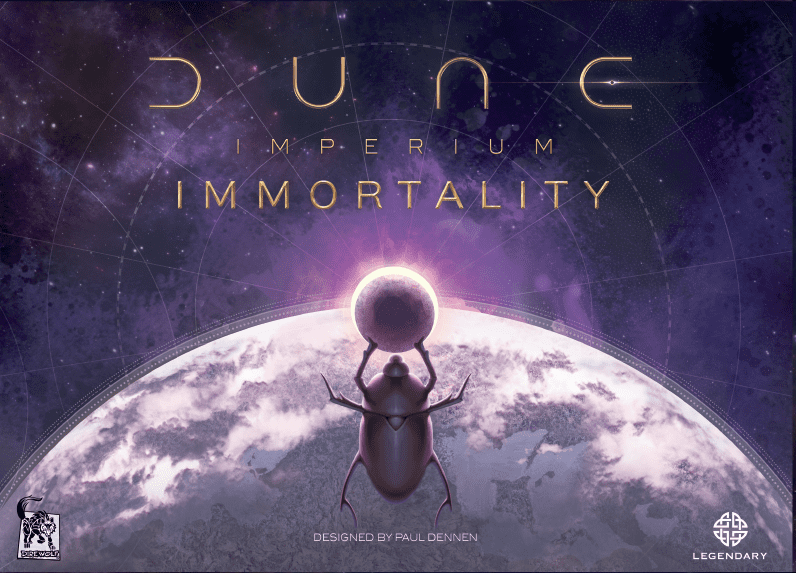
Dune: Imperium - Immortality (2022) - BGG Rating 8.54. Image © Dire Wolf Digital, via BGG
BGG Rating 8.54 (Bayes 7.52) · Weight 3.34 · Requires the Base Game
Dune: Imperium - Immortality is a mid-weight expansion that adds the Bene Tleilaxu faction and two new mechanics: research (a track that unlocks special abilities) and grafting (combining two cards into a more powerful hybrid).
It’s well-reviewed, but the lower Bayesian score (7.52 vs 8.54 raw) reflects a smaller, more polarised voter base. The consensus on BGG’s forums is pretty clear: Immortality adds texture and replayability if you’ve logged 20+ plays of the base game and want more. If you’re still learning the base game or only play it occasionally, it muddies the water without adding much satisfaction.
Worth it? Yes - eventually. Don’t rush it.
The Decision Framework
| Your Situation | Recommendation |
|---|---|
| New to Dune: Imperium | Base game first |
| Base game owner, want more content | Immortality expansion |
| Base game owner, want 6 players | Uprising standalone |
| Buying for the first time, experienced group | Uprising |
| Budget limited, choose one | Base game (better teach) |
| Want everything | Base game + Uprising + Immortality - they all combine |
Final Verdict: Is It Worth It?
Dune: Imperium (base game): Yes, without reservation - if you’re comfortable with medium-heavy games. BGG rank #6 is not a fluke. The deck-building and worker placement fusion works better here than in almost any other game that’s tried it. The solo mode is genuinely good. The theme earns its place. At full price, it’s worth every penny.
Uprising: Yes, with context - better for experienced groups, or if you specifically want 6-player support. Don’t buy it as a replacement for the base game experience; buy it as a progression or an alternative.
Immortality: Yes, but wait - don’t buy it until you’re sure the base game has permanent shelf space in your rotation. It’s the right expansion at the right time for the right players.
The Dune: Imperium ecosystem is unusually coherent for a game with sequels and expansions. Designer Paul Dennen hasn’t chased complexity for its own sake. Every version earns its weight. That’s increasingly rare.
All ratings and ranks sourced from BGG, July 2026. Prices are approximate UK retail at time of writing.