
Splendor has a peculiar staying power. The rules fit on a single page. The play time rarely exceeds 30 minutes. And yet it keeps getting pulled off the shelf - by families, by couples, by groups who have been playing it for years and still haven’t tired of it.
The reason is in the design economy. You collect gem tokens to buy cards. Those cards become permanent gems for future purchases. Over time you build an engine. It’s clean, satisfying, and just tense enough to keep everyone leaning forward.
If that loop has hooked you and you’re wondering where to go next, these five games are worth your attention - each one captures something specific about what makes Splendor tick, while adding its own twist.
1. Jaipur - The Best Two-Player Splendor Alternative

BGG Rating: 7.48 | Complexity: 1.46 / 5 | Players: 2 | Time: ~30 min
Jaipur is the go-to recommendation for anyone who mainly plays Splendor with one other person. It’s a two-player card game about competing merchants in a Rajasthani marketplace: you take goods from a shared row, you sell them for tokens, and you adjust your hand size constantly to stay ahead of your rival.
Where Splendor is about accumulating resources patiently, Jaipur is faster and more reactive. The central market shifts every turn. Timing your sell becomes everything - sell too early and you lose bonus tokens; wait too long and your opponent clears out the goods. It’s the same satisfying resource-into-points loop, compressed into a sharper, more adversarial duel.
Best for: Splendor fans who almost always play with exactly one other person and want a game that rewards reading your opponent over building a long engine.
2. Century: Spice Road - If You Want More of the Same Loop

BGG Rating: 7.29 | Complexity: 1.80 / 5 | Players: 2-5 | Time: 30-45 min
Century: Spice Road is, more or less, “Splendor but with spices instead of gems and cards instead of token-stacks.” That’s not an insult - it’s a description that explains exactly why it works.
You build a hand of cards that convert lower-value spices into higher-value ones. Each turn you play a card from your hand, convert ingredients, or acquire a new card by placing your merchants on it. The goal is buying point cards before anyone else can. It’s slightly more variable than Splendor - the card market changes as everyone drafts from it, and the engine you build with your conversion cards feels more personal. But the core feel is almost identical: a brief, clean, puzzly engine-builder that anyone can learn in ten minutes.
Designed by Emerson Matsuuchi, Century: Spice Road was widely perceived as a spiritual Splendor follow-up on release, and the comparison holds up. If your Splendor group wants slightly more moving parts without changing genres, start here.
Best for: Groups who love Splendor’s pacing and want a lateral step - familiar structure, fresh feel.
3. Sagrada - The Puzzle That Looks Like Stained Glass
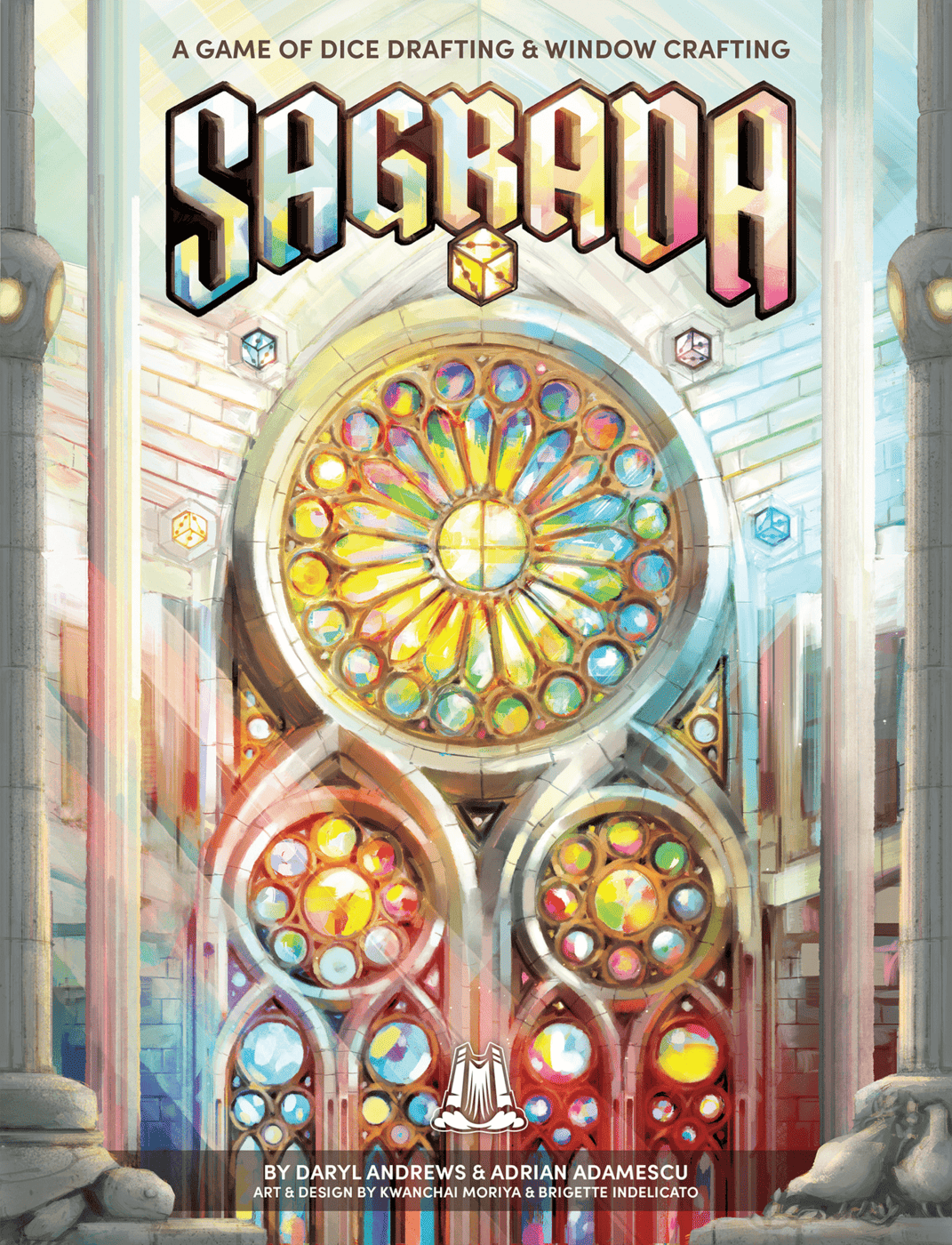
BGG Rating: 7.47 | Complexity: 1.92 / 5 | Players: 1-4 | Time: ~45 min
Sagrada replaces gem tokens with translucent dice. You’re filling a stained glass window pattern by drafting dice from a shared pool, and placement rules mean you can’t just put a die anywhere - colour and value constraints create a surprisingly tight puzzle every round.
It shares Splendor’s DNA in a few key ways: the components are genuinely lovely to handle, the rules are learnable in under 15 minutes, and each player’s tableau creates a satisfying visual record of their decisions. The spatial puzzle aspect is new - Splendor doesn’t care where your cards sit, but in Sagrada the position of every die matters. That’s where the depth lives.
The solo mode is also worth noting: it’s one of the better single-player gateway games out there, using an automa deck that creates genuine pressure without adding much setup overhead.
Best for: Splendor fans who enjoy the puzzle element more than the trading element, or anyone looking for a game that looks spectacular on the table.
4. 7 Wonders - Scales to Seven, Plays in 30 Minutes
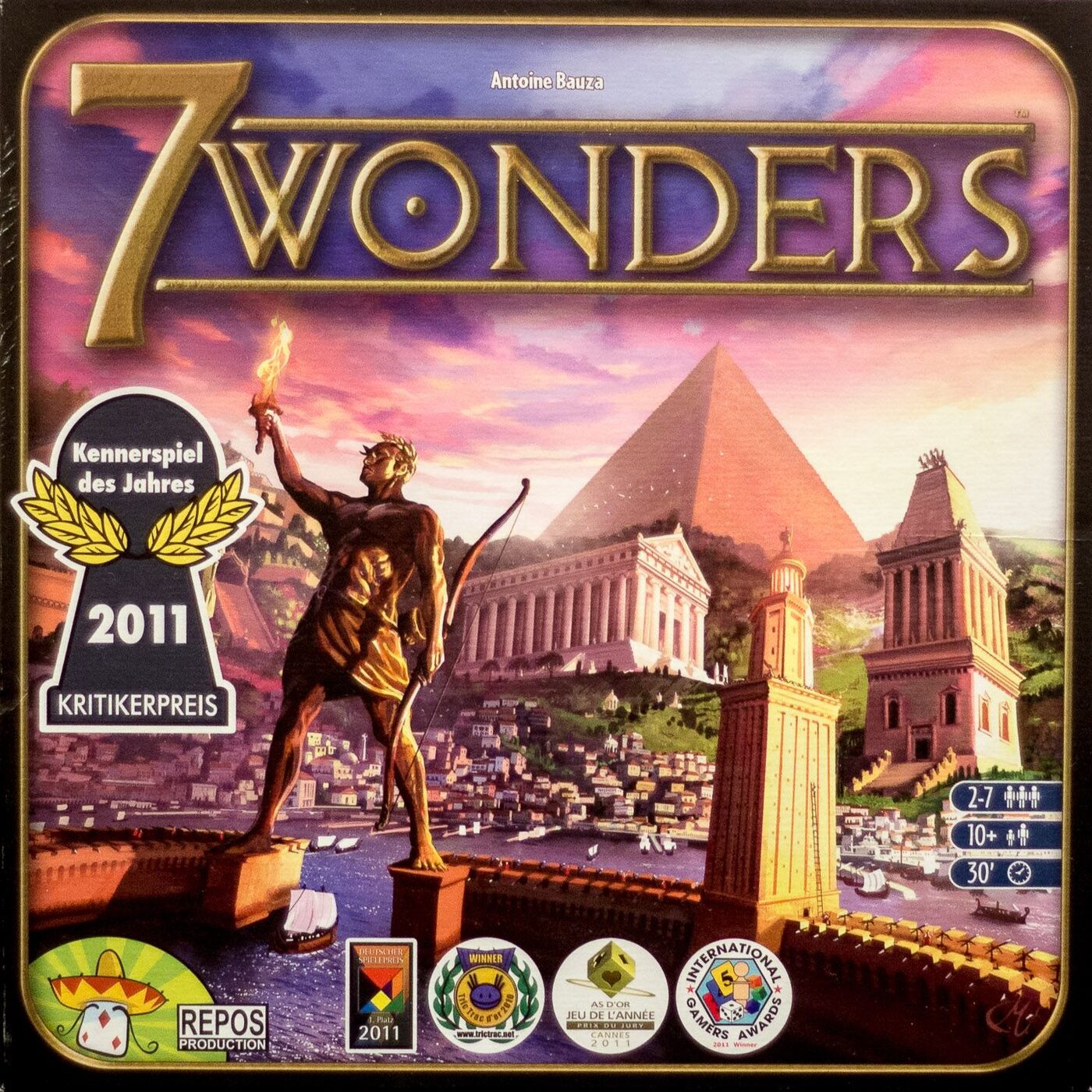
BGG Rating: 7.66 | Complexity: 2.32 / 5 | Players: 2-7 | Time: ~30 min
One of Splendor’s practical virtues is that it fits awkward group sizes - you can play it with two people or four and the game doesn’t suffer. 7 Wonders extends that logic dramatically. Seven players, same table time as Splendor.
The mechanism that enables this is simultaneous card drafting. Everyone picks a card from their hand, plays it or discards it for coins, then passes the remaining hand to a neighbour. There’s no waiting - when others are deciding, so are you. The result is a civilisation-building game that covers three ages of history and generates enormous score swings between players who built militaries, scientists, and traders in completely different proportions.
7 Wonders is harder to learn than Splendor - there are more card types to understand and the interaction between ages takes a few plays to fully appreciate. But the runtime stays anchored. You’ll finish a full three-age game in the time Splendor takes for two sessions, and with twice the players.
Best for: Groups who outgrow Splendor’s player cap, or anyone who wants an accessible game with more narrative arc to each session.
5. Istanbul - Trading Routes with More to Think About
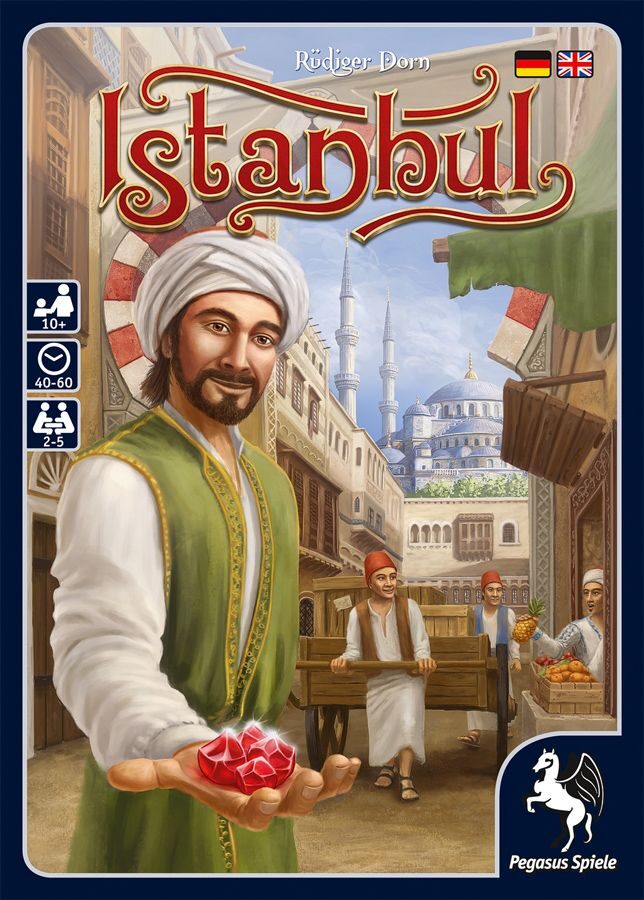
BGG Rating: 7.53 | Complexity: 2.58 / 5 | Players: 2-5 | Time: 40-60 min
Istanbul is where you go when you’ve finished with the gateway games and want something that will occupy the same satisfying genre territory - trading, resource conversion, elegant merchant flavour - but deliver a richer decision space.
You move your merchant through a bazaar grid, collecting resources at markets, converting them to gems, and racing to collect five rubies before anyone else. The spatial element is what makes it click differently from Splendor: you have to think about where you’re going next and whether dropping an assistant somewhere now will cost you later. Replay value is high because the bazaar layout changes between sessions.
Istanbul sits around 45-60 minutes - longer than Splendor - but it’s the natural next step for Splendor fans who want the same clean winner-takes-all race structure with more tactical texture. It won the Kennerspiel des Jahres (the “connoisseur” award) in 2014, which is a reliable signal that it bridges gateway and hobbyist players well.
Best for: Splendor fans ready to step up. Anyone who feels like Splendor’s decisions come slightly too easily after 20 plays.
Quick Reference
| Game | BGG Rating | Complexity | Players | Time | Best For |
|---|---|---|---|---|---|
| Jaipur | 7.48 | 1.46 | 2 only | 30 min | Two-player duel |
| Century: Spice Road | 7.29 | 1.80 | 2-5 | 30-45 min | Lateral Splendor step |
| Sagrada | 7.47 | 1.92 | 1-4 | 45 min | Puzzle lovers |
| 7 Wonders | 7.66 | 2.32 | 2-7 | 30 min | Larger groups |
| Istanbul | 7.53 | 2.58 | 2-5 | 40-60 min | Step-up complexity |
All complexity scores and ratings from BoardGameGeek as of September 2026. Games listed by weight, lightest to heaviest.