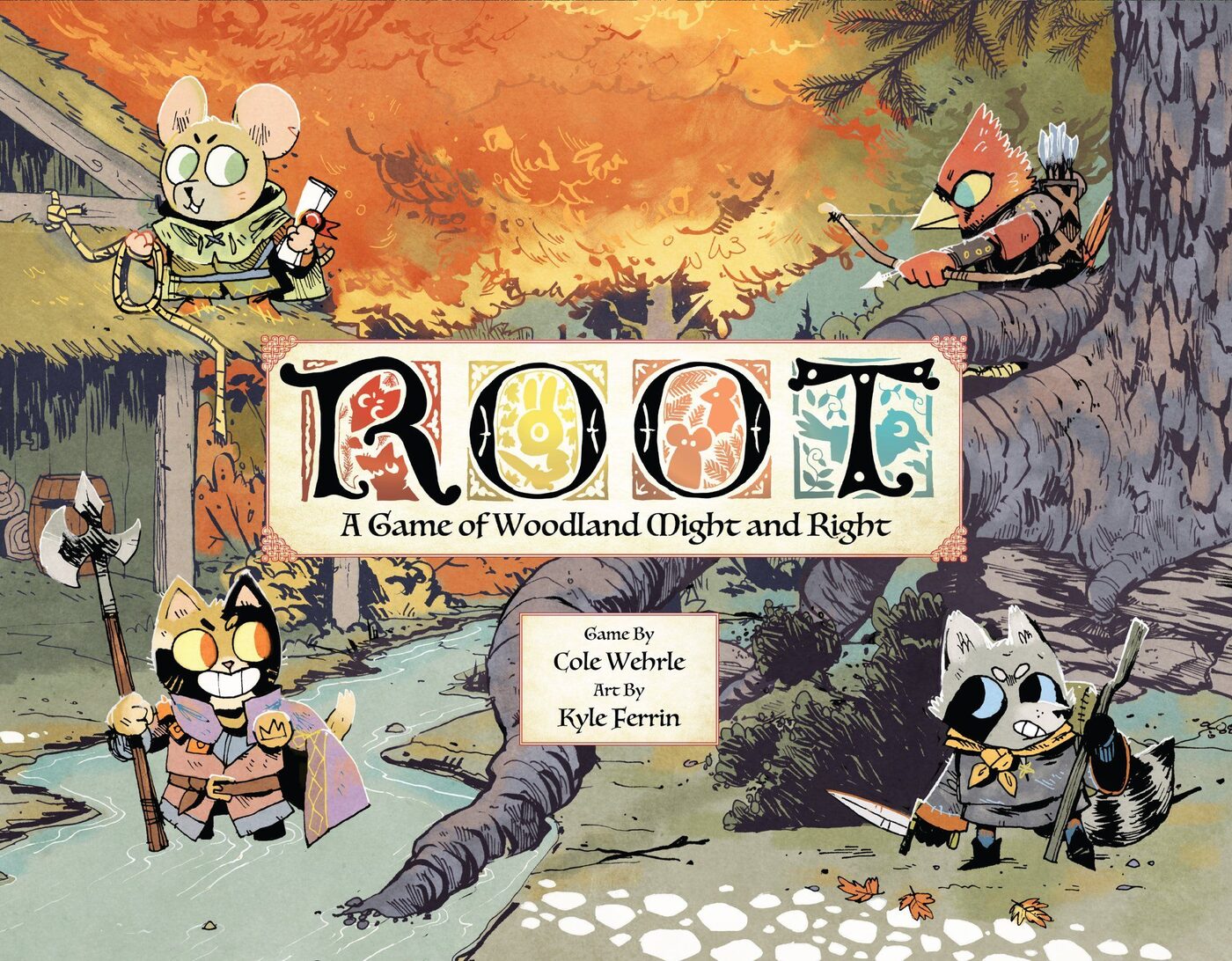
Root works because it understood something that most area control games get completely wrong. Every faction at the table is playing a different game.
The Marquise de Cat runs an industrial engine, building sawmills and workshops, trying to grind the board into submission through sheer production. The Eyrie Dynasties are locked into a decree that grows increasingly unmanageable, balancing expansion against the constant threat of turmoil. The Woodland Alliance builds sympathy quietly - too quietly - until the forest erupts with unrest and suddenly they’re winning without having fought anyone. The Vagabond drifts through all of it, taking quests, making friends, betraying them. Each faction has a completely separate arc, a separate game feel, a separate path to victory.
That combination - radical faction asymmetry wrapped in a surprisingly accessible package - is what makes Root so persistently popular. Root sits at 8.07/10 on BGG from 65,165 ratings, carries a weight of 3.84/5, plays 2-4 players in 60-90 minutes, and has been a consistent top-50 game since release. That rating comes from people who stayed for multiple campaigns, tried different factions, and kept finding something new.
So when Root lovers go looking for their next game, they’re usually chasing one or more of five specific things:
- faction asymmetry that goes deep, not just cosmetic stat differences
- area control that rewards reading opponents, not just positioning pieces
- card play that creates meaningful decisions every round
- player interaction with genuine consequences - politics, timing, alliance
- a game where the board state constantly shifts and no two plays feel the same
The five games below all hit that DNA from different angles. Some are close area-control cousins. One is a wildcard so strange it almost defies description. But each one captures something specific about what makes Root memorable.

Pax Pamir: Second Edition
If your favourite part of Root is the political undercurrent - factions positioning, allying, betraying, and winning through timing rather than brute force - this is the closest match.
Pax Pamir: Second Edition comes from the same designer as Root - Cole Wehrle - and it shows in every mechanism. Set in 19th-century Afghanistan during the Great Game between Britain, Russia, and the Afghan court, players manoeuvre their influence across a shared political landscape, building coalitions that can flip entirely on a single scoring round.
The shared DNA is unmistakable. In Root, the Vagabond wins by cultivating relationships and exploiting faction tensions. In Pax Pamir, every player operates on that frequency. You pledge loyalty to a dominant power, build up your tableau of cards, and try to ensure your coalition is winning when the dominance check lands - without tipping your hand too early. Cards drive the whole engine. Reading what your opponents are building is as important as building your own position. And the winner is rarely the player who fought the most; it’s the player who chose their moments.
The differences are worth flagging. Root gives each player a distinct faction with locked-in mechanics. Pax Pamir has more fluid roles - you’re not locked into one coalition forever, and switching allegiance is both legal and often necessary. The physical presentation is also completely different: Wehrle’s earlier game is all ink-wash illustrations and wooden chits, spare and purposeful. It requires more active engagement with the book-keeping, and the correct player count window (best at 3-4) is narrower than Root’s.
BGG weight: 3.84 / Rating: 8.12 / Players: 1-5 / Time: 45-120 min
Who it’s for: Root players who found the faction asymmetry interesting but care even more about the political reading and coalition timing. If your best Root moments were all about watching someone else’s plan fall apart while yours quietly matured, Pax Pamir is your next game.
Blood Rage
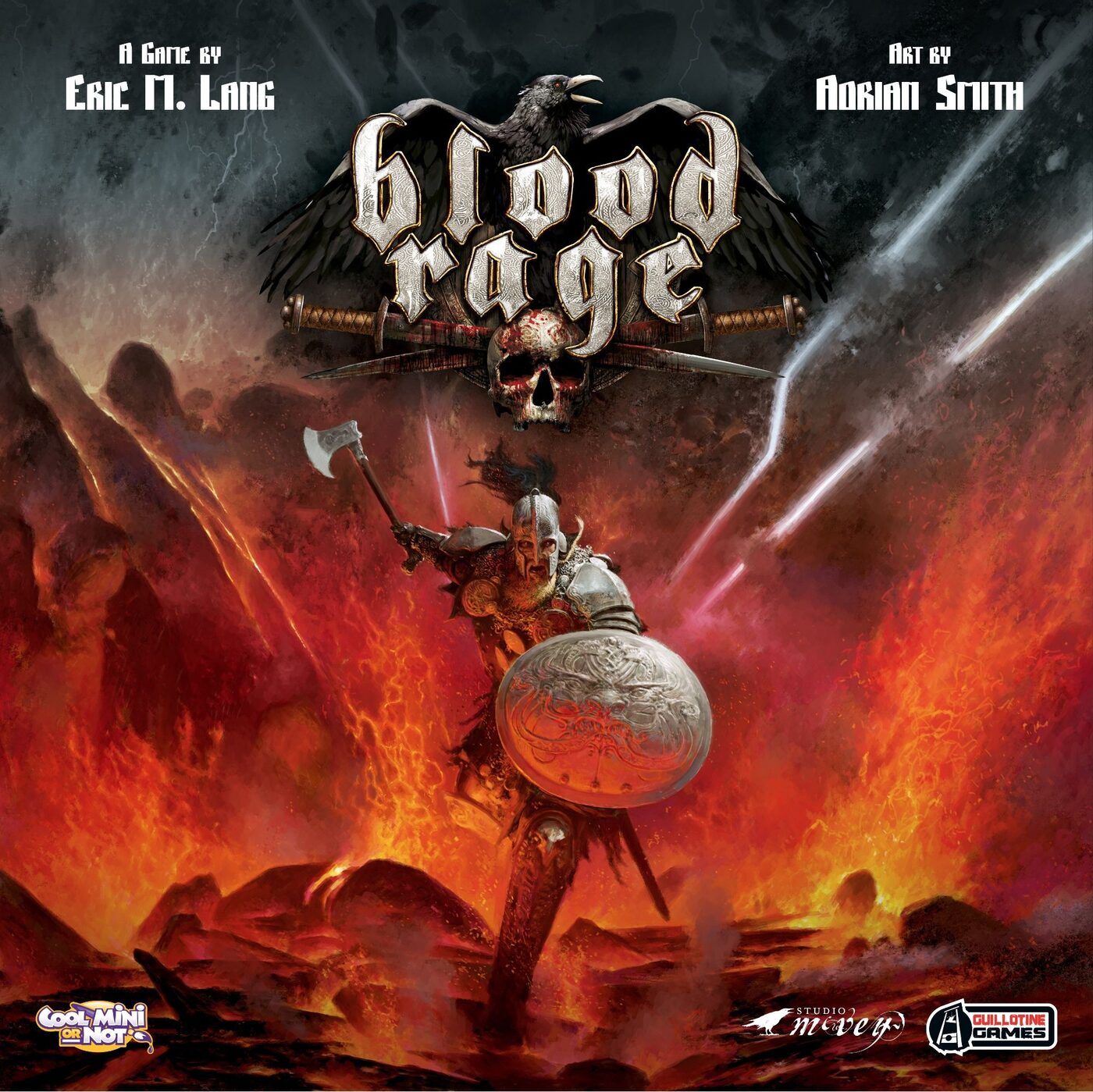
If Root’s combination of card-driven play, area conflict, and asymmetric clan identity is the draw - but you want something faster and less teaching-intensive - Blood Rage hits that target with spectacular visual impact.
Blood Rage sets Norse mythology clans loose on a collapsing world, drafting cards to build clan powers and fighting for control of provinces that are literally being destroyed as the game goes on. Each clan has a unique set of upgrade paths, and the card draft at the start of each age makes it so you’re constantly shaping your strategy to the table - not just executing a fixed plan.
The parallel with Root is real. Blood Rage is a card-powered area control game where the table reads the draft and shapes their entire approach around it. Combat is deterministic (whoever plays the higher-strength card wins) with room for modifiers, so the psychological element - when to commit, what to hide, when to let someone take a region to burn a card - is always present. The clan upgrade system creates meaningful asymmetry: one clan might run an aggression engine, another leans on quests and positioning, and these differences emerge from draft decisions rather than fixed starting conditions.
It’s a noticeably lighter game than Root by weight - 2.88 versus 3.84 - and that shows in the teach. The first game of Blood Rage runs in about an hour. Root’s first game rarely does, especially with a full faction roster. Blood Rage also has more spectacle: the miniatures are genuinely impressive and the table presence draws people in. It’s a better introduction game for groups who aren’t committed to reading rulebooks.
The trade-off is depth. Root’s faction asymmetry goes deeper in the long run. Blood Rage’s clans feel different, but over many plays, the delta between them is narrower than Root’s. If you’ve played Blood Rage extensively and want to go further down the asymmetry rabbit hole, Root is waiting for you.
BGG weight: 2.88 / Rating: 7.89 / Players: 2-4 / Time: 60-90 min
Who it’s for: Root fans who want to introduce non-hobbyist friends to asymmetric area conflict. Also: Root players who love the draft tension and want to play something with faster setup and a lighter teach.
Dune
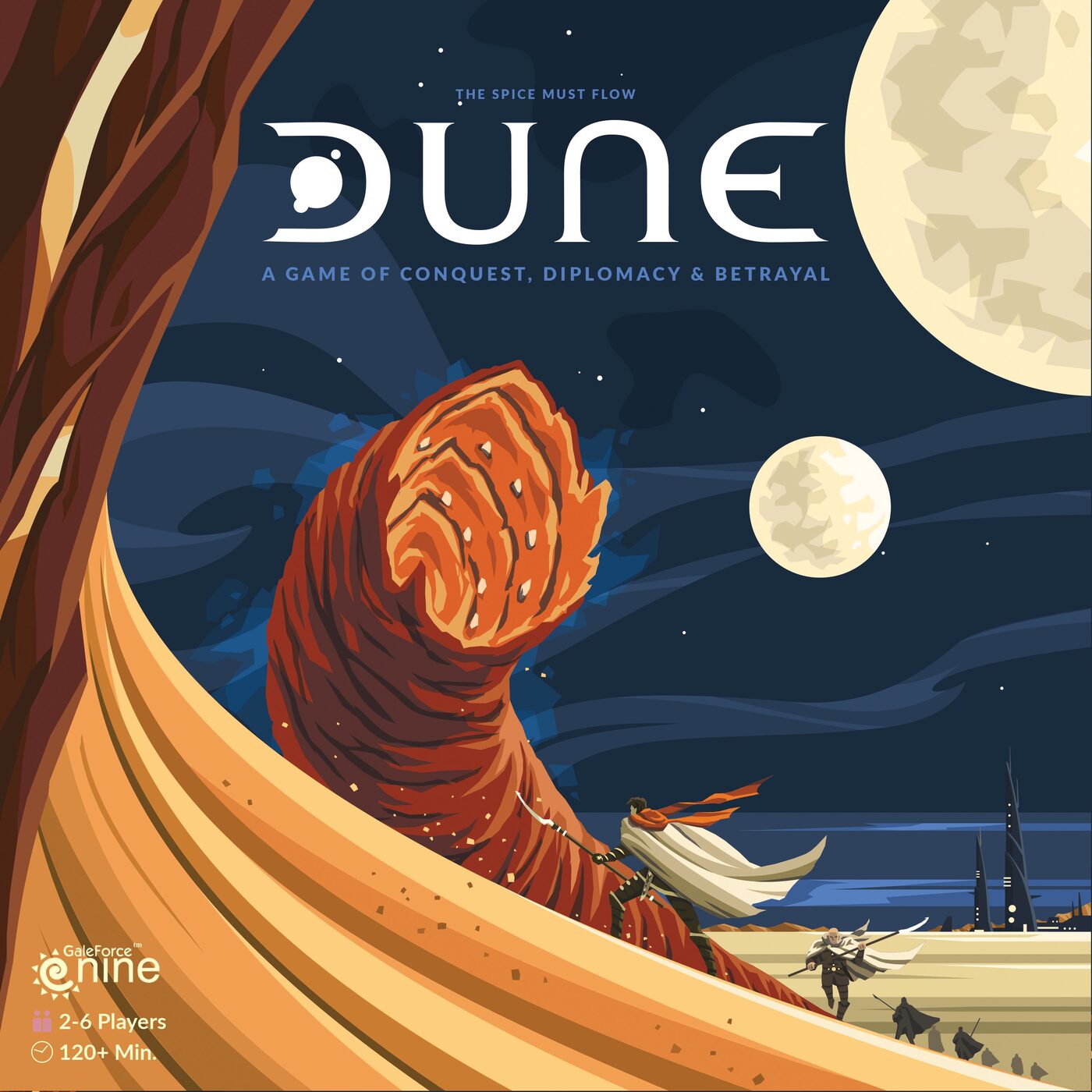
If what you love about Root is that every faction at the table is fighting a completely different battle - with different rules, different advantages, and different paths to victory - Dune is the original template for all of it.
Dune, the 2019 Gale Force Nine reprint of the 1979 Avalon Hill classic, is one of the most asymmetric games ever published. Six factions compete across Arrakis for control of the spice and the Harkonnen homeworld. Each one plays differently in ways that go far beyond what most “asymmetric” games attempt.
The Bene Gesserit can predict outcomes and place advisors next to almost any battle without participating. The Spacing Guild controls the transport network and earns money from every shipment. The Fremen move across the desert without paying transport costs and ally with the sandworms. The Harkonnen get a massive starting hand and can steal cards outright. The Atreides can see the top cards of the treachery deck. The Emperor has the strongest forces in the game but also has to fund everyone else’s bankroll indirectly.
No other game on this list - including Root - has faction asymmetry this extreme. These aren’t different starting positions or stat modifiers. These are different operating rules. A game between the Fremen player and the Spacing Guild player involves near-completely separate concerns.
What Root players need to know going in: Dune is heavier and more time-intensive than Root. The weight clocks at 3.98 and the runtime at 2-3 hours. It’s also better at 5-6 players, which creates a table commitment Root doesn’t require. And the political negotiation here is explicit - alliances are forged, deals are struck, betrayals happen in the open. If Root’s political layer felt implicit and occasionally frustrating, Dune will feel either thrilling or exhausting depending on your group.
BGG weight: 3.98 / Rating: 7.92 / Players: 2-6 / Time: 120-180 min
Who it’s for: Root players who thought the factions weren’t quite different enough and who have a reliable 4-6 person group comfortable with longer, politics-heavy sessions. The faction asymmetry ceiling here is higher than almost anything else in the hobby.
Cosmic Encounter
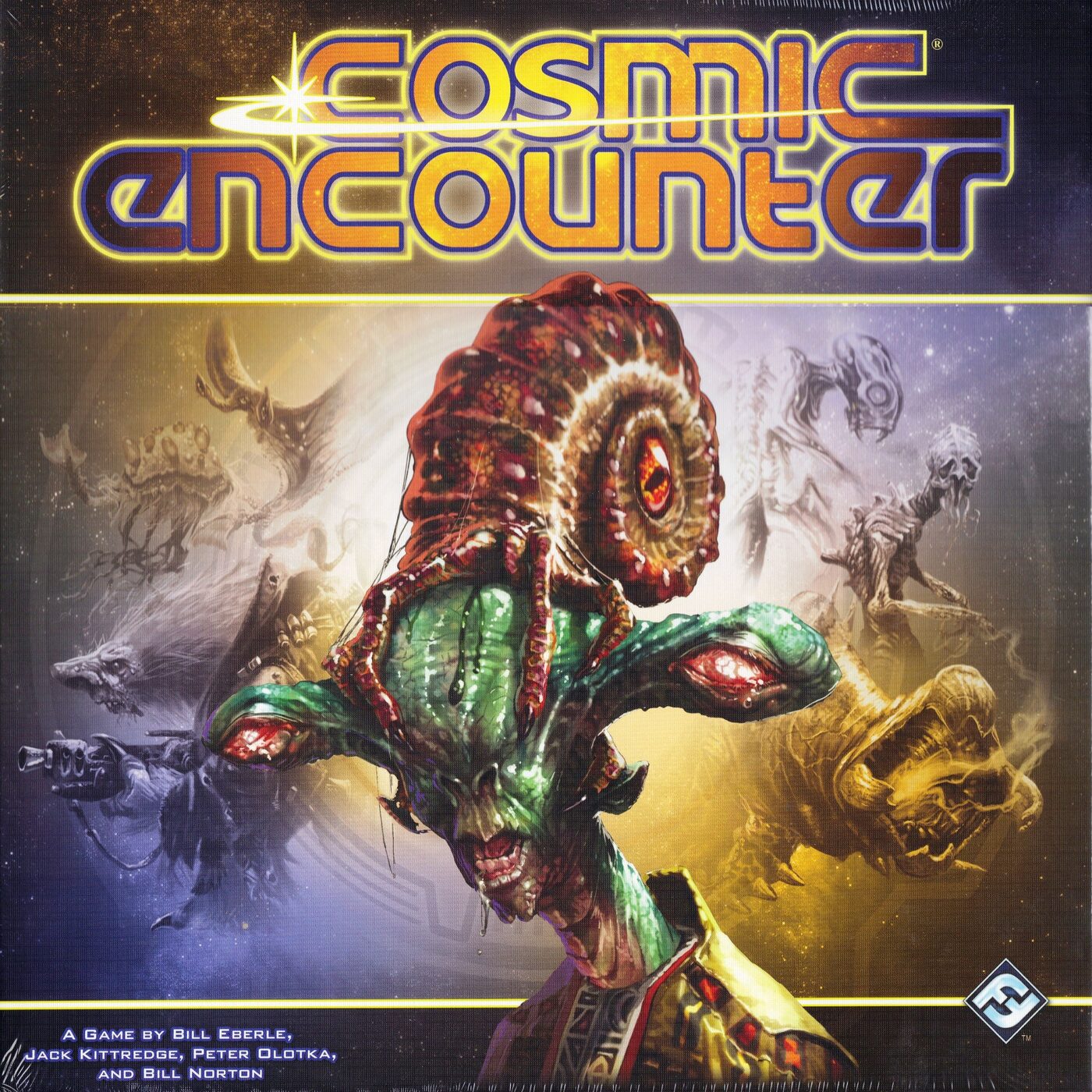
If the part of Root you love most is how wildly different each faction feels - and the delightful chaos of abilities that break their own rules - Cosmic Encounter is where that design philosophy was born.
Cosmic Encounter is one of the oldest designs in the hobby, originally from 1977, and it still does something that very few games have matched: every alien power is a rule-breaker. The Virus multiplies its forces exponentially in combat. The Zombie returns its ships from the warp for free. The Loser wins by losing. The Clone copies whatever alien power the opponent is using. The Grudge ignores combat results when attacking players who have beaten it before.
None of these are cosmetic differences. Each alien bends a core rule in a way that reshapes how you play, how your opponents play around you, and what alliances make sense at any given table. When you pair Root’s appeal to faction identity with Cosmic’s long history of producing aliens that each feel like a genuine breakthrough, the connection is clear: both games are fundamentally about “your rules are not my rules.”
The contrast is in tone and structure. Root is a controlled, strategic area-control game with a defined arc. Cosmic Encounter is negotiation chaos on a cosmic scale. Players form alliances mid-combat, defend each other’s colonies, and anyone can win at any time by establishing five colonies. The game length is unpredictable, the diplomacy is live and messy, and the weight is significantly lighter - 2.58 to Root’s 3.84. It’s a different kind of fun, more explosive and party-adjacent than Root’s precision.
But if someone asks “what game first proved that factions can be genuinely asymmetric in ways that change how the entire game functions,” Cosmic Encounter is the answer. Everything Root and its descendants learned about faction design comes from a line that runs through this game.
BGG weight: 2.58 / Rating: 7.51 / Players: 3-5 / Time: 60-120 min
Who it’s for: Root players who want a lighter, more social, more chaotic take on faction asymmetry. Good for groups that respond to negotiation and chaos over careful area-control planning.
Vast: The Crystal Caverns
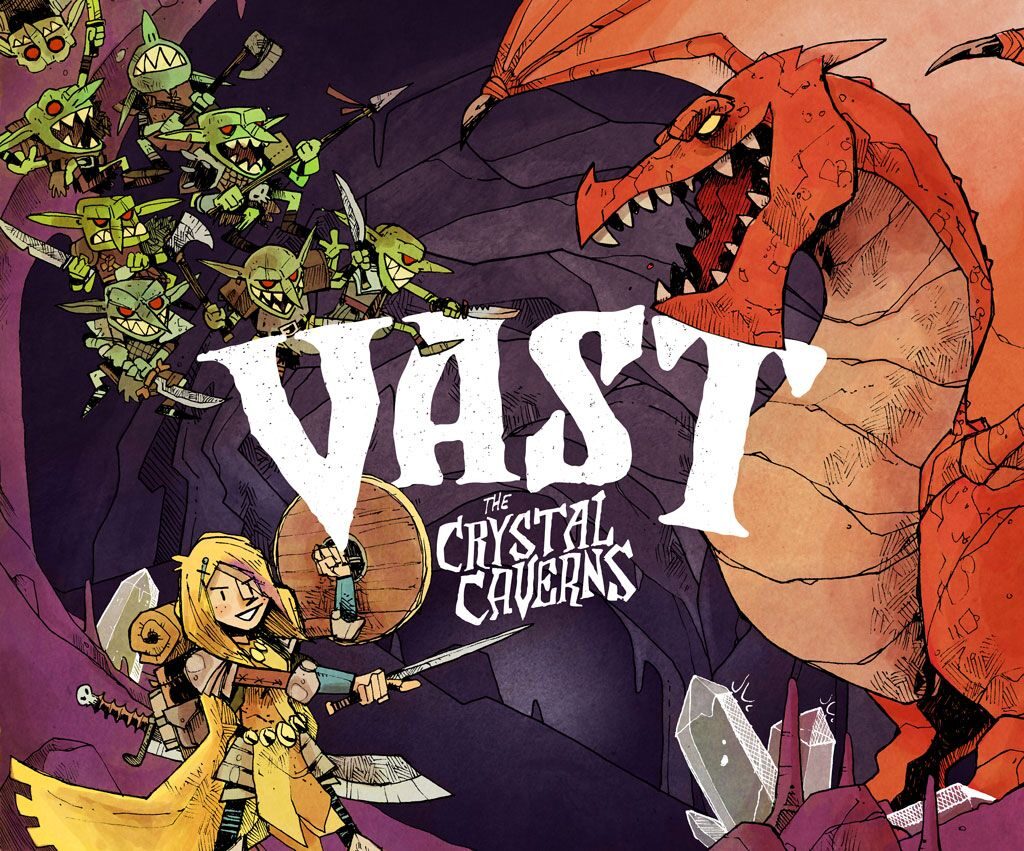
If you want to see asymmetric design taken as far as it can possibly go - each player not just playing differently, but playing what feels like an entirely separate game - Vast is the answer. This is the deep cut.
Vast: The Crystal Caverns is worth flagging immediately: Root’s rulebook actually references Vast directly as a design influence. They share a publisher and a fundamental design philosophy. If Root is asymmetric area control, Vast is asymmetric dungeon crawl pushed to its absolute logical extreme.
Each role in the cavern is mechanically distinct to a degree that’s hard to convey without playing it. The Knight enters a dungeon populated by monsters and tries to kill the Dragon. The Dragon tries to wake up and escape. The Cave itself is a player who expands and reshapes the dungeon, with tile-placement as the primary mechanic. The Goblins swarm and multiply, threatening to overwhelm everything. The Thief tries to loot and escape before the dungeon collapses. Not one of these roles uses the same core loop. Explaining the game to new players means teaching five different games simultaneously.
That is also the game’s primary challenge. Vast requires everyone at the table to understand their role and all other roles well enough to make informed decisions. The first play is almost always messy. Setup is long. The learning curve is steep - weight 3.65 - and the ideal player count window is narrow. It earns a 7.08 on BGG from a smaller pool of dedicated players, and that score reflects both genuine love from its audience and the reality that it filters out a significant portion of casual groups.
But for the Root player who has played every faction multiple times and wants to experience what truly radical asymmetry feels like - what it means when every player at the table is literally running different mechanics - Vast: The Crystal Caverns is unlike anything else in the hobby.
BGG weight: 3.65 / Rating: 7.08 / Players: 1-5 / Time: 75-150 min
Who it’s for: Experienced Root players who want to see how far asymmetric design can go. Requires a committed group willing to invest in learning. Not a light recommendation - but a unique one.
The Quick Reference
| Game | BGG Rating | Weight | Players | Time | Root DNA |
|---|---|---|---|---|---|
| Pax Pamir 2e | 8.12 | 3.84 | 1-5 | 45-120 min | Political asymmetry, card play, coalition reading |
| Blood Rage | 7.89 | 2.88 | 2-4 | 60-90 min | Area control, drafting, clan identity, accessible |
| Dune | 7.92 | 3.98 | 2-6 | 120-180 min | Extreme faction asymmetry, political negotiation |
| Cosmic Encounter | 7.51 | 2.58 | 3-5 | 60-120 min | Rule-breaking faction powers, negotiation chaos |
| Vast: Crystal Caverns | 7.08 | 3.65 | 1-5 | 75-150 min | Radical role asymmetry, direct design influence |
Which One to Play Next?
- Closest to Root: Pax Pamir 2e - same designer, same political DNA, same satisfaction in reading opponents
- Best for groups new to asymmetric games: Blood Rage - lower barrier, faster teach, immediate visual payoff
- Deepest faction asymmetry in the hobby: Dune - the original and still the gold standard for “everyone plays differently”
- Lighter and chaotic: Cosmic Encounter - if Root feels too controlled, this is the chaos version
- Most radical design: Vast: The Crystal Caverns - the direct spiritual predecessor, taken to its logical extreme
All five earn their place on a shelf that already has Root. They’re not Root replacements - they’re different facets of the same underlying obsession: games where every player at the table is living in a different world, governed by different rules, working toward a different kind of victory.
That’s a hard problem to solve. These games all solved it differently. Any one of them is worth finding out.