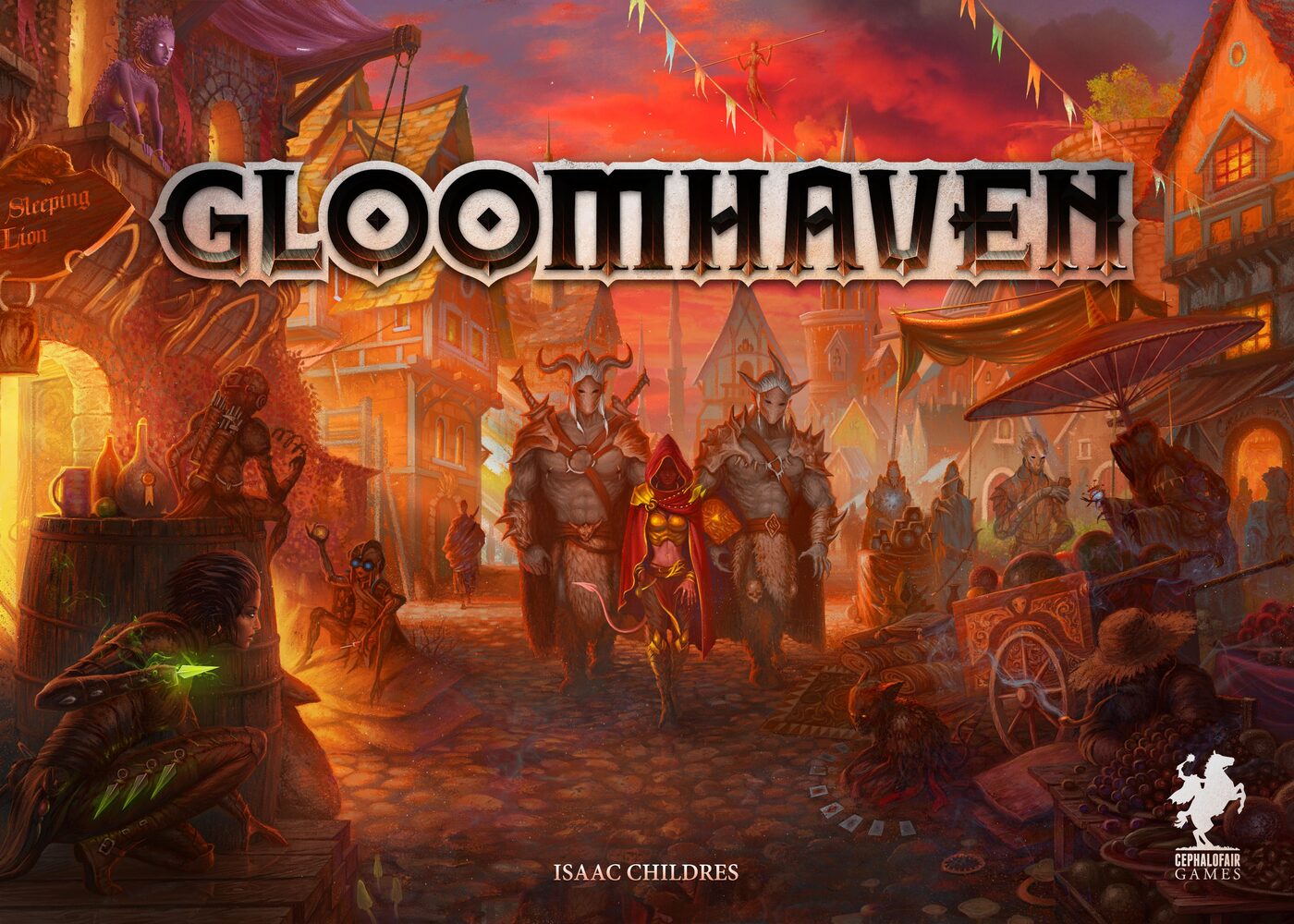
Gloomhaven needs no introduction, but the numbers still impress: BGG rank #4, a weight of 3.92 out of 5, rated 8.54 across more than 70,000 votes. It sat at #1 on BGG for years and single-handedly redefined what a dungeon crawl could be.
The card-based combat system, the persistent campaign with retiring characters, the branching scenario map - Gloomhaven proved that co-operative dungeon crawling could be deep, strategic, and narratively satisfying in a way that dice-chuckers never managed. It showed that big-box co-ops could compete with the best euros for tactical richness.
But Gloomhaven is also finite. The campaign ends. Characters retire for good. And then you find yourself staring at the empty box wondering what comes next.
These seven games are your answer. Each one captures something specific about why Gloomhaven works - and a few of them go further. Ordered from most immediately accessible to most demanding, so you can find your natural next step.
What Makes Gloomhaven Click
Before listing alternatives, it helps to identify exactly what Gloomhaven does:
- Card-driven abilities - no dice for attacks in the base game; positioning and card timing is everything
- Persistent campaign - characters grow, retire, unlock new classes; the world changes based on decisions
- Scenario-based structure - each session is a self-contained dungeon with a clear objective
- Tactical depth - monster AI is deterministic; the challenge comes from planning, not luck
- Long commitment - 95+ scenarios across a full campaign; this is a year-long project for most groups
Different games below hit different parts of that list. Pick your entry point.
1. Frosthaven (2022)
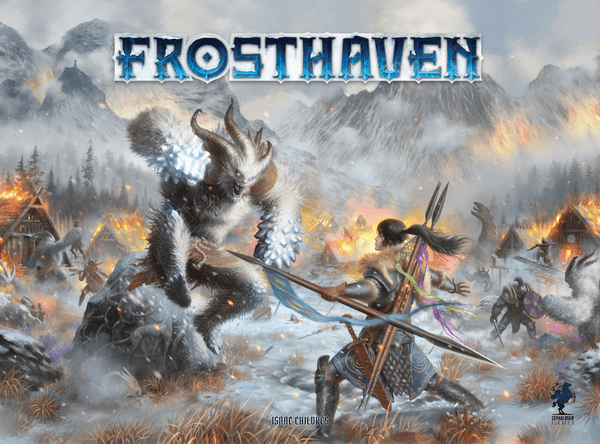
Frosthaven - Gloomhaven’s true successor, bigger and deeper in every way. Image © Cephalofair Games
Frosthaven | 1-4 players | 90-180 min | BGG rank #20 | Weight 4.41 | Rating 8.73
The obvious first stop. Frosthaven is Isaac Childres’s follow-up to Gloomhaven - same publisher, same design DNA, but rebuilt from the ground up rather than just expanded. It shipped as the most-funded board game Kickstarter at the time.
The combat system is immediately familiar: two-card hands, initiative, top/bottom ability splits. But Frosthaven adds an outpost-building layer between scenarios - you maintain a settlement, manage resources, and make decisions that affect which buildings you can construct and which upgrades unlock. This creates strategic weight outside the dungeon, not just inside it.
The sixteen new character classes are outstanding, each with its own mechanical identity. The Boneshaper summons skeletons that can be sacrificed for effects. The Geminate has two separate hand sizes that flip between modes. The Drifter stacks persistent bonuses across multiple rounds. These are cards that feel nothing like each other.
Who it’s for: Gloomhaven veterans who want the same deep campaign experience with fresh mechanics and a longer, more complex arc. Budget 6-12 months of regular sessions.
2. Oathsworn: Into the Deepwood (2022)
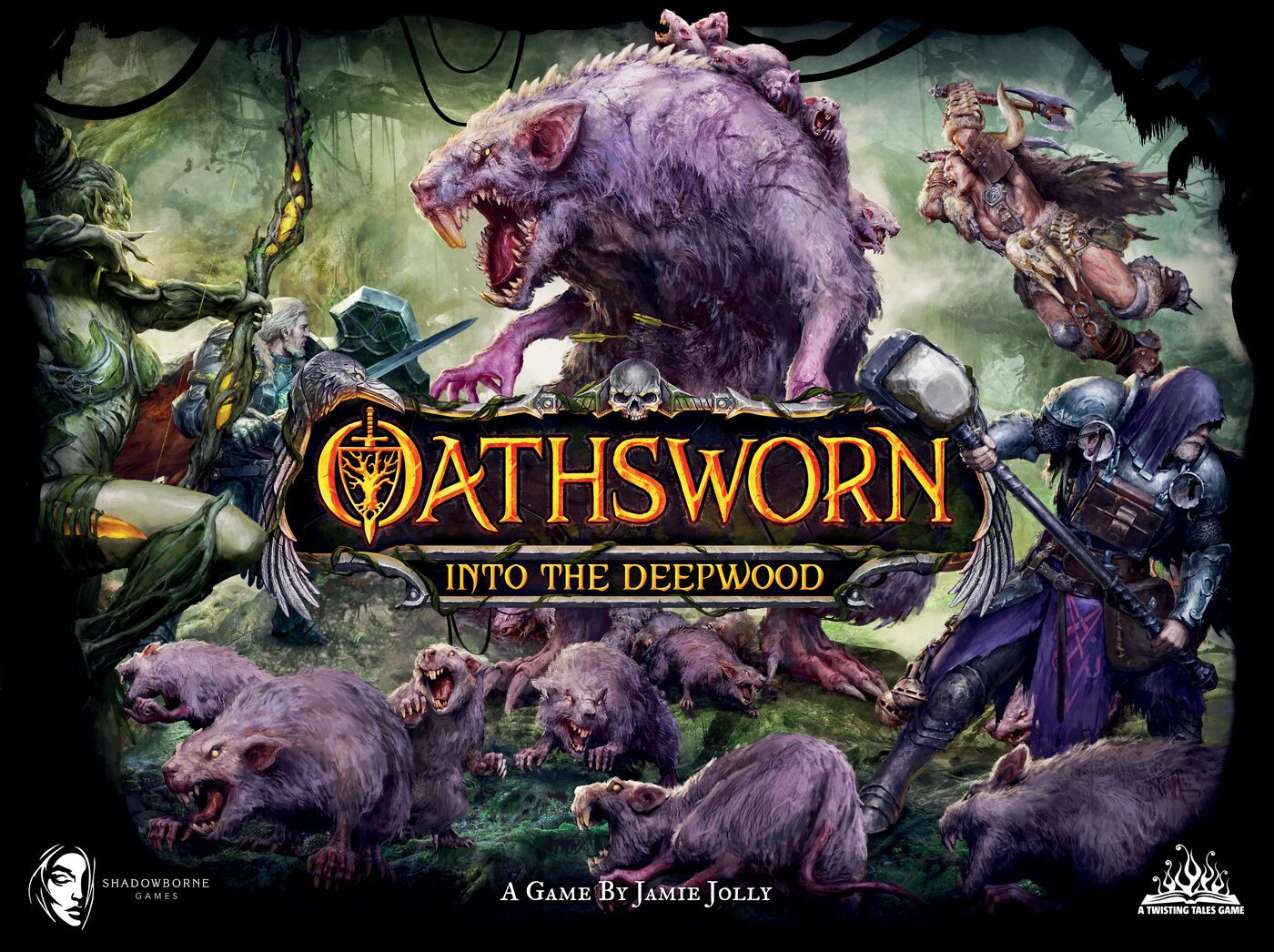
Oathsworn delivers story-driven combat unlike anything else in the dungeon-crawl space. Image © Shadowborne Games
Oathsworn: Into the Deepwood | 1-4 players | 30-90 min per scenario | BGG rank #63 | Weight 3.69 | Rating 8.76
Oathsworn rates higher than Gloomhaven on BGG - 8.76 versus 8.54 - which tells you something important. This game has a fanatical audience for good reason.
Combat in Oathsworn uses a deck that represents your collective morale. Every ability costs morale cards; every hit against you costs morale cards. Run out, and your group is broken - not dead, but routed. This creates a completely different tension from Gloomhaven’s exhaustion system. You’re never just managing HP; you’re managing your will to fight.
The story is genuinely exceptional for a board game. Each session includes voiced narration (QR codes on scenario pages), and the choices you make carry real weight - characters die permanently, relationships shift, the world responds to what your Oathsworn do. The production is enormous: custom miniatures, full art cards, an original fantasy setting built entirely for this game.
Who it’s for: Players who want Gloomhaven’s tactical depth and a story worth caring about. Particularly strong for 2-player sessions.
3. Mage Knight Board Game (2011)
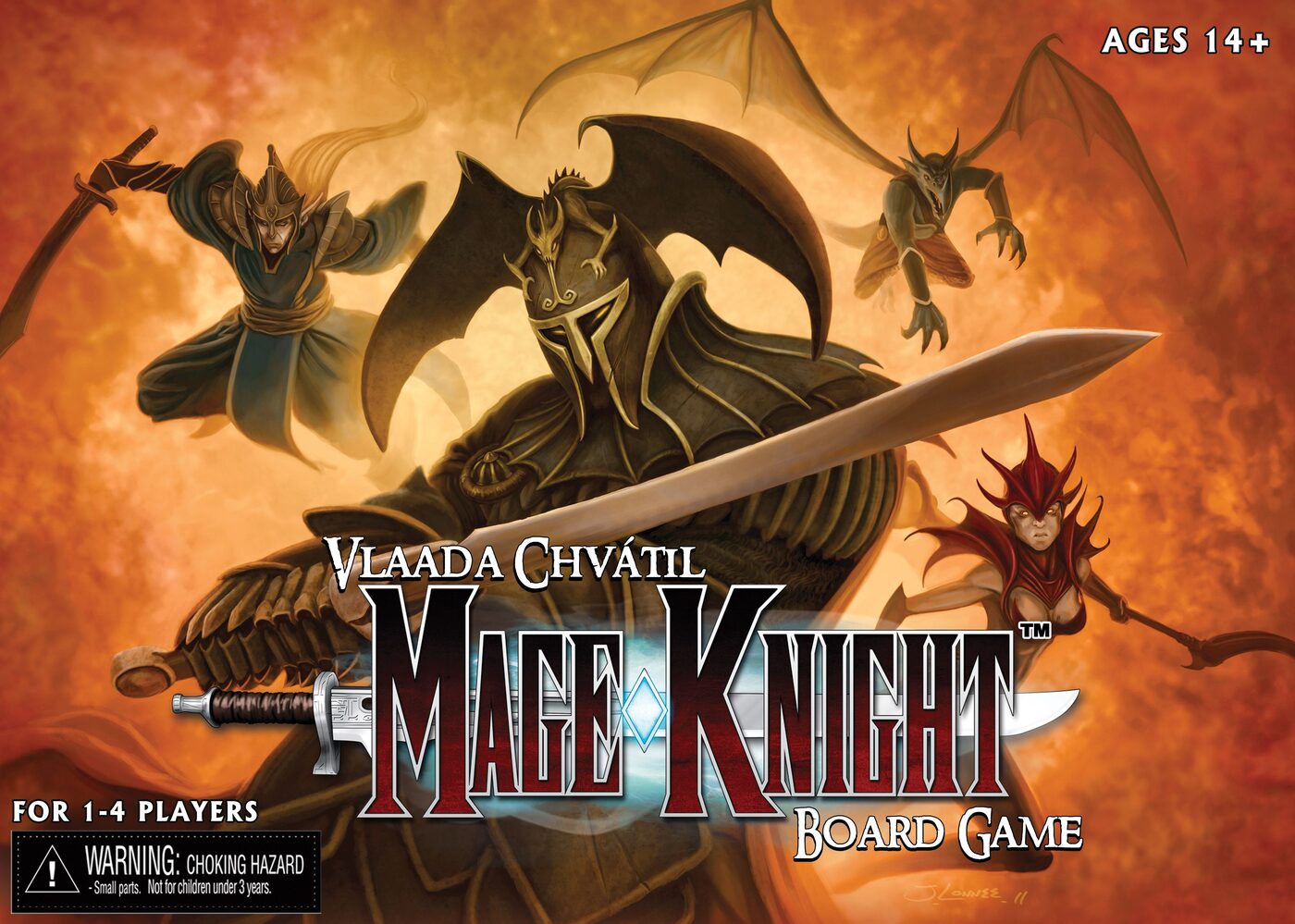
Mage Knight - the game that proved solo dungeon crawls could be genuinely deep. Image © WizKids
Mage Knight Board Game | 1-4 players | 60-240 min | BGG rank #40 | Weight 4.38 | Rating 8.08
Mage Knight predates Gloomhaven by six years and remains one of the most demanding games ever published. Weight 4.38 - heavier than Frosthaven, heavier than almost anything. This is not a gentle alternative. But if Gloomhaven left you craving something that pushes back harder, Mage Knight delivers.
The core difference is the open map. Instead of a fixed scenario dungeon, you explore hex tiles that reveal as you move - cities, dungeons, monster dens, ruins. Combat uses a mana-powered card system where you build attack combos on the fly, block efficiently, and plan your positioning across multi-room fights. A single scenario can fill an entire day.
The solo experience is particularly acclaimed. Mage Knight at solo forces you to play both tactically (this fight, these cards) and strategically (the whole campaign arc, levelling path, which cities to sack before the finale). It’s as close as board gaming gets to a single-player RPG without a GM.
Who it’s for: Experienced dungeon-crawlers who want maximum challenge and don’t mind a steep learning curve. Read the rulebook twice before your first game.
4. Sleeping Gods (2021)
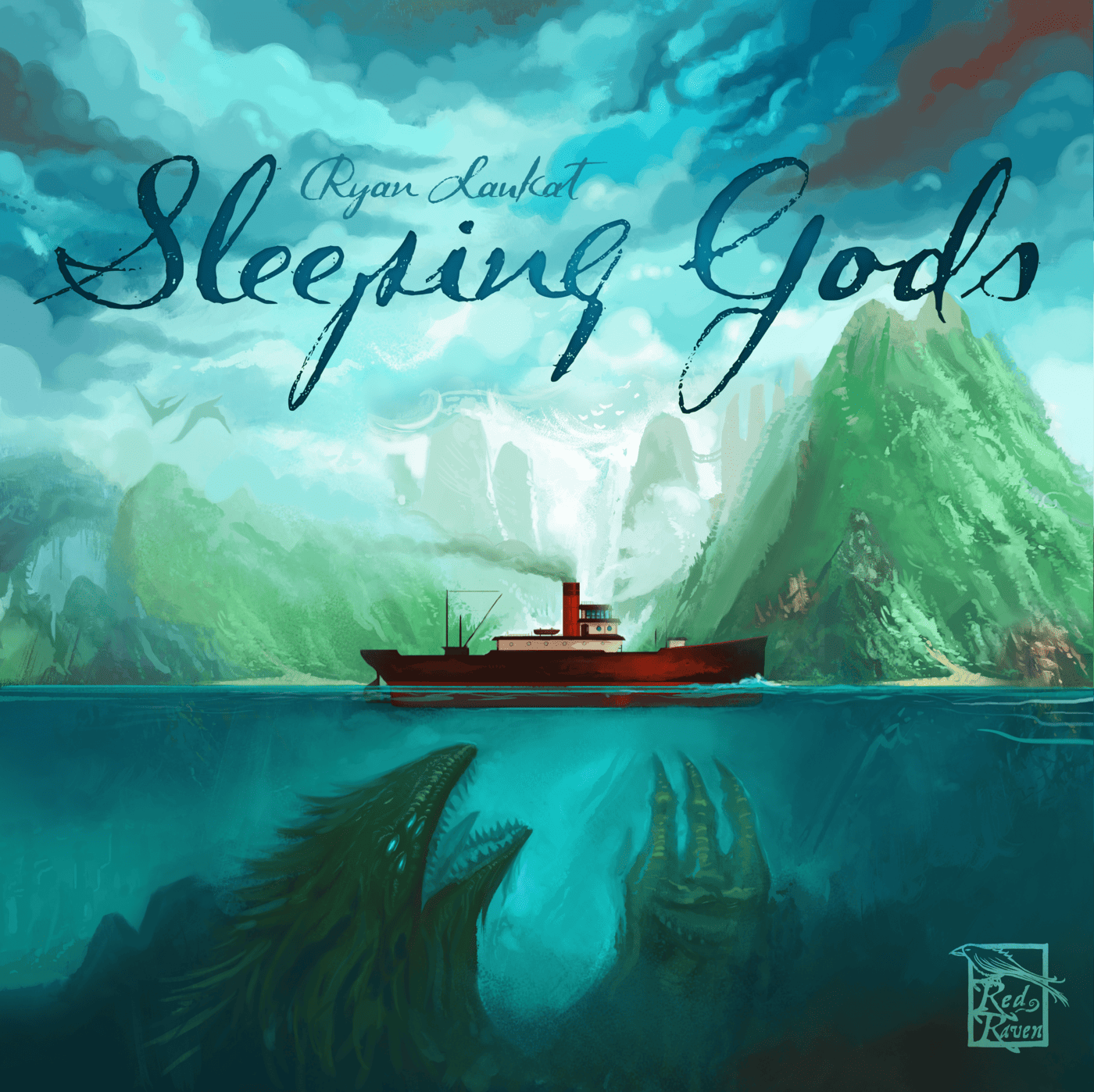
Sleeping Gods trades dungeon combat for open-ocean exploration - but the narrative depth rivals anything in the genre. Image © Red Raven Games
Sleeping Gods | 1-4 players | 60-1200 min (full campaign) | BGG rank #74 | Weight 3.26 | Rating 8.09
Sleeping Gods is the narrative outlier on this list. You’re not crawling dungeons - you’re sailing an unknown ocean, discovering islands, meeting NPCs, and fighting awakened gods. But it shares Gloomhaven’s most important quality: a persistent world where every decision matters and your characters evolve over many sessions.
The campaign atlas is a physical book of hex maps and numbered entries (think a Choose Your Own Adventure crossed with an atlas). Combat uses card play and dice, but the encounters are primarily about exploration - finding totem pieces, building relationships, managing crew fatigue. Sessions have a natural pace that Gloomhaven lacks; you can stop mid-ocean without losing anything.
The solo experience - one captain, a small crew - is consistently rated among the best in the hobby. The emotional weight of the story hits harder in solo because every loss is yours alone.
Who it’s for: Gloomhaven fans who want a rich persistent campaign but prefer exploration and story over tactical combat. Particularly good for players who want something their non-gamer partner might enjoy.
5. Star Wars: Imperial Assault (2014)
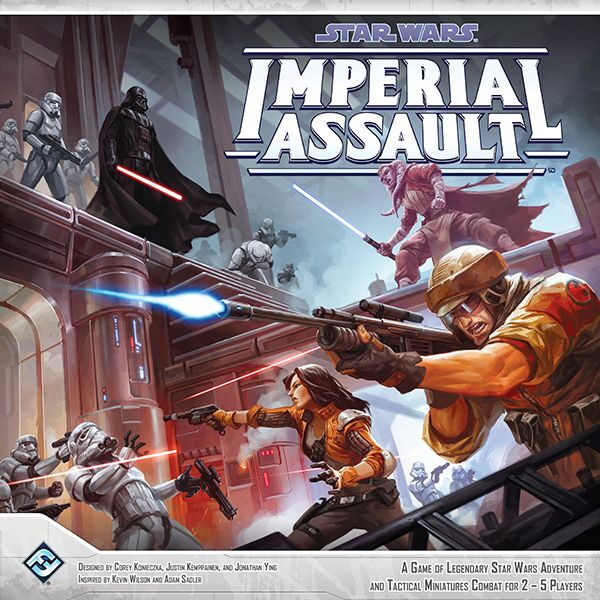
Imperial Assault wraps Descent-style dungeon combat in one of the most recognisable settings in fiction. Image © Fantasy Flight Games
Star Wars: Imperial Assault | 2-5 players | 60-120 min | BGG rank #87 | Weight 3.30 | Rating 7.95
Imperial Assault runs on a simpler engine than Gloomhaven - dice resolution, action point movement, line-of-sight rules - but it delivers one of the best campaign structures in dungeon-crawl gaming. One player runs the Empire (or you use the companion app for fully co-operative play); everyone else controls Rebel heroes.
The scenario design is tight and varied: some missions are assassination runs, some are timed extractions, some are defensive last stands. The Star Wars licence is used well - you fight AT-STs, recruit Chewbacca, find yourself inside the Death Star. For players who bounced off Gloomhaven’s custom fantasy setting, Imperial Assault offers an immediately familiar world with all the same tactical satisfaction.
The companion app made this fully co-operative in 2017 and it holds up well. An entire campaign of 30+ scenarios, character upgrades between missions, and side missions that flesh out each hero’s arc.
Who it’s for: Gloomhaven fans who want something slightly lighter, highly thematic, and Star Wars-flavoured. Excellent gateway into the genre.
6. Descent: Legends of the Dark (2021)
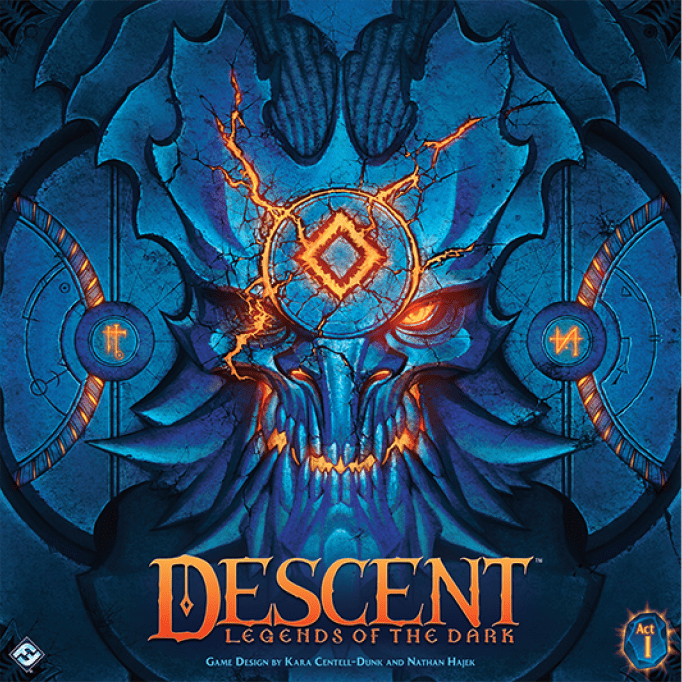
Descent: Legends of the Dark ditches the overlord entirely and goes fully app-driven - a deliberate step toward accessibility. Image © Fantasy Flight Games
Descent: Legends of the Dark | 1-4 players | 120-180 min | BGG rank #487 | Weight 2.69 | Rating 7.89
Descent: Legends of the Dark is the most accessible game on this list - weight 2.69, a full point lighter than Gloomhaven. The app handles all monster AI, rules adjudication, and the campaign map, which dramatically reduces setup time and cognitive load. You focus on hero abilities, positioning, and card decisions; the app handles everything else.
The production is spectacular. The game ships with enormous 3D dungeon tiles - doors that open, moveable walls, fire tokens, darkness mechanics. Setting up a scenario takes 20 minutes but the resulting table looks extraordinary. The campaign runs around 20 scenarios across a continuous story, shorter than Gloomhaven but well-paced and complete.
The lower BGG rank compared to others on this list reflects Descent’s more accessible design philosophy rather than poor quality. Players who found Gloomhaven overwhelming often cite Descent as the game that made dungeon crawls click.
Who it’s for: Groups who want the dungeon-crawl experience without Gloomhaven’s rulebook overhead. Also excellent for mixed-experience groups where not everyone wants to track card combos.
7. Aeon’s End (2016)
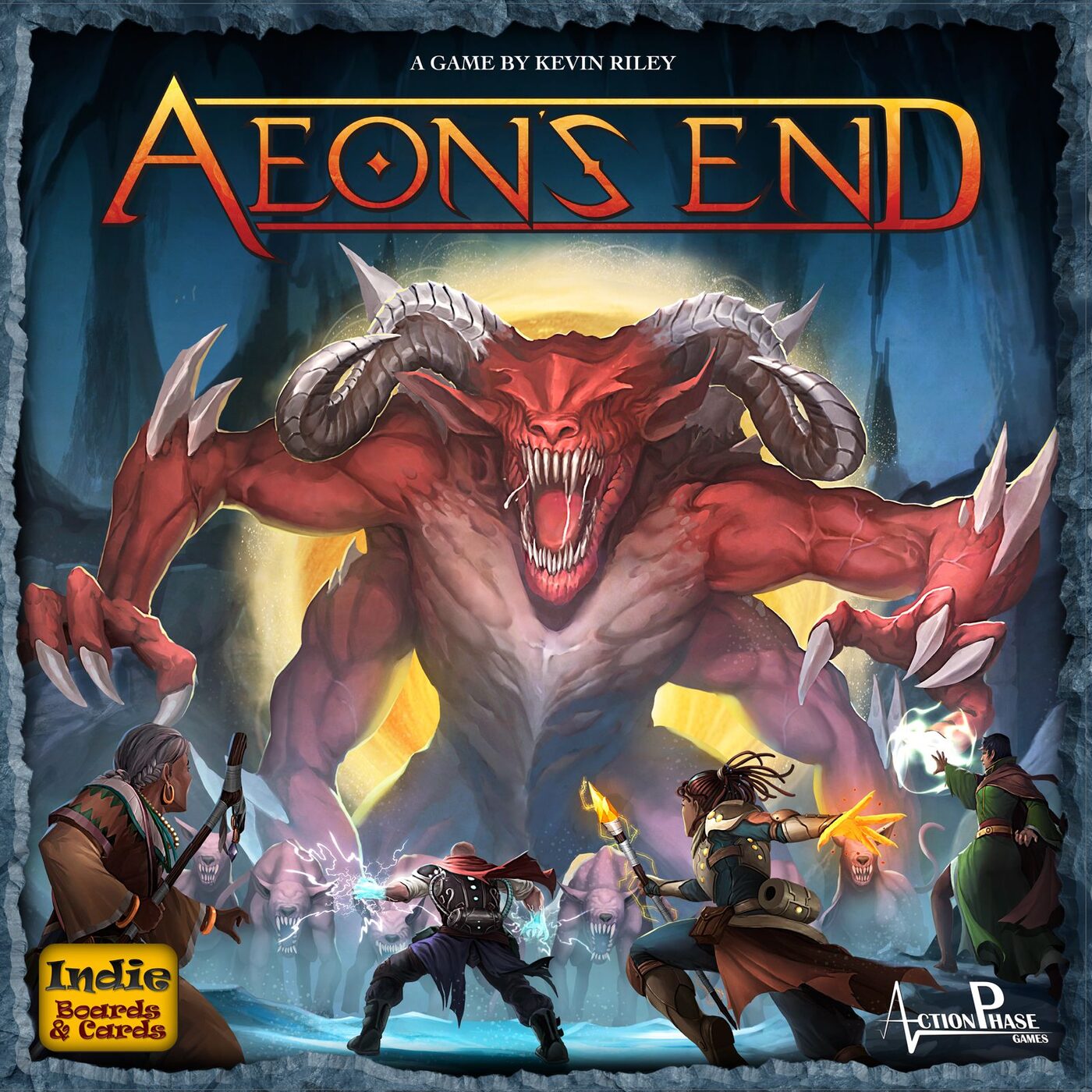
Aeon’s End strips the dungeon back to pure card combat - and finds something genuinely brilliant in the space. Image © Indie Boards & Cards
Aeon’s End | 1-4 players | 60 min | BGG rank #108 | Weight 2.80 | Rating 7.86
Aeon’s End is an oddity: it’s a co-operative deckbuilder where the deck never shuffles. You control the order cards return to your draw pile, which transforms each hand from random luck to careful engineering. Plan your deck’s cycling well enough, and you can reliably combo off. Let it go wrong, and you’ll face a nemesis with your worst cards leading.
The thematic hook is mages defending the last city, Gravehold, from ever-evolving nemesis bosses. Each nemesis is asymmetric and attacks differently; each mage has a unique starting deck and special ability. Games typically run 45-75 minutes, far shorter than a Gloomhaven scenario - which makes Aeon’s End the strongest pick for groups who love the tactical card-combo feel but can’t commit to multi-hour sessions.
The Legacy edition, Aeon’s End: Legacy, takes the system into campaign territory with permanent character changes, city upgrades, and a story arc. If you love Gloomhaven’s growth system and want it in a tighter format, Legacy is the direct answer.
Who it’s for: Gloomhaven players who love the card-play mechanics but want something they can finish in a single sitting. Great for two players, works well solo.
Quick Comparison
| Game | BGG Rank | Weight | Players | Session Length |
|---|---|---|---|---|
| Gloomhaven | #4 | 3.92 | 1-4 | 60-120 min |
| Frosthaven | #20 | 4.41 | 1-4 | 90-180 min |
| Oathsworn | #63 | 3.69 | 1-4 | 30-90 min |
| Mage Knight | #40 | 4.38 | 1-4 | 60-240 min |
| Sleeping Gods | #74 | 3.26 | 1-4 | 60+ min |
| Imperial Assault | #87 | 3.30 | 2-5 | 60-120 min |
| Descent: Legends of the Dark | #487 | 2.69 | 1-4 | 120-180 min |
| Aeon’s End | #108 | 2.80 | 1-4 | 60 min |
BGG data verified July 2026.
Where to Start
If you want more Gloomhaven: Play Frosthaven. There’s no real alternative.
If you want a richer story: Oathsworn for tactical depth with narrative weight; Sleeping Gods for open-world exploration.
If you want maximum difficulty: Mage Knight. Clear your schedule.
If you want something lighter: Descent: Legends of the Dark for production quality with reduced complexity; Aeon’s End for shorter sessions with strong tactical decisions.
If you want a theme that hooks your group: Star Wars: Imperial Assault. The licence does serious work here.
All seven games are worth owning. The dungeon-crawl genre has never been richer.