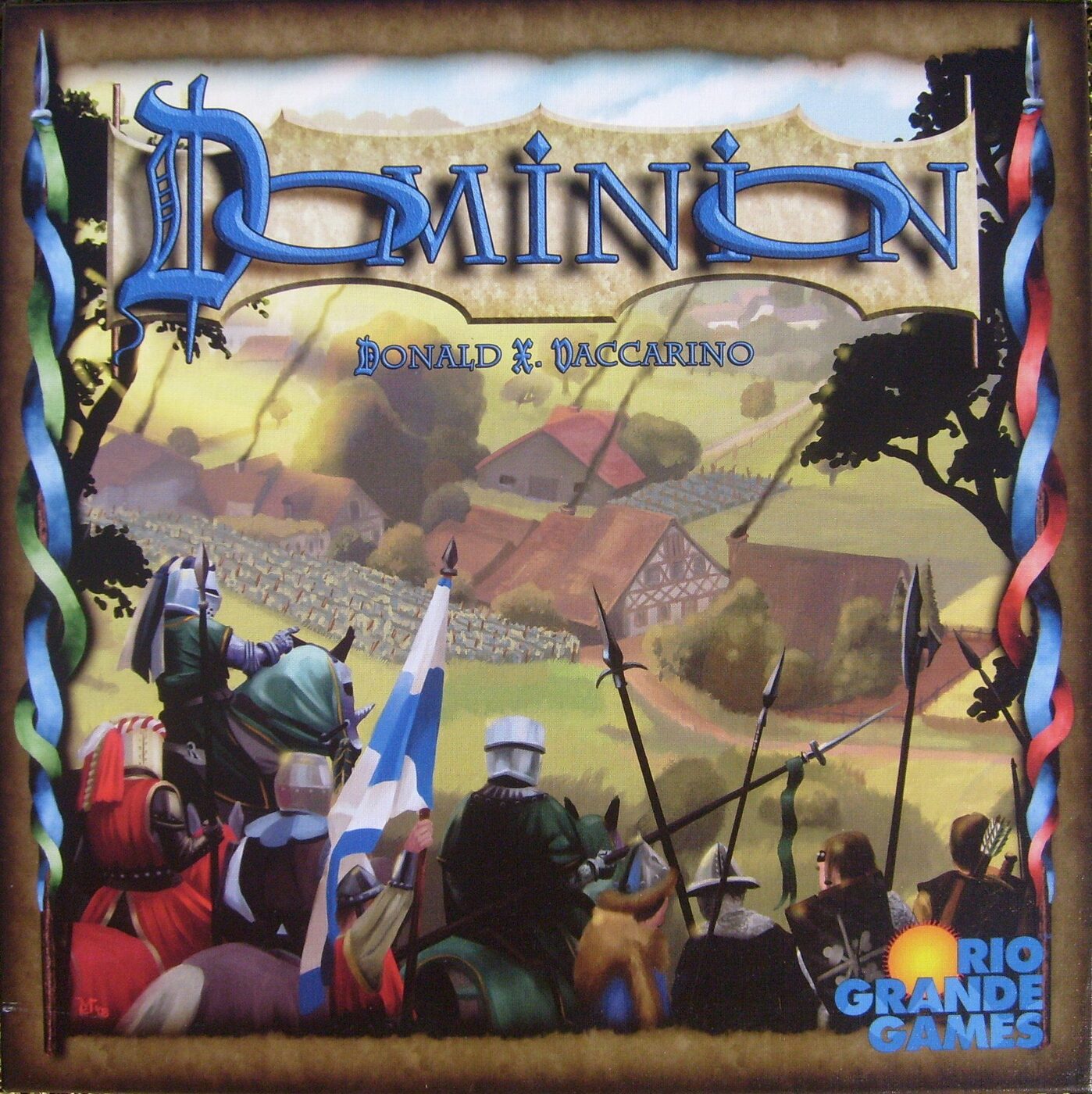
Dominion - BGG #146 · Rating: 7.60 · Weight: 2.3/5 · Players: 2-4 · Time: 30 min
In 2008, Donald X. Vaccarino quietly released a card game about buying cards, and broke board gaming. Dominion didn’t just win the Spiel des Jahres - it spawned an entire genre. Every deck-building game published since owes something to it: the shared market, the card cycling, the tension between buying power and deck density.
What makes Dominion endure isn’t just that it invented the mechanic. It’s that the core loop is exceptionally clean. You start with a weak deck of Coppers and Estates, slowly replace them with better cards, and try to squeeze more efficient turns from the same 5-card draws than your opponents. The kingdom cards - 10 of 250+ options - ensure no two games play the same. Fifteen years in, serious players are still debating whether Witch is too strong.
But Dominion’s deck stays in your hand. You don’t move. There are no monsters. No cooperative goals. No miniatures. If you’ve played it enough to want those things layered on, you’re in the right place. Here are seven deck builders that each solve a different “I wish Dominion had…” problem.
If You Want More Game Around the Deck Building
1. Clank! A Deck-Building Adventure
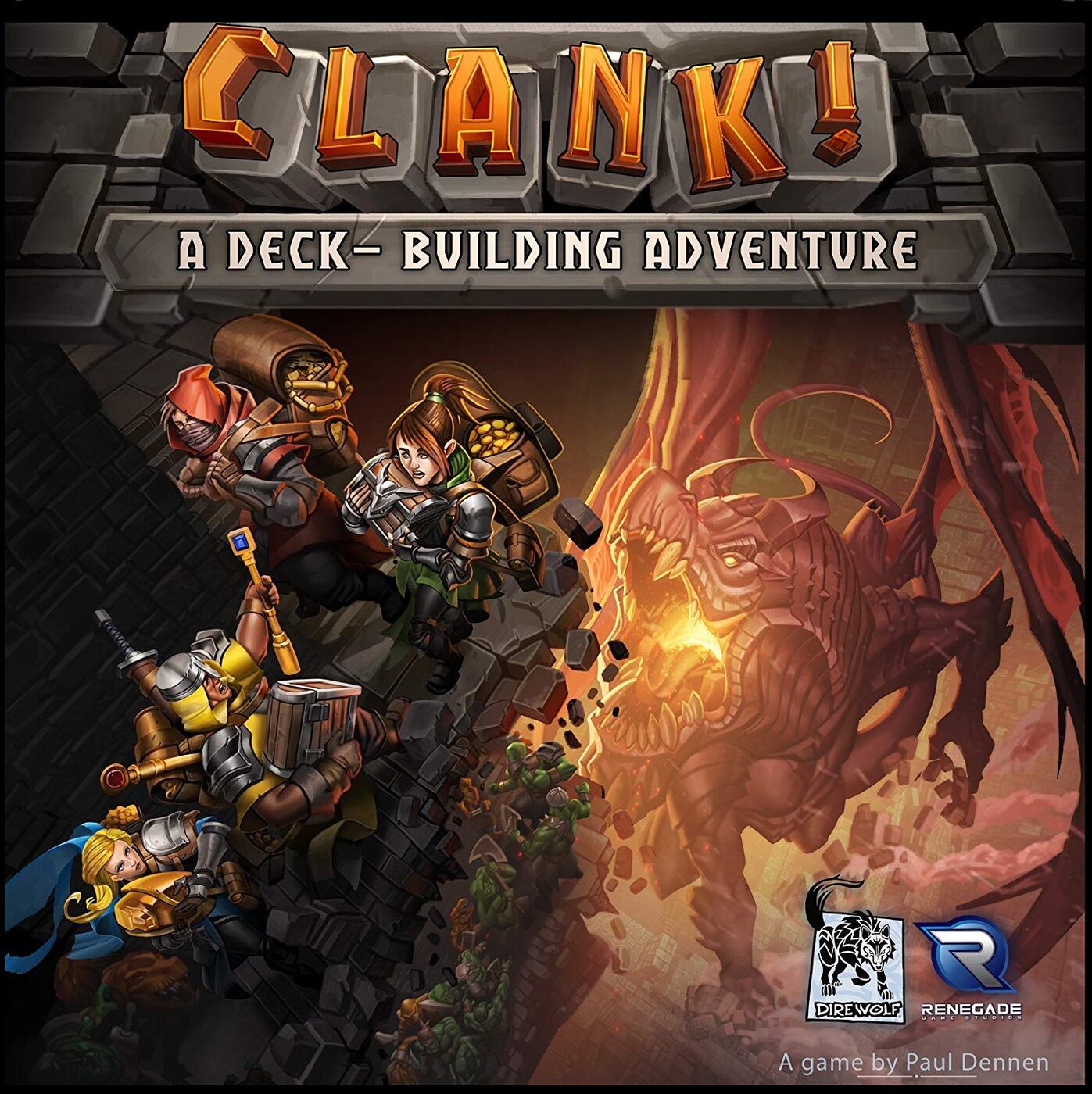
BGG #103 · Rating: 7.76 · Weight: 2.2/5 · Players: 2-4 · Time: 60 min
Clank! answers the most common Dominion complaint: nothing happens in the world. Here, the deck building is wrapped around a dungeon crawl. You’re moving your thief through a modular board, grabbing artefacts, running from a dragon, and trying to escape before you die - all while building your deck in real time.
The Clank! mechanic itself is elegant: certain cards add noise tokens (your “clank”) to a bag. When the dragon attacks, tokens are drawn from that bag - and anyone whose colour appears takes damage. So the deck-building decisions aren’t just about power efficiency. A cheap card that costs you three clank cubes might kill you if the dragon wakes up.
At weight 2.2, it sits just below Dominion’s 2.3, so the learning curve is comparable. The board adds about 15 minutes to setup but transforms the experience from a pure card puzzle into something with genuine tension and forward momentum.
Play this if: You want Dominion’s card economy but with spatial decisions, a board to explore, and actual stakes attached to your buying choices.
2. Aeon’s End
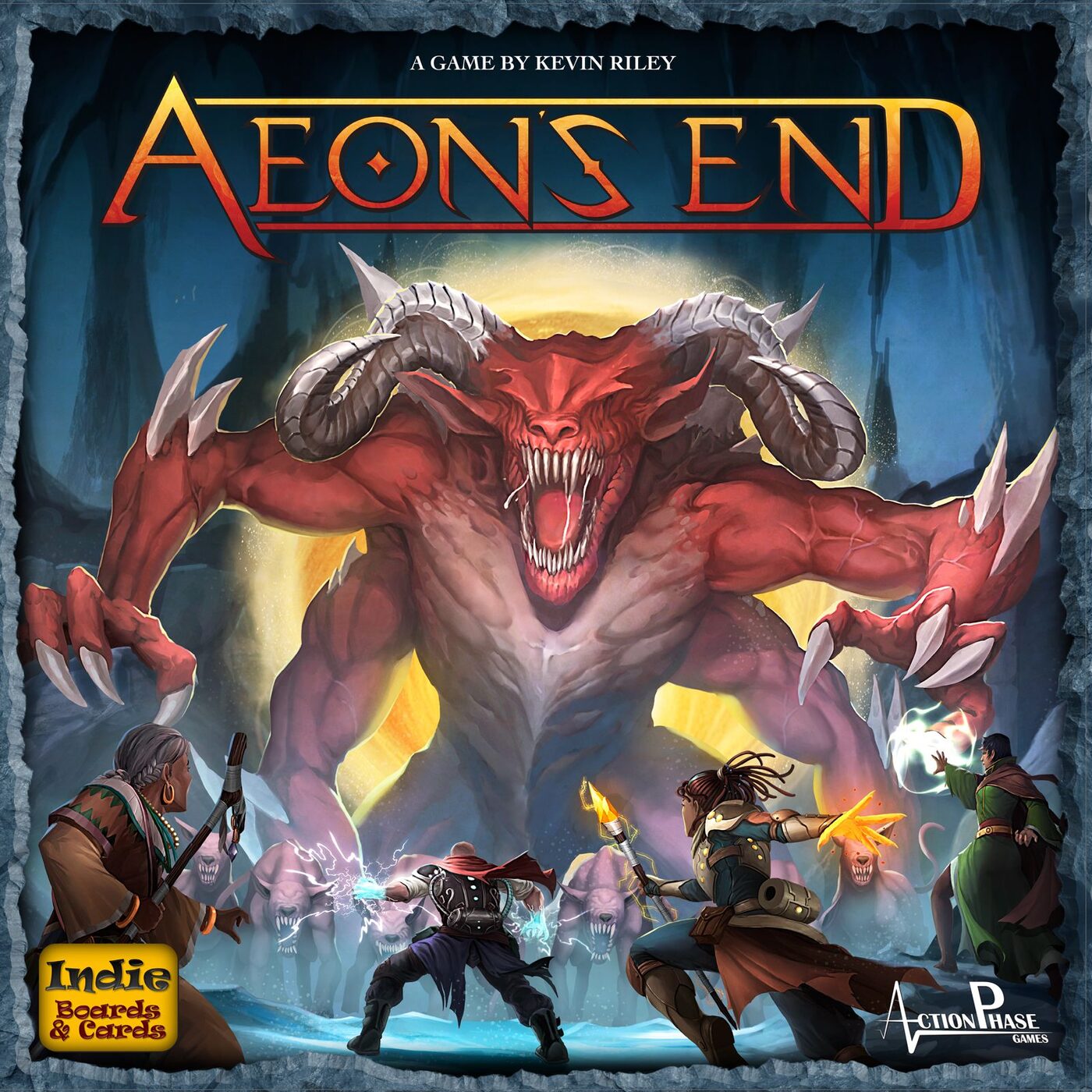
BGG #109 · Rating: 7.86 · Weight: 2.8/5 · Players: 1-4 · Time: 60 min
Aeon’s End does something no other deck builder does: you never shuffle your deck. When your draw pile runs out, you flip your discard pile upside down without shuffling and draw through it again. This sounds minor. It is not. Suddenly, card sequencing becomes as important as card selection - because you can engineer the order in which cards will appear three or four turns from now.
You’re playing cooperatively as mages defending the city of Gravehold against increasingly powerful nemeses (each with its own health bar, attack deck, and boss mechanics). Your breach slots let you pre-charge spells for massive burst turns. The randomised turn order - you never know who goes next until a card is flipped - creates an unusual kind of cooperative tension where you have to plan for outcomes, not just take your turn.
At weight 2.8 it’s a meaningful step up from Dominion, and the first game will likely overstay its welcome. But Aeon’s End rewards investment. The no-shuffle rule fundamentally changes how you think about deck building.
Play this if: You want cooperative deck building where sequencing matters, or if you want a game that rewards multiple plays with the same characters because your mastery of the deck actually improves.
If You Want the Competitive Rush, Faster
3. Star Realms
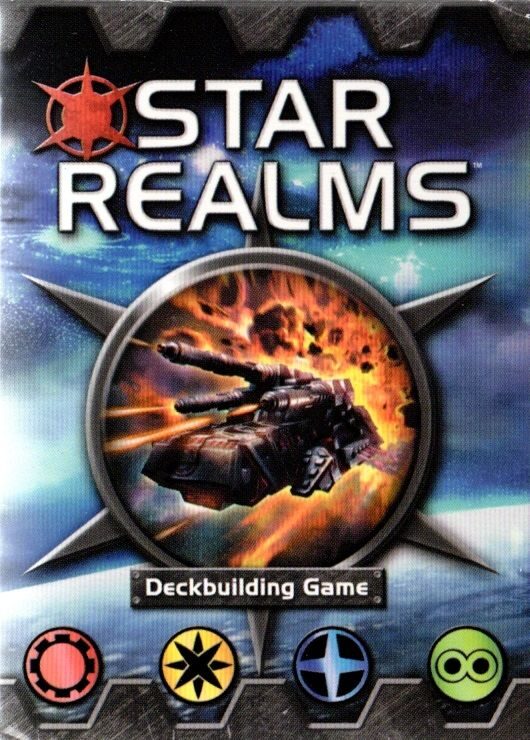
BGG #178 · Rating: 7.55 · Weight: 1.9/5 · Players: 2 · Time: 20 min
Star Realms is Dominion stripped to its competitive essence and crammed into a box the size of a paperback. Two players, one shared trade row of six cards, and the goal is simple: reduce your opponent’s authority (health) to zero. Instead of buying victory point cards, you’re buying attack power and deploying ships and bases to punch through defences.
The faction synergy mechanic - cards from the same faction trigger bonus abilities when played together - creates a satisfying meta-game within each hand. You’re not just buying the best card in the row; you’re buying toward a faction identity that will cascade later.
At weight 1.9 and 20 minutes per game, it’s an excellent lunchtime game or travel companion. The starter set (under £15) is one of the best value-for-money purchases in the hobby.
Play this if: You loved the competitive direct-confrontation feeling of Dominion’s Witch and Militia cards and wish the whole game was built around that aggression. Note it’s strictly 2-player.
4. The Quest for El Dorado
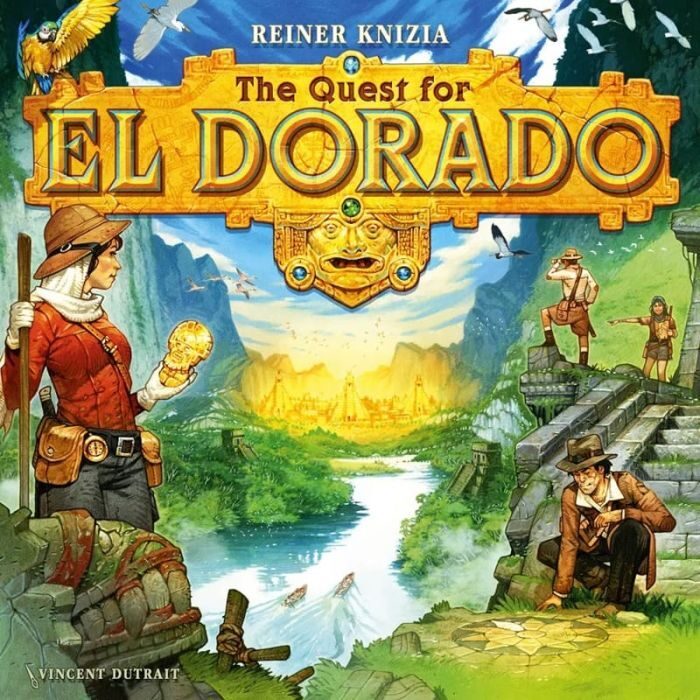
BGG #120 · Rating: 7.72 · Weight: 1.9/5 · Players: 2-4 · Time: 60 min
Designed by Reiner Knizia, El Dorado is the most approachable game on this list - and possibly the cleverest. You build a deck to move your explorer across a modular jungle board, racing opponents to El Dorado. Cards don’t give you money to buy cards; cards are the movement. A green card lets you cross jungle hexes. A blue card crosses water. Gold crosses anything.
The genius is the buying market: when you don’t need a card to move, you discard it to buy new cards from the row. So thinning and focusing your deck happens organically, without a dedicated mechanic. The board ensures every game has different terrain, and the modular tiles scale difficulty nicely.
At weight 1.9, it’s the easiest introduction on this list and works beautifully with people who found Dominion’s card complexity slightly overwhelming.
Play this if: You want to introduce deck building to non-gamers or family members, or want a game where the deck building serves a clear, tangible goal that everyone at the table can track.
If You Want Cooperative Deck Building
5. Legendary: A Marvel Deck Building Game
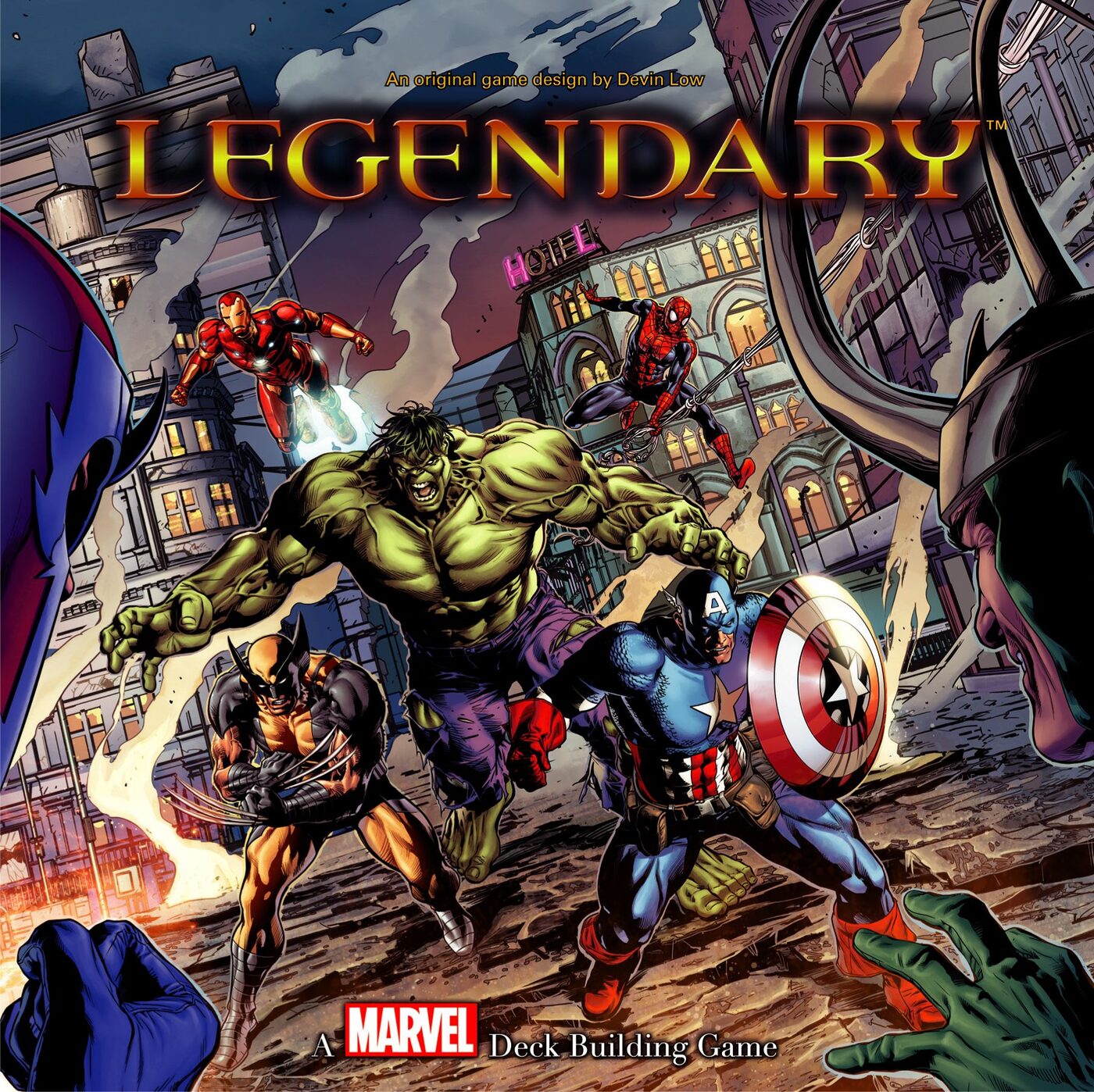
BGG #287 · Rating: 7.52 · Weight: 2.4/5 · Players: 1-5 · Time: 60 min
Legendary is semi-cooperative deck building at its most thematic. You and up to four others are building decks from hero cards - Spider-Man, Wolverine, Iron Man, hundreds more - trying to defeat a Mastermind villain who’s advancing a scheme across New York. The Mastermind punishes you each round with wounds and city-threatening schemes; you build your deck to punch hard enough to stop them before the city collapses.
The hero recruitment system mirrors Dominion’s buy phase almost exactly: a shared row of six hero cards, refreshed as they’re bought. But the combat system - attacking the villain city directly, fighting minions - replaces the victory-point race with a more dramatic finish. The expansions (dozens of them) add new heroes, masterminds, and schemes that fundamentally change how the game plays.
At weight 2.4 and up to 5 players, it scales better for larger groups than most deck builders and leans harder into IP appeal for Marvel fans who might otherwise never play a deck builder.
Play this if: Your group prefers cooperative play, or if Marvel/superhero theme is the hook that will get reluctant players to the table.
6. Hero Realms
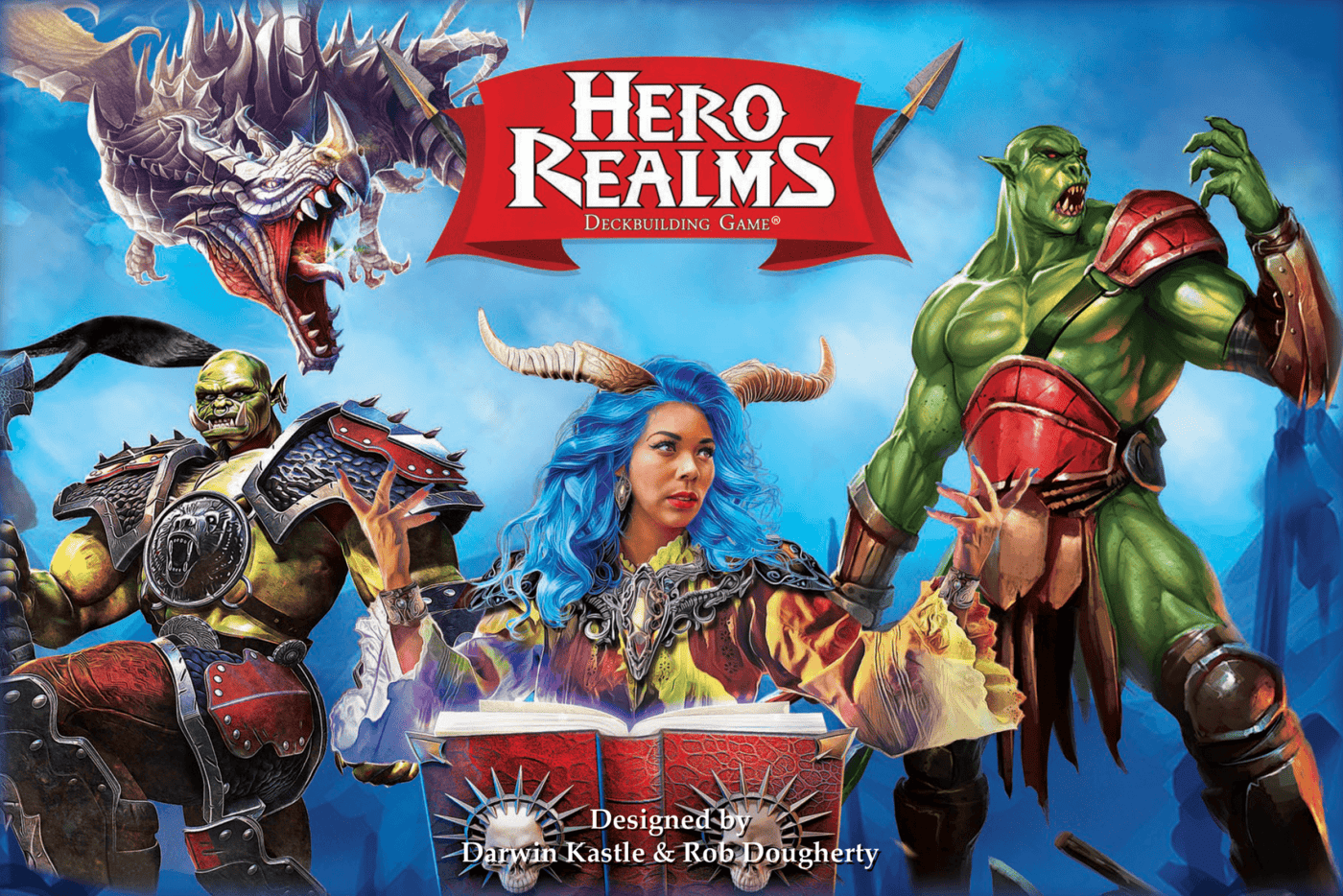
BGG #313 · Rating: 7.49 · Weight: 1.9/5 · Players: 2-4 · Time: 20 min
Hero Realms is Star Realms in a fantasy setting - and the changes are meaningful, not cosmetic. Where Star Realms locks you to 2 players, Hero Realms supports 2-4 in competitive free-for-all, or 2-4 cooperatively against a boss deck. Each player starts with a unique Character Pack (Cleric, Fighter, Ranger, Thief, Wizard) that gives them a personal starting ability and skews them toward different faction synergies.
The character asymmetry adds a layer Dominion never had: the Cleric heals allies and builds a defensive engine; the Wizard chains high-cost spell combinations; the Thief punishes opponents for holding cards. Same market, same turn structure as Star Realms - but the starting conditions create genuinely different playstyles.
At weight 1.9, it’s easier to teach than most games on this list, and the boss decks make the cooperative mode genuinely tense.
Play this if: You liked Star Realms but want the combat deck builder to support more players, or want the cooperative mode as a built-in alternative.
If You Want the Formula Twisted
7. Mystic Vale
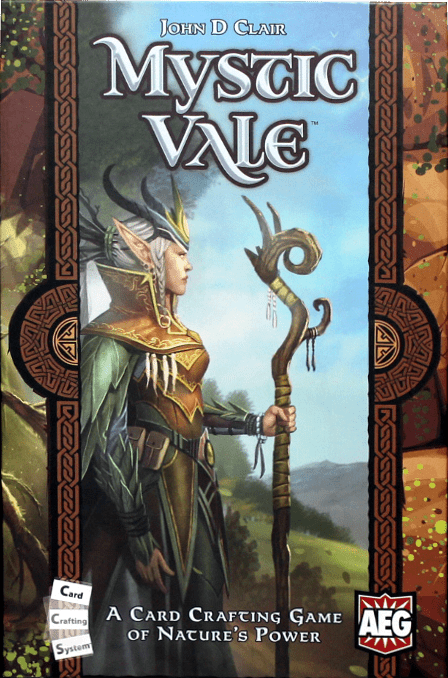
BGG #604 · Rating: 7.23 · Weight: 2.3/5 · Players: 2-4 · Time: 45 min
Mystic Vale doesn’t add cards to your deck. It adds enhancements to the cards already in your deck. Each card is a transparent sleeve you can slot additional card-thirds into - upgrading existing cards with new icons and abilities rather than replacing them. Designer John D. Clair calls it “Card Crafting.”
The practical effect is striking. Instead of thinning your deck by removing weak cards, you transform weak cards into strong ones. A basic card that generates one nature mana might, over several turns, become a three-mana generator with a bonus ability sleeved into its transparency. Your deck doesn’t grow so much as evolve.
The push-your-luck element adds tension: you flip cards face-up until you decide to stop or reveal three spoil symbols, at which point you’re poisoned. Managing that risk - going one card further for more mana - is the heartbeat of every turn.
At weight 2.3 - almost identical to Dominion - Mystic Vale is the most mechanically unusual pick on this list, and a good test of whether you like the customisation process as much as the card-buying one.
Play this if: You’ve absorbed enough deck builders that you want the formula itself questioned, not just reskinned. Mystic Vale rewards players who enjoy the system of deck building as much as the execution.
Quick Reference
| Game | BGG Rank | Weight | Players | Time |
|---|---|---|---|---|
| Clank! | #103 | 2.2 | 2-4 | 60 min |
| Aeon’s End | #109 | 2.8 | 1-4 | 60 min |
| The Quest for El Dorado | #120 | 1.9 | 2-4 | 60 min |
| Star Realms | #178 | 1.9 | 2 | 20 min |
| Legendary: A Marvel Deck Building Game | #287 | 2.4 | 1-5 | 60 min |
| Hero Realms | #313 | 1.9 | 2-4 | 20 min |
| Mystic Vale | #604 | 2.3 | 2-4 | 45 min |
Where to Start
If you own Dominion and want exactly one more deck builder:
- For the same weight, but with a board: Clank! - the dungeon makes the card decisions feel physical.
- For cooperative play: Aeon’s End if you want depth; Legendary if you want Marvel and more players.
- For something faster and cheaper: Star Realms (2-player) or Hero Realms (2-4) - both under £20.
- For introducing the genre to newcomers: The Quest for El Dorado - clearest goals, lowest cognitive load.
- For a genuinely different take on the mechanic: Mystic Vale - the card-crafting system won’t feel like anything else you’ve played.
Dominion remains the cleanest expression of the genre it created. But the best deck builders since have all found something specific to add - a board, a boss, a spatial race, a no-shuffle twist - rather than just copying the template. Any pick here will feel earned, not derivative.