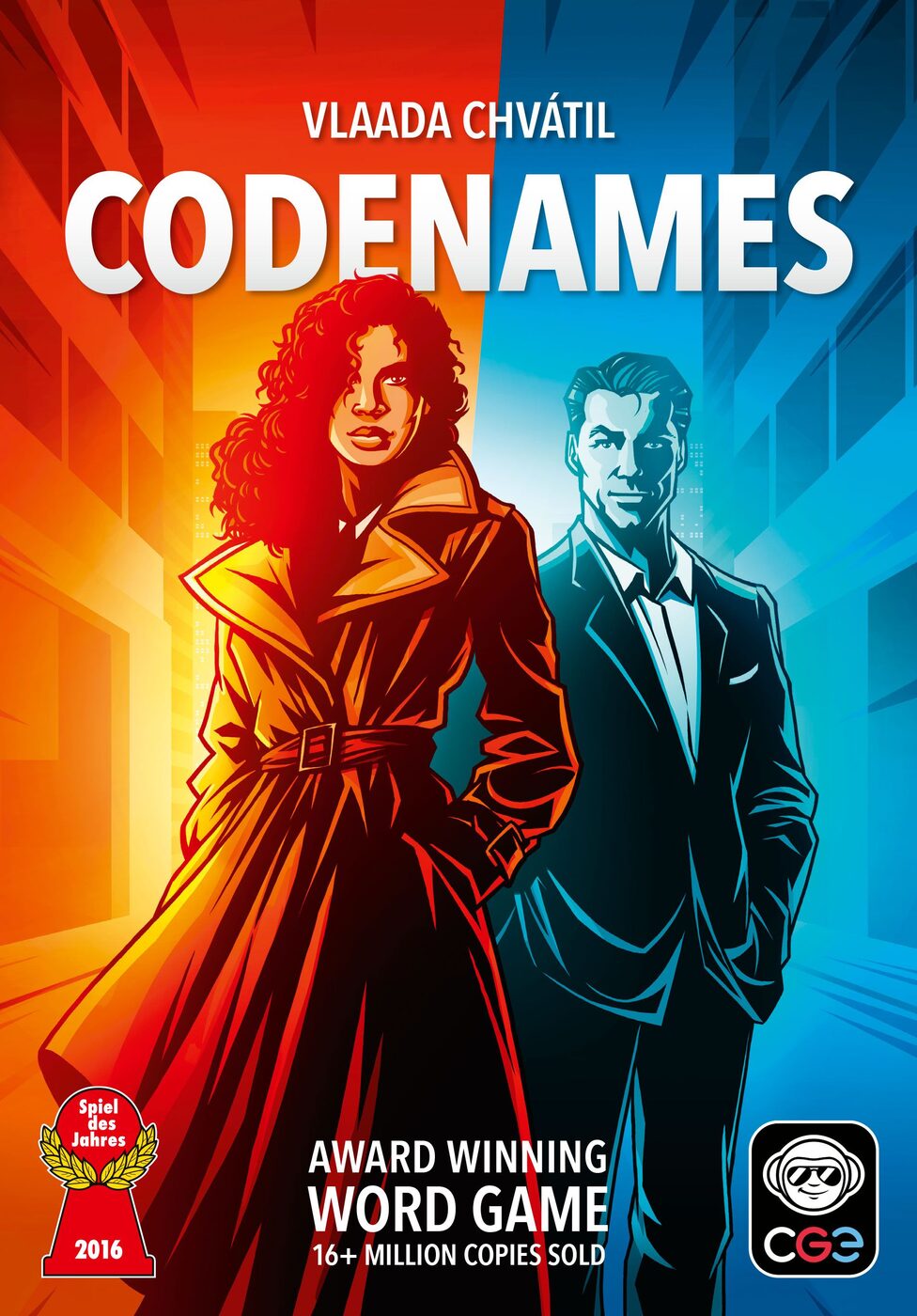
Codenames - BGG #162 · Rating: 7.52 · Weight: 1.25/5 · Players: 2-8 · Time: 15 min
There’s a specific feeling Codenames nails that almost no other game does: the moment your clue-giver says one word with the confidence of someone who has it all figured out, and then watches helplessly as their team touches every wrong card in sequence.
It’s clever. It’s social. It produces arguments that last longer than the game itself. And it scales from two people at a kitchen table to a full group of eight without losing any teeth.
If you’ve run out of nights to play it or you’re looking for something to rotate in with the same crowd, the games below all land in that same zone: accessible weight, team or cooperative structure, and that particular energy where the real game happens inside people’s heads.
What Makes Codenames Work
Before the list: the reason Codenames works so well is a specific mechanic. One person knows where all the targets are. Everyone else doesn’t. The clue-giver has to compress multiple connections into a single word and a number - and the guessers have to reverse-engineer that compression in real time, usually talking each other into disaster along the way.
The best games on this list either use that same clue-compression tension, or they invert it in ways that feel equally satisfying.
1. Decrypto
Decrypto - BGG #116 · Rating: 7.76 · Weight: 1.83/5 · Players: 3-8 · Time: 15-45 min
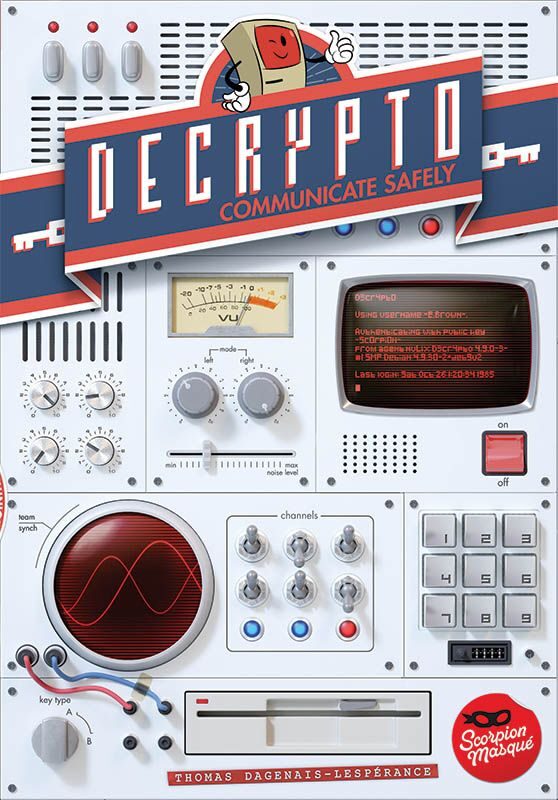
Image: IELLO via BoardGameGeek
If Codenames is about clue quality, Decrypto is about clue history. Both teams have a set of four keywords only they can see. Each round, you give clues to help your team identify a three-number sequence - but here’s the twist: the opposing team is also listening and trying to intercept. The clues you give in round one are on the table in round five.
This creates a compounding problem. You need clues that your team recognises but the opponents can’t crack. Too obvious and they intercept. Too oblique and your own team fails.
The structure is closer to Codenames than anything else on this list - teams, a designated clue-giver per turn, deduction under pressure - but the interception mechanism adds a metagame that builds across the whole session. Decrypto is the strongest direct recommendation on this list if you love Codenames.
BGG community verdict: “Decrypto has everything Codenames has but adds that delicious layer of psychological warfare. My group now argues about clues from three rounds ago.” - BGG user review
2. Just One
Just One - BGG #160 · Rating: 7.59 · Weight: 1.03/5 · Players: 3-7 · Time: 20 min
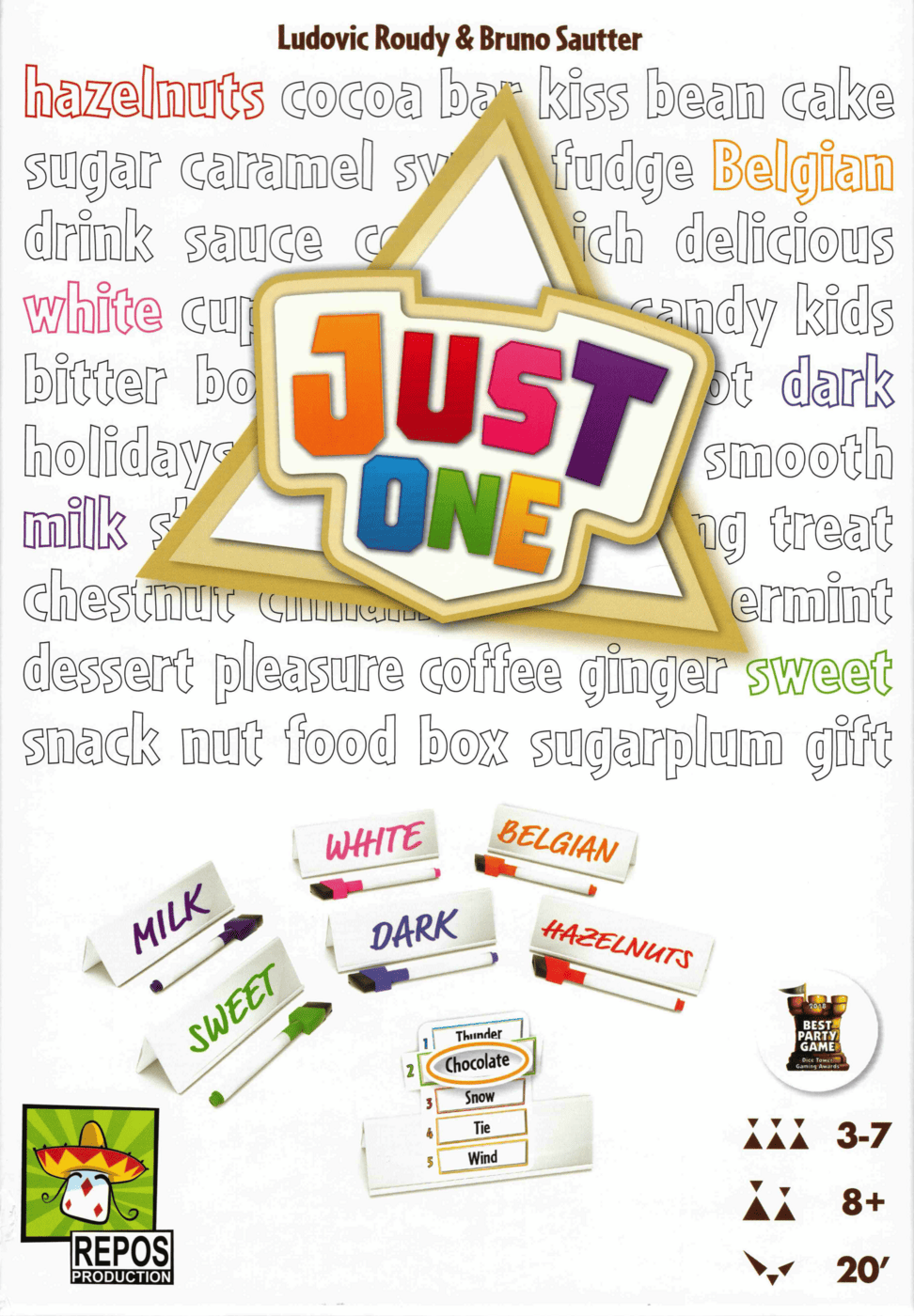
Image: Repos Production via BoardGameGeek
Just One won the Spiel des Jahres in 2019 - Germany’s most prestigious board game award - and it deserved it. The concept is disarmingly simple: one player has to guess a mystery word, and everyone else writes a one-word clue to help them. The catch: any duplicate clues are eliminated before the guesser sees them.
That one rule flips the whole dynamic. Instead of competing to give the best clue, you’re now trying to give the useful clue - which means predicting what everyone else will write and deliberately going slightly left of obvious. “Elephant” for GREY might be too obvious. But what if three people write it? Now nobody wrote it.
It’s fully cooperative, which gives it a different texture to Codenames - less adversarial, more of a collective puzzle. It’s also the easiest to teach on this list and the most reliably fun with non-gamers. Start here if Codenames sometimes gets too competitive with your group.
3. So Clover!
So Clover! - BGG #264 · Rating: 7.59 · Weight: 1.12/5 · Players: 3-6 · Time: 30 min
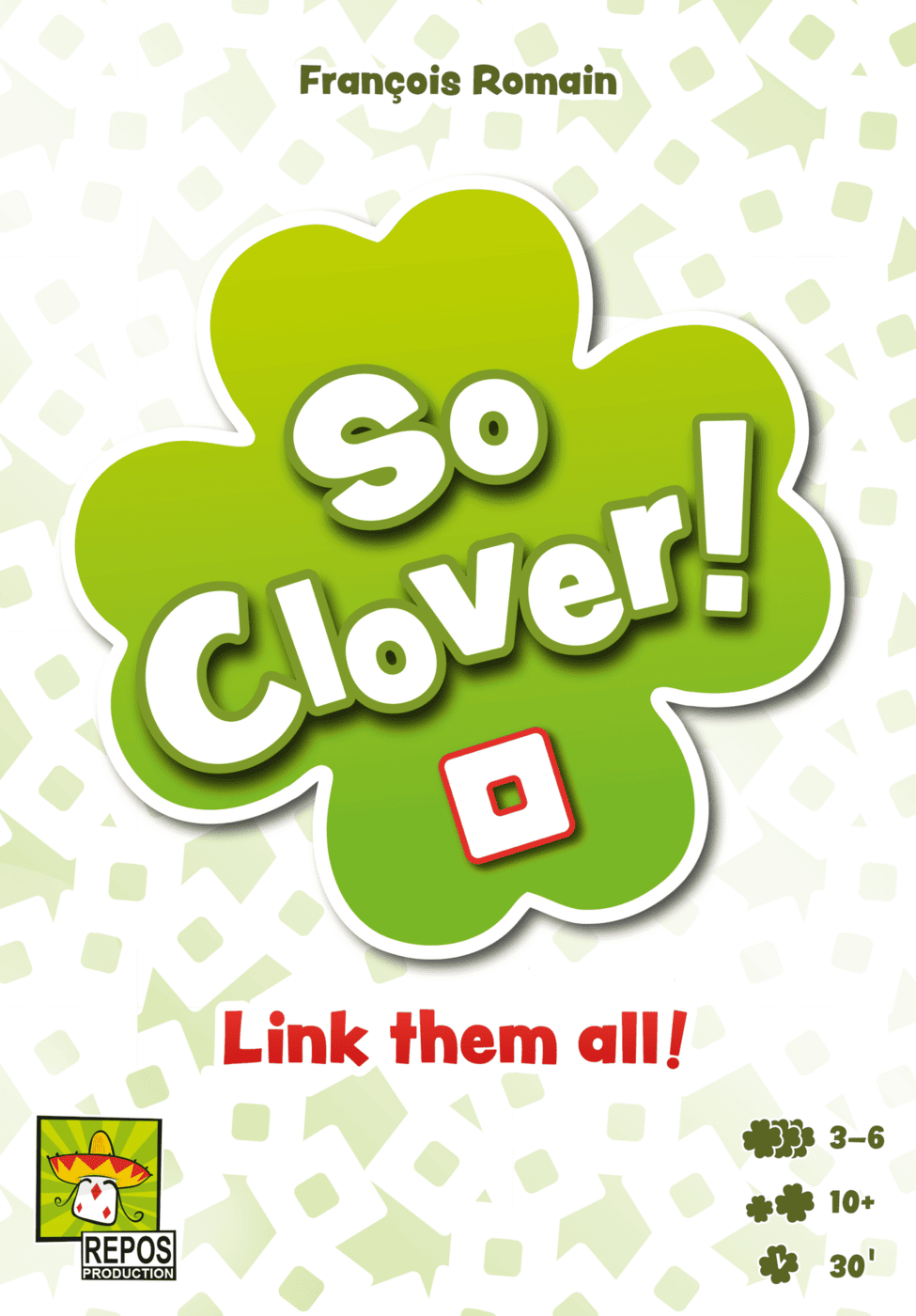
Image: Repos Production via BoardGameGeek
So Clover! is cooperative word association at its most elegant. Each player has a clover-shaped card with four random keywords on it - one in each quadrant. Your job is to write a single word in each of the four seams between adjacent keywords. That seam-word has to connect both keywords it sits between.
Then the cards get shuffled and everyone works together to reconstruct who wrote what, based purely on the seam-words and the keywords in play.
The genius is in the private creation phase. You’re writing clue-words that you think work, then watching your friends try to interpret them with completely different mental models. The gaps between how people think reveal themselves hilariously.
Like Just One, it’s fully cooperative, low-stress, and works with the sort of people who claim they don’t like board games. So Clover! is the best pick for groups who want Codenames energy but without any losing.
4. Wavelength
Wavelength - BGG #541 · Rating: 7.18 · Weight: 1.10/5 · Players: 2-12 · Time: 30-45 min
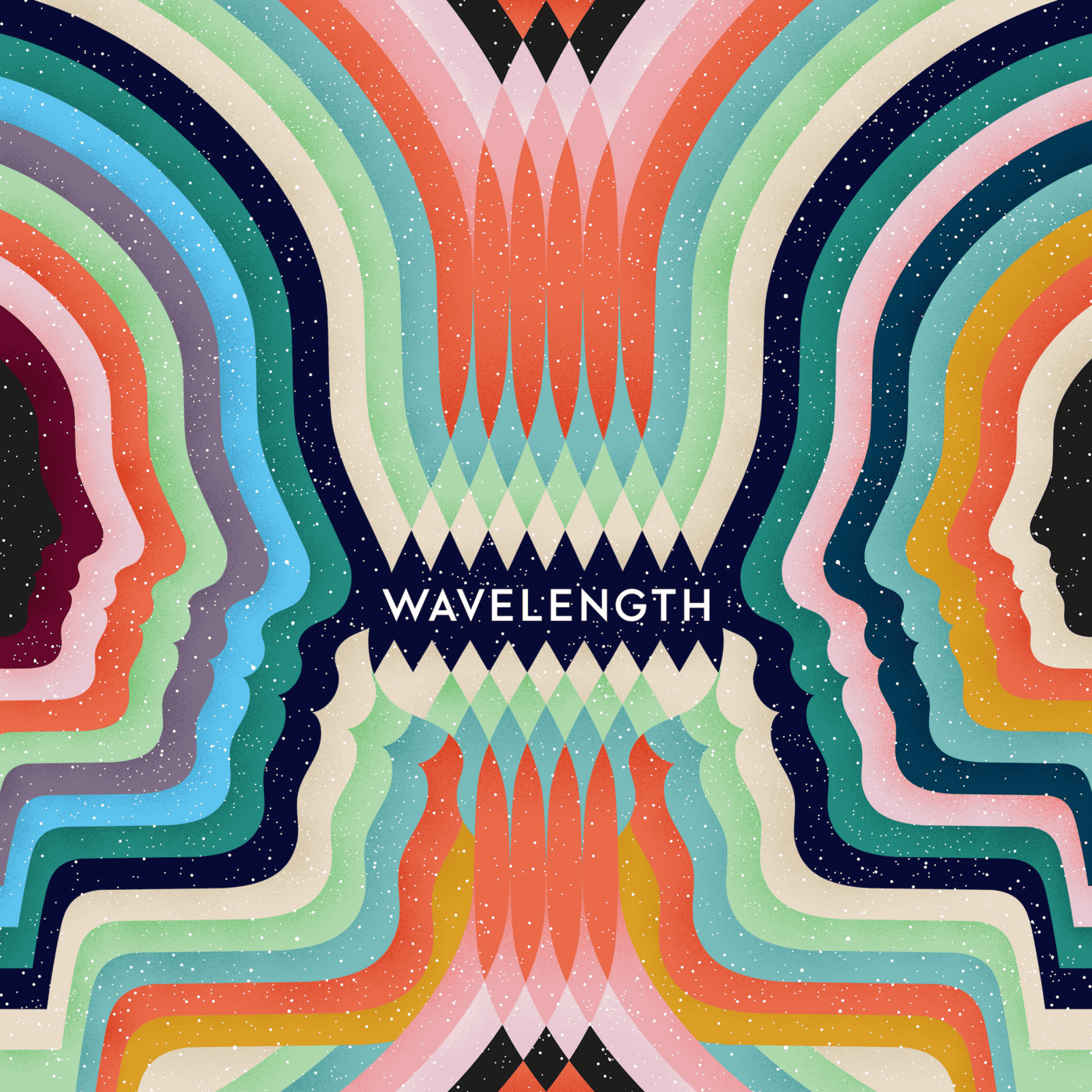
Image: Palm Court Games via BoardGameGeek
Wavelength doesn’t use words at all - it uses a dial. A spectrum card shows two opposing concepts (Hot/Cold, Good/Evil, Serious/Funny) and the clue-giver knows exactly where on that spectrum a hidden target sits. They give one word as a clue to help their team place the dial as close to the target as possible.
The discussion after the reveal is the whole game. “How is ’tax returns’ Hot? Hot implies energy and passion!” “Tax returns have enormous consequences - that’s high-energy!” This goes on for five minutes and nobody is wrong.
Wavelength is a conversation engine. It generates genuine disagreement about subjective things - which is exactly what Codenames does when someone’s clue lands in contested territory. It plays up to 12 people, makes virtually no demands in terms of reading or vocabulary, and works brilliantly at mixed-age tables.
The catch: it’s more of an experience than a competition. If your group wants a tight game with scoring that matters, Wavelength can feel a bit formless. If your group just wants to argue pleasantly for an hour, it’s perfect.
5. Mysterium
Mysterium - BGG #461 · Rating: 7.19 · Weight: 1.89/5 · Players: 2-7 · Time: ~45 min
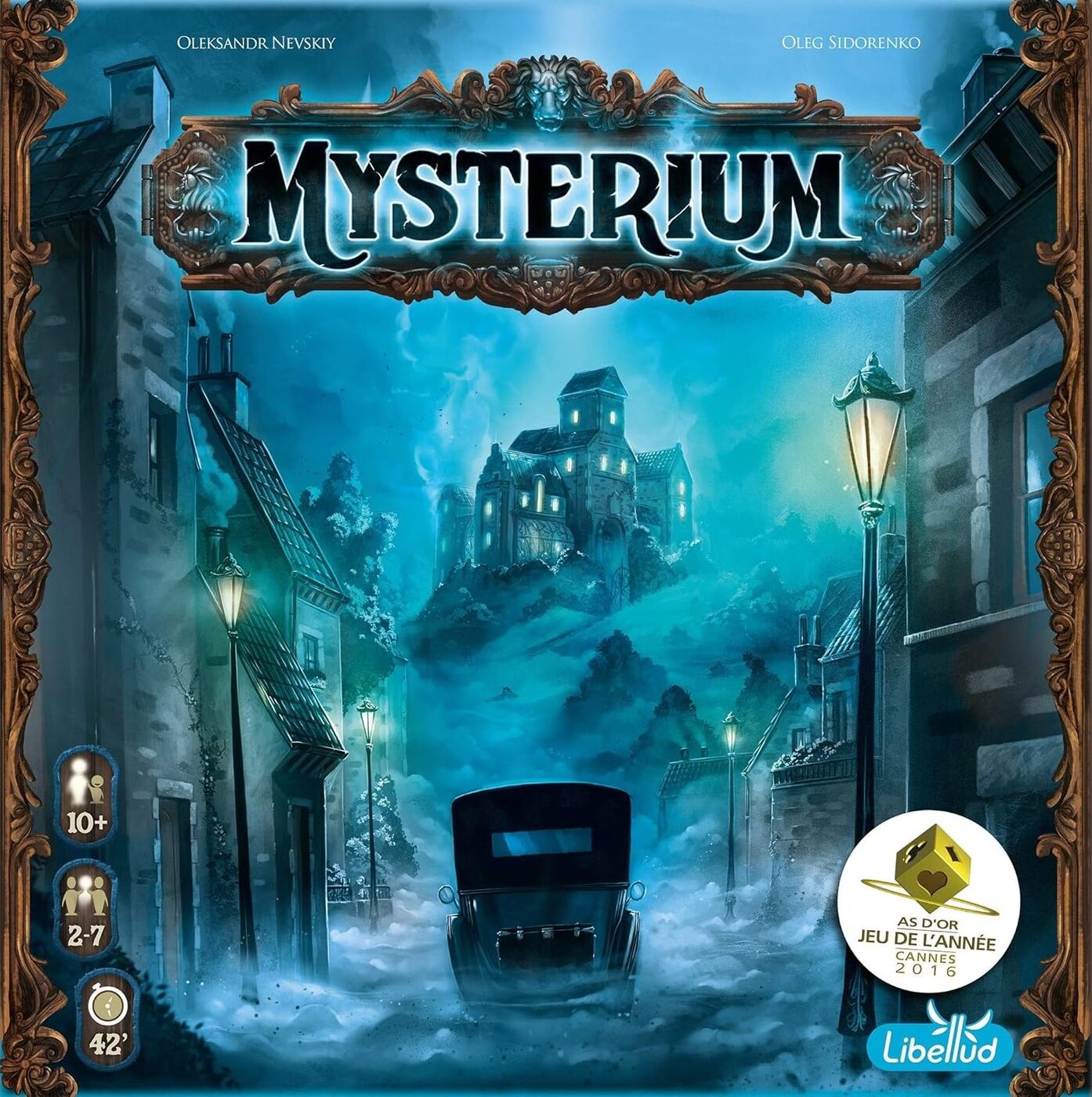
Image: Libellud via BoardGameGeek
Mysterium is the most thematic game on this list by a significant margin. One player is a ghost trying to communicate with up to six psychic investigators. The ghost can’t speak - they can only send dream cards, which are gorgeous, surrealist images. The investigators use those images to identify a suspect, location, and weapon.
The clue-giving here is purely visual and non-verbal, which shifts the dynamic considerably from Codenames. The ghost is trying to draw connections between an abstract image and a specific card on the table, and the investigators are trying to decode intentions without any of the shared language scaffolding that word games rely on.
What it shares with Codenames: the moment when the clue-giver (here, the ghost) watches their team completely misread the communication they were so sure would land. That mix of amusement and despair is identical.
Mysterium is heavier than everything else on this list - at 1.89 weight it’s still very approachable, but it has a setup process, fixed roles, and a cooperative elimination structure that takes a bit more explaining. Worth it for groups who want something that feels like an event rather than a filler.
6. Dixit
Dixit - BGG #435 · Rating: 7.18 · Weight: 1.19/5 · Players: 3-6 · Time: 30 min
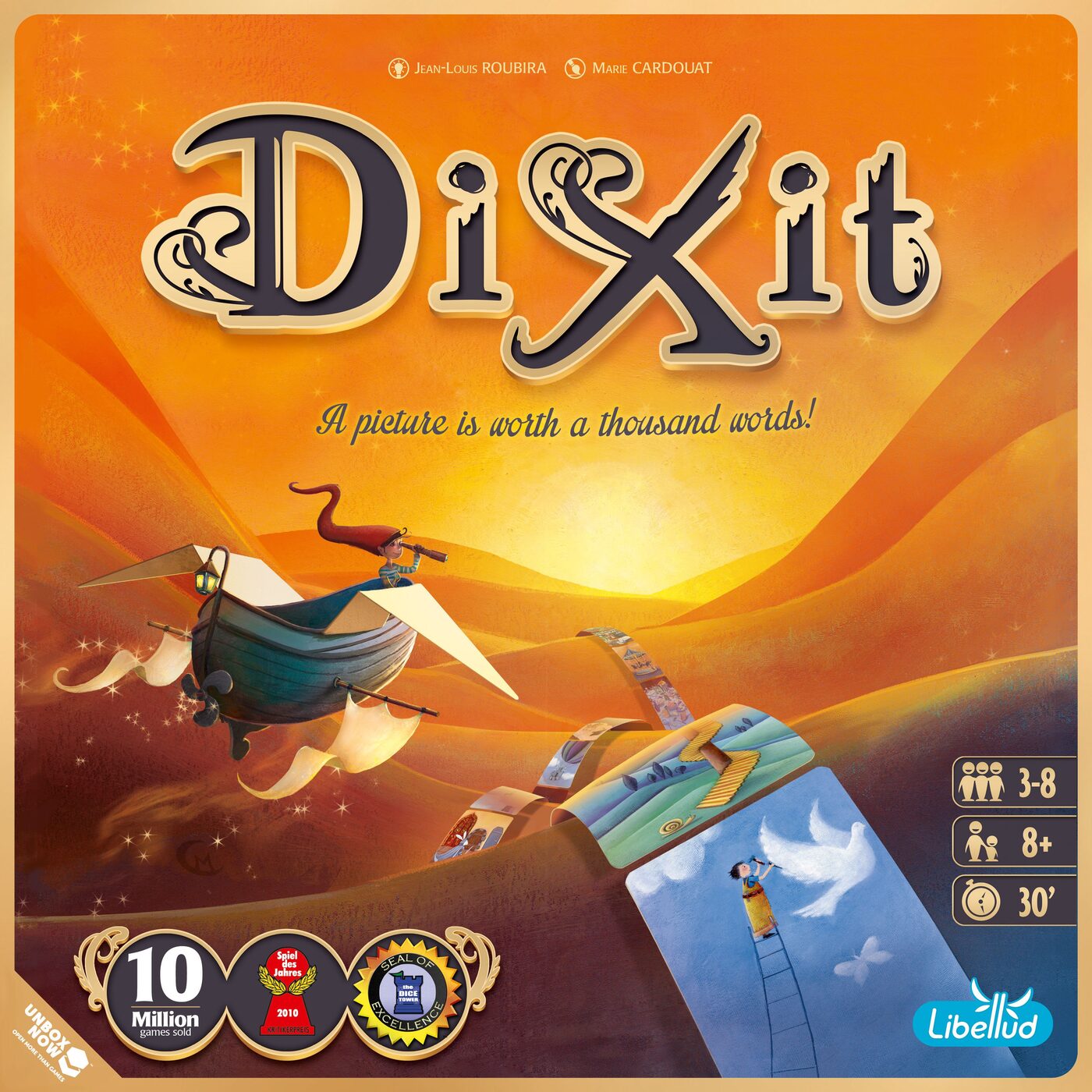
Image: Libellud via BoardGameGeek
Dixit is the other side of Codenames’ coin. In Codenames, you want your team to find the right cards and avoid the wrong ones - precision and coverage. In Dixit, the storyteller wants some players to guess their card correctly but not all of them. Too obvious and you score nothing. Too obscure and same problem.
That sweet spot - the perfect clue that lands for some but not everyone - produces the same calibration challenge that Codenames’ clue-givers deal with, but through dreamlike illustration rather than language.
The artwork is the star here. Dixit’s cards are genuinely beautiful, strange pieces - they invite interpretation rather than direct reading. Someone who isn’t a word person often thrives at Dixit in a way they might not at Codenames.
At nearly 20 years old and multiple expansions deep, Dixit is about as proven as party games get. The best pick if you have someone in the group who claims to be bad at word games.
7. Spyfall 2
Spyfall 2 - BGG #2059 · Rating: 6.80 · Weight: 1.21/5 · Players: 3-12 · Time: 15 min
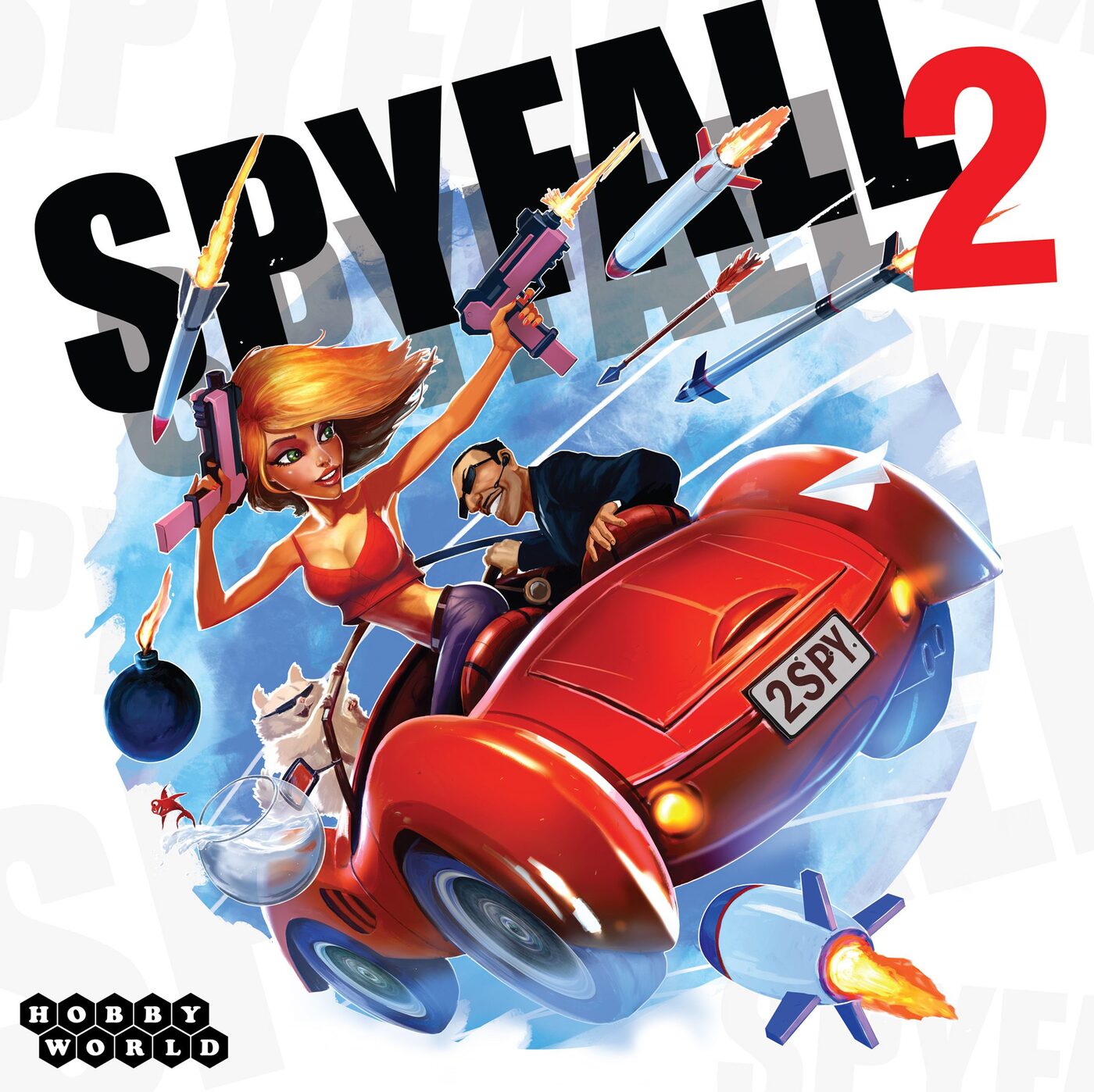
Image: Cryptozoic via BoardGameGeek
Spyfall 2 keeps the spy flavour that the Codenames theme leans into. Everyone is at the same location - except one or two players who are spies and don’t know where they are. Players ask each other questions to figure out who the spy is. The spy asks questions to figure out where they are without giving themselves away.
The tension is different from Codenames - more improv comedy than deduction puzzle. The best Spyfall moments come from someone asking an accidentally revealing question (“Is the food here good?” at a gas station) or from the spy confidently bluffing for four rounds before getting voted out.
The lower BGG rank (2059) is fair: Spyfall is streakier than everything else on this list. It lives and dies on group energy. With the right crowd it’s one of the funniest games you can play. With a quieter group or people who find lying uncomfortable, it can drag.
Pick this one when you want something freer and sillier than Codenames, and your group has the improv energy to carry it.
The Quick Guide
| If you want… | Play |
|---|---|
| The closest thing to Codenames | Decrypto |
| Fully cooperative word fun | Just One or So Clover! |
| Something for non-gamers | Wavelength |
| A visual/thematic experience | Mysterium or Dixit |
| Spy theme + improv laughs | Spyfall 2 |
The One Rule
All of these work best with the same ingredient Codenames needs: a group willing to talk. Not just about the game - about the reasoning behind the clues. The debrief after each round, where everyone explains what they were thinking, is where 90% of the fun lives.
Buy the game. Play it once. Then spend twenty minutes afterwards dissecting why nobody understood what you meant by “parliament.”