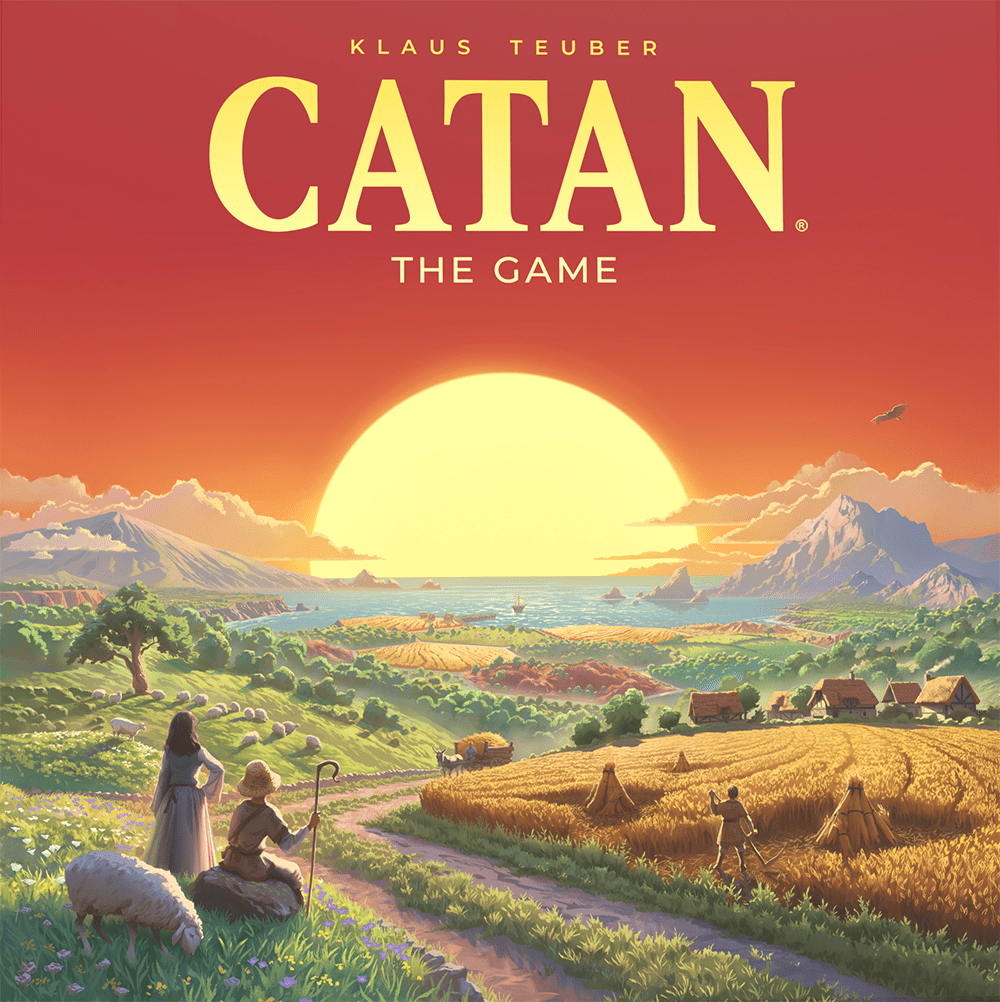
Catan - BGG #626 · Rating: 7.09 · Weight: 2.28/5 · Players: 3-4 · Time: 60-120 min
Catan is the board game that opened the door for millions of people. It proved that games could be about building something, not just eliminating opponents - and that a Friday night around a table could be genuinely competitive without being hostile. For that alone, it deserves its legendary status.
But spend enough time at the table and Catan’s cracks become very familiar. A bad hex placement early on. The runaway leader who the whole table never stops trading with. The end-game drag when everyone can see who’s going to win but the dice won’t cooperate. The fact that it simply doesn’t work with two players.
If you’ve hit any of those walls, you haven’t fallen out of love with Catan - you’ve just grown past it. These five games share what Catan does best, and each one addresses a specific frustration it never quite managed to fix.
What Makes Catan Worth Loving
Before reaching for something new, it’s worth being clear about what made Catan click in the first place:
- Resource management - collecting, hoarding, and spending is satisfying in a way that pure card games rarely match
- Map interaction - every game board is different, and your position relative to opponents actually matters
- Accessible tension - anyone at the table can understand what’s happening and why it matters
- Trading - at its best, negotiation makes Catan feel alive
Keep those four things in mind. Every game below delivers on at least three of them.
1. Ticket to Ride
If you want the gateway feel without the trading drama
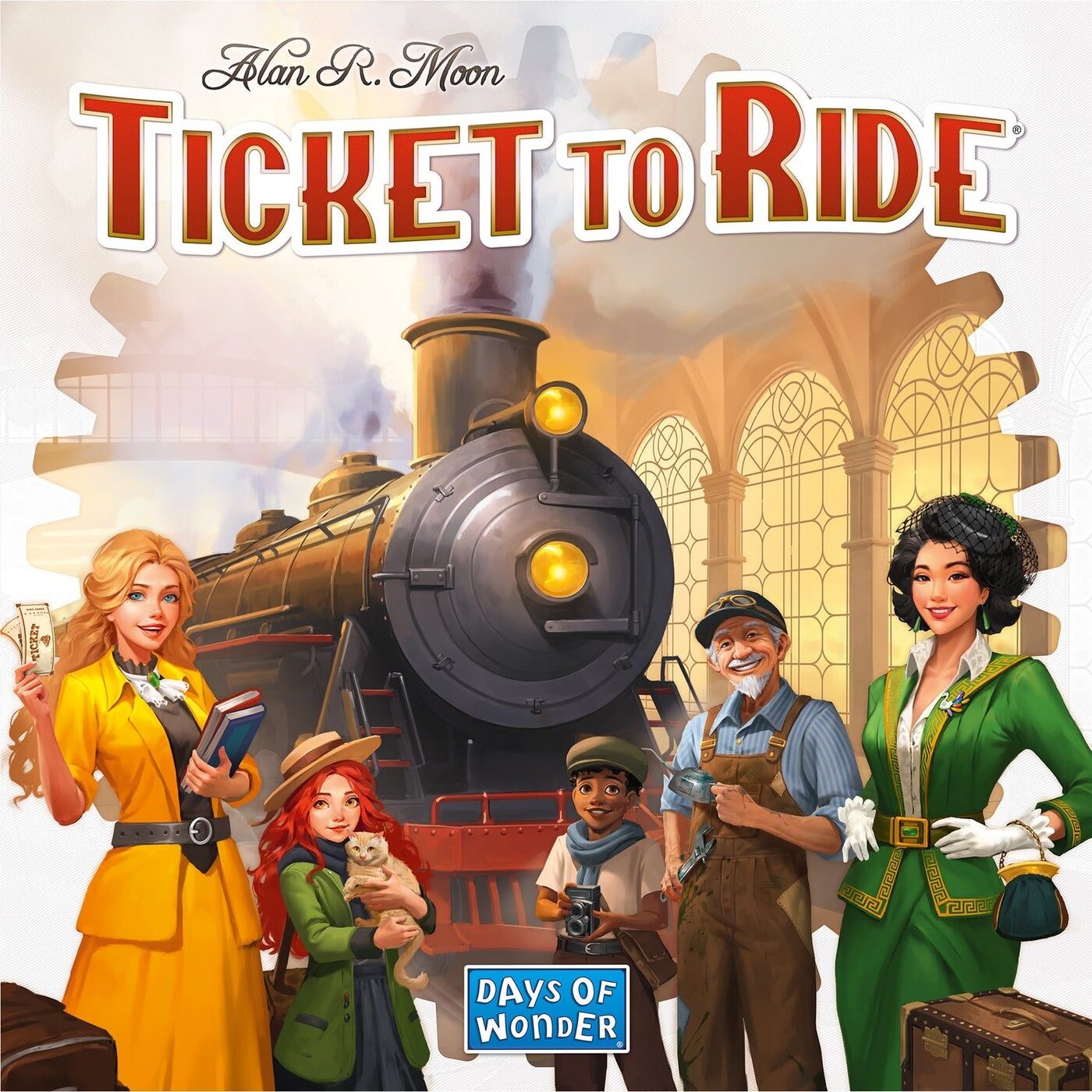
BGG #263 · Rating: 7.38 · Weight: 1.82/5 · Players: 2-5 · Time: 30-60 min
Ticket to Ride is the most natural first step away from Catan. You’re still claiming routes on a map, still racing opponents to key positions, still building toward a goal that only you can see. But the dice are gone, the trading is gone, and the downtime vanishes with them.
Instead, you collect coloured train cards and cash them in to claim railway routes between cities. Your secret destination tickets tell you which connections to complete. Miss them and you lose points. Complete them and you score big.
What Ticket to Ride does that Catan doesn’t: it works beautifully at two players, it plays in half the time, and a bad start never feels insurmountable. The interaction is mostly spatial - watching an opponent grab the route you needed - rather than negotiated. That makes for a cleaner, faster experience.
The Catan connection: same gateway accessibility, same map tension, far less chaos. The dice luck is replaced by hand management.
Best for: families, new players, anyone who found Catan’s trading exhausting.
2. Carcassonne
If you want pure tile-placement with real tactical depth
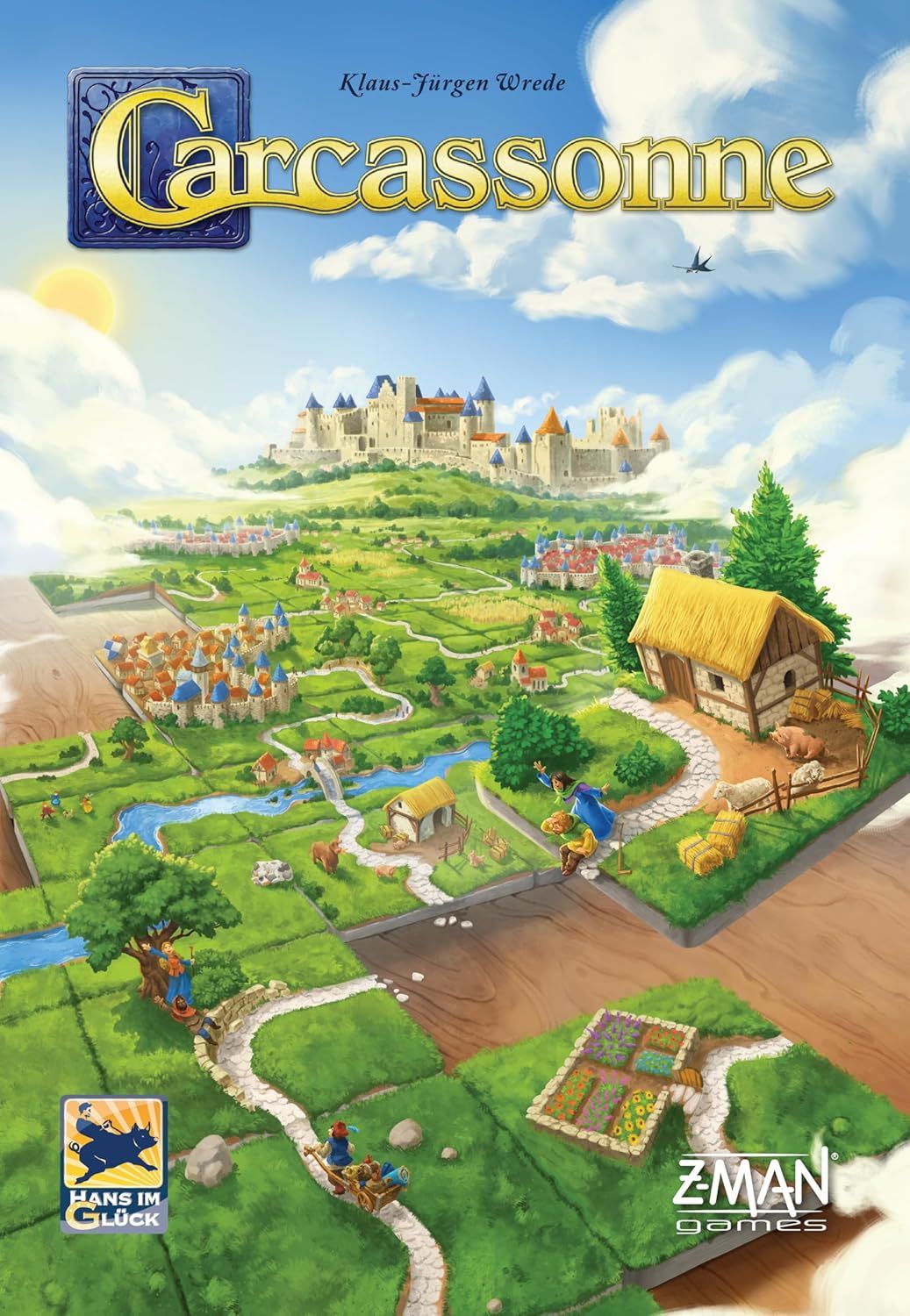
BGG #240 · Rating: 7.42 · Weight: 1.88/5 · Players: 2-5 · Time: 30-45 min
Carcassonne builds a shared map one tile at a time, and every placement is a micro-decision. Do you extend the road you’re already scoring, or block the city your opponent is almost finished? Drop a meeple now and claim a feature as yours, or wait and try to muscle in on someone else’s territory later?
Like Catan, it rewards map reading and positional awareness. Unlike Catan, there’s no luck of the draw that can completely derail you - a “bad” tile can almost always be placed somewhere useful, and the shared board means you’re always reacting to what everyone else is building.
It also happens to be one of the rare games that genuinely improves at two players - the direct competition is sharper and more satisfying than in a five-player free-for-all.
The Catan connection: shared map, positional decisions, competing for territory. But without dice and without trading.
Best for: couples, players who love spatial puzzles, anyone who wants a game that sets up in two minutes.
3. 7 Wonders
If you want more strategy and zero downtime
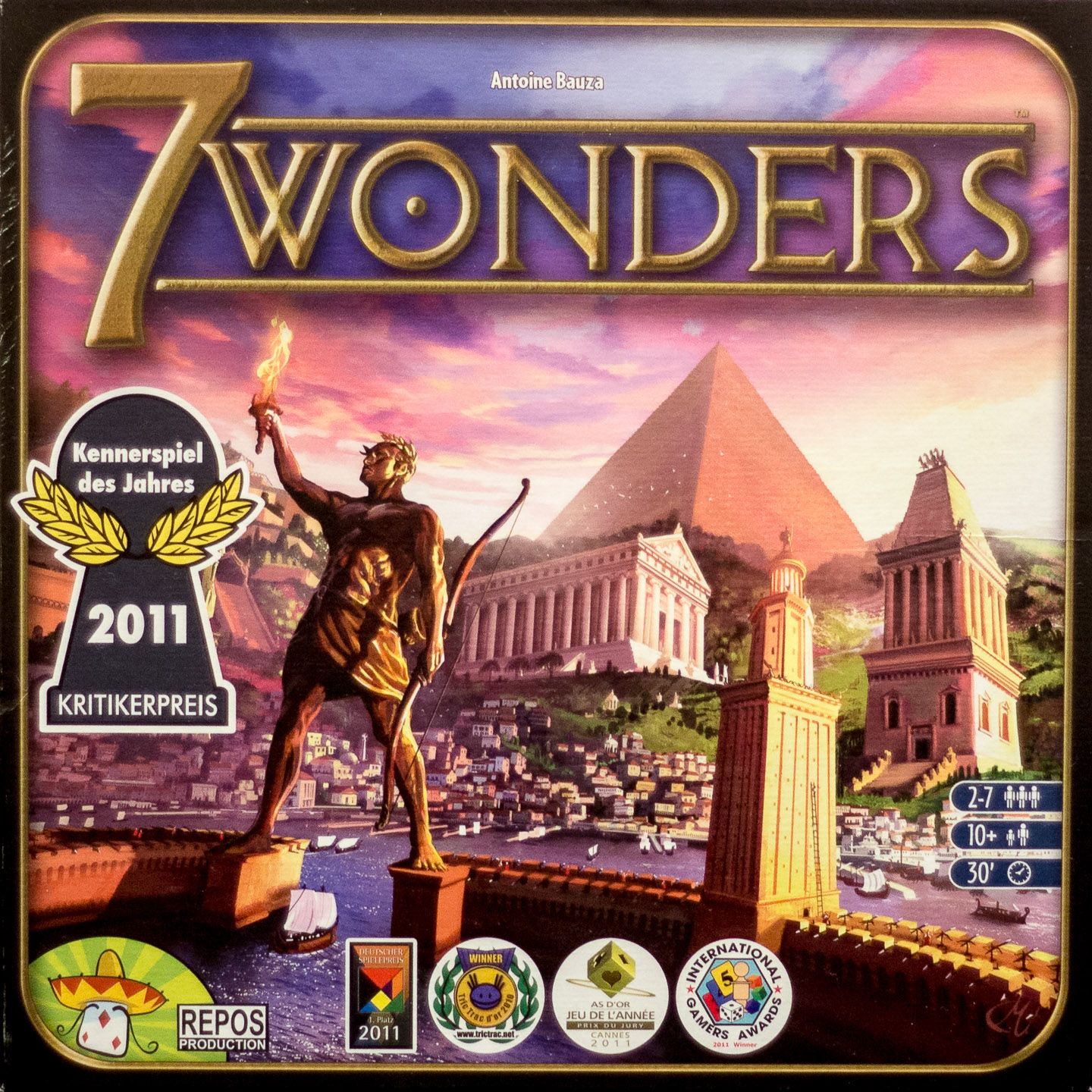
BGG #118 · Rating: 7.66 · Weight: 2.31/5 · Players: 2-7 · Time: ~30 min
7 Wonders ends the “this is taking forever” problem once and for all. Seven players, thirty minutes, everyone playing simultaneously. There’s almost no downtime because you and your neighbours draft cards at the same moment every round.
The resource management is very Catan-adjacent - you’re producing stone, ore, clay, glass, and paper to pay for structures across three ages. But where Catan uses trading to transfer resources between players, 7 Wonders lets you pay your neighbours directly for access to theirs. It’s cleaner, faster, and eliminates the power imbalance that makes Catan trading frustrating.
At weight 2.31 (vs Catan’s 2.28), complexity is comparable. The big win is pace: if your Catan sessions were stretching past two hours, 7 Wonders will feel like a revelation.
The Catan connection: multi-resource economy, neighbour interaction, building toward a score only you can fully see.
Best for: larger groups of 5-7 players, anyone who hates waiting for their turn, players ready for more nuanced scoring.
4. Dominion
If you want resource management without the map conflict
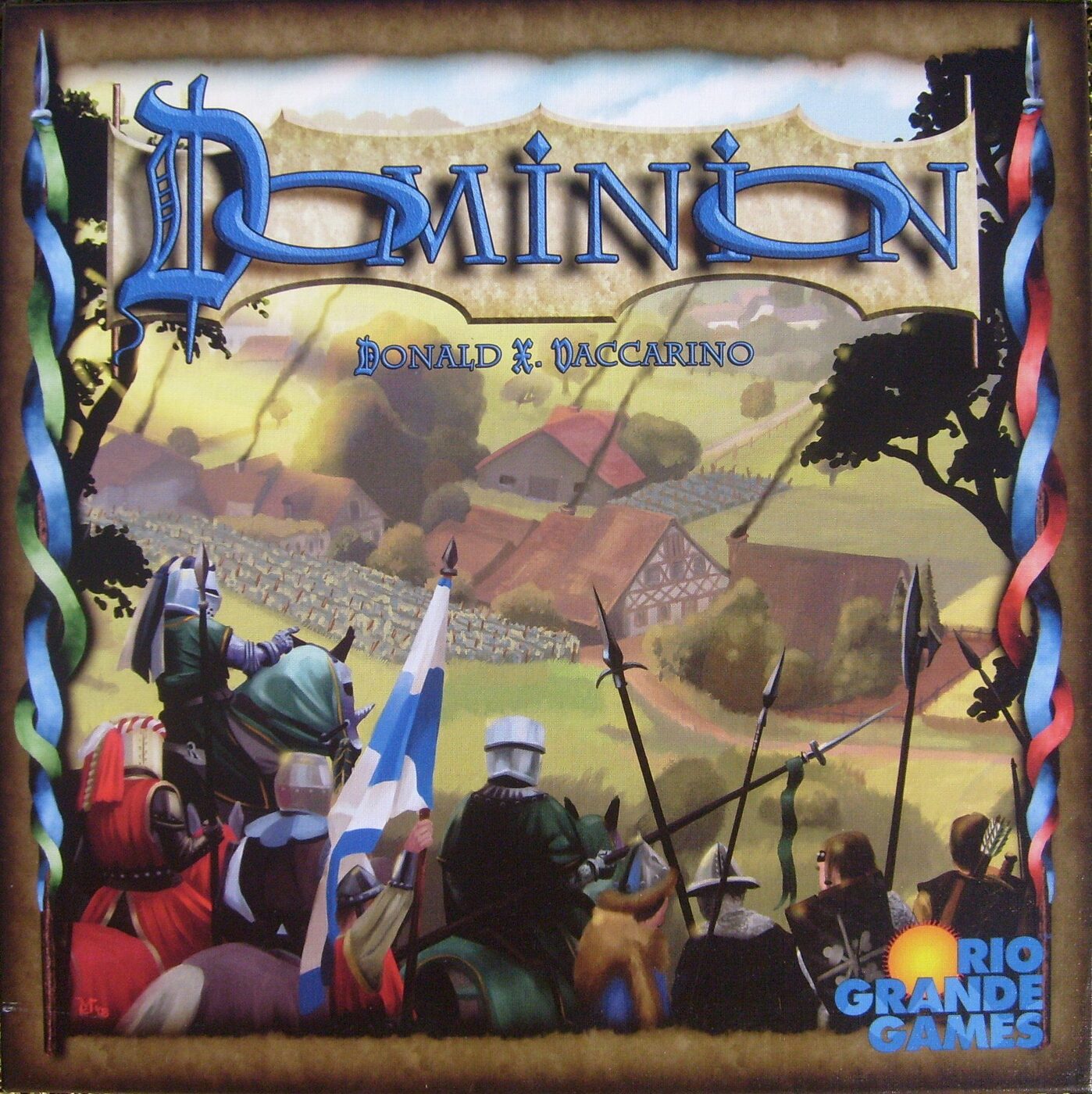
BGG #146 · Rating: 7.60 · Weight: 2.34/5 · Players: 2-4 · Time: ~30 min
Dominion invented the deck-building genre and remains one of the purest expressions of what resource management can be. You start with a weak hand of copper coins and estate cards, and over the course of the game you buy better cards, upgrade your deck, and build an engine that generates points at the end.
There’s no board, no map, no hexes - which means there’s no kingmaking, no blocking, and no “your starting position was bad” complaints. Each game is different because a random selection of kingdom cards defines what’s available to buy. Dominion is endlessly replayable without a single expansion.
Compared to Catan, Dominion is more purely strategic: you’re not managing territory, you’re managing an economy in your hands. Interaction is mostly indirect - racing to buy the same cards as your opponent - but games are short enough that a loss is a lesson, not a grudge.
The Catan connection: resource management, building an engine over time, adapting to what opponents are doing. Minus the map.
Best for: players who love pure optimisation, two-player gaming, anyone who found Catan’s physical setup tedious.
5. Wingspan
If you want engine-building without the table conflict
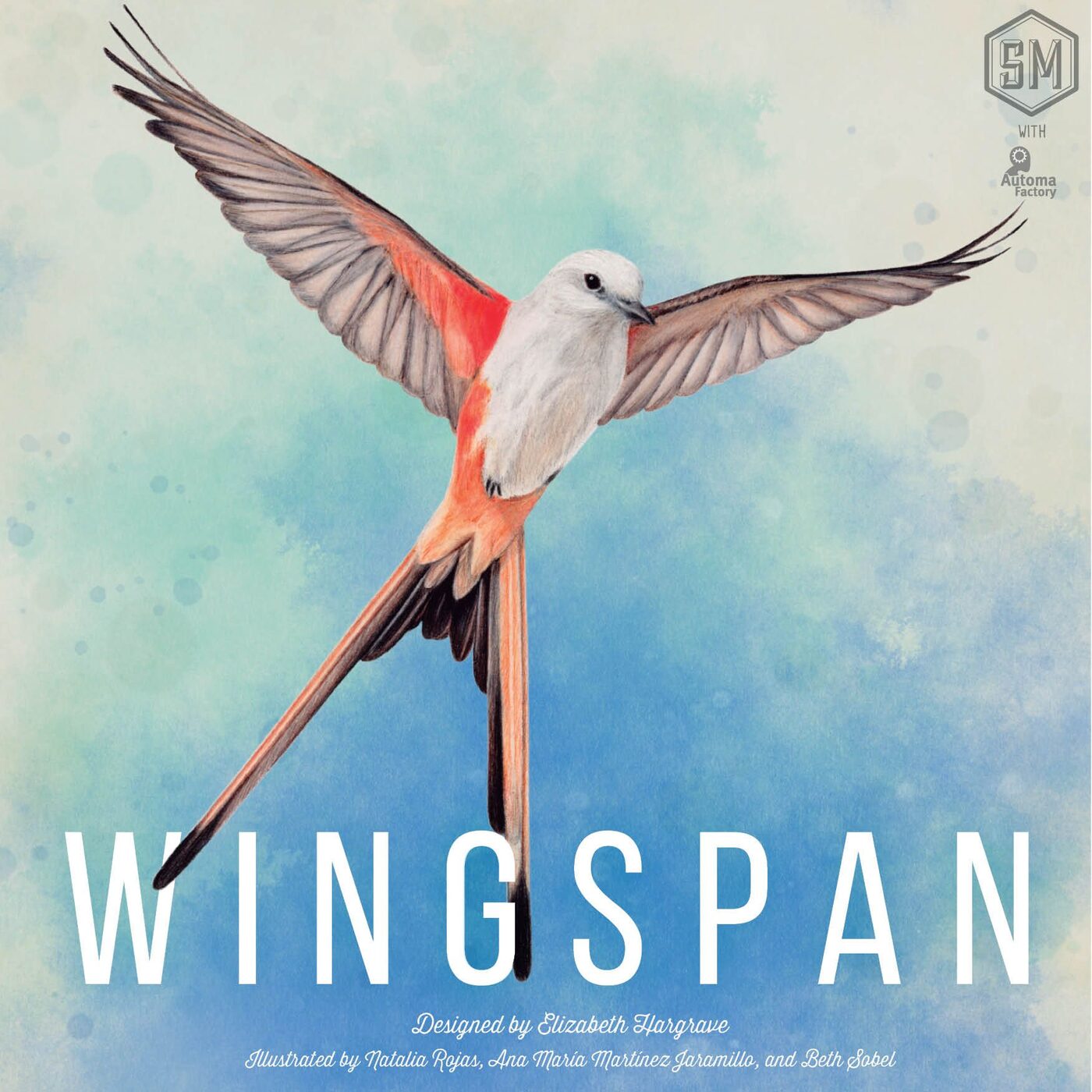
BGG #38 · Rating: 7.99 · Weight: 2.48/5 · Players: 1-5 · Time: 40-70 min
Wingspan is the highest-rated game on this list - BGG rank #38, 7.99 average rating - and it earns that position by being almost universally accessible and genuinely gorgeous. You’re attracting birds to nature reserves, each one a card with a unique ability that chains into your growing engine.
The connection to Catan is the engine-building satisfaction: that feeling of a resource network humming along, generating more than it costs to run. But Wingspan strips out direct conflict almost entirely. You’re not blocking opponents, not stealing their resources, not trading. You’re building your own bird sanctuary and watching it flourish.
At weight 2.48, it’s the most complex game on this list, but the complexity comes from depth rather than friction. New players typically click with it after one game; experienced players find new bird combinations to explore for years.
The Catan connection: resource collection, building something that generates more over time, replayable setup. Minus the negotiation.
Best for: players who want a relaxed, thematic experience; anyone who found Catan’s conflict stressful; solo players (the automa solo mode is excellent).
Which One Should You Try First?
Here’s a straightforward read on where to start:
| You want… | Try this |
|---|---|
| The most direct replacement | Ticket to Ride |
| Great two-player game | Carcassonne |
| Faster, smarter, more players | 7 Wonders |
| Pure strategy, no board | Dominion |
| Something beautiful and deep | Wingspan |
All five of these rank higher than Catan on BGG, and all are worth every minute at the table. Whichever you pick, your gateway days are officially over - in the best possible way.
BGG data verified September 2026. Ratings and rankings current at time of publication.