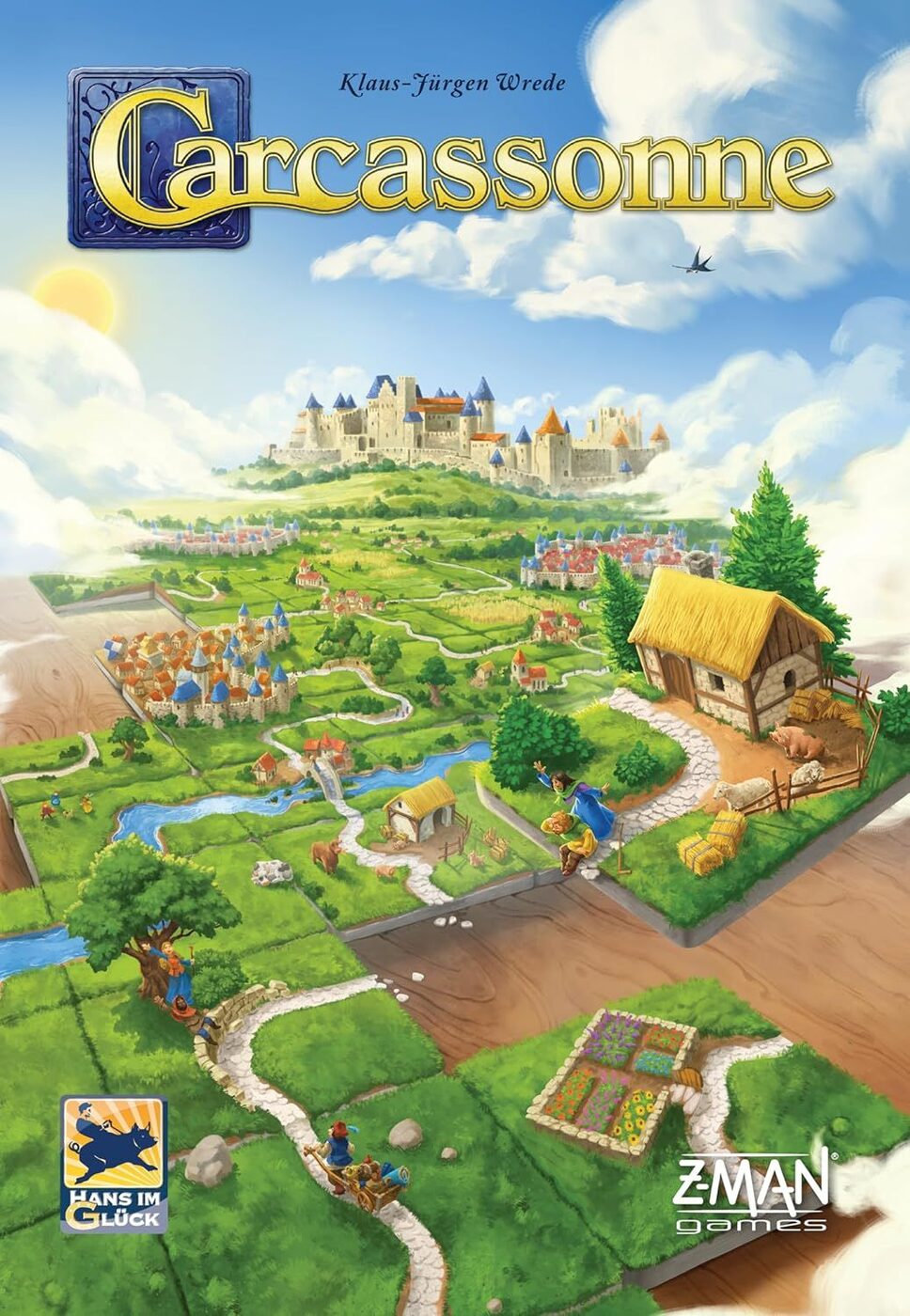
There’s a reason Carcassonne has sold over ten million copies. It’s the perfect gateway game - fifteen minutes to learn, thirty to forty-five to play, and just enough spatial tension to keep experienced players engaged without scaring anyone off.
Carcassonne has a BGG rating of 7.42 from over 141,000 players, sits at #240 all-time, and carries a weight of 1.88/5 - firmly in gateway territory. It’s tile placement at its purest: draw a tile, match the edges, place your meeple, score at the end.
If you’ve played it to death and want more - or if you loved what it does and want that feeling in a different shell - you’re in the right place.
Here are six games that scratch the same itch, each doing something distinct with the core appeal.
What Makes Carcassonne Work?
Before getting into alternatives, it’s worth naming what Carcassonne actually delivers:
- Spatial puzzle - you’re building something on the table that grows as you play
- Tension without complexity - decisions are about placement and timing, not dense rule systems
- Visible progress - the board tells a story by the end
- Flexible player count - works at 2 through 5
- Short playtime - 30-45 minutes that don’t outstay their welcome
The best alternatives preserve at least two or three of these qualities. None of the games below are copies. Each one twists or expands the formula in a way that makes it worth owning alongside Carcassonne, not instead of it.
1. Cascadia
The closest thing to a straight upgrade
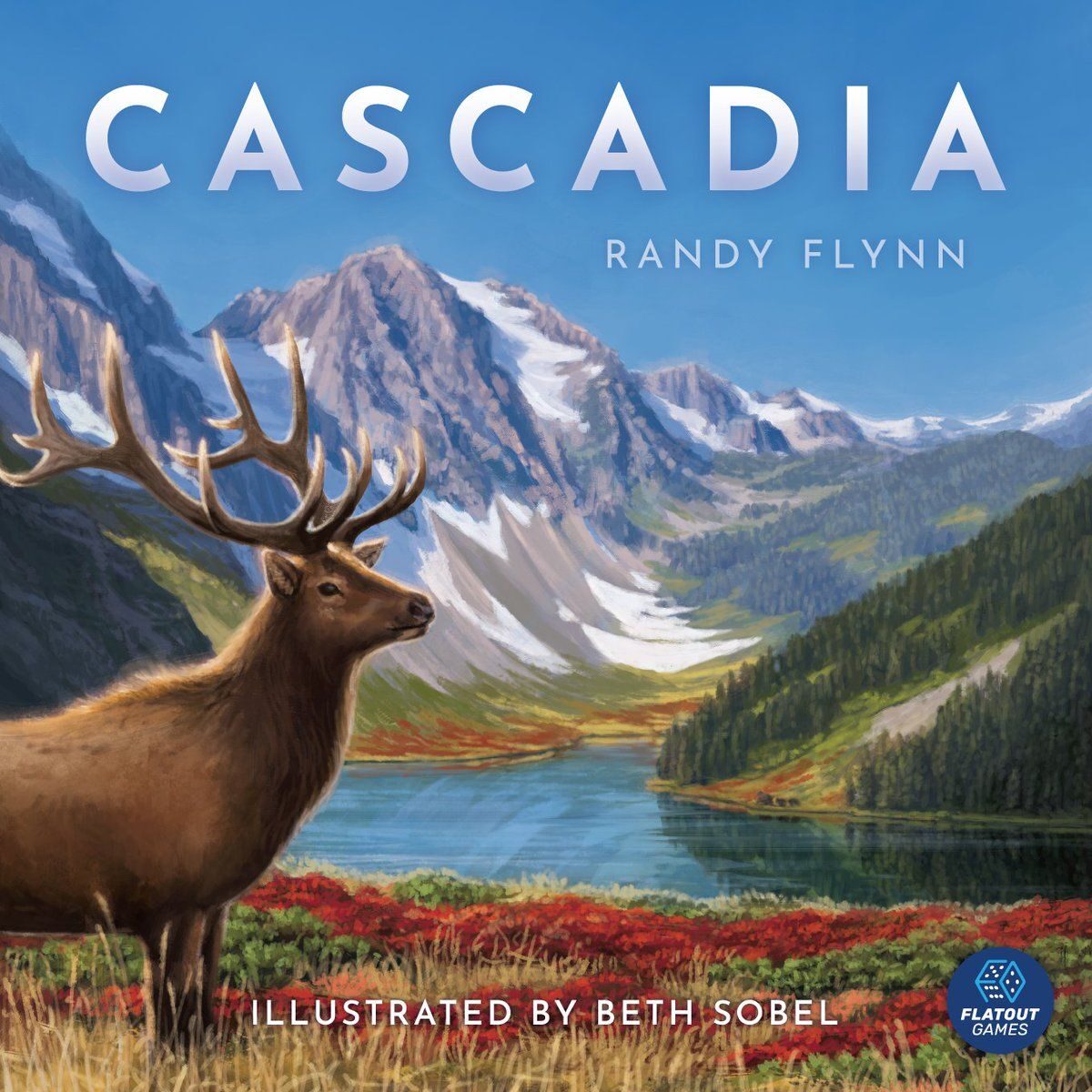
Box art via BoardGameGeek. Cascadia published by Flatout Games / Alderac Entertainment Group.
BGG Rating: 7.88 | Rank: #60 | Weight: 1.84 | Players: 1-4 | Time: 30-45 min
BGG Page: boardgamegeek.com/boardgame/295947
If Carcassonne feels like placing tiles on a shared medieval map, Cascadia feels like building your own personal Pacific Northwest ecosystem. Each turn you pick a hex tile (terrain) and a wildlife token, place them on your growing habitat, and try to score points by meeting the scoring conditions for five different animals - salmon, bears, elk, foxes, and hawks.
The genius is the wildlife scoring cards. Each game uses one of multiple scoring variants per animal, so the optimal patterns are different every play. This variability is what Carcassonne lacks - after a few dozen plays, the scoring logic in Carcassonne becomes second nature. Cascadia keeps reshuffling what “good placement” means.
Why Carcassonne fans love it: Same drafting-and-placing rhythm. Same 30-45 minute window. Higher rated than Carcassonne on BGG (#60 vs #240) and feels fresh much longer. Also plays solo.
Who it’s for: Anyone who owns Carcassonne and wants a second tile-placement game with more replayability. This is the one I’d recommend first, without hesitation.
2. Kingdomino
Faster, lighter, perfect for families
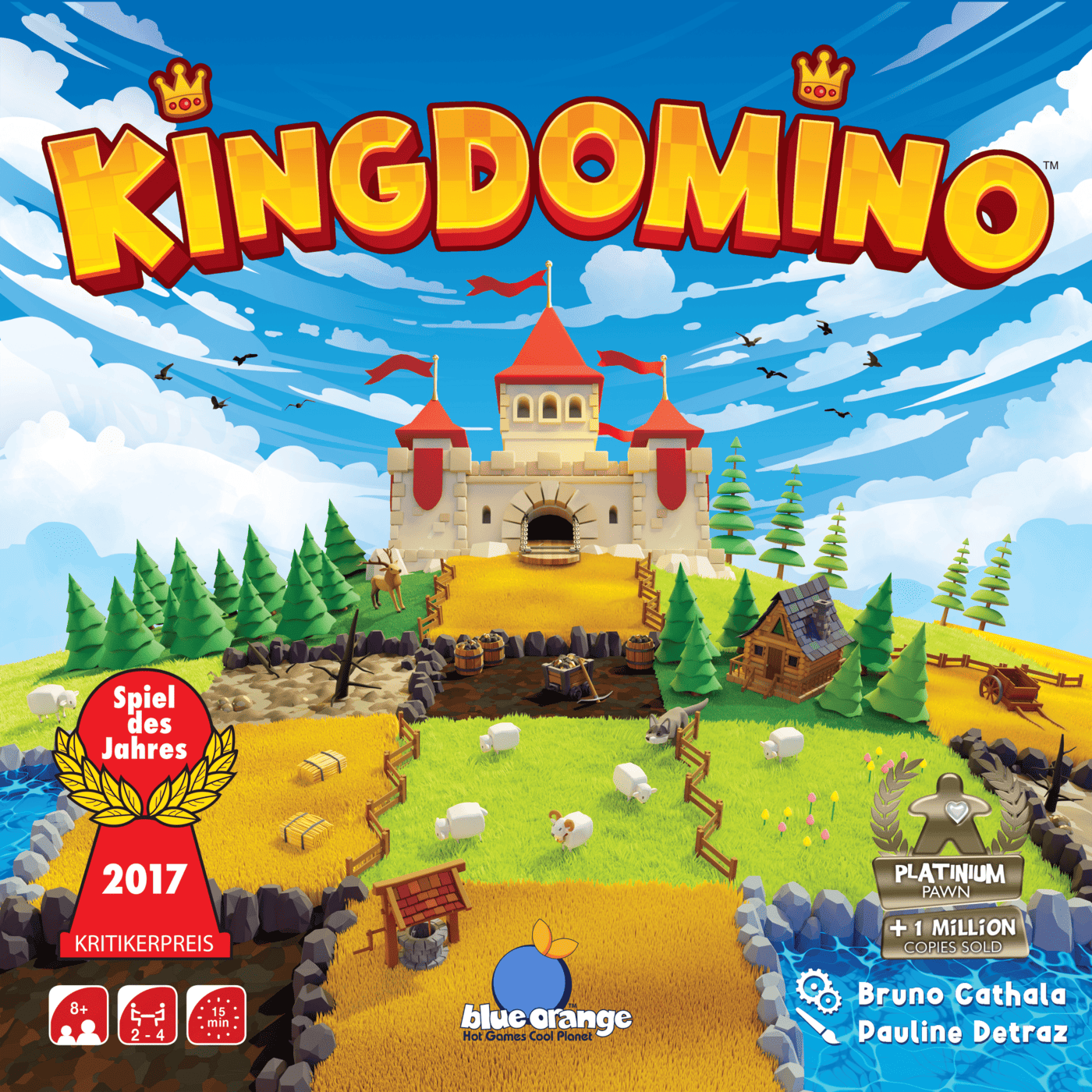
Box art via BoardGameGeek. Kingdomino published by Blue Orange Games.
BGG Rating: 7.29 | Rank: #332 | Weight: 1.24 | Players: 2-4 | Time: 15-25 min
BGG Page: boardgamegeek.com/boardgame/204583
Kingdomino won the Spiel des Jahres in 2017 - the board game world’s equivalent of a Michelin star for family games - and it earned it. You’re each building a 5×5 kingdom by drafting domino-style tiles (two terrains per tile) and placing them to connect matching terrain types. Score by multiplying connected terrain area by the number of crown symbols within it.
That’s the whole game. It plays in 15-25 minutes. It sets up in two minutes. It works brilliantly at 2 or 4 players.
Where Carcassonne shares a board, Kingdomino gives everyone their own 5×5 grid, which removes the direct confrontation but adds a neat constraint: your kingdom must stay within those 25 squares. That limit creates a genuine spatial puzzle - do you take a tile that fits your current shape, or one that scores big but forces an awkward layout?
Why Carcassonne fans love it: Familiar domino-tile logic, but personal grids mean you’re never waiting for others to mess up your plan. The draft order mechanic (better tiles = later pick next round) adds surprising tactical depth.
Who it’s for: Families with younger children. Anyone who wants a game that genuinely starts and finishes in 20 minutes. Brilliant filler between longer games.
3. Azul
The abstract tile-drafter
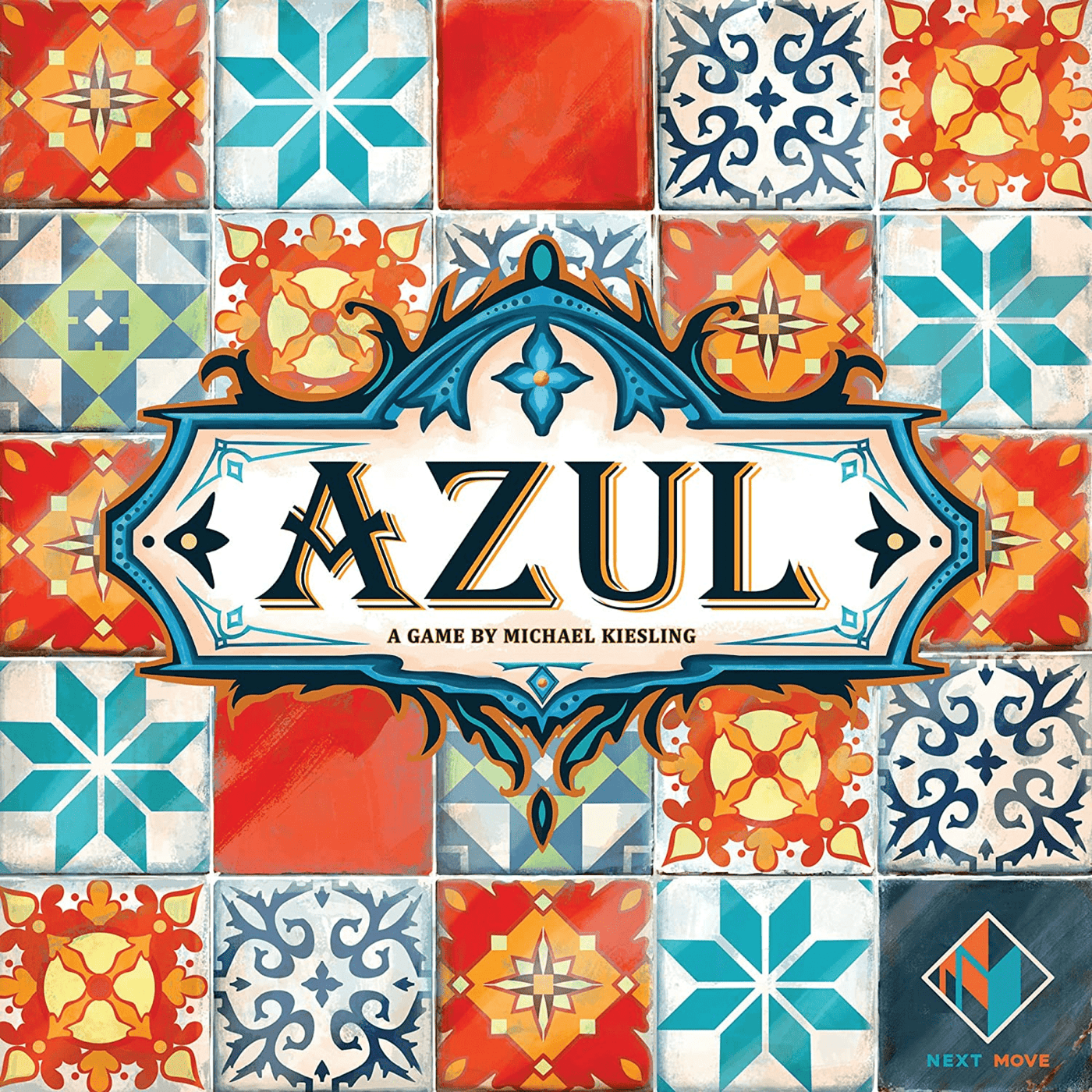
Box art via BoardGameGeek. Azul published by Next Move Games / Plan B Games.
BGG Rating: 7.71 | Rank: #99 | Weight: 1.77 | Players: 2-4 | Time: 30-45 min
BGG Page: boardgamegeek.com/boardgame/230802
Azul plays nothing like Carcassonne mechanically, but it delivers the same core feeling: pick something, place it somewhere, watch a pattern emerge. You’re drafting coloured tiles from a central market, arranging them on your personal player board, and trying to complete rows, columns, and colour sets to score points. Leftover tiles at the end of a round get penalty points.
The penalty system is what makes Azul sing. Unlike Carcassonne, where a badly placed tile is mostly just a missed opportunity, Azul punishes greed. Taking tiles you can’t fit will hurt you. That threat running through every turn creates a consistent low-level tension that family-weight games rarely achieve.
It’s also beautiful. Azul was designed around Portuguese glazed tile-work (azulejos), and the physical tiles - heavy, smooth, satisfying to handle - make it one of the best-tactile games at any weight.
Why Carcassonne fans love it: Same weight range, same 30-45 minute sweet spot, easier to explain. Rated #99 on BGG, significantly higher than Carcassonne. The abstract theme opens it up for non-gamer friends who might balk at medieval castles.
Who it’s for: Two to four players who want something that looks beautiful on the table and plays clean. A near-perfect gift game for anyone who liked Carcassonne.
4. Patchwork
The two-player tile puzzle
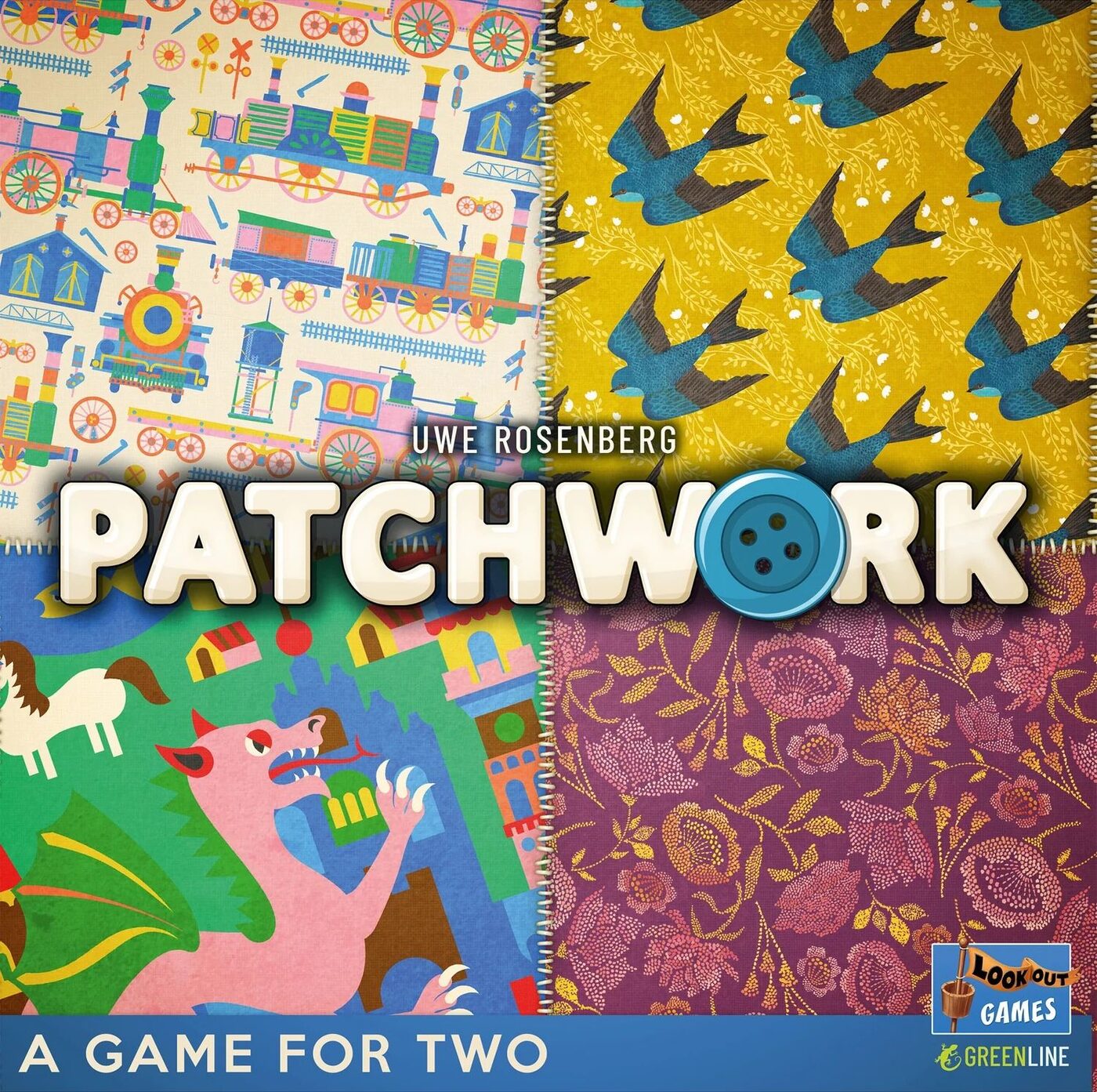
Box art via BoardGameGeek. Patchwork published by Lookout Games.
BGG Rating: 7.58 | Rank: #148 | Weight: 1.60 | Players: 2 only | Time: 15-30 min
BGG Page: boardgamegeek.com/boardgame/163412
Carcassonne at two players is fine, but it’s not the game’s best count - you’re missing the chaos and jostling that comes from more people. Patchwork solves this by being built exclusively for two, and it’s arguably the best two-player gateway game ever made.
You’re each building a patchwork quilt on a 9×9 personal board, drafting Tetris-shaped fabric patches from a central market. Each patch has two costs: buttons (currency) and time. The time track is the mechanism - paying time means your opponent gets to take multiple turns while you wait. Managing that asymmetry, rather than just pure spatial placement, is what separates good Patchwork players from great ones.
The game plays in 15-30 minutes. Setup takes 90 seconds. It fits in a bag. It’s been rated by over 74,000 BGG users and sits at #148 all-time - higher than Carcassonne despite being strictly two-player.
Why Carcassonne fans love it: Pure tile-placement decision-making with no downtime. The Tetris-piece shapes make the spatial puzzle feel more challenging and personal than Carcassonne’s square tiles.
Who it’s for: Couples, siblings, or any two-player household. If you mainly play Carcassonne at two, Patchwork is a direct, superior replacement for that specific count.
5. Cartographers
Solo and group map-drawing
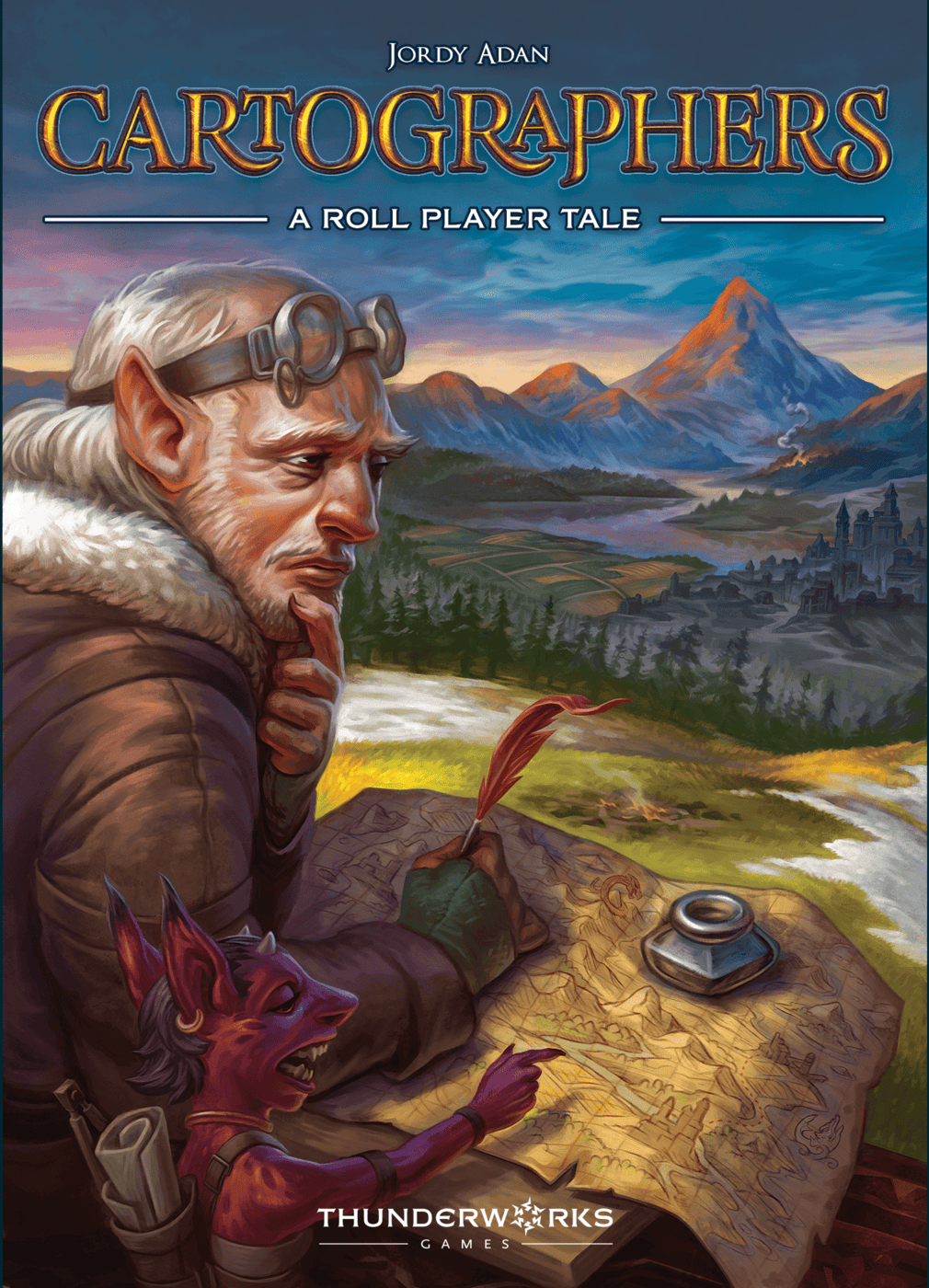
Box art via BoardGameGeek. Cartographers published by Thunderworks Games.
BGG Rating: 7.55 | Rank: #184 | Weight: 1.89 | Players: 1-100 | Time: 30-45 min
BGG Page: boardgamegeek.com/boardgame/263918
Cartographers replaces physical tiles with pencil and paper. A card is flipped from a deck showing a terrain shape; everyone draws that shape on their personal map sheet, placing it wherever they like. At the end of each of four seasons, you score two of four randomly chosen objectives. The seasons are timed by working through the explore deck - when it runs out, the season ends.
This shift from tiles to paper changes the feel significantly. You’re not constrained by what’s in your hand; everyone sees the same revealed terrain. The decisions are entirely about where on your personal map to place it - maximising four different scoring objectives simultaneously while managing the random raider cards that damage your map if you’re not prepared.
Plays at any table size, which makes it genuinely unique. Ten people can play it as easily as one. It also plays fully solo.
Why Carcassonne fans love it: Same spatial puzzle core, same 30-45 minute run time, same “map building” aesthetic. Works when you can’t get a table together - or when you have more people than any tile game can handle.
Who it’s for: Solo players who want the Carcassonne feel without waiting for others. Groups that run large. Anyone who prefers the low-overhead of paper over component setup.
6. Isle of Skye: From Chieftain to King
The strategic step up
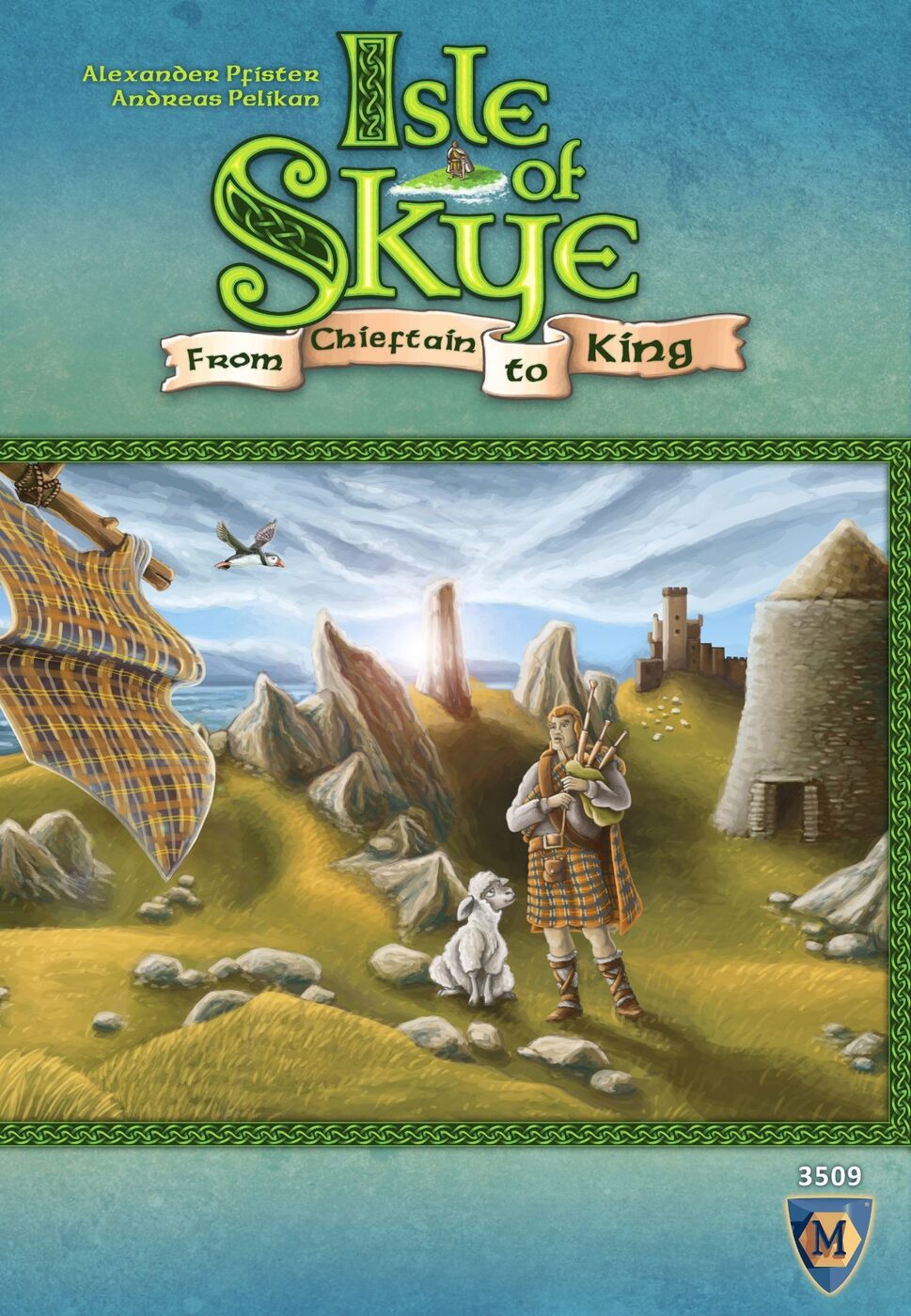
Box art via BoardGameGeek. Isle of Skye published by Lookout Games.
BGG Rating: 7.39 | Rank: #294 | Weight: 2.26 | Players: 2-5 | Time: 30-50 min
BGG Page: boardgamegeek.com/boardgame/176494
Isle of Skye looks like Carcassonne at first glance - you’re building a landscape from tiles, connecting terrain and placing castles and roads. But it adds a full auction layer that changes everything.
Each round, players secretly price two of their three drawn tiles and discard the third. The catch: if another player buys one of your tiles, you get their money - but you lose the tile you wanted. Set the price too high and no one buys it, so you must pay that price yourself from your own supply. This push-and-pull pricing tension is where Isle of Skye earns its Kennerspiel des Jahres win.
The scoring also changes: four variable objective tiles are chosen each game (from a larger set), so what scores big shifts dramatically between plays. You never solve Isle of Skye the way you eventually “solve” Carcassonne’s meeple placement.
Why Carcassonne fans love it: Same tile-placement DNA, same time window. The auction mechanism adds a social tension - reading opponents, bluffing on prices - that makes it excellent at 3-5 players.
Who it’s for: Carcassonne veterans who want the next level. Groups that enjoy a bit of economic negotiation alongside their landscape building. The weight bump to 2.26 means it’s still accessible but rewards a bit more planning.
Quick Reference
| Game | Players | Time | BGG Weight | BGG Rank | Best For |
|---|---|---|---|---|---|
| Carcassonne | 2-5 | 30-45 min | 1.88 | #240 | The classic starting point |
| Cascadia | 1-4 | 30-45 min | 1.84 | #60 | Best overall upgrade |
| Kingdomino | 2-4 | 15-25 min | 1.24 | #332 | Fast family sessions |
| Azul | 2-4 | 30-45 min | 1.77 | #99 | Abstract precision |
| Patchwork | 2 only | 15-30 min | 1.60 | #148 | Two-player households |
| Cartographers | 1-100 | 30-45 min | 1.89 | #184 | Solo or large groups |
| Isle of Skye | 2-5 | 30-50 min | 2.26 | #294 | Strategic depth seekers |
Which One Should You Buy?
- “I want the best game in this family of weight and style” → Cascadia. Rated #60 on BGG, plays solo, works at all counts. It’s simply better on almost every dimension.
- “I have kids under 10” → Kingdomino. Done in 20 minutes, easy to explain, genuinely engaging for adults too.
- “I mostly play games with one other person” → Patchwork. Built for two, plays in 20 minutes, one of the best two-player designs ever made.
- “I want something that looks spectacular on the table” → Azul. The physical tiles alone are worth the price of admission.
- “I want to be able to play alone, or with my whole family” → Cartographers. Paper and pencil, any number of players, same map-building soul.
- “Carcassonne is too easy now, I want more to think about” → Isle of Skye. Same DNA, but the auction mechanic adds a layer that keeps experienced players engaged.
All six are legitimate. None of them overlap enough that you’d regret owning two or three alongside Carcassonne. That’s the strength of the tile-placement genre - it’s a big tent with room for everyone.