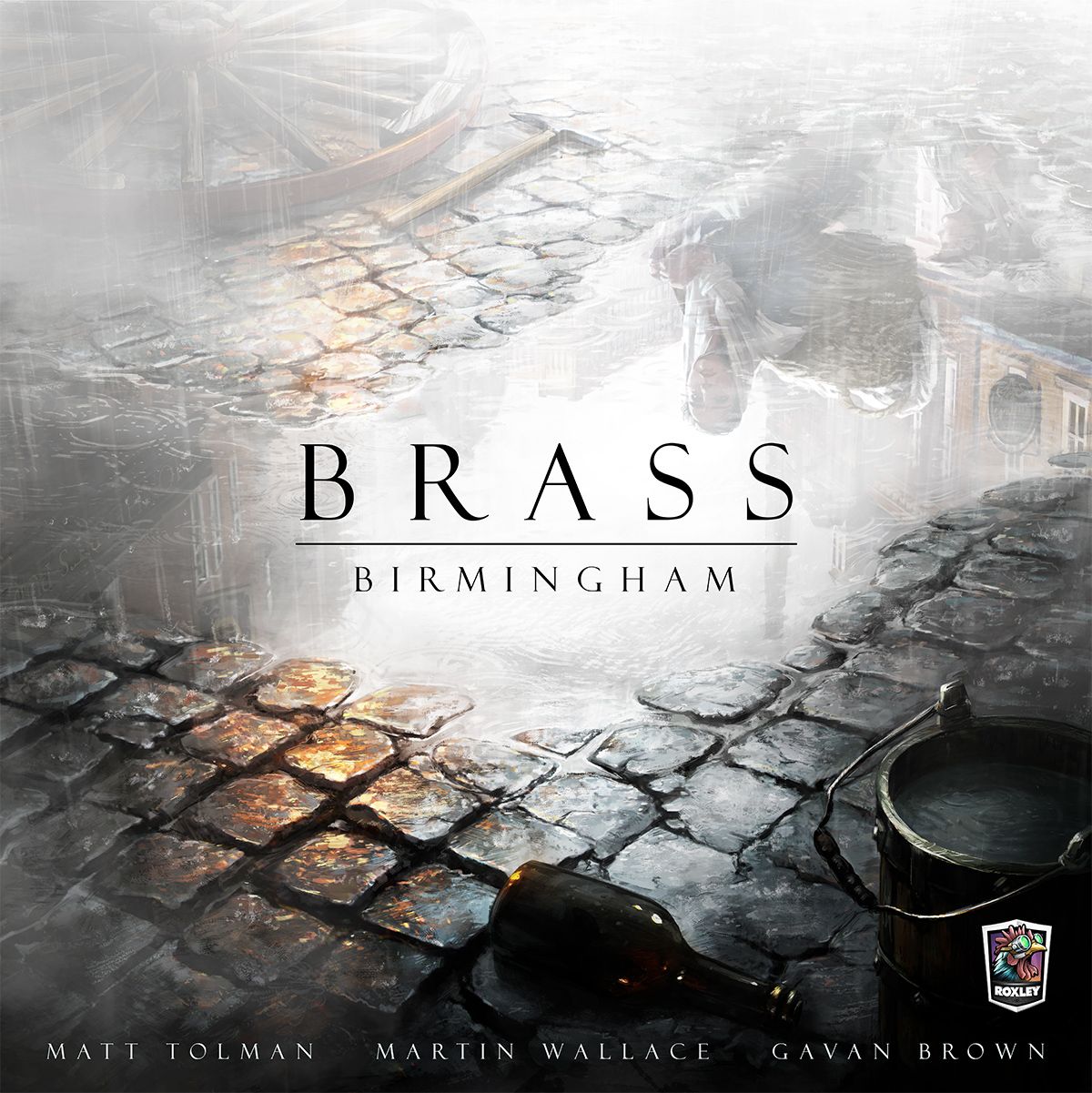
Brass: Birmingham is, by every measurable standard, the best board game ever made. It holds BGG Rank #1, carries an 8.56 average rating from nearly 60,000 voters, and packs a 3.86 weight that rewards players who actually want to think hard for two hours. You’re a competing industrialist in 1770-1870 Birmingham, building cotton mills, coal mines, iron works, and canals - then tearing it all up and doing it again in the rail era. The hand management is elegant, the resource chain is punishing in the best way, and every move ripples outward in ways you only fully appreciate after losing to someone who built beer earlier than you.
It’s the kind of game that ends with everyone reaching for their phones to check how much it costs. Then they buy it. Then they’re here, reading this, six months later.
The problem with loving Brass: Birmingham is that almost nothing else is quite like it. But there are games that scratch adjacent itches - some lighter, some heavier, some sharing the industrial economics, some delivering that same beautiful tension between short-term actions and long-term network payoff.
Here are seven of the best.
1. Brass: Lancashire - The Predecessor That’s Still Worth Playing
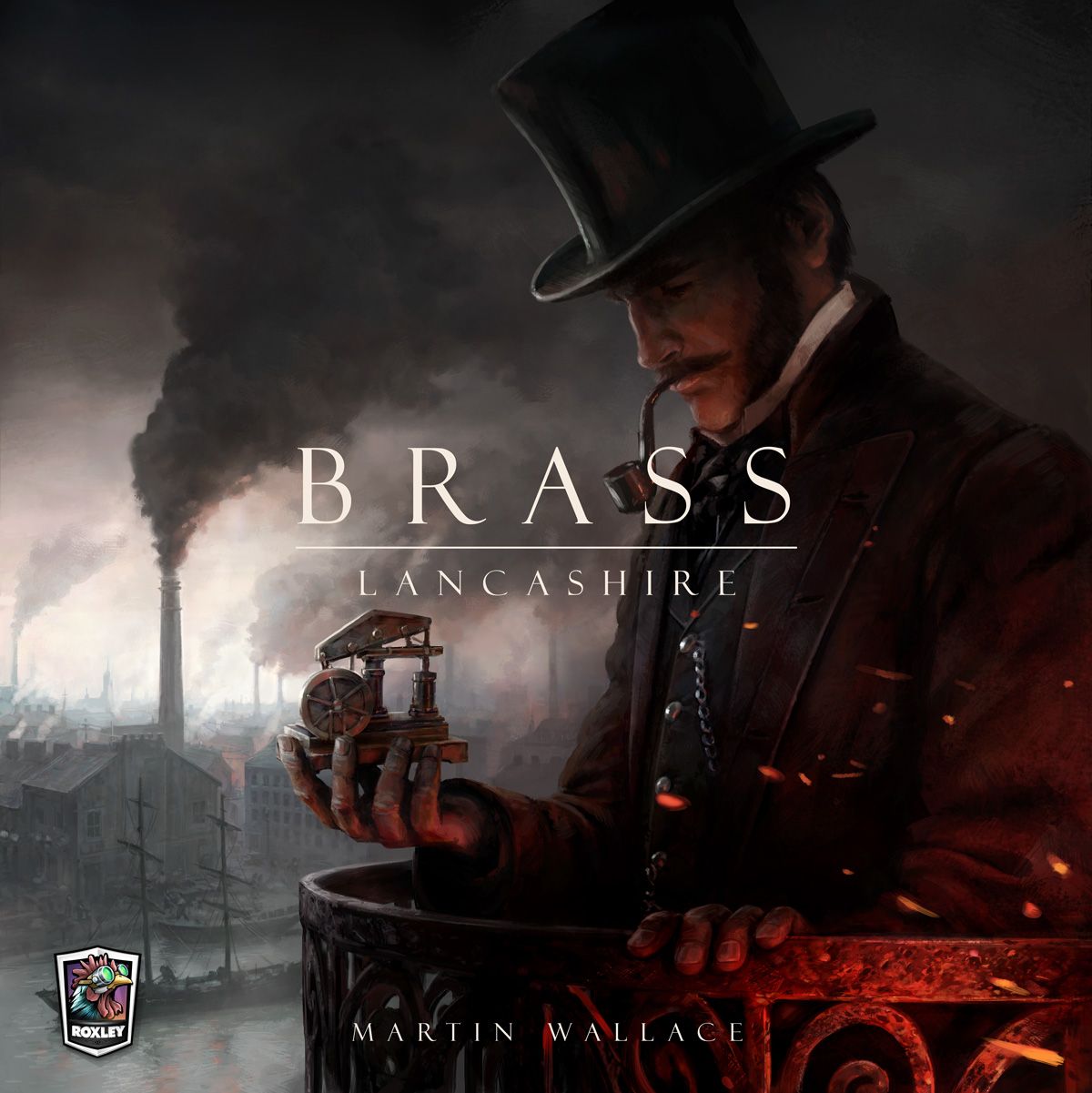 Image credit: Roxley / BoardGameGeek
Brass: Lancashire | BGG Rank #22 | Rating: 8.20 | Weight: 3.84 | 2-4 players | 120 mins
The obvious first stop. Martin Wallace’s 2007 original predates Birmingham by a decade, and the comparison is genuinely interesting: Lancashire and Birmingham share the same bones - two eras, hand management, a network you must connect through to score - but play differently enough to justify owning both. Lancashire is slightly leaner, slightly more punishing, and has a contested cotton market that forces tighter timing decisions. Birmingham added beer as a resource, gave merchants more character, and polished the rough edges.
If you’ve only played Birmingham and never touched Lancashire, you’re missing context. BGG regularly debates which is “better” (Lancashire fans are loyal and vocal), and the reality is that they’re complementary. Lancashire at 3.84 weight is functionally identical to Birmingham’s 3.86 - these are twin heavyweights.
What it shares with Brass: Birmingham: The core two-era loop, hand-as-location system, network building, industry tile mechanics.
What’s different: No beer, slightly more direct competition for cotton markets, less merchant variety, marginally harsher early turns.
Who it’s for: Brass: Birmingham devotees who want to see where it came from - and fans who enjoy the slightly rawer, more cutthroat original formula.
2. Great Western Trail - The Best Network-Builder in Its Weight Class
 Image credit: eggertspiele / BoardGameGeek
Great Western Trail | BGG Rank #21 | Rating: 8.15 | Weight: 3.69 | 2-4 players | 75-150 mins
Alexander Pfister’s masterwork is the closest thing to Brass: Birmingham in spirit without sharing any of its mechanics. You’re a cattle rancher driving herds from Texas to Kansas City - building a trail with buildings, managing your deck of cattle cards, and optimising a network of structures that give you economic advantages as your cattle drives improve.
The parallels with Birmingham are structural rather than mechanical: both games feature an interlocking economy where every decision has downstream consequences, both reward players who plan multiple turns ahead, and both have that distinctive feeling of “I can see exactly what I should do but I don’t have the cards/resources to do it yet.” Great Western Trail is slightly lighter at 3.69 weight, plays somewhat faster, and has just enough theme to make the economic abstraction feel grounded.
Alexander Pfister (also of Mombasa, Oh My Goods!) is one of the most consistent designers of the last decade, and Great Western Trail is arguably his best work.
What it shares with Brass: Birmingham: Network building, economic hand management, the pressure of multi-turn planning in a tight system.
What’s different: Deck-building core instead of card-as-location, American frontier theme, no two-era structure.
Who it’s for: Birmingham fans who want the same strategic depth with a slightly faster, thematically distinct experience. Excellent at 3-4 players.
3. Terraforming Mars - The Accessible Entry Point
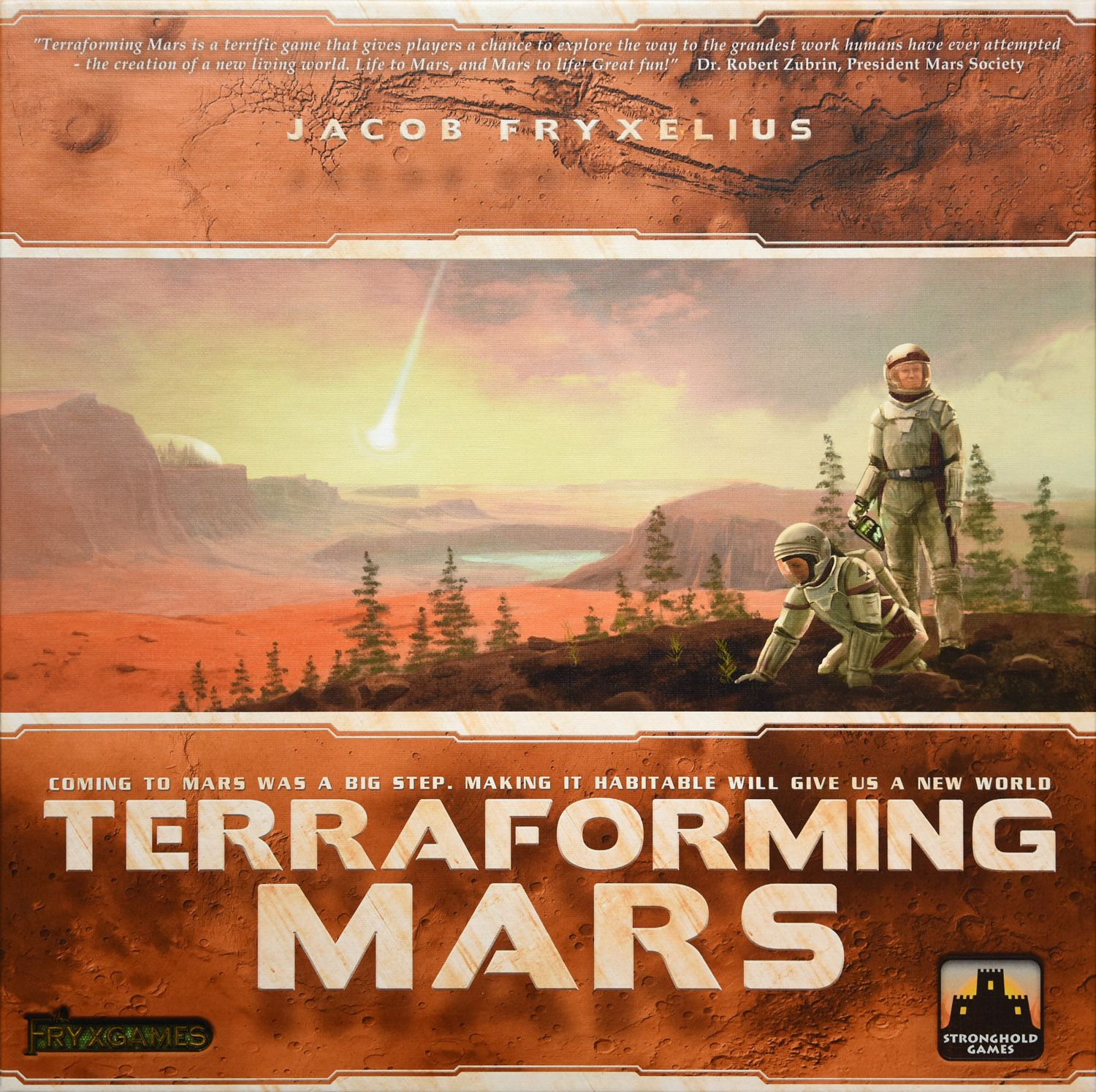 Image credit: FryxGames / BoardGameGeek
Terraforming Mars | BGG Rank #9 | Rating: 8.34 | Weight: 3.27 | 1-5 players | 120 mins
If Brass: Birmingham is your benchmark for heavyweight economic games, Terraforming Mars is the game you introduce to friends who aren’t quite ready for it yet. At 3.27 weight it’s noticeably lighter, but it delivers a similarly rich economic engine and similar end-game satisfaction - just through a card-drafting tableau rather than a network-building tile puzzle.
You’re a corporation competing to terraform the Red Planet: raising temperature, oxygen, and ocean levels by playing project cards that chain into elaborate combos. The resource generation system - production tracks that pay out every generation - rhymes with Birmingham’s income track logic. The engine snowballs, the combos compound, and the game reaches a crescendo where every card you play generates more cards, resources, and points simultaneously.
Terraforming Mars has famously basic production components (cardboard tiles, thin cards), but the mechanical depth punches well above its price point. The solo mode is also one of the genre’s best.
What it shares with Brass: Birmingham: Economic engine building, production track management, the satisfaction of a system clicking into gear over a long game.
What’s different: Card-engine rather than network, sci-fi theme, more direct player interaction via card effects.
Who it’s for: The friend who liked Birmingham but found it exhausting - or the Birmingham veteran who wants a slightly faster economic puzzle.
4. Tzolk’in: The Mayan Calendar - The Interconnected System Lover’s Pick
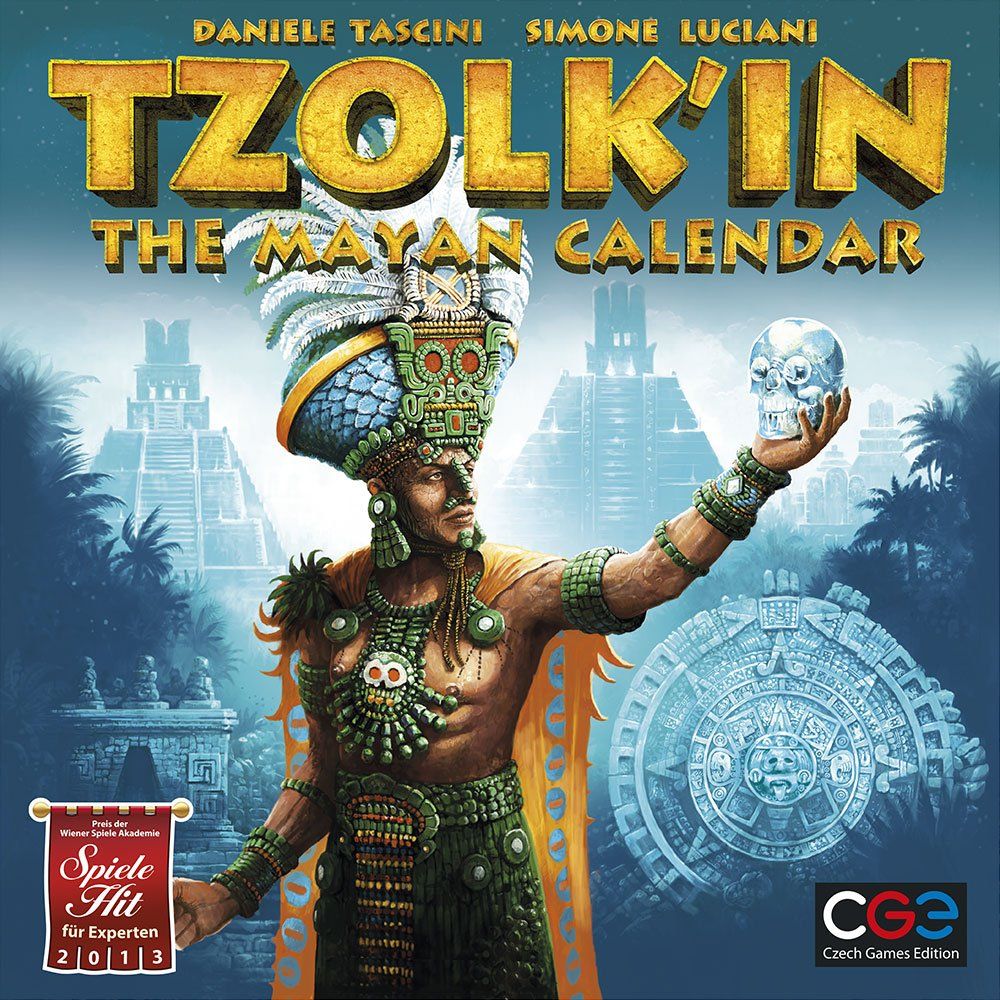 Image credit: Czech Games Edition / BoardGameGeek
Tzolk’in: The Mayan Calendar | BGG Rank #74 | Rating: 7.85 | Weight: 3.66 | 2-4 players | 90 mins
Tzolk’in is one of the most mechanically distinctive games in hobby gaming - its gimmick is physical gears that actually turn, advancing your workers up resource tracks every round without you having to do anything. You place workers on gears, the calendar ticks forward, and when you retrieve them they’ve “worked” their way up to stronger rewards. The puzzle is knowing when to place, when to retrieve, and how to manage the calendar’s inexorable forward march.
The reason this belongs on a Brass: Birmingham list is the underlying feeling: Tzolk’in is a game of interconnected consequences. Like Birmingham, every resource feeds into every other resource - corn funds placements, stone builds monuments, gold buys technology. The timing pressure is relentless, and the “I can see what I need to do but I can’t get there from here” frustration is a feature, not a bug.
It’s slightly lighter than Birmingham at 3.66 weight, plays in a tight 90 minutes, and has one of the cleanest endgame scoring structures in the genre.
What it shares with Brass: Birmingham: Tight resource economy, interconnected action systems, planning pressure across multiple turns.
What’s different: No network building, no hand management, physical gear mechanic is entirely unique in the genre.
Who it’s for: Birmingham fans who love the resource chain puzzle and want something thematically different that delivers the same “everything is connected” feel.
5. Gaia Project - The Heavier Sci-Fi Alternative
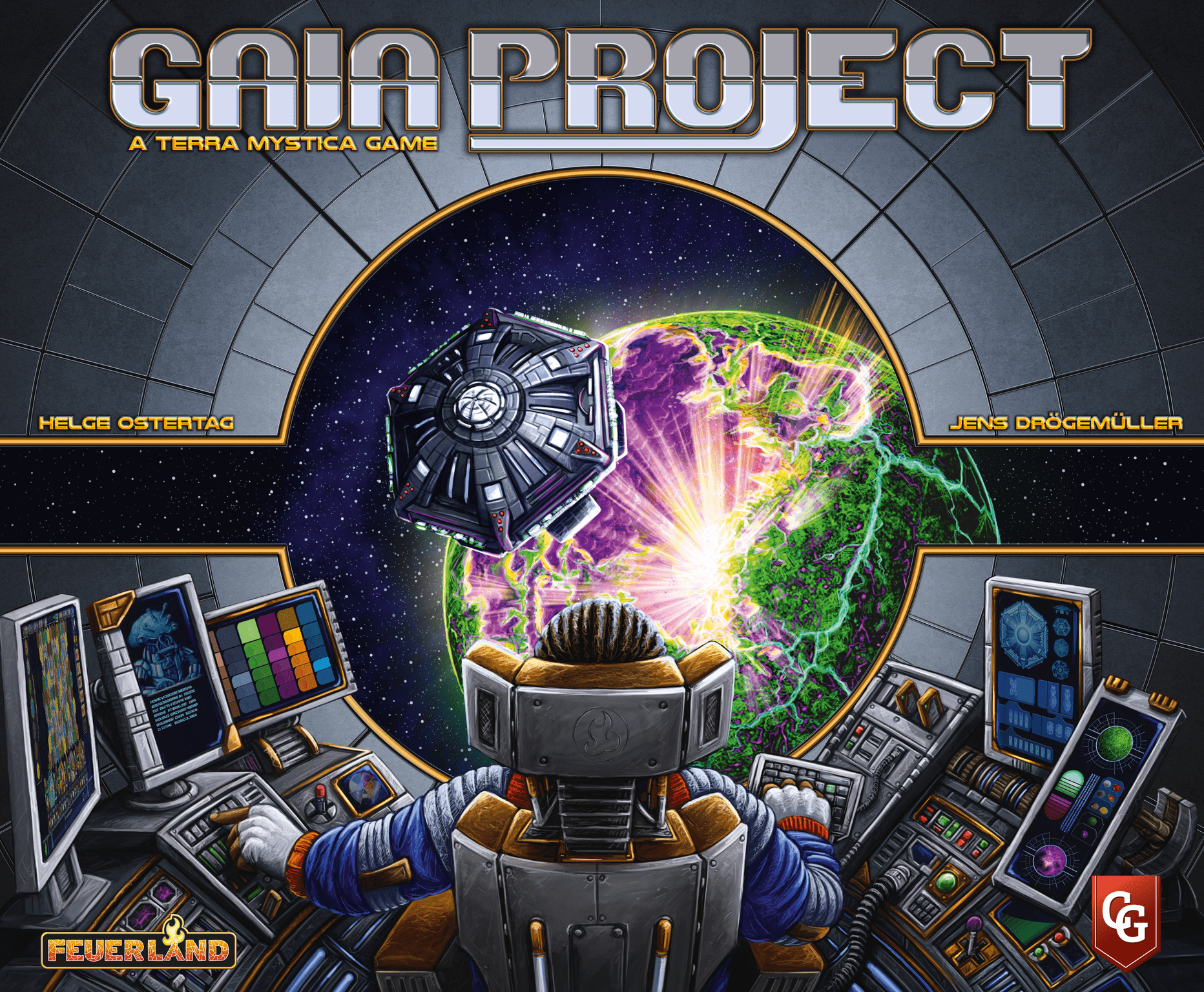 Image credit: Z-Man Games / BoardGameGeek
Gaia Project | BGG Rank #13 | Rating: 8.35 | Weight: 4.40 | 1-4 players | 60-150 mins
If Birmingham doesn’t satisfy your need for complexity, Gaia Project steps up to 4.40 weight and dares you to keep up. A sci-fi civilization-builder derived from Terra Mystica, it has you colonising galaxies, transforming planets to suit your faction, researching technology trees, and forming federations to score resources. The network-building element is explicit: adjacency matters, connectivity scores points, and expanding efficiently across the galaxy board requires exactly the kind of spatial planning Birmingham rewards.
Each faction has radically asymmetric powers that fundamentally change how you approach the economic engine - comparable to how your hand composition in Birmingham forces you to adapt your network strategy. Gaia Project rewards mastery over dozens of sessions, and the interaction between player factions, federation scoring, and round bonuses creates the kind of complexity where every game reveals something new.
The 150-minute runtime at four players is real. This is a game for committed heavyweights only.
What it shares with Brass: Birmingham: Network expansion, tight economic management, asymmetric player powers that change the decision space, significant planning across the full game arc.
What’s different: Heavier than Birmingham by a meaningful margin, sci-fi theme, explicit tech trees, much more player faction diversity.
Who it’s for: Birmingham veterans who want more - more complexity, more asymmetry, more decisions per turn.
6. Through the Ages: A New Story of Civilization - The Card Management Epic
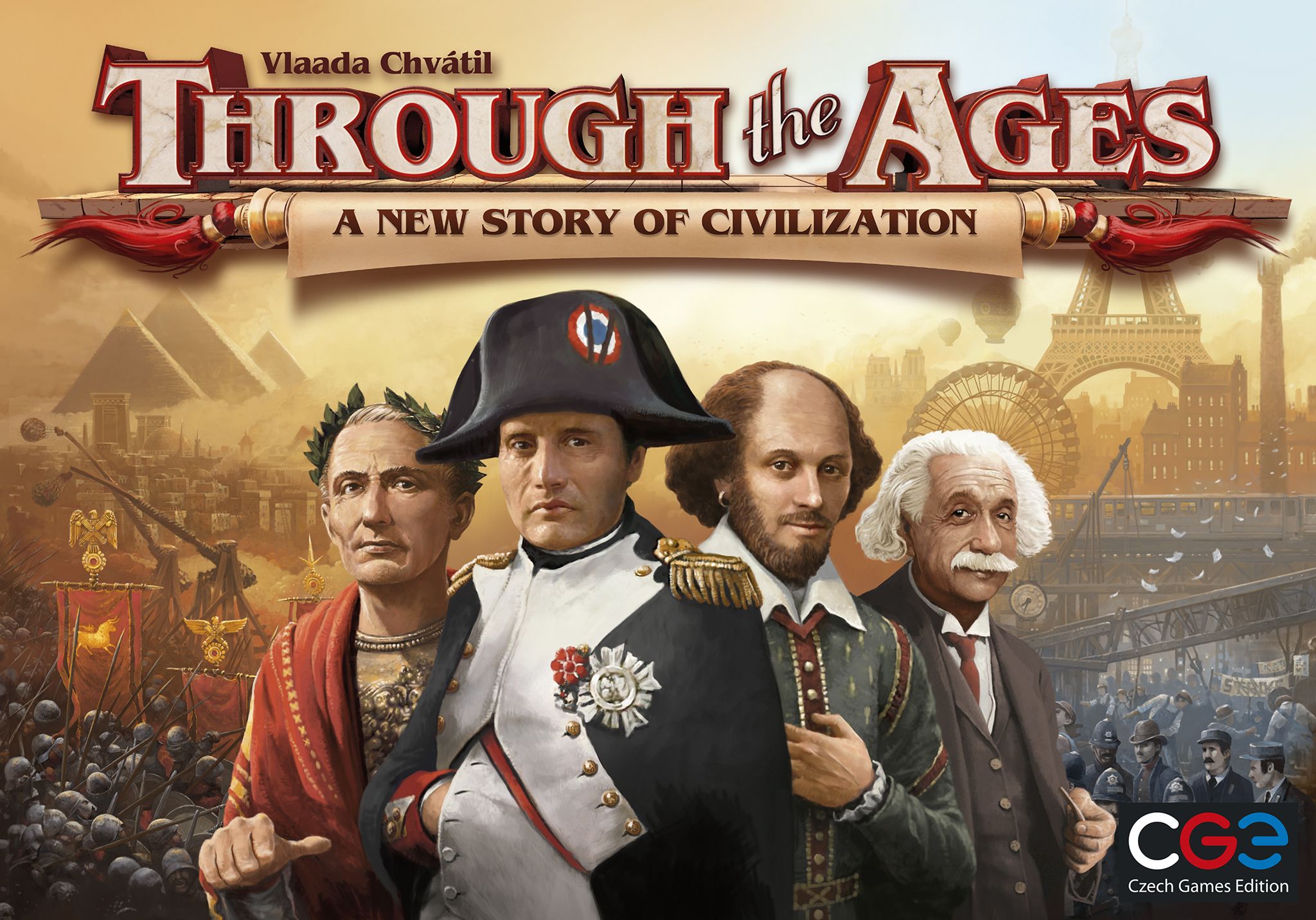 Image credit: Czech Games Edition / BoardGameGeek
Through the Ages: A New Story of Civilization | BGG Rank #18 | Rating: 8.25 | Weight: 4.44 | 2-4 players | 120 mins
Through the Ages is one of the most celebrated civilisation games ever designed - and like Birmingham, it’s built around ruthless hand management, resource chain management, and the sense that every card you don’t play is a card you’re ceding to someone else. You’re leading a civilisation from the ancient world through the modern era, building wonders, advancing technology, fielding armies, and managing the brutal tension between military spending and civilian development.
The card row mechanic is the heart of it: cards are revealed across ages and cycle off if no one buys them, so the decision of when to spend civil actions acquiring cards versus spending them on development is constant and punishing. The game rewards players who can think in systems - exactly the same cognitive muscles Birmingham exercises.
At 4.44 weight it’s heavier than Birmingham, and it plays longer. But if you love Birmingham’s hand management - using cards as both locations and actions - Through the Ages will feel like a natural next step into something more expansive.
What it shares with Brass: Birmingham: Demanding hand management, the feeling that resources are always scarce, long planning horizons, a game that rewards experience.
What’s different: No network building or spatial element, civilisation rather than industrial theme, much longer game at full count.
Who it’s for: Birmingham fans who love the hand management puzzle above everything else and want a full civilisation scope to apply it to.
7. Lisboa - The Lacerda Heavy for Converts
 Image credit: Eagle-Gryphon Games / BoardGameGeek
Lisboa | BGG Rank #69 | Rating: 8.17 | Weight: 4.57 | 1-4 players | 60-120 mins
Vital Lacerda’s games occupy a tier of complexity almost entirely their own, and Lisboa - set in the rebuilding of Lisbon after the 1755 earthquake - is one of his most thematically grounded and mechanically dense designs. You’re a noble, merchant, or clergyman contributing to the reconstruction, managing a hand of royal decree and character cards that interact in layered ways across a tightly interconnected action board.
The connection to Birmingham is the shared feel of urban economic reconstruction: placing buildings, managing resource flows, timing your actions around what other players are doing. Like Birmingham, Lisboa has a phase structure that changes the value of your assets - what scores in the early game doesn’t necessarily score in the late game. And like Birmingham, the game punishes players who don’t read the board state and play reactively.
At 4.57 weight Lisboa is the heaviest game on this list - a real commitment that rewards multiple plays before the systems start to feel intuitive. But for Birmingham fans who’ve been told “you’re ready for Lacerda now,” this is the most accessible entry point into his catalogue.
What it shares with Brass: Birmingham: Economic city-building, interconnected resource systems, phase-based value shifts, the sense that the board is a living system you’re trying to read.
What’s different: Heavier, longer rules overhead, no network building, Pombaline Lisbon rather than industrial Birmingham.
Who it’s for: Birmingham devotees who’ve exhausted their group’s ambitions and want to see where the genre pushes next. Not for newcomers to heavy games.
The Hierarchy at a Glance
| Game | BGG Rank | Weight | Players | Time | Best For |
|---|---|---|---|---|---|
| Brass: Birmingham | #1 | 3.86 | 2-4 | 60-120 min | The benchmark |
| Terraforming Mars | #9 | 3.27 | 1-5 | ~120 min | More accessible engine building |
| Great Western Trail | #21 | 3.69 | 2-4 | 75-150 min | Network building, similar depth |
| Brass: Lancashire | #22 | 3.84 | 2-4 | 120 min | The predecessor, still excellent |
| Tzolk’in | #74 | 3.66 | 2-4 | 90 min | Interconnected systems, unique mechanic |
| Through the Ages | #18 | 4.44 | 2-4 | 120 min | Hand management epic |
| Gaia Project | #13 | 4.40 | 1-4 | 60-150 min | Heavier, sci-fi network expansion |
| Lisboa | #69 | 4.57 | 1-4 | 60-120 min | Lacerda entry point for converts |
All weights and rankings verified via BGG API (June 2026).
Where to Start
You want the closest thing to Birmingham’s feel: Play Great Western Trail. The hand-management network-building tension translates most directly, even though the theme and mechanics are different.
You want to understand where Birmingham came from: Brass: Lancashire. Same designer, same bones, just a decade older and slightly rawer.
You want to introduce friends to this style: Terraforming Mars. It’s lighter, more forgiving, and still delivers that “my engine is humming” satisfaction at a slightly reduced complexity level.
You want to go deeper: Gaia Project or Through the Ages. Both are heavier, both are longer, both will destroy you the first few times and reward the investment.
You’re ready for a Lacerda: Lisboa. Welcome to the deep end.
Wherever you go from here, one thing is true: you have good taste. Seven of the eight games in this table sit in the BGG top 100. There is no wrong answer.
All BGG ratings, weights, and ranks accurate as of June 2026. Images sourced from BoardGameGeek with attribution.