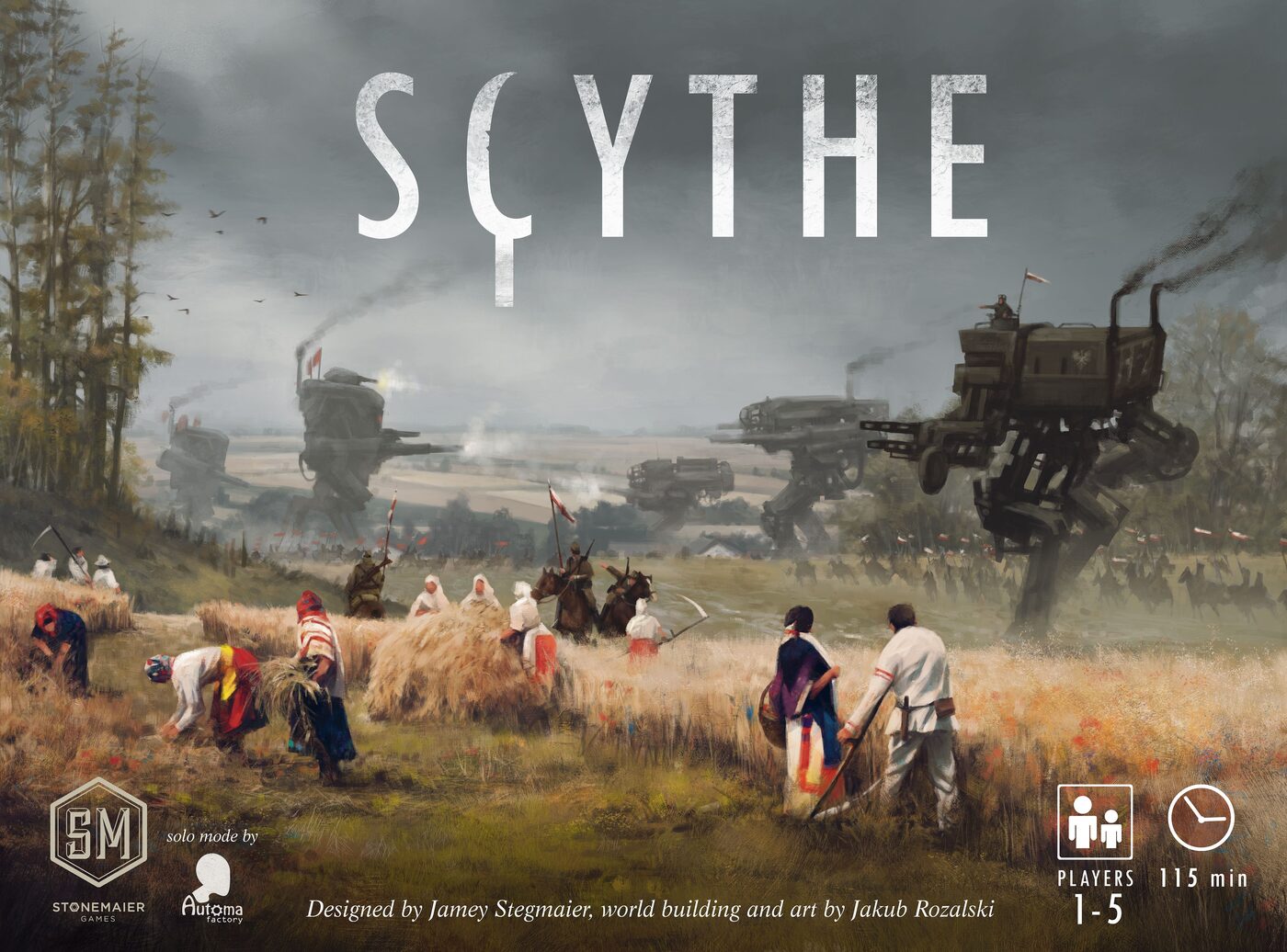
There’s a particular type of board gamer who ends up with both Scythe and Dune: Imperium on their shelf. They’re not wrong. But before you get there, a lot of people have to make a choice - and the question “which one first?” is asked constantly, usually by people who know they want something with strategic depth but aren’t sure how to distinguish these two.
The surface-level comparison is understandable: both are heavy-ish strategy games with asymmetric factions, both have exceptional BGG ratings, both attract a similar audience. But once you’re sitting at the table, they feel almost nothing alike. Scythe is an engine-building area-control game dressed in diesel-punk alt-history. Dune: Imperium is a political deckbuilder about controlling a desert planet. They share the same shelf category, not the same design DNA.
Here’s how they actually compare.
The Quick Numbers
| Scythe | Dune: Imperium | |
|---|---|---|
| BGG Rank | #27 | #6 |
| BGG Rating | 8.09 | 8.41 |
| Weight | 3.45 / 5 | 3.08 / 5 |
| Players | 1-5 | 1-4 |
| Play Time | ~115 min | 60-120 min |
| Year | 2016 | 2020 |
| Publisher | Stonemaier Games | Dire Wolf |
The rating gap is real and notable. Dune: Imperium sits at BGG #6 - a position usually occupied by games that have been around longer and accrued massive voter bases. Scythe at #27 is also phenomenal, but Dune has crept well past it in community esteem. The weight difference (3.45 vs 3.08) is meaningful: Scythe teaches longer and requires more rules overhead per turn.
What Each Game Is Actually Doing
Scythe: Engine Building in an Occupied Territory
Scythe is fundamentally an engine-building game with area-control stakes. Each player controls an asymmetric faction from a different nation of 1920s alt-history Europe, manoeuvring mechs across a modular hex map, gathering resources, upgrading their player board, and trying to trigger game-end as soon as they’ve completed enough achievements to maximise their scoring position.
The core turn structure uses an alternating action mechanic: each faction board has a top row and a bottom row of actions. You pick a section, take the top action optionally, then take the bottom action optionally. You can’t repeat the same section two turns in a row. Simple on the surface - but the depth comes from sequencing your upgrades to link these actions efficiently, planning your mech deployments to control resource-rich hexes, and reading when your rivals are close to triggering game-end.
What makes Scythe feel distinct is the tension between conflict and avoidance. Combat is possible, but it’s costly and punishing for the loser. Most experienced players will tell you Scythe rewards positioning and presence over direct aggression. You’re playing a cold war of sorts - projecting power, occupying key territories, staying threatening enough that opponents don’t bother you. Games that devolve into pure combat tend to produce worse outcomes than games played with restraint.
The game ends when one player places their sixth star token - achieved through combat wins, worker deployment, building placement, mech deployment, upgrades, and end-round card objectives. The pressure to trigger game-end before your opponents are ready is constant.
Dune: Imperium: Deckbuilding Meets Political Intrigue
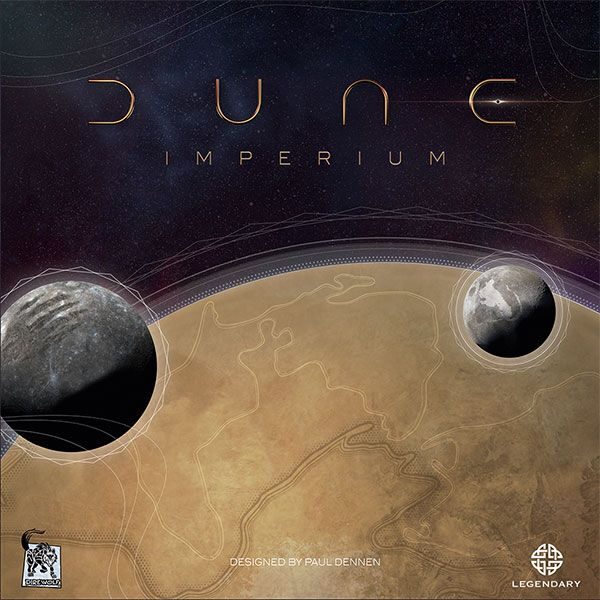
Dune: Imperium is a worker placement game grafted onto a deckbuilder, set in the universe of Frank Herbert’s novel. Each player controls a Great House of the Imperium - Atreides, Harkonnen, Corrino, or others - vying for control of spice, political alliances, and ultimately dominance over Arrakis.
The turn structure is clean but rich: play a card from your hand to send an Agent to a board space (triggering that space’s effect), or Reveal the rest of your hand to score influence in the current conflict and gain resources. The deckbuilding loop feeds directly into the worker placement loop - the cards you’ve accumulated determine which board spaces you can access on your Agent turns, and reveal turns are when you marshal your strength for the combat that decides who gains Control markers on Arrakis.
The intrigue card system adds a hidden-information layer. You’ll accumulate secret intrigue cards that can disrupt opponents’ plans, generate resources at unexpected moments, or score points - and nobody knows exactly what you’re holding. A well-timed intrigue play can flip a conflict at the last second.
The game rewards a coherent strategy. Rushing military control burns resources. Overinvesting in political influence leaves you poor. The best Dune: Imperium players read the conflict cards coming up and plan two or three turns ahead to be in the right position without revealing their lane too early.
Where They Diverge: The Key Differences
Complexity and Teaching
Scythe is harder to teach. Its alternating action structure, faction asymmetry, upgrade system, mech abilities, and encounter cards all require a solid 45-60 minutes of rules before you start. First-game paralysis is real - Scythe’s board is enormous and the number of visible options on your faction board can overwhelm.
Dune: Imperium has more intuitive table logic. Agents go to spaces, Reveal turns cash in your hand - that skeleton is graspable in 20 minutes. The nuance (which faction to ally with, how to read intrigue, when to press conflicts) comes through play rather than up-front rules. Weight 3.08 vs 3.45 doesn’t sound like much, but in practice the first game of Dune: Imperium is considerably smoother.
Verdict: Dune: Imperium is easier to get to the table with new-to-heavy-euros players.
Player Count and Table Time
Scythe technically plays up to five but hits a sweet spot at three to four. Two-player Scythe is functional but loses some of its territorial tension. Five players makes the game run long and the map can feel chaotic. The listed 115 minutes is accurate for experienced players; new groups should budget 2.5-3 hours.
Dune: Imperium is a tighter experience that plays well at two to four. Two-player Dune is a genuinely compelling knife fight - fewer factions means every conflict is personal, and the deckbuilding decisions are sharper when you know exactly who you’re racing against. At four, the political complexity and intrigue card volatility make it feel like a proper board game thriller. At one, both games have solo modes (more on that below). Play time for Dune: Imperium is closer to 90 minutes in practice - a full hour shorter than Scythe per session.
Verdict: Dune: Imperium is more flexible across player counts; Scythe is best at 3-4.
Solo Mode
Scythe’s solo mode (the Automa) is a beloved implementation. The Automa is a deck of cards that drives a rival faction, moving it across the board and threatening territories in a convincing way. It’s not the deepest solo experience in board gaming, but it’s clean and functions well as a puzzle for optimising your own engine against a credible threat.
Dune: Imperium’s solo mode has received strong reviews from the solo community, using an automated opponent faction that competes for conflicts and deploys agents using a simplified card system. The BGG solo poll shows it landing in “Recommended” territory - not universally loved, but genuinely playable. Expansion content (Rise of Ix, Immortality) adds further solo depth.
Verdict: Both are solid solo games. Scythe’s Automa is the more elegant implementation; Dune’s solo is competitive and variable.
Theme and Table Presence
Scythe’s table presence is extraordinary. The board is massive, the faction miniatures are chunky and gorgeous, and the diesel-punk Jakub Różalski artwork creates an atmosphere like no other game. Players who prioritise aesthetic experience at the table frequently cite Scythe as one of the best-looking games they own.
Dune: Imperium is functional rather than spectacular. The art references the Dune IP well and the conflict cards are thematic, but it’s a more compact physical footprint. If you or your group are Dune fans - novel or recent films - the thematic resonance is significant. For players coming in blind to the IP, it’s coherent but not quite the visual spectacle that Scythe delivers.
Verdict: Scythe wins on table presence. Dune: Imperium wins on theme coherence for IP fans.
Replayability
Both games have strong replayability, built differently.
Scythe uses random faction assignment, random player mats, and variable starting positions to ensure no two games open the same way. The faction asymmetry is meaningful: playing the Rusviet feels genuinely different from playing the Nordic Kingdoms. Expansion content (particularly Invaders from Afar and the campaign mode Rise of Fenris) extends this considerably.
Dune: Imperium’s replayability comes primarily from the deckbuilding - the cards available in any given session, which conflict cards appear, and which factions other players are pursuing creates a highly variable strategic landscape. The expansion Rise of Ix adds significant new cards and mechanics, and Immortality introduces a further faction layer. The game also plays faster per session, meaning you can fit more plays in a comparable time period.
Verdict: Both are highly replayable. Dune: Imperium sees the table more often due to shorter sessions.
Who Should Buy Scythe
- You love engine building as a primary mechanic, not just a side system
- You want something that’s a visual centrepiece - the kind of game people stop to look at
- Your group enjoys a longer, more leisurely strategic experience (2-2.5 hours)
- Area control and territory management interest you more than political alliance-building
- You play with 3-4 people regularly
Who Should Buy Dune: Imperium
- You want your first serious heavy euro - it’s the more accessible entry point at weight 3.08
- Deckbuilding excites you and you want it woven into a broader strategic game, not standalone
- Your group plays at two frequently, or four with mixed experience levels
- You’re a Dune fan and want the thematic connection
- You value a 90-minute play time over a 2+ hour commitment
The Verdict: Which First?
If you can only buy one, buy Dune: Imperium. It’s ranked #6 on BGG for good reasons - it’s more accessible, plays faster, is better at more player counts, and the deckbuilding + worker placement combo hits a design sweet spot that makes almost every turn feel meaningful. It’ll also leave you wanting more complexity, which makes Scythe a natural follow-up.
Scythe is a different kind of great. It’s slower to teach, more demanding to set up, and the play time commitment is real. But the engine-building satisfaction is distinct from anything Dune: Imperium offers, and the table presence is in a category of its own. Once your group has played enough heavier games to appreciate what Scythe is doing, it becomes one of those games that stays on the shelf for years.
They’re different enough that owning both is entirely justified. They don’t compete - they complement. Dune for the quicker Thursday night session; Scythe for the Saturday afternoon with the group that wants the full experience.
BGG data verified September 2026. Scythe: weight 3.45, rating 8.09, rank #27. Dune: Imperium: weight 3.08, rating 8.41, rank #6.