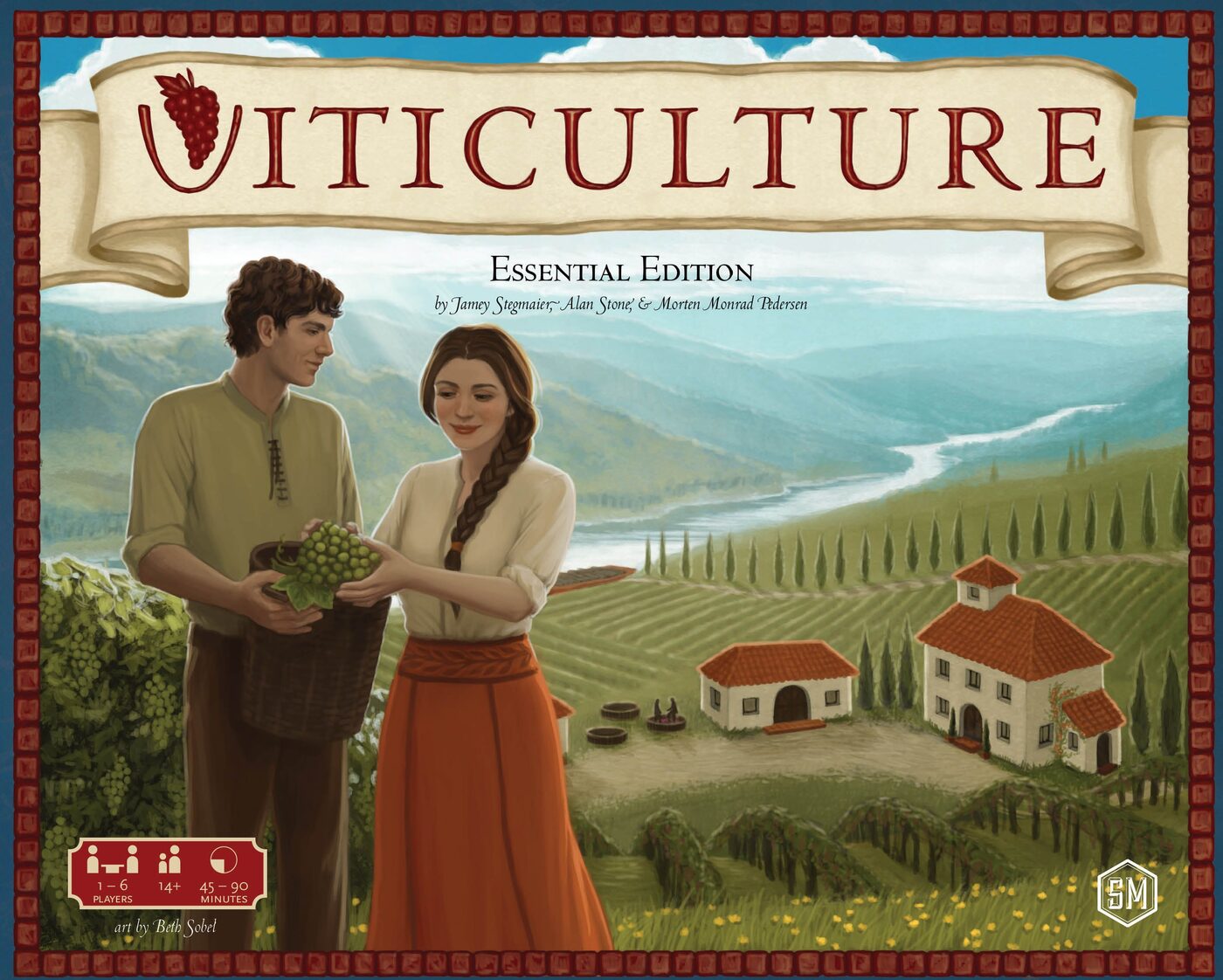
Two games, two farms, two completely different reasons to argue with your friends.
Agricola and Viticulture Essential Edition are the two names that come up every time someone asks “what’s the best worker placement game?” They both put you on a plot of land, both ask you to manage workers across a shared action board, and both clock in as some of the most beloved games in the hobby. But play each one for ten minutes and you’ll understand why recommending one over the other matters.
Agricola will stress you out. Viticulture will relax you - until you realise you’re losing.
At a Glance
| Agricola | Viticulture EE | |
|---|---|---|
| BGG Rank | #65 | #43 |
| Rating | 7.86 (77k ratings) | 7.96 (56k ratings) |
| Weight | 3.64 / 5 | 2.90 / 5 |
| Players | 1-5 | 1-6 |
| Play Time | 150 min | 90 min |
| Year | 2007 | 2015 |
| Designer | Uwe Rosenberg | Jamey Stegmaier |
| Publisher | Lookout Games | Stonemaier Games |
Both sit comfortably in the BGG top 70 - not fashionable picks, but enduring ones. The weight gap (3.64 vs 2.90) is the single most important number here and we’ll come back to it.
The Experience at the Table
Agricola: Managed Panic
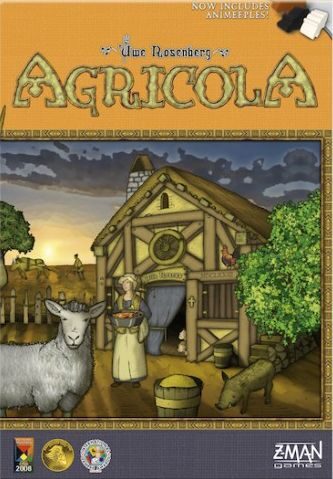
You start Agricola with two workers, a wooden hut, and nothing else. Your first instinct is to grab food before the round ends - because if you can’t feed your family, you take begging cards, and begging cards cost you points. Everything in Agricola flows from that one rule.
The board fills up fast. Every action space you want is blocked by someone else’s farmer. You planned to build fences for your sheep pasture? Your opponent grabbed the Wood you needed. Now you need to improvise - but improvising takes turns, turns you don’t have, and winter is coming faster than your brain can process.
This is the Agricola experience: a beautifully engineered scarcity engine that makes every single decision feel loaded. The 14 rounds tick down like a clock you’re always watching. The card system - a hand of Occupations and Minor Improvements unique to each player - adds asymmetry, planning, and a reason to replay the game dozens of times. No two games feel the same.
The downside? Agricola demands. A full five-player game at 150 minutes expects your full attention for all of it. New players need a patient teacher. Analysis paralysis is a real risk, and the scoring at the end - six categories, penalties for underdeveloped farms - can feel like grading an exam you barely studied for.
Viticulture: Flowing Optimization
Viticulture opens in Tuscany. You have a vineyard, a crush pad, a modest cellar, and a dream of producing wine good enough to fill the most lucrative orders on the table. Every year cycles through four seasons - spring, summer, autumn, winter - each with its own worker actions. Plant vines in summer. Harvest in autumn. Make wine in winter. Fill orders whenever you can.
The action board is generous. Multiple workers can take the same space in most cases, which immediately removes the tooth-gnashing tension of Agricola. Someone grabbed the space you wanted? Often, there’s a spot that does almost the same thing one row down. The friction is still there - order bonuses reward whoever arrives first, and the race to twenty victory points gives everything purpose - but the stakes feel manageable rather than existential.
What Viticulture does brilliantly is theme integration. The cycle of seasons creates genuine rhythm. The visitor cards that fire each season are varied, flavourful, and genuinely interesting to read. The moment you fill a grande wine order and slide VP tokens onto the track feels like actual satisfaction, not just arithmetic.
Complexity and Teaching
Agricola takes about 30-40 minutes to teach properly. The core rules aren’t complicated, but the sheer volume of action spaces, the card systems, and the scoring rubric require patience. New players will feel lost for the first three or four rounds. The recommended “family game” variant (no Occupation or Improvement cards) strips out half the game’s depth to make it accessible - which tells you something.
Viticulture teaches in 15-20 minutes. The seasonal structure is intuitive. The visitor card text is clear. The victory point track gives everyone a visible race to follow. You can hand someone a rulebook summary card and they’ll be functioning on turn two. This is worker placement for people who haven’t played a lot of euro games - and it earns that reputation without dumbing anything down.
Solo Play
Both games include solo modes. Agricola’s solo experience is one of the genre’s best - you play against a personal challenge target with stripped-down rules that still capture the essential tension of the full game. It’s a genuine solo mode, not an afterthought.
Viticulture’s solo mode (built into the Tuscany Essential Edition expansion, not the base game) is also excellent - an Automa deck creates a convincing opponent and tracks a VP race. If solo play is important to you, Viticulture solo needs the expansion; Agricola’s base game includes solo out of the box.
Player Count
Agricola works best at 3-4 players. At five the action board becomes a scramble that sharpens the tension but also lengthens the game. At two players it’s solid but slightly loose - too many spaces available, too few opportunities to be blocked.
Viticulture scales more smoothly. The 4-5 player count is the sweet spot per BGG’s community votes, with the game remaining fun at two and genuinely social at six. If you’re regularly gaming with a big group, Viticulture handles it better.
The Verdict: Who Should Get What
Buy Agricola if:
- Your group loves optimisation under pressure and enjoys a stressful race against the clock
- You want a mechanically deep game with massive card variety and replay value
- You have patient, experienced players who won’t mind a long first teach
- You want a solo game in the box, no expansion needed
- You’re a Uwe Rosenberg fan exploring his farming trilogy (alongside Le Havre and Caverna)
Buy Viticulture EE if:
- You’re introducing someone to worker placement for the first (or second) time
- Your group values theme, atmosphere, and enjoying the game regardless of result
- You want a game that plays cleanly in 90 minutes on a regular weeknight
- You frequently play at 5-6 players
- You like expansions - Tuscany Essential Edition is one of the best in the hobby, adding a redesigned board, a proper solo mode, special workers, and extended seasons
Can You Own Both?
Yes - and you probably should eventually.
These games feel much less alike than they look on paper. Agricola is the game you bring out when your gaming group wants to be tested. Viticulture is the game you bring out when you want to spend an evening in Tuscany without leaving the kitchen table. They’re both worker placement, but they scratch different itches the way a marathon and a long hike both involve walking but feel nothing alike.
If you can only own one: Viticulture EE is the safer, broader, more table-friendly pick. More people will enjoy it. More of those people will want to play it again immediately. And at BGG #43 with a 7.96 average, it’s not a compromise - it’s genuinely one of the best games in the hobby.
If you already own Viticulture and want something that pushes harder: Agricola is exactly what you’re looking for. It’s older, rougher around the edges of accessibility, and infinitely more willing to make you feel bad about your decisions. That’s not a warning - for the right group, it’s the whole point.