You’ve played Carcassonne a dozen times. You know the tile draws by feel. Your group has started asking: what’s next?
This is the question that defines every gaming group at some point - and the answer matters more than people think. Jump too far too fast and you lose a player. Stay too safe and you leave serious games unplayed for years.
This guide is a calibrated path. Six rungs on the euro game complexity ladder, using BGG’s community weight scores as the measuring stick (rated 1-5, with 5 being the most complex). Each step introduces something new - a mechanic, a decision layer, a new kind of pressure - without dropping you off a cliff.
How BGG Weight Works
BGG’s “weight” (officially “average weight”) is crowd-sourced from thousands of player ratings. It measures cognitive demand: rules density, decision complexity, player interaction depth, and how much you need to track simultaneously. It’s imperfect, but it’s the best objective data we have.
A word of caution: weight and fun are not the same axis. A 4.44-weight game is not “better” than a 1.88-weight game - it just demands more. Some of the most satisfying gaming experiences live in the 2.0-3.0 range.
With that said: let’s climb.
Step 1 - Carcassonne (Weight: 1.88)
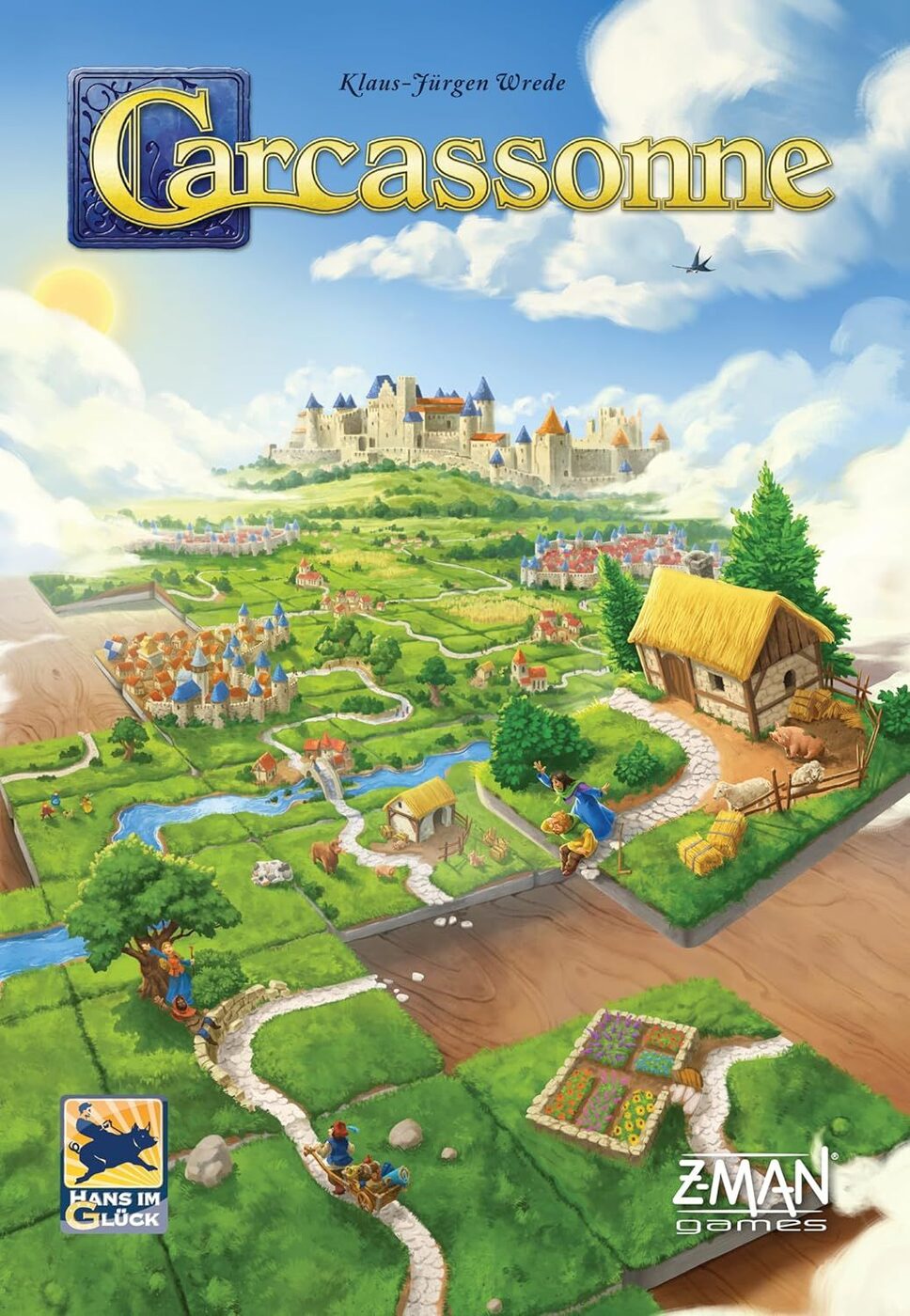 Carcassonne - Image © Z-Man Games
BGG Rating: 7.42/10 (Rank #240) | Weight: 1.88/5 | Players: 2-5 | Time: 30-45 min
Carcassonne needs no introduction - it’s been the gateway into serious tile-laying for over 20 years. You draw a tile, place it so it connects to the existing landscape, optionally place a meeple, and score cities, roads, farms, and cloisters as they complete.
What makes it ideal as a starting point isn’t just the low rules overhead. It’s the legibility. Every decision is visible on the table. You can see what you’re building, what opponents are threatening, and roughly what everything is worth. Carcassonne trains the habit of reading the table state - a skill that carries through every game on this list.
What it teaches you for the next step: Spatial reasoning. Reading what opponents are doing. Accepting that you can’t control everything.
Step 2 - 7 Wonders (Weight: 2.31)
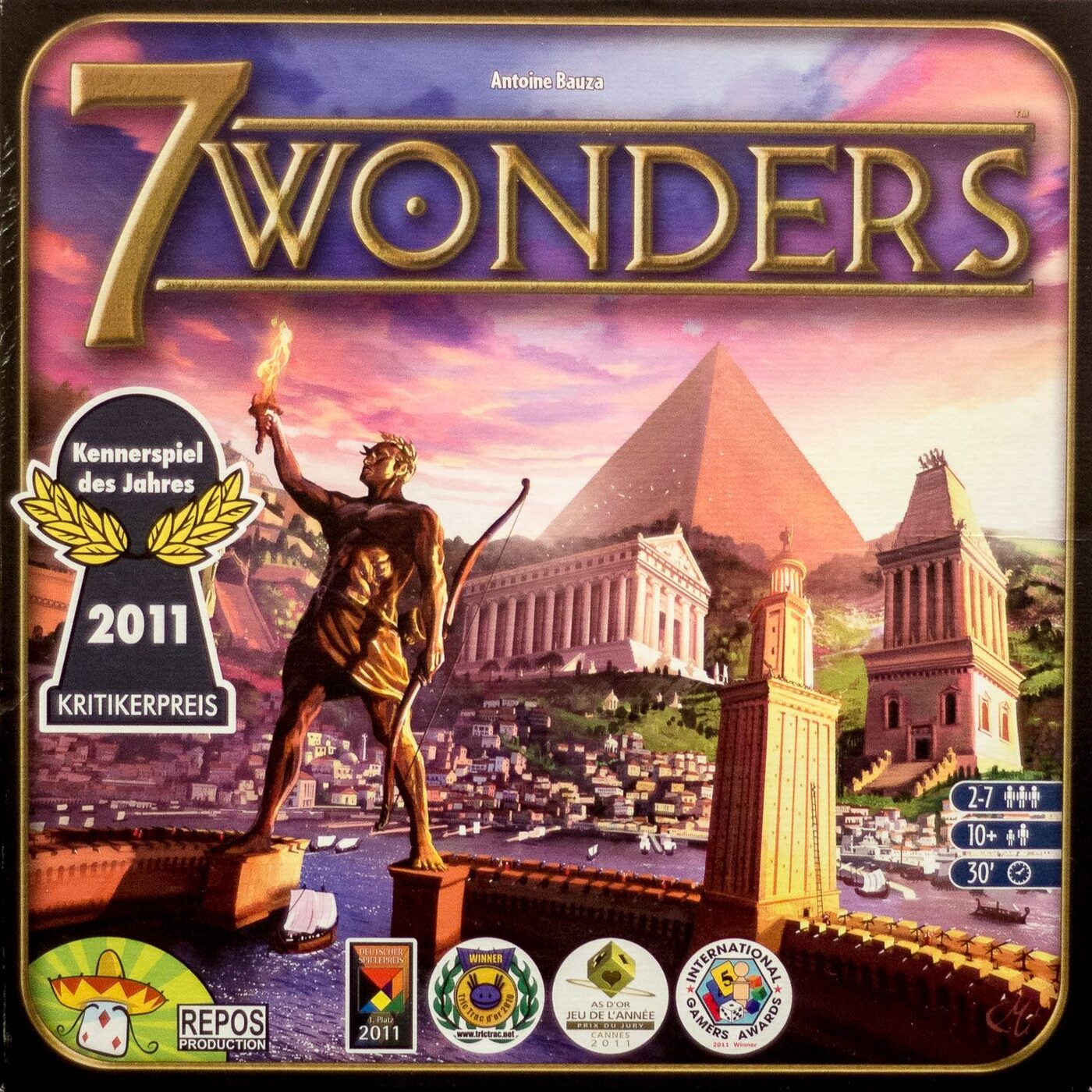 7 Wonders - Image © Repos Production
BGG Rating: 7.66/10 (Rank #118) | Weight: 2.31/5 | Players: 2-7 | Time: 30 min
7 Wonders is the first major step up - but it disguises it well. Everyone plays simultaneously, turns are fast (draft a card, pass the hand), and a full three-age game clocks in at 30 minutes flat. That efficiency masks real strategic depth underneath.
The new challenge here is multiple scoring paths. Do you build military to beat your neighbours? Chase science symbols for exponential points? Build blue victory point cards? Run commerce to fund everything else? You’ll try to do three things and succeed at two - and part of the skill is reading which paths your neighbours are blocking without ever engaging them directly.
7 Wonders also introduces the concept of resource chains: to build certain cards you need resources, and if you don’t have them you pay neighbours for theirs. It’s a gentle first brush with economic efficiency before things get more demanding.
What it teaches you for the next step: Tracking multiple scoring vectors simultaneously. Adjusting your strategy mid-game based on what’s available.
Step 3 - Two Paths at the Same Weight
Lords of Waterdeep and Stone Age both sit at approximately BGG weight 2.45-2.46. They introduce the same core mechanic - worker placement - but from opposite directions. Pick whichever suits your group.
Path A: Lords of Waterdeep (Weight: 2.45) - If your group wants theme
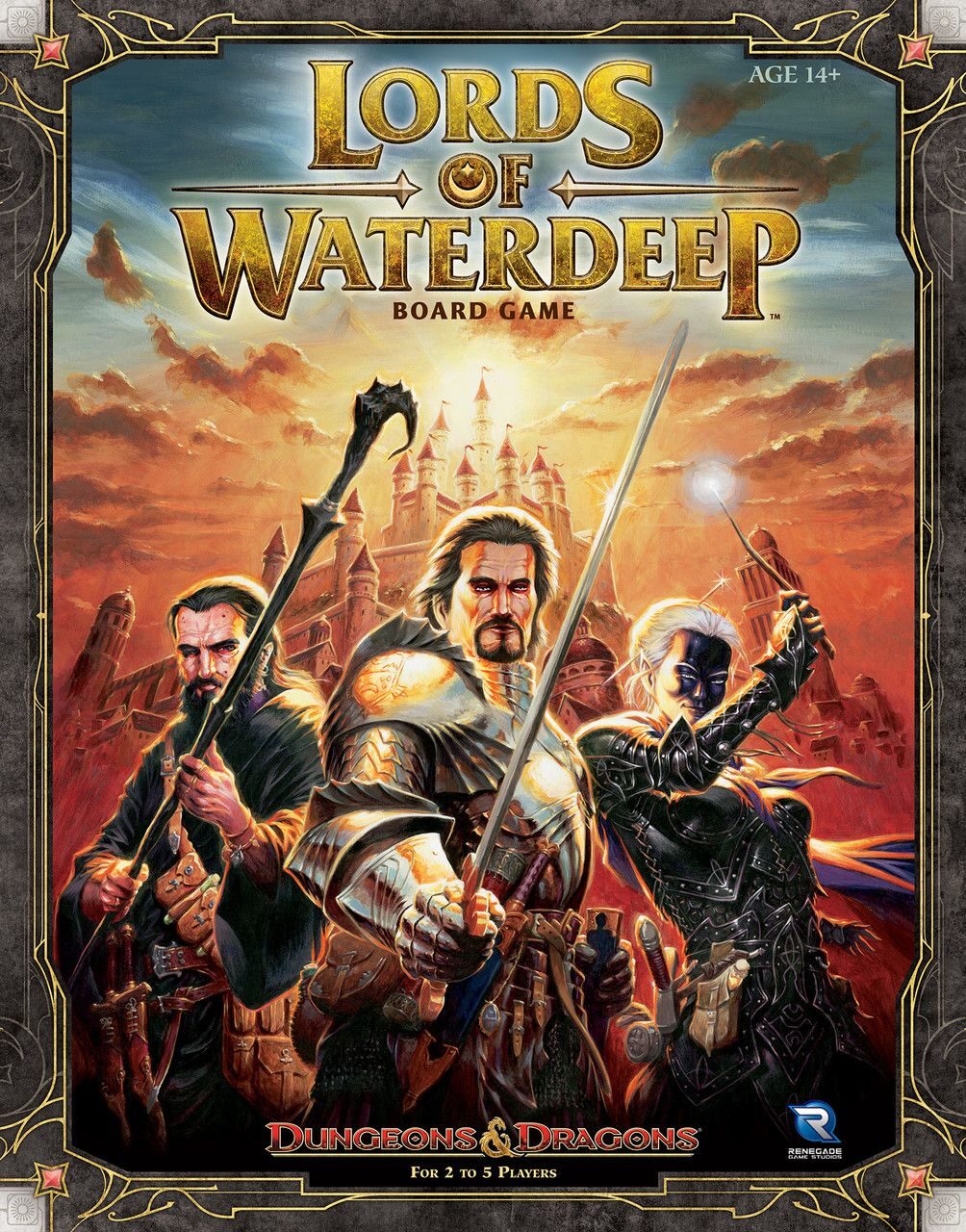 Lords of Waterdeep - Image © Wizards of the Coast
BGG Rating: 7.73/10 (Rank #106) | Weight: 2.45/5 | Players: 2-5 | Time: 60-120 min
Lords of Waterdeep wraps Dungeons & Dragons flavour around a solid worker placement engine. You play a secret lord of the city, sending agents to locations to collect adventurers (coloured cubes) and gold, then completing quests to score points.
The D&D skin does real work here: recruiting rogues, wizards, and fighters feels immediately intuitive compared to abstract resource tokens. The quest cards give clear objectives - complete five of these, collect these resources, score this many points. Newer players have something concrete to aim at.
What’s new at this step: Workers block locations. If someone takes the slot you wanted, you adapt. This spatial conflict over a shared action space is worker placement’s defining trait - and Waterdeep introduces it cleanly, with enough board space that you’re never permanently shut out.
Path B: Stone Age (Weight: 2.46) - If your group wants to feel the mechanics
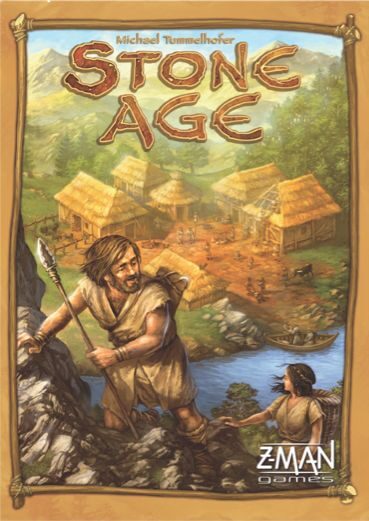 Stone Age - Image © Hans im Glück
BGG Rating: 7.51/10 (Rank #188) | Weight: 2.46/5 | Players: 2-4 | Time: 60-90 min
Stone Age is worker placement with a dice-rolling resource production system bolted on. Send workers to the hunting grounds, roll dice, collect food. Send workers to the forest, roll dice, collect wood. The dice introduce a layer of variance that Waterdeep mostly avoids.
That variance is the point. Stone Age teaches risk management under uncertainty: how many workers do you commit to a location? Do you gamble on needing fewer dice and send the rest to stable-income buildings? The resource chain - gather materials, build huts, upgrade tools - is more explicitly mechanical than Waterdeep’s adventurer-and-quest loop.
Both games are excellent at this weight. Your group’s preference (theme vs. mechanics) is the real deciding factor.
What this step teaches for the next rung: Resource management. Planning two turns ahead. Operating within a constraint.
Step 4 - Concordia (Weight: 2.99)
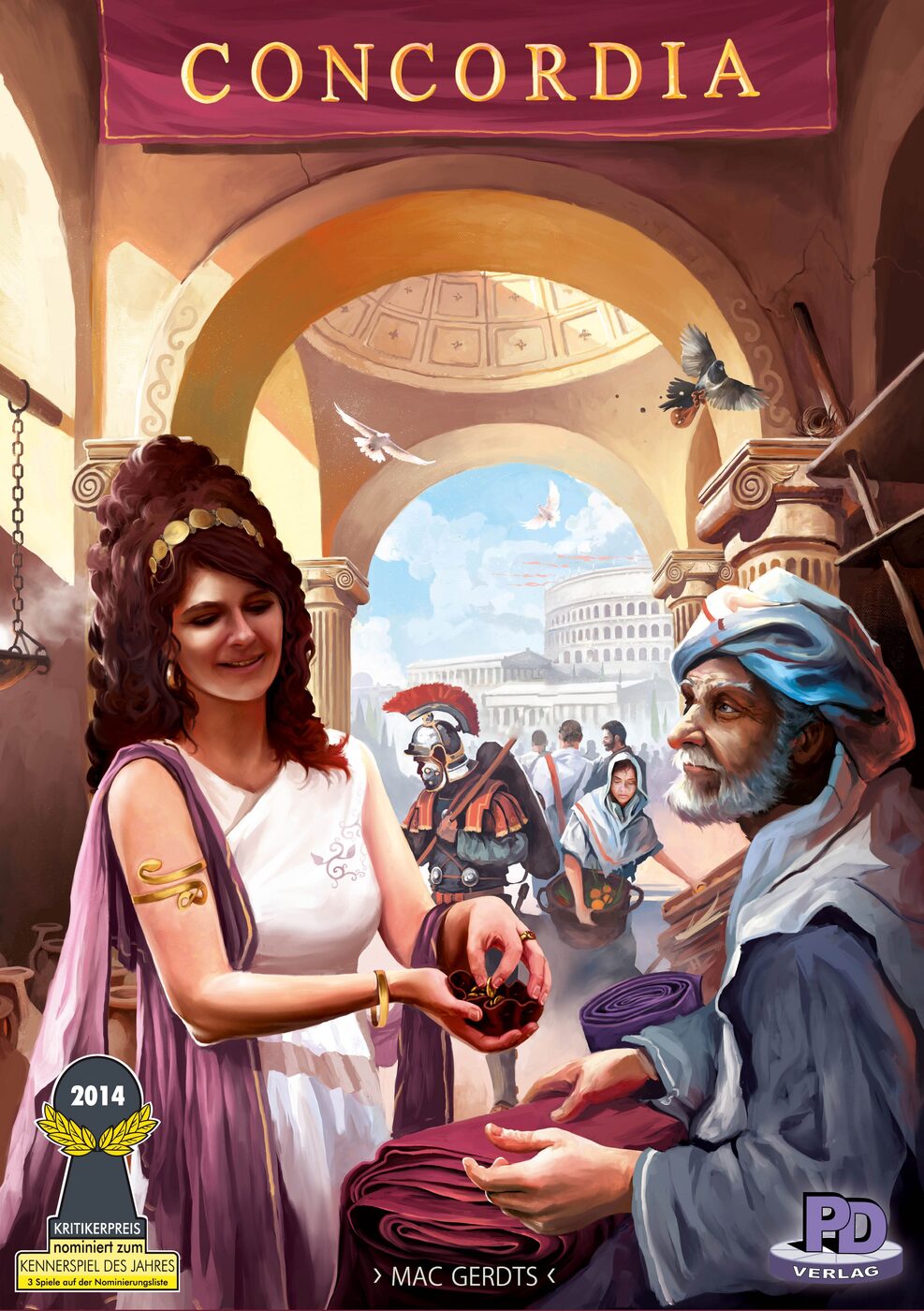 Concordia - Image © PD-Verlag
BGG Rating: 8.08/10 (Rank #29) | Weight: 2.99/5 | Players: 2-5 | Time: 100 min
Concordia is where the ladder gets genuinely interesting - and where many groups stop, happily, for a long time. You build a Roman trade network across the Mediterranean, expanding to new cities, producing resources, and fulfilling demand via a hand of action cards.
The defining feature is the card return system: playing a card uses it, and to get your cards back you must spend your turn on the Senator action. This creates natural tempo decisions - push too hard and you run empty; recover too often and opponents outpace you. It’s elegant, deeply interactive without much direct conflict, and rewards reading your opponents’ card states.
Concordia also introduces end-game scoring via deity cards, where the gods you activate throughout the game determine your multipliers at the end. Figuring out which gods align with your strategy while watching which ones your opponents are chasing is where most of the strategic tension lives.
What’s new here: Hand management pressure. Long-horizon planning. Scoring engine construction that plays out over 20+ turns.
Step 5 - Brass: Birmingham (Weight: 3.86)
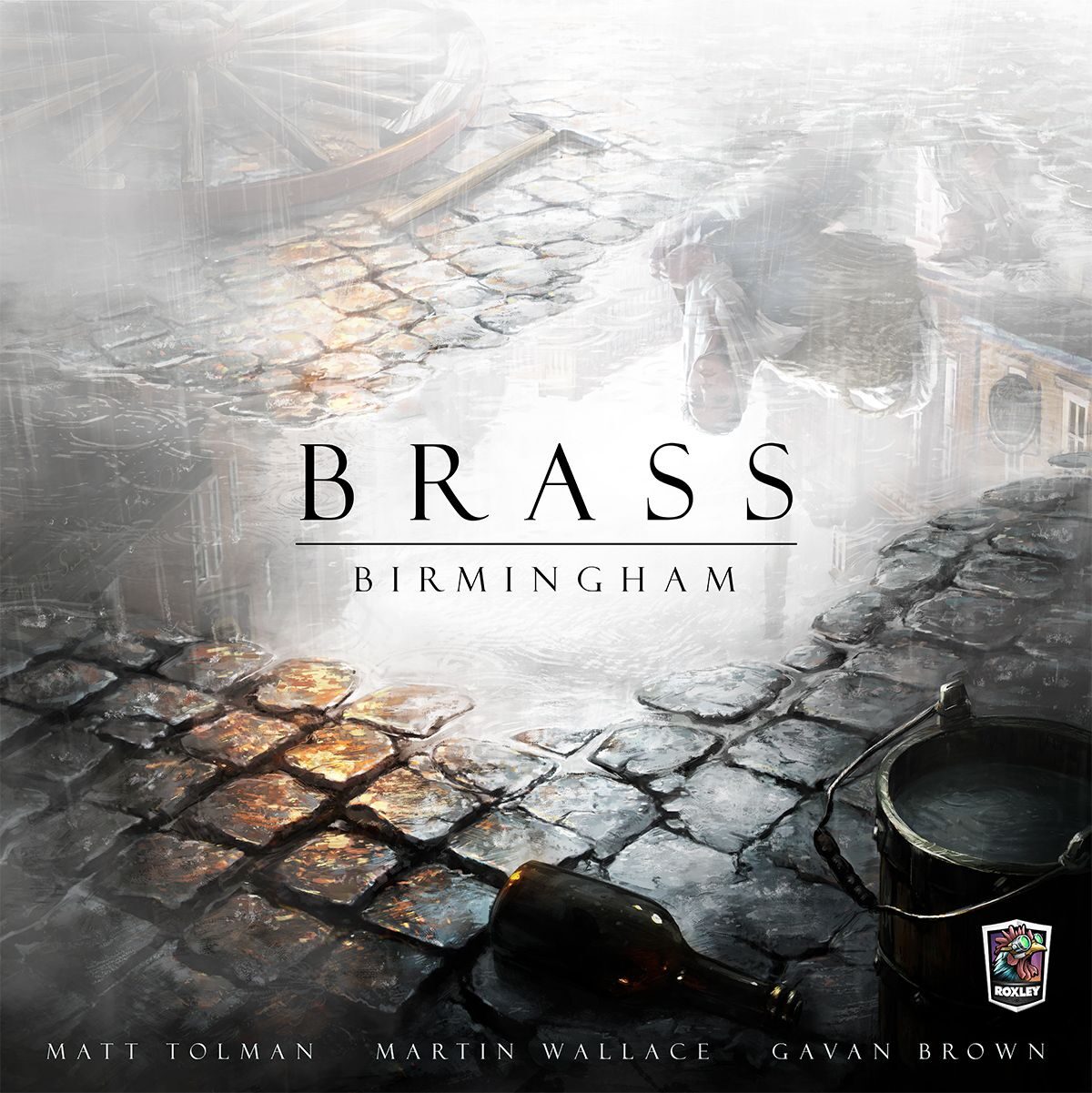
 Brass: Birmingham - Image © Roxley Games
BGG Rating: 8.56/10 (Rank #1) | Weight: 3.86/5 | Players: 2-4 | Time: 60-120 min
Brass: Birmingham is the #1 game on BGG for a reason. You’re building an industrial network across 18th-century Birmingham - developing canals and railways, constructing industries, shipping goods to meet demand. Every action requires not just resources but card-based location access: you can only build in a city if you have the right card in hand.
This is the first game on the ladder where everything is interconnected. Your coal mines feed your ironworks. Your ironworks consume coal that your opponents might also need. Build in the wrong order and you find yourself dependent on infrastructure your rivals control. The two-era structure (Canal Era → Rail Era, with the board partially reset between them) forces you to plan for both a short-term payoff and a second-act pivot.
Brass: Birmingham is demanding. First plays are usually a blur of rules, costs, and failed plans. That’s expected. Most players need two plays before the engine clicks - and when it does, it’s one of the most satisfying experiences in the hobby.
What’s genuinely new here: True interdependence. Opportunity cost at every action. Reading an economic board state in real time.
Step 6 - Through the Ages: A New Story of Civilization (Weight: 4.44)
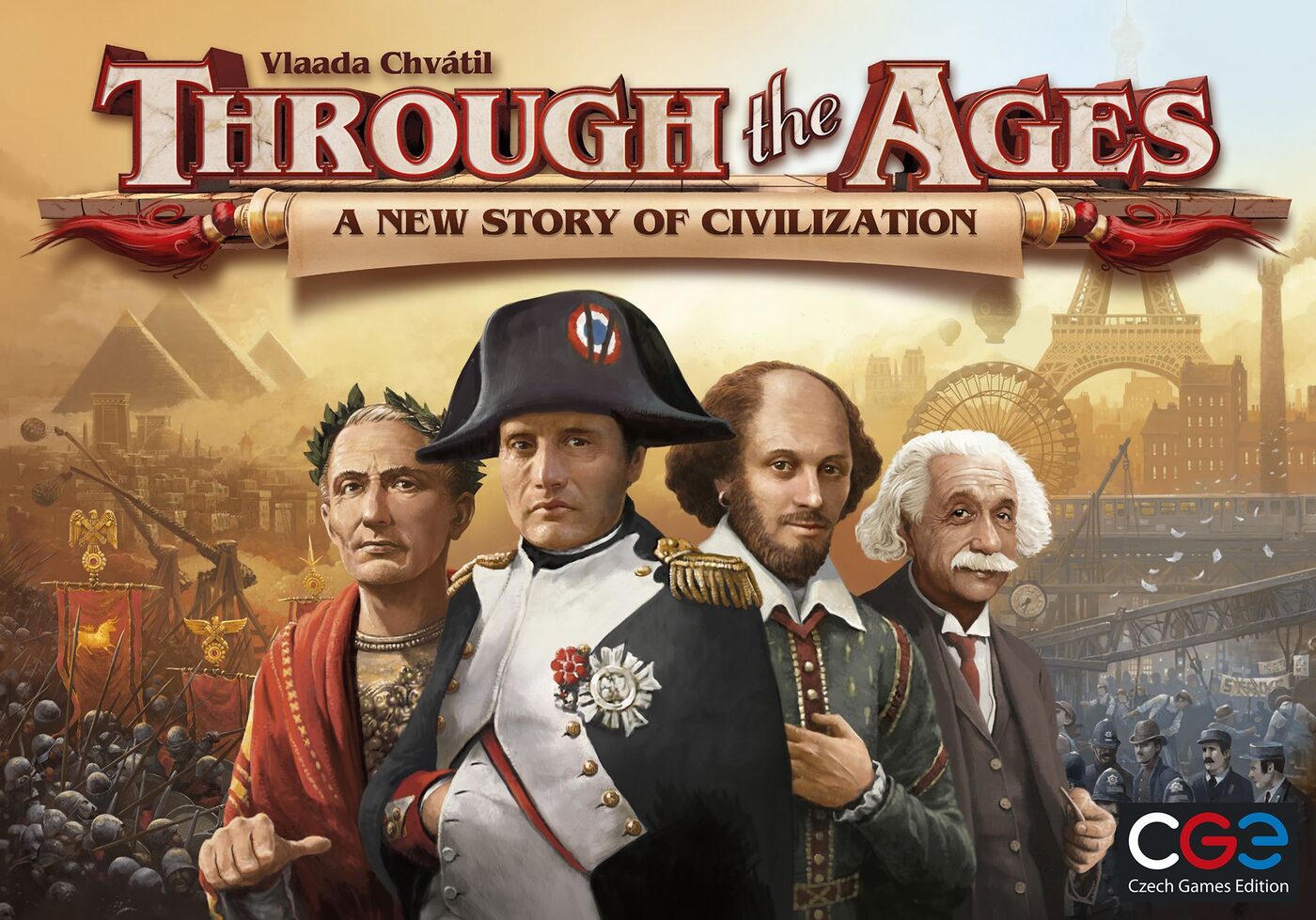 Through the Ages - Image © Czech Games Edition
BGG Rating: 8.24/10 (Rank #18) | Weight: 4.44/5 | Players: 2-4 | Time: 120+ min
Through the Ages is a civilisation-building card game that runs entirely without a map. You manage population, food production, resource production, military strength, science, and culture simultaneously - every resource feeds something else, and falling behind on any one axis creates cascading problems.
This is the summit of the ladder because the decision density never lets up. Every round you’re choosing between developing new technologies, ageing out obsolete buildings, expanding your civil action capacity, keeping military parity with opponents, or drafting the cards you need before rivals snap them up. The game rewards careful planning six rounds out while demanding tactical adaptation every single turn.
A genuine note: Through the Ages isn’t for every group. It plays best with two, runs long, and has a sharp learning curve. But for the right players - those who’ve worked through everything below and want a full civilisation game that’s actually about decisions rather than empire graphics - it’s extraordinary.
What makes it the final rung: Everything you’ve learned. Resource chains, hand management, spatial planning, economic interdependence, long-term strategy, opponent reading. It all runs simultaneously for 90-150 minutes.
Practical Advice for Climbing
Don’t skip rungs. The weight gaps are intentional. A group jumping from Carcassonne to Brass: Birmingham will likely have a bad time and blame the game, not the preparation.
Two plays before you judge. Every game from Concordia upward rewards the second play significantly. First plays are tutorials - plan for them to be imperfect.
Stay at a rung if you’re having fun. There’s no obligation to climb. Concordia at weight 2.99 contains enough strategic depth to last years. Some groups never need to go higher, and that’s completely valid.
Watch for the click. Each of these games has a moment - usually mid-game, usually around play 2 or 3 - where the system suddenly makes sense. Everything connects. You start seeing three moves ahead. That’s when you know you’re ready for the next step.
The path from your first meeple to a four-player Through the Ages marathon is longer than most people expect. But every game on this list is worth playing for its own sake, not just as preparation for the next one.
Climb at whatever pace suits your table.