There’s a joke in hobbyist board gaming circles: if you can win a game through approximately seventeen different scoring categories and you’re never quite sure which one actually mattered, you’re probably playing a Stefan Feld game.
The joke has teeth - but it undersells what Feld actually does. The German designer has been publishing complex Euro games since the mid-2000s, and in that time he’s built one of the most recognisable design signatures in the hobby. Intricate mechanisms, historical European backdrops, dice that actually make decisions interesting, and - yes - multiple overlapping scoring paths that reward players who can hold several plans in their heads at once.
If you’ve played The Castles of Burgundy, you’ve already experienced what a Feld game feels like. This piece covers the rest of his catalog: what it’s like, where the depth lives, and how to work your way through it.
Who Is Stefan Feld?
Feld is a German-born designer who started releasing games professionally in the mid-2000s. His first notable title was Notre Dame in 2007 - a card-drafting, area-influence game set in medieval Paris - and he’s been producing work at a steady pace ever since. Most of his games come through alea, the Ravensburger imprint that has also published Puerto Rico, Ra, and Bora Bora, giving his work a reliable production standard.
He’s not the most prolific designer in the hobby (Wolfgang Kramer or Reiner Knizia have him on volume), but he’s one of the most consistent. Almost every Feld game sits in the same difficulty band - complex enough to reward serious players, but not so opaque that casual hobbyists are locked out.
The Feld Signature
If you’ve played a few of his games, the family resemblance becomes obvious:
Multiple scoring paths. Feld games rarely have one winning strategy. You can specialise - but over-specialising almost always loses to a player who assembled a coherent mosaic of medium scores across different categories. This is sometimes called “point salad” as a criticism, but Feld’s best designs make those paths genuinely interact. Pursuing one category typically costs you in another, and the puzzle is figuring out your own coherent path before the board changes.
Dice as texture, not randomness. Several Feld games use dice in unusual ways. In Castles of Burgundy, you roll dice and then use them to take specific actions based on their values - but you have enough control over how you use the values that luck rarely feels like the deciding factor. Dice give the game texture and variability without swinging outcomes wildly.
Historical European themes. Medieval French castles, ancient Rome, the canals of Bruges, a Tang Dynasty imperial court - Feld rarely does science fiction or fantasy. His settings tend to be real European history rendered in abstracted Euro-game form.
Punishing inefficiency. Feld games don’t have much slack. If you miss turns, fail to chain actions, or let the game’s internal rhythm pass you by, you fall behind quickly. This is not a designer who lets you play at your own pace.
The Games: Where to Start
1. The Castles of Burgundy (2011)

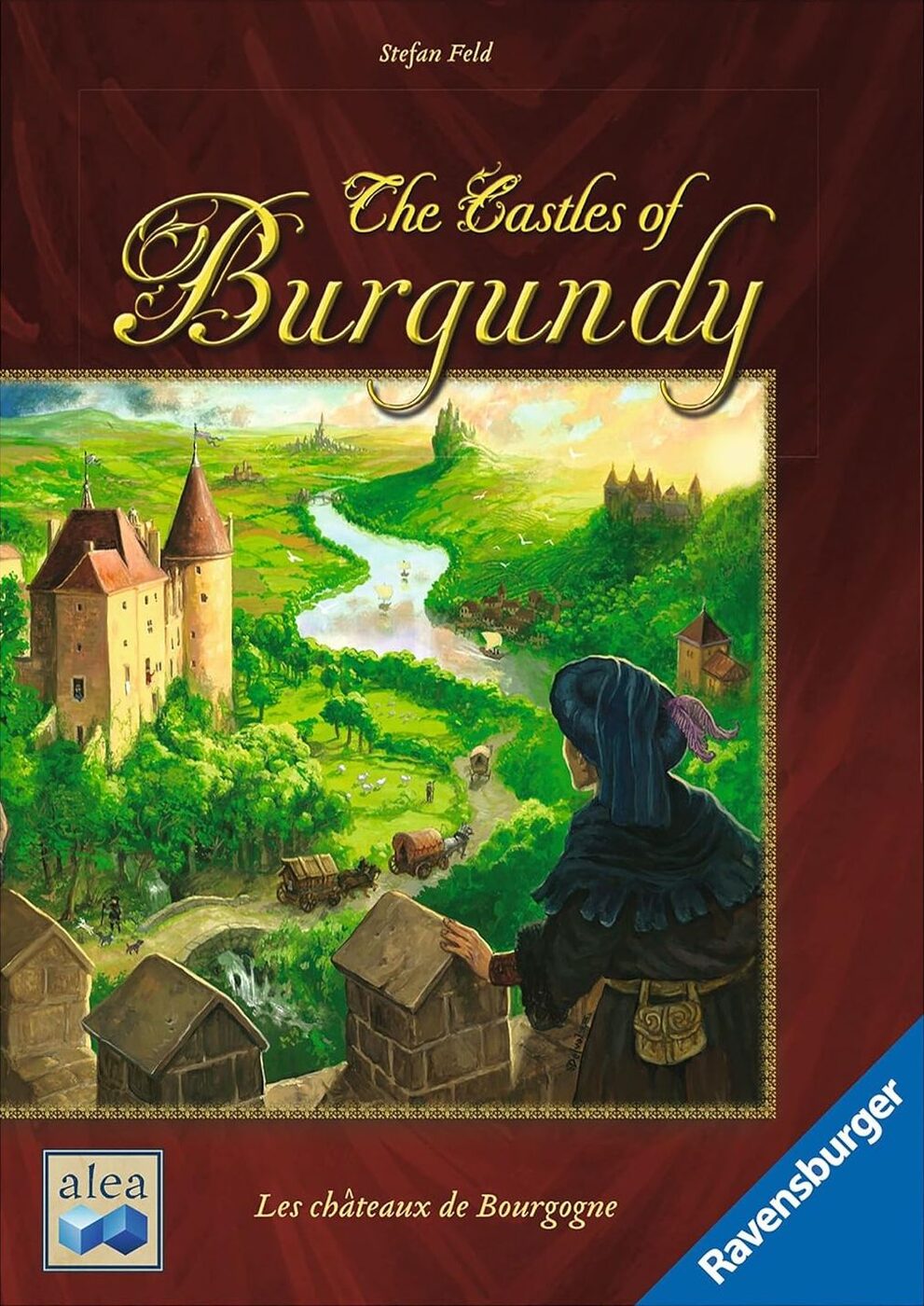
The Castles of Burgundy - the best entry point into Feld’s catalog, and one of the best Euro games ever made. Image © alea / Ravensburger.
| BGG ID | 84876 |
| Players | 2-4 |
| Play time | 30-90 min |
| BGG weight | 2.97 / 5 |
| BGG rating | 8.16 / 10 |
| BGG rank | #17 |
Start here. Castles of Burgundy is Feld’s most accessible complex game and, by BGG ratings, one of the best games ever made. You roll two dice each turn and use their values to take tiles from a central board and place them into your personal estate - but the values restrict which regions you can access, creating a constant puzzle of what to pursue versus what’s available.
The genius is that the game rewards spatial planning (tiles in your estate score more when grouped), timing (tiles score bonus points when placed early), and specialisation (one estate type scores massive points if you commit to it) - but none of these paths dominates. A player who focused on shipping goods while you built castles can beat you by being more efficient, not by playing a different game.
The 25th Anniversary Edition (2022) refreshes the visuals significantly. If you’re buying new, get that one.
Who it’s for: Anyone stepping into heavier Euros for the first time. It plays faster than it looks and rewards replays.
2. Notre Dame (2007)
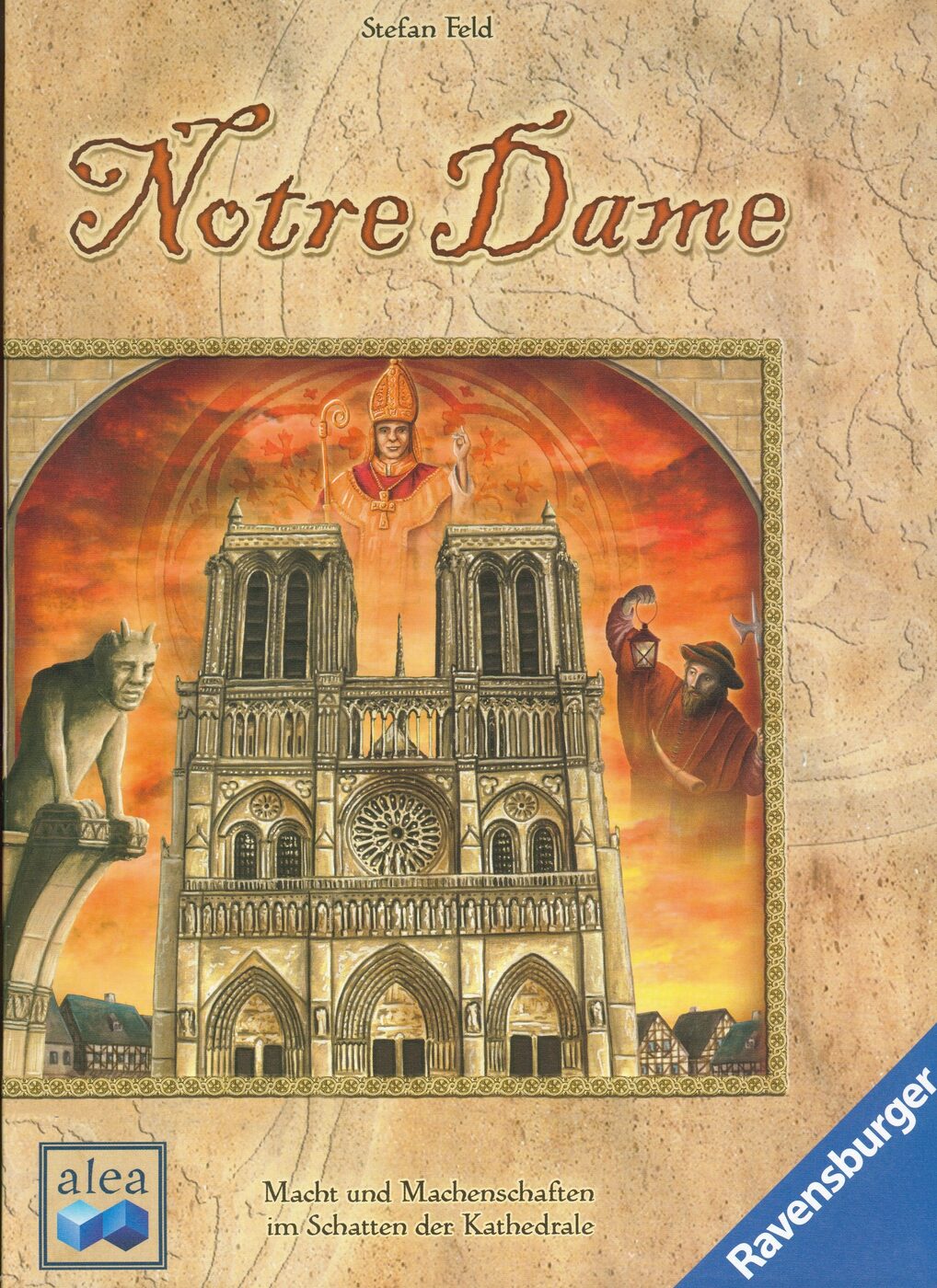
Notre Dame - Feld’s first major hit, and still one of the tightest designs in his catalog. Image © alea / Ravensburger.
| BGG ID | 25554 |
| Players | 2-5 |
| Play time | 45-75 min |
| BGG weight | 2.74 / 5 |
| BGG rating | 7.31 / 10 |
| BGG rank | #472 |
Notre Dame predates Castles of Burgundy and it shows a slightly rawer version of Feld’s sensibility - but it’s also one of his tightest designs. Players draft cards from a hand and use them to take actions in different districts of medieval Paris, building influence and collecting resources while managing the relentless pressure of the plague marker.
The plague is the design’s masterstroke. Every round, a track creeps forward in each district - ignore it and you’ll lose points, but spending your limited actions on plague control means you’re not building anything. It creates genuine tension between short-term urgency and long-term positioning that many heavier games never quite nail.
Notre Dame plays best at 4-5 players where the card drafting becomes genuinely tense. At 2 players it loses some of its teeth.
Who it’s for: Players who want to see where Feld started. A solid game in its own right, especially at higher player counts.
3. Bruges (2013)
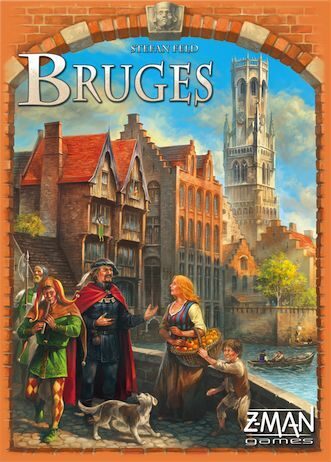
Bruges - an underrated card-driven gem in the Feld catalog. Image © Z-Man Games.
| BGG ID | 136888 |
| Players | 2-4 |
| Play time | 60 min |
| BGG weight | 2.75 / 5 |
| BGG rating | 7.42 / 10 |
| BGG rank | #394 |
Bruges is Feld’s most underrated game and one of the hobby’s more criminally ignored designs. Set in medieval Bruges - the Belgian canal city - it’s a card game in which every card in your hand can be used in four different ways: as a resource, as a building, as a character for your estate, or to advance one of five tracks. The multi-use card system creates a constant feeling that you’re making the wrong sacrifice every turn.
What makes Bruges special is how the card effects chain. Characters you recruit do things - generate money, fight threats, create synergies with buildings - and a well-constructed tableau of characters can produce devastating turns late in the game. Getting there requires patience and flexibility, because the draw deck is random and your plans will be disrupted.
It’s harder to find than Feld’s more famous titles but worth hunting down.
Who it’s for: Feld fans who’ve exhausted Castles of Burgundy and want something different. Multi-use card systems appeal to players who like hand management.
4. In the Year of the Dragon (2007)
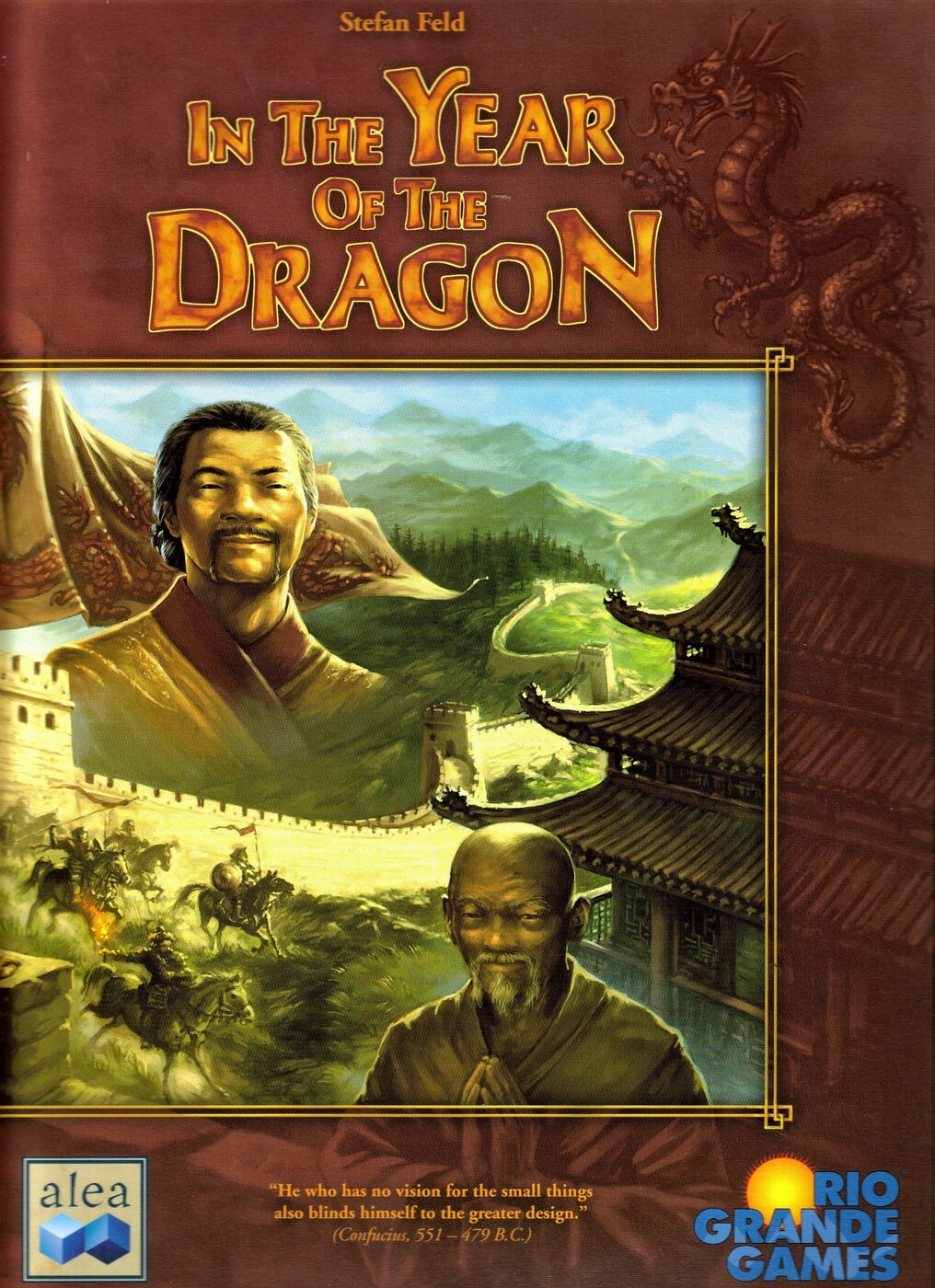
In the Year of the Dragon - Feld at his most relentlessly punishing. Image © alea / Ravensburger.
| BGG ID | 31594 |
| Players | 2-5 |
| Play time | 75-100 min |
| BGG weight | 3.08 / 5 |
| BGG rank | #513 |
| BGG rating | 7.29 / 10 |
This is Feld’s most confrontational design - not because players attack each other directly, but because the game does. Set in Tang Dynasty imperial China, In the Year of the Dragon hits players with a rolling series of disasters (plague, drought, Mongolian invasion, fireworks celebrations) that you must prepare for or suffer. Every round you take actions that either prepare for the coming disaster or build your palace and score points - but you can rarely do both.
The stress is intentional. The game moves fast, forgives almost nothing, and rewards players who read the disaster sequence ahead and position early. It’s shorter than Feld’s heaviest titles but packs more pressure into its runtime than most 3-hour games.
Rating-wise it sits below his best work - the disaster randomness means some configurations feel less interesting - but at its best it’s a uniquely tense experience.
Who it’s for: Experienced Euro gamers who want something leaner and meaner. Avoid this one as a first Feld game.
5. Trajan (2011)
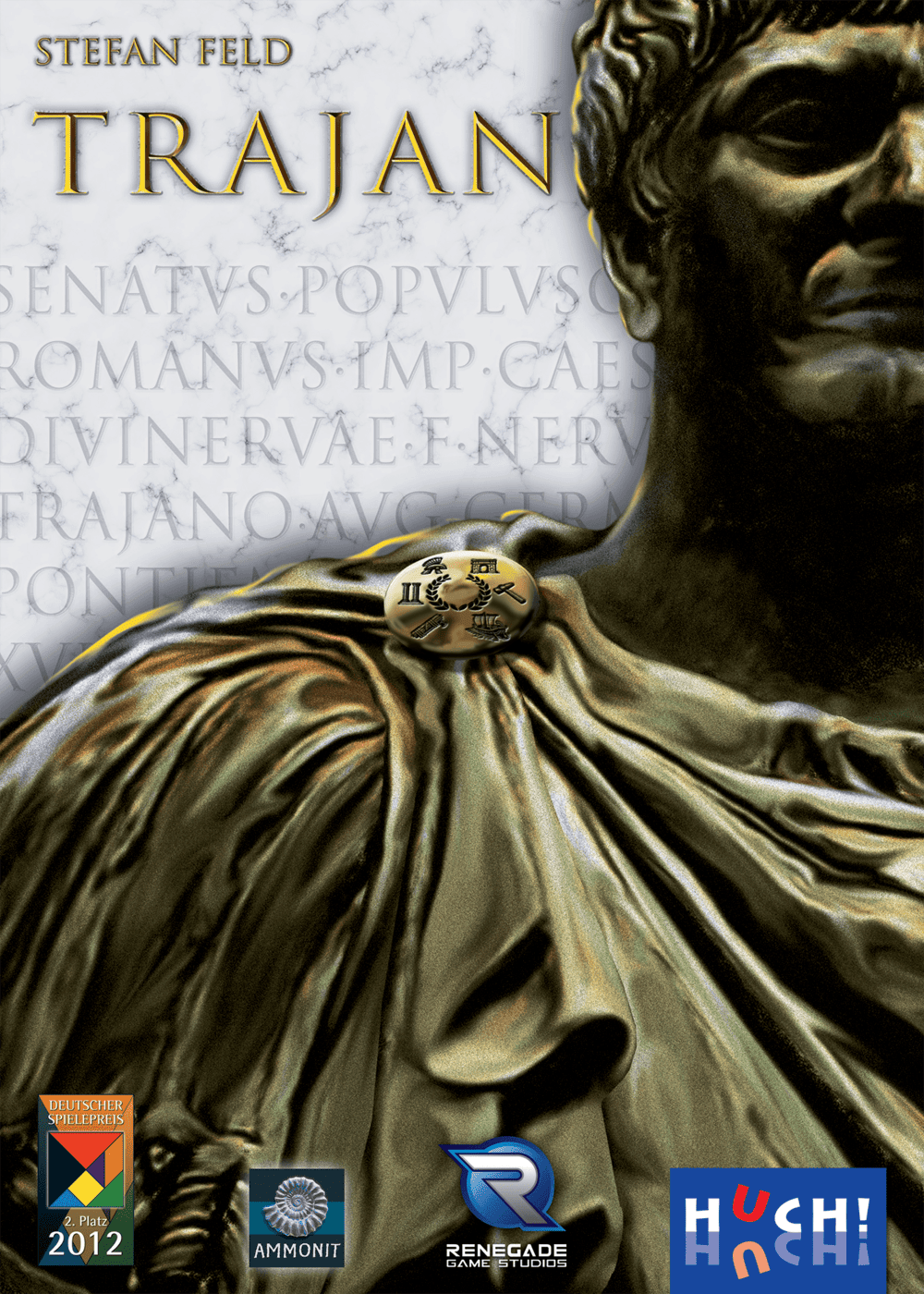
Trajan - Feld’s most mechanically ambitious design, built around a mancala-style action wheel. Image © Stefan Feld Collection / Pegasus Spiele.
| BGG ID | 102680 |
| Players | 2-4 |
| Play time | 60-120 min |
| BGG weight | 3.62 / 5 |
| BGG rating | 7.74 / 10 |
| BGG rank | #149 |
Trajan is the game that Feld fans argue about most - either it’s his best design or it’s a brilliant mechanism in search of a coherent game, depending who you ask.
The mechanism in question is the Trajan wheel: a personal mancala-style track in which you distribute tokens each turn to reach specific action sectors. The position of your tokens at the start of each turn determines what actions you can take, not what you choose from - meaning you need to plan several turns ahead to reach the action you want when you need it. It’s unlike anything else in Euro gaming.
Around that wheel, Trajan layers four completely different mini-games (Roman Senate, military, building, trade routes) each with their own scoring logic. The game essentially asks you to run four separate economic engines while keeping your Trajan wheel aligned to service all of them on schedule.
At its best - when the wheel planning clicks and you manage to service all four areas without letting anything stall - Trajan feels like the most rewarding puzzle in the hobby. At its worst, one misaligned wheel turn cascades into a ruined round and you spend the rest of the game recovering. The gap between understanding the game and playing it well is one of the steepest in Feld’s catalog.
Who it’s for: Experienced Euro gamers who want Feld at maximum complexity. Do not play this as your first or second Feld game.
The Complexity Ladder
| Game | Weight | Where to Start |
|---|---|---|
| Notre Dame | 2.74 | Good second Feld game |
| Bruges | 2.75 | Underrated - try after CoB |
| Castles of Burgundy | 2.97 | Start here |
| In the Year of the Dragon | 3.08 | Experienced gamers only |
| Trajan | 3.62 | Feld veterans |
| Bora Bora | 3.72 | Heavy, dice-heavy |
Who Feld Games Are NOT For
It’s worth being direct about this. Feld games are not for everyone.
If you like games where the optimal path is transparent and progress is easy to read - Wingspan, Ticket to Ride, most gateway games - Feld will feel opaque and frustrating. His games deliberately obscure whether you’re winning until late in the game, and the information density is high enough that first plays often feel like controlled confusion.
Similarly, if narrative and theme drive your enjoyment, Feld games will disappoint. The historical settings are dressing, not story - there’s no emergent tale of Roman conquest in Trajan, just an elegantly brutal system of interlocking actions. The experience is entirely mechanical.
But if you like the feeling of a complex system coming into focus over repeated plays, of strategies that take three games to understand properly, and of scoring categories that genuinely interact rather than sitting alongside each other in isolation - Feld is probably your designer.
Where to Buy First
The Castles of Burgundy and it’s not close. It’s his most refined design, the most beginner-friendly of his complex games, consistently available, and good enough to sit in any serious collection permanently. The 25th Anniversary Edition is beautiful and worth the extra cost.
Once Castles of Burgundy clicks - and it will take two or three plays - pick up Bruges for something different at roughly the same weight, or go to Trajan if you want to climb.
Stefan Feld has been publishing for nearly twenty years. He’s not flashy, he doesn’t do dungeon crawls or big miniatures, and his games won’t wow a casual crowd on looks alone. But for players who want to work, to plan, and to be rewarded for thinking several turns ahead? He’s quietly one of the best.