You’ve played Ticket to Ride a dozen times and you’re ready for something meatier. But every time you try to explain what “meatier” means to your gaming group, someone panic-buys Monopoly. This guide is for that in-between space: the climb from gateway game to heavy euro, one learnable step at a time.
Each rung below introduces one new cognitive challenge. Not five. Not a full paradigm shift. Just a clearly identifiable mechanic or layer of depth that prepares you for the next step up. The BGG complexity weights (averaged from thousands of player ratings) tell you roughly where each game sits - and the order here matches them exactly.
Rung 1: Ticket to Ride - BGG Weight 1.82
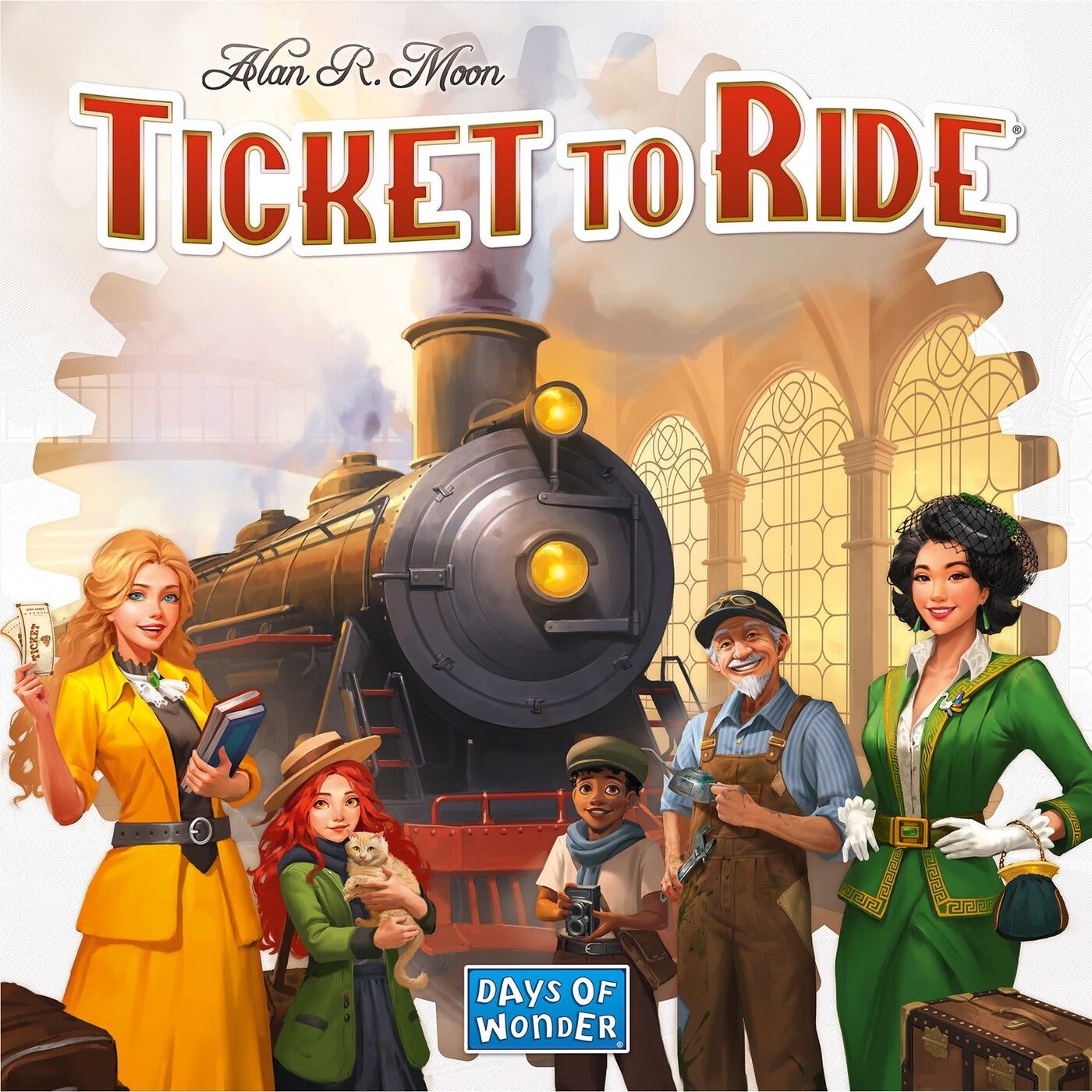
Ticket to Ride - image courtesy of Days of Wonder
Everyone starts here for a reason. Ticket to Ride is ruthlessly clear: claim routes, complete destination tickets, score points. The rulebook takes ten minutes to explain and the rules never fight you.
But don’t mistake simplicity for absence of skill. The game quietly teaches route denial (blocking opponents without a clear mechanism for doing so), hand management (holding cards vs. committing to a route), and goal prioritisation (which destination tickets are actually achievable with the hand you’re building). These are foundational. Every heavier euro builds on them.
What you’re learning here: Turns have consequences. Resources are scarce. Completing objectives under time pressure matters.
2-5 players | 30-60 min | BGG rank #263 | Rating 7.38
Rung 2: Catan - BGG Weight 2.28
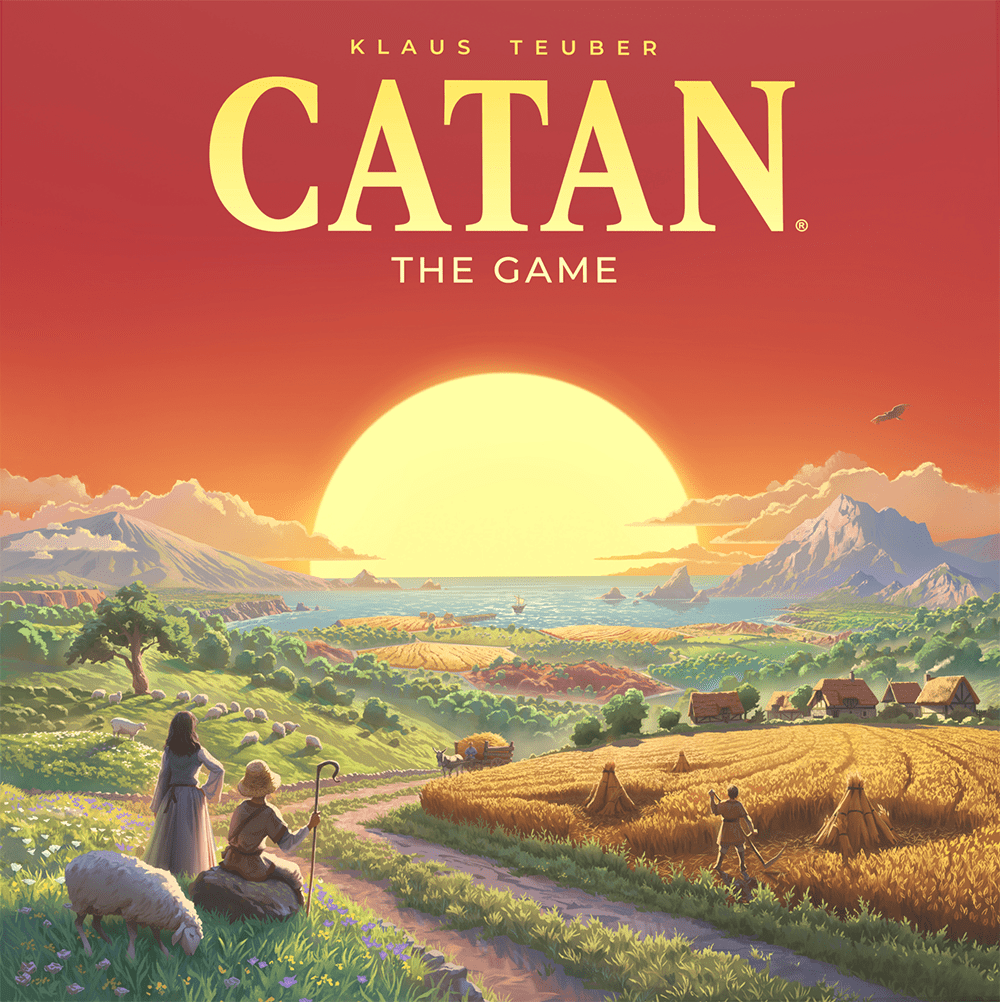
Catan - image courtesy of KOSMOS
The jump from Ticket to Ride to Catan introduces two concepts simultaneously: dynamic resource generation and player interaction through trade. In Ticket to Ride, your income is fixed (draw cards). In Catan, your income depends on the dice - and where you placed your settlements on turn one.
This creates the first real tension of euro gaming: position matters before the game actually starts. The trading mechanism takes some getting used to (players often either over-trade or refuse to trade at all for the first few sessions), but it’s the embryo of every negotiation-heavy game that follows.
What you’re learning here: Variable income. Strategic placement. Negotiation as a game system.
3-4 players | 60-120 min | BGG rank #628 | Rating 7.09
Rung 3: 7 Wonders - BGG Weight 2.31
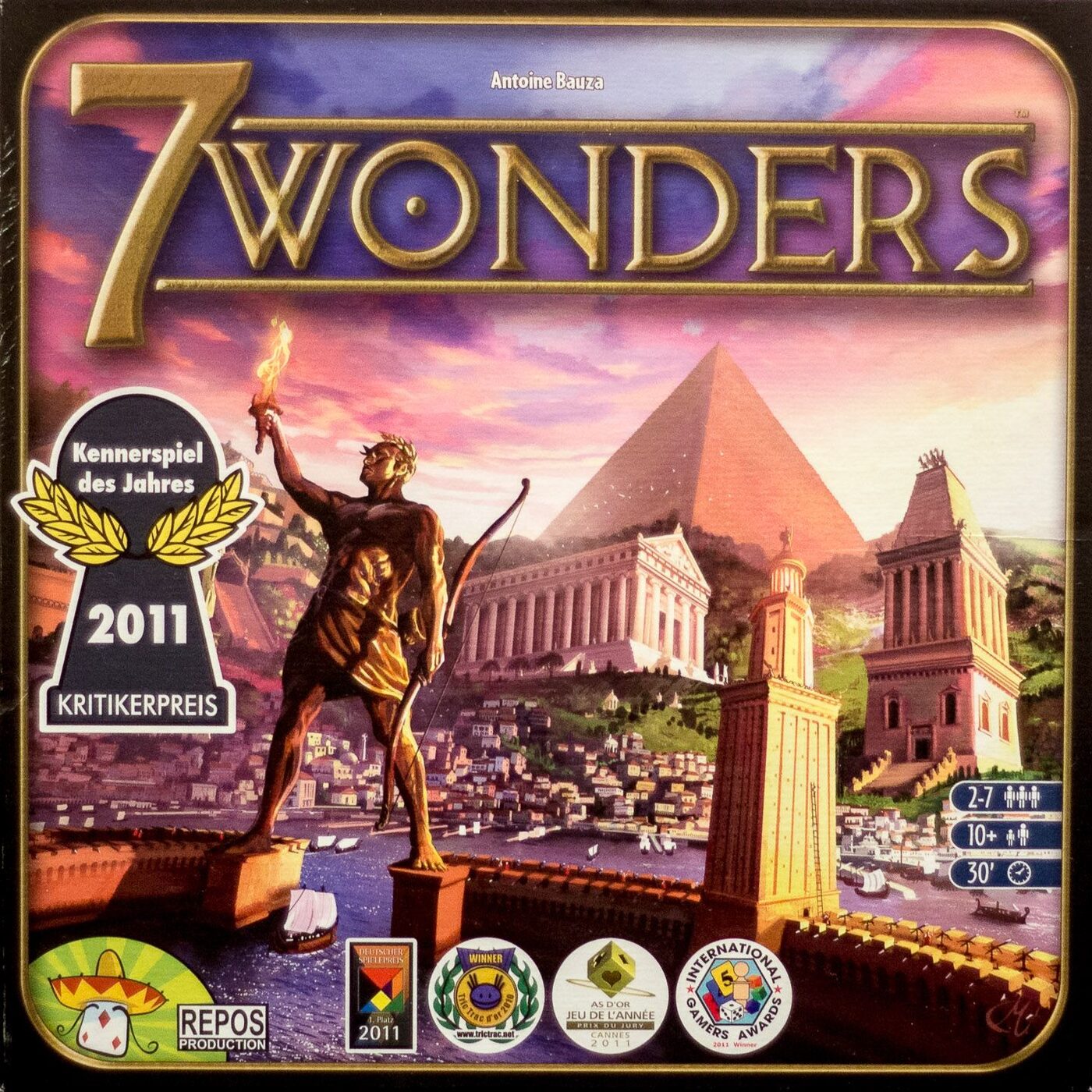
7 Wonders - image courtesy of Repos Production
On paper 7 Wonders sits just 0.03 weight above Catan. In practice it introduces something conceptually new: simultaneous drafting. Everyone picks a card at the same time, then passes their hand. No downtime, but tremendous cognitive overhead - you’re not just thinking about what you want, you’re reading what your neighbours are taking and adjusting accordingly.
Card synergies here are subtle. Science chains explode if you get the right combination. Military pressure is invisible until the score. The whole game is a series of micro-decisions under imperfect information, and it plays in 30 minutes at any player count. Once you can articulate why you passed a card to your left, you’re ready for Rung 4.
What you’re learning here: Drafting. Reading opponents indirectly. Card synergies that reward long-term pattern recognition.
2-7 players | 30 min | BGG rank #118 | Rating 7.66
Rung 4: Wingspan - BGG Weight 2.48
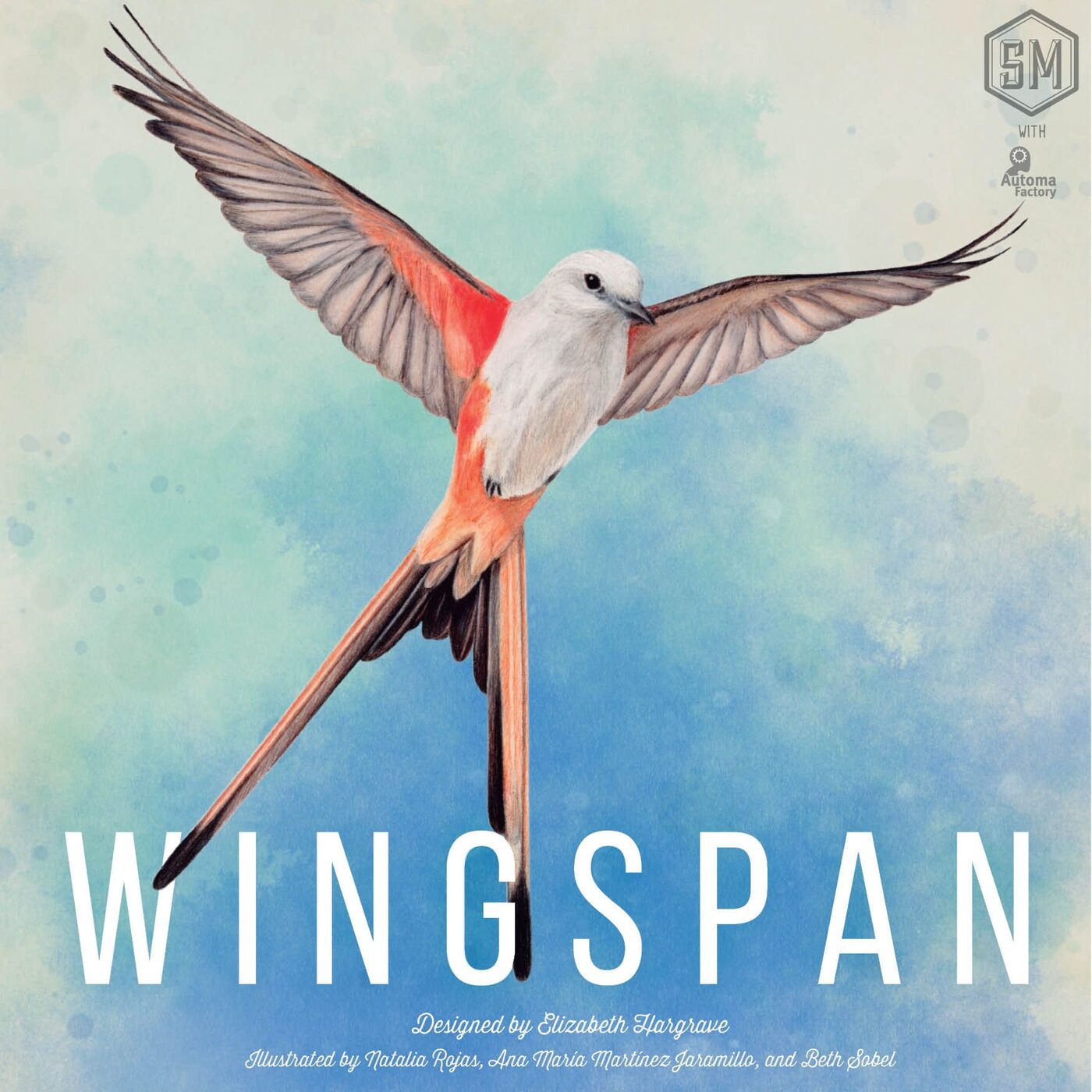
Wingspan - image courtesy of Stonemaier Games
Wingspan is where engine building clicks for most players. The birds you play into your tableau eventually generate the resources you need to play more birds, which generate more resources. The cycle compresses over four rounds until the engine barely needs feeding.
The step up from 7 Wonders is primarily iconographic complexity - each bird card does something slightly different, and decoding what those symbols mean under time pressure is a real skill. The first game you’ll spend ten seconds on each card. By your fifth, you’ll be reading them in a glance. That shift is exactly what higher-weight games demand at scale.
What you’re learning here: Engine construction. Iconography fluency. Evaluating cards for synergy, not just face value.
1-5 players | 40-70 min | BGG rank #38 | Rating 7.99
Rung 5: Viticulture - BGG Weight 2.95
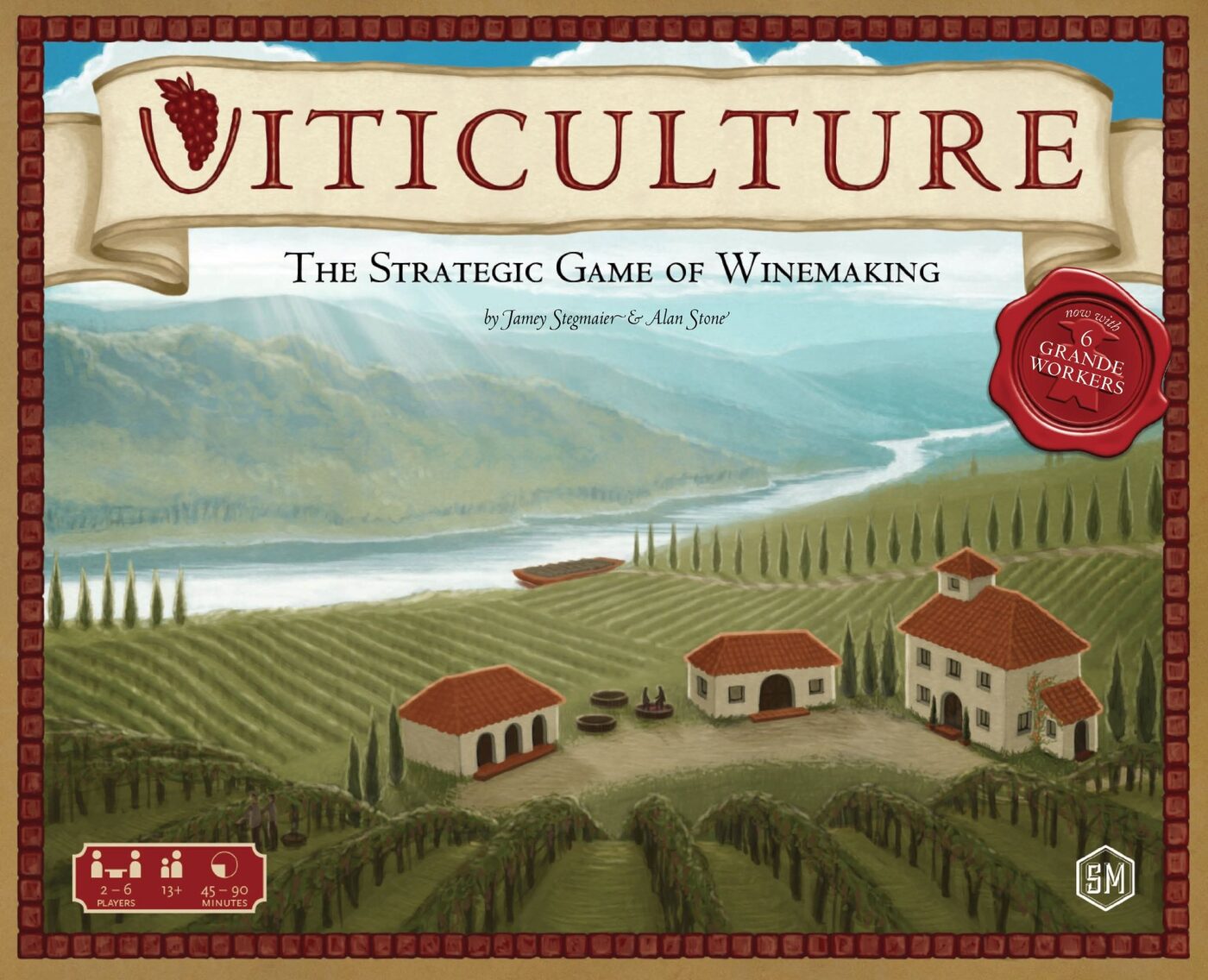
Viticulture: Essential Edition - image courtesy of Stonemaier Games
Viticulture introduces worker placement - a mechanism built on scarcity of action spaces and the tension of doing things in the right order. Workers get placed (and return) seasonally, so you’re not just picking what to do, you’re picking when and accepting that someone might beat you to the action space you needed.
The jump in weight here (from 2.48 to 2.95) comes from multi-turn planning. A single round isn’t enough context. You need to be thinking two or three seasons ahead: get the vine card now so you can plant in summer so you can harvest in autumn. Mess up the sequence and you’ve wasted a year.
What you’re learning here: Action economy. Blocking and being blocked. Sequencing actions across multiple rounds.
2-6 players | 90 min | BGG rank #326 | Rating 7.47
Rung 6: Terraforming Mars - BGG Weight 3.27
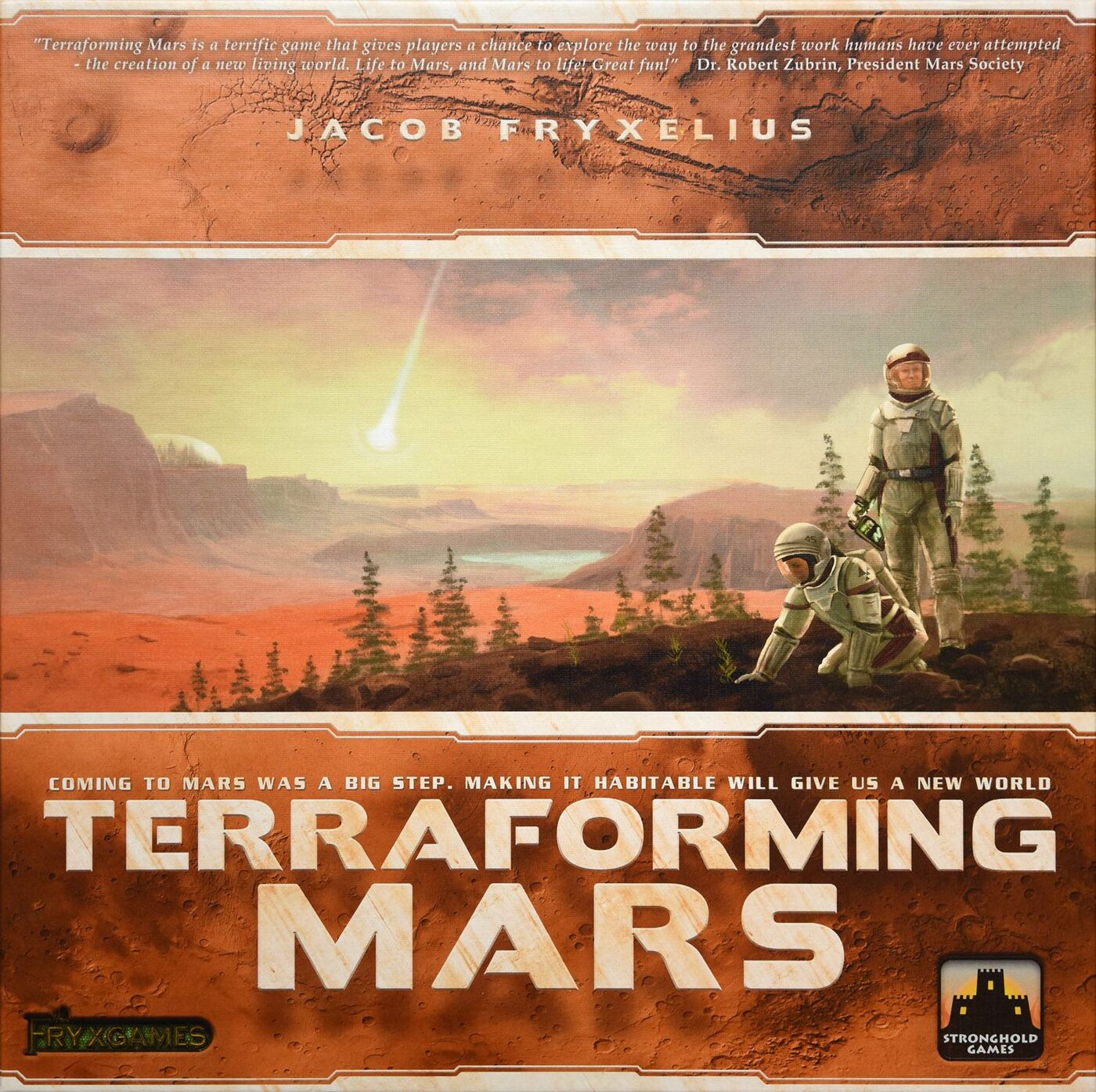
Terraforming Mars - image courtesy of FryxGames
Here’s where the training wheels come fully off. Terraforming Mars runs six independent resource tracks simultaneously - megacredits, steel, titanium, plants, energy, heat - and the 233-card project deck contains interactions that would fill a second rulebook. The first game at this weight is legitimately daunting.
But the foundation is everything you’ve already practised. Engine building from Wingspan, sequencing from Viticulture, iconography fluency from 7 Wonders. Terraforming Mars just runs them all in parallel and extends the timeline to two or three hours. The projects that chain together are genuinely satisfying when you spot them; the penalty for ignoring resource conversion is swift and brutal.
What you’re learning here: Parallel resource management. Card combo evaluation at scale. Sustained focus over a longer game.
1-5 players | 120 min | BGG rank #9 | Rating 8.33
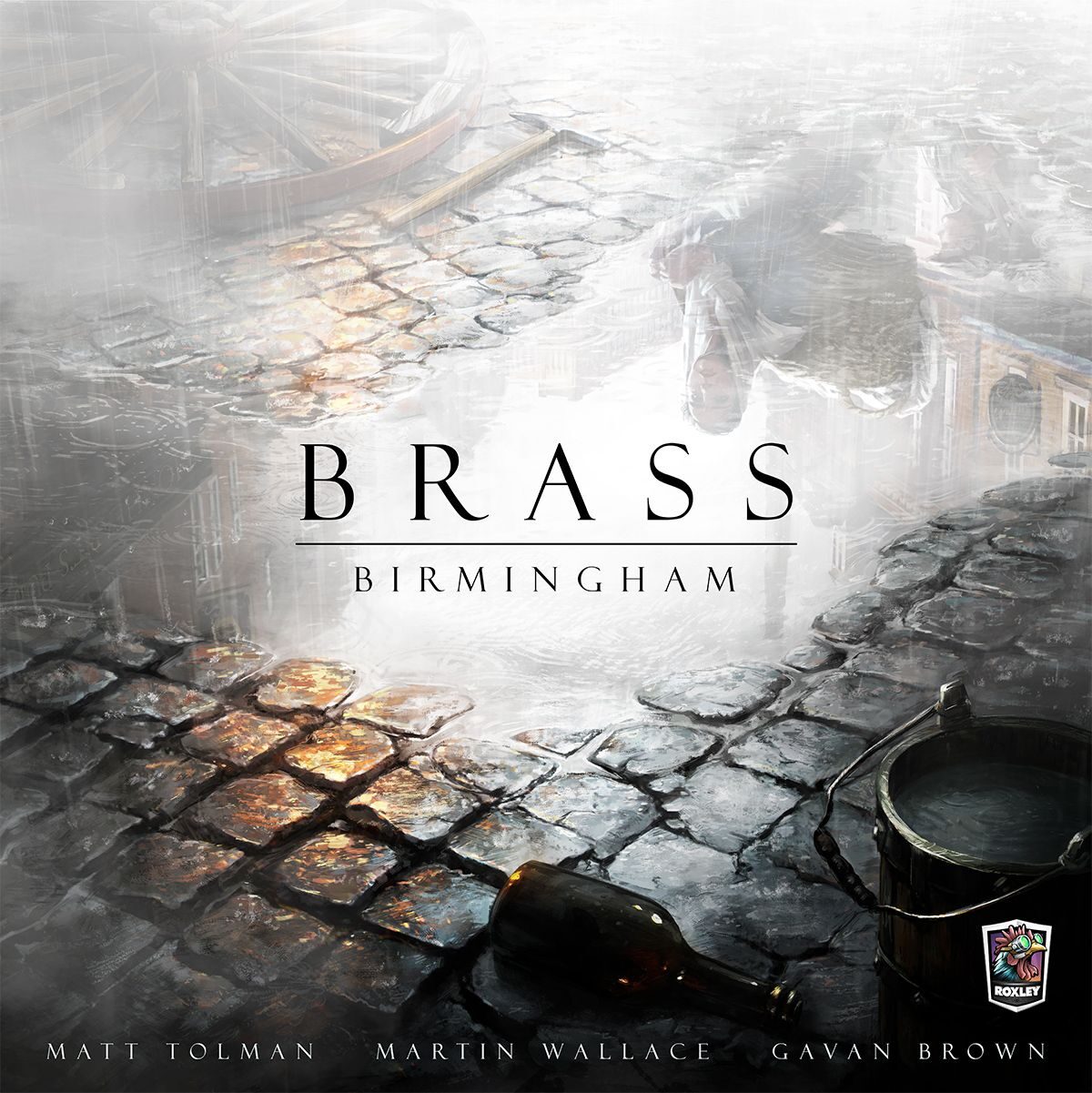
Rung 7: Brass: Birmingham - BGG Weight 3.86

Brass: Birmingham - image courtesy of Roxley Games
Brass: Birmingham is the #1 ranked game on BGG. It earns that by doing something no prior rung quite prepares you for: making cards do two things at once. Every card in your hand either builds in a city OR consumes a resource when spending a card of that city. Running low on good cards creates a cascading problem that’s hard to see coming until you’re already in trouble.
The Canal and Rail era structure means every industry tile you build might get wiped at era transition (or deliberately abandoned for points). Network connectivity determines what you can even reach. Card efficiency - getting maximum value from a hand of eight - is the core puzzle, and it’s one of the most rewarding strategic challenges in modern board gaming.
What you’re learning here: Dual-use cards. Network dependencies. Era-based planning with partial resets.
2-4 players | 60-120 min | BGG rank #1 | Rating 8.56
Rung 8: Twilight Imperium: Fourth Edition - BGG Weight 4.36
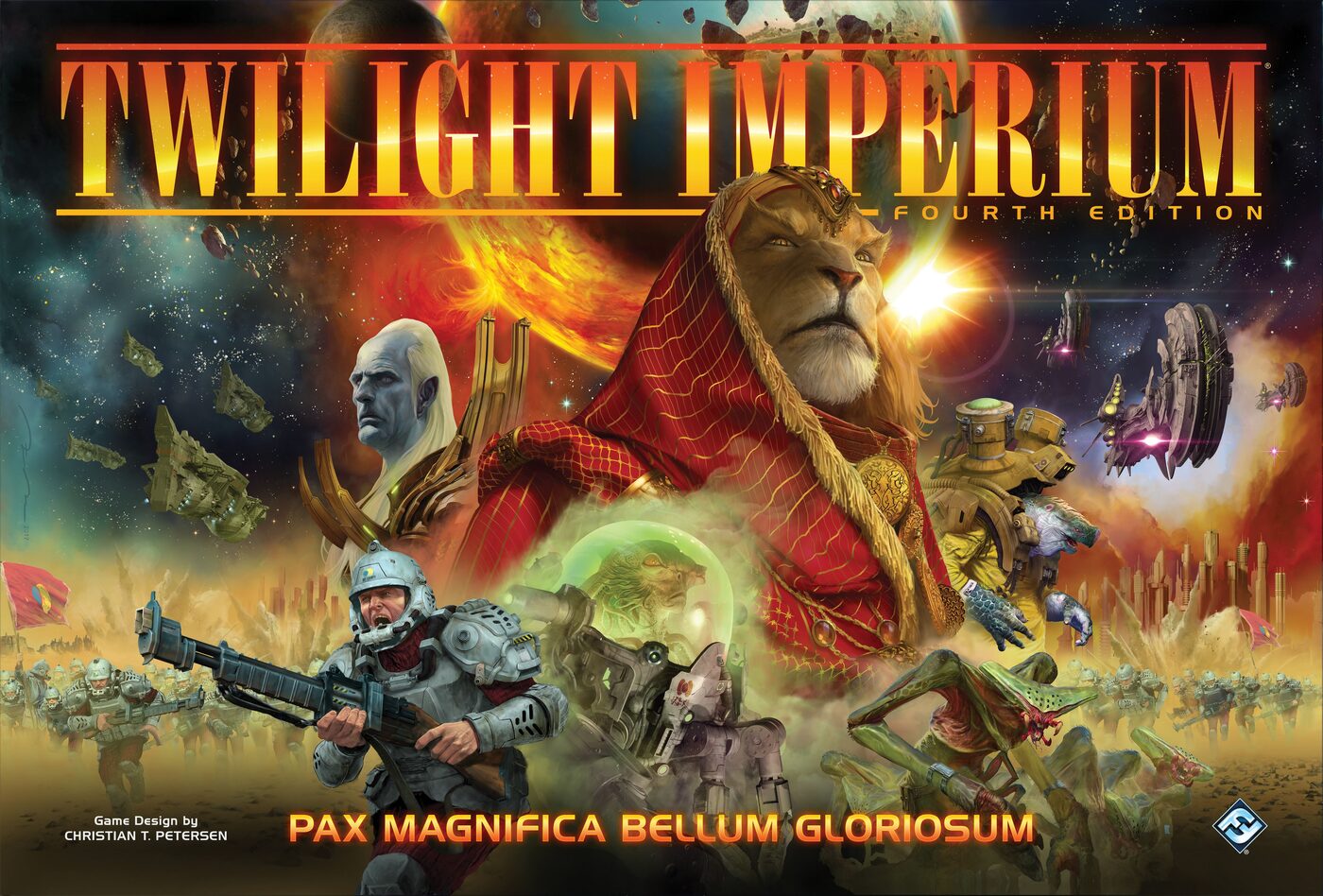
Twilight Imperium: Fourth Edition - image courtesy of Fantasy Flight Games
There’s a reason TI4 sits at the top. It’s not a heavier game in the traditional sense - it’s a different kind of game that just happens to require everything you’ve learned to function. Seventeen asymmetric factions. Political voting. Fleet combat. Economic expansion. Objective-racing across a procedurally assembled galaxy. Sessions run six to eight hours.
What makes TI4 manageable (rather than overwhelming) for players who’ve climbed the ladder is that every system - the trade, the combat, the politics - is individually simpler than Brass: Birmingham. The complexity is additive, not multiplicative. You’re not mastering a single intricate puzzle; you’re juggling a dozen medium-complexity systems while negotiating with five other people who are doing the same thing.
What you’re learning here: Everything. Simultaneously. This is the summit.
3-6 players | 240-480 min | BGG rank #7 | Rating 8.56
How to Actually Climb This Ladder
The mistake most groups make is skipping rungs because they’re impatient. Someone buys Brass: Birmingham after three plays of Catan and wonders why nobody enjoys it. The ladder works because each step teaches. Skip Viticulture and Wingspan, and you’ll hit Terraforming Mars without the engine-building vocabulary to appreciate what’s in front of you.
A realistic pace: two to four plays at each rung before moving up. Not because you need to exhaust the game, but because you need the mechanics to feel natural before adding new ones. When Wingspan starts feeling easy - when you’re reading the bird cards instantly and planning three turns ahead - that’s when you’re ready for Viticulture. When Brass: Birmingham feels like a puzzle rather than a flood of information, TI4 is waiting.
The games on this ladder are some of the most celebrated in the hobby for a reason. Each one is worth your time, not just as a stepping stone, but as a destination in its own right.
All BGG weights and rankings current as of August 2026. Complexity weights are community averages and may shift slightly over time.