Two-player board games get a bad reputation. People assume they’re either stripped-down versions of bigger games, or abstract puzzles with all the warmth of a chess clock. Both assumptions are wrong.
The two-player format forces game designers to think differently. With only two players, every decision lands directly on your opponent. There’s no hiding behind other players’ moves, no diplomacy to dilute the tension. The result, when designers get it right, is some of the most intense and satisfying gaming you can do.
The problem is knowing where to start. BGG lists thousands of games designed for exactly two players. This list cuts through it: six picks ordered from lightest to most demanding, covering every mood from a quick 20-minute card game to a three-hour Cold War epic.
All weights, ratings, and ranks come from BGG data pulled directly for this article.
1. Codenames: Duet - The Social Puzzle (Weight: 1.36)
Codenames: Duet | BGG Rank #275 | Rating 7.41 | 2 players | 15-30 minutes
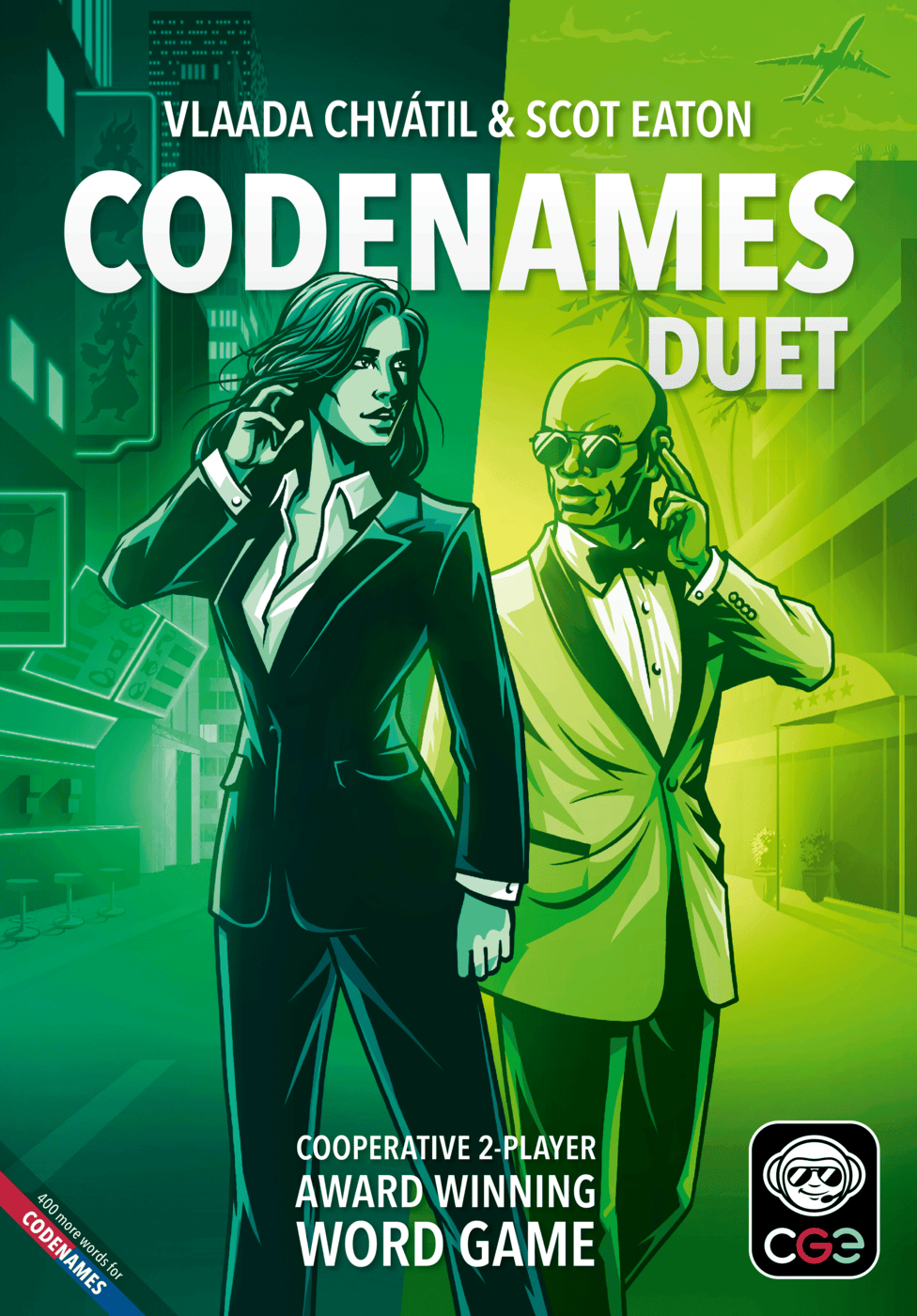
Codenames: Duet. Image © Czech Games Edition
The original Codenames needs a group. Duet strips it down to two players working together - one of the few truly collaborative word games that scales to just a pair.
Each player sees a different key card showing which words the other player should be guiding them toward. You’re both cluegiver and guesser simultaneously, which sounds simple but quickly reveals how differently two people think about the same concepts. It’s collaborative, but it’s not easy. The game has a mission map with increasing difficulty, giving it proper replayability.
Why it works at two: The cooperative structure makes it genuinely low-stakes while still demanding real communication. Perfect for evenings when you want to play together, not against each other.
The catch: Word association is subjective. If your thinking styles are wildly different, expect some spectacular misfires. This is usually the funniest part.
2. Jaipur - The Trading Duel (Weight: 1.46)
Jaipur | BGG Rank #202 | Rating 7.48 | 2 players only | 30 minutes
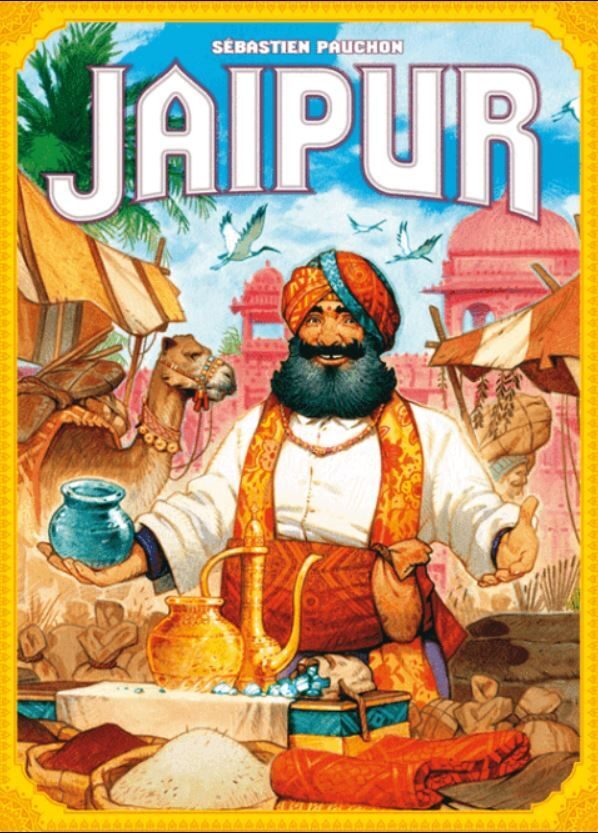
Jaipur. Image © GameWorks
Jaipur is deceptively lean. The entire game is a small deck of cards and a handful of tokens, but it generates genuine tension in nearly every turn.
You’re a merchant in the Indian market competing for the Maharaja’s seal. Each turn you either take cards from the market or sell cards from your hand. Taking gives you resources; selling scores you points - but selling too late means your opponent grabs the highest-value tokens first. The camels add a wrinkle: they don’t score, but they let you take big batches of cards from the market in one go.
Why it works at two: Jaipur is explicitly designed for two and nothing else. There’s no “this works better with four” issue. Every decision you make directly responds to what your opponent is doing with the same market. Games play in 25-30 minutes and best-of-three is almost mandatory.
The catch: Variance matters. Bad draws can feel punishing. The experienced player wins more often than not, but not always.
3. Patchwork - The Quilting Battle (Weight: 1.60)
Patchwork | BGG Rank #148 | Rating 7.58 | 2 players only | 15-30 minutes
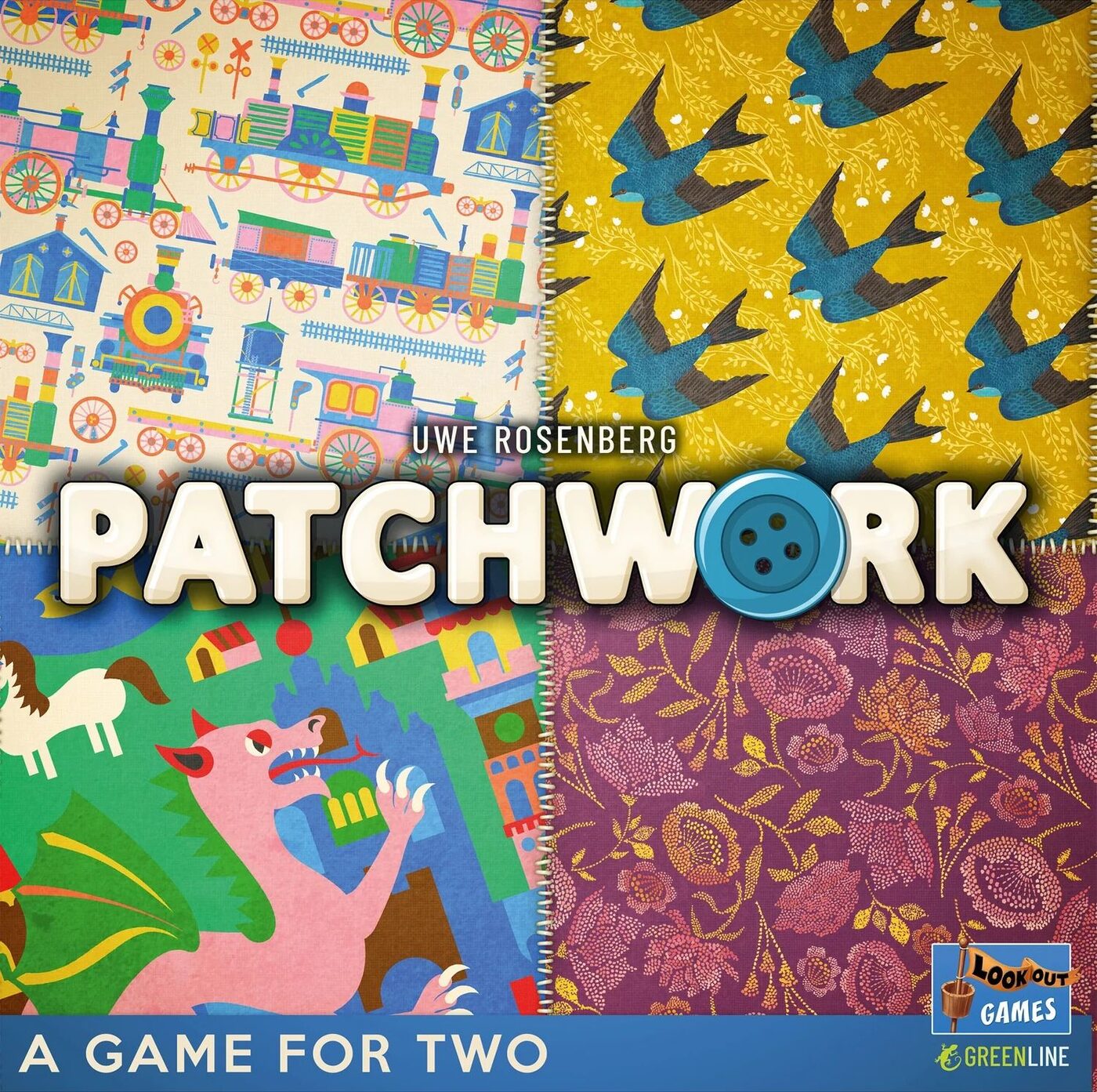
Patchwork - Uwe Rosenberg’s tactile 2-player masterpiece. Image © Lookout Games
Uwe Rosenberg is famous for Agricola, Le Havre, and other brain-burning worker placement games. Patchwork is nothing like them, which is the point. It’s a tight, tactile 30-minute game about filling a 9×9 quilt grid with tetromino-shaped fabric patches.
The catch: you pay for patches in both buttons (currency) and time. The time track is the elegant bit - whichever player is furthest behind on the time track takes their turn, meaning you can take multiple short turns in a row if you keep advancing quickly. Every turn is a real decision: which patch fits my grid best? Can I afford it? Is my opponent about to buy the perfect piece I need?
Empty spaces cost negative points at the end. A full grid is the dream. It’s very rarely achieved.
Why it works at two: Patchwork is purely a two-player game. The time track, the shared patch market, the way each player’s board develops independently - all of it assumes exactly two. Rosenberg designed it as a gift for his partner and it shows.
The catch: People expecting a casual quilting game often bounce off the puzzle difficulty. This is not relaxing. It’s a brain burner in a cheerful box.
4. Star Realms - The Deckbuilder Duel (Weight: 1.91)
Star Realms | BGG Rank #178 | Rating 7.55 | 2 players | 20 minutes
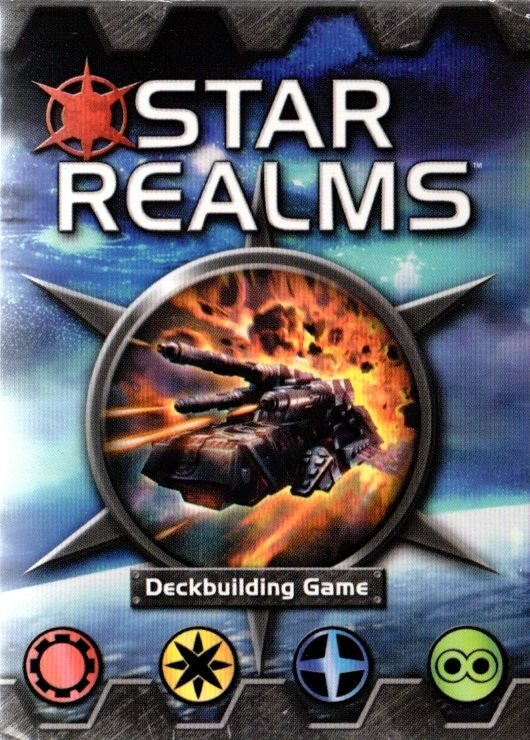
Star Realms - the deckbuilder designed from the ground up for two. Image © White Wizard Games
Dominion invented the deckbuilding genre. Star Realms stripped it down to its essential duel.
Both players start with identical small decks and a shared market of ships and bases. You buy cards to improve your deck, then use that improved deck to deal combat damage directly to your opponent’s authority (health). First to zero loses. The faction synergies - trading over machine, blob, star empire - reward careful acquisition but games still run in 20 minutes.
The maths work out well: the deck is small enough that you see every card you buy quickly, so you never feel like your decisions evaporated into a shuffle.
Why it works at two: Most deckbuilders were designed for 3-5 and scaled down awkwardly. Star Realms was designed as a head-to-head from day one. The direct damage mechanic keeps both players constantly under pressure.
The catch: The faction synergies mean the luck of which cards appear in the market matters. A dominant early market draw is hard to overcome. The campaign expansion adds some structure if raw variance bothers you.
5. 7 Wonders Duel - The Civilisation Sprint (Weight: 2.23)
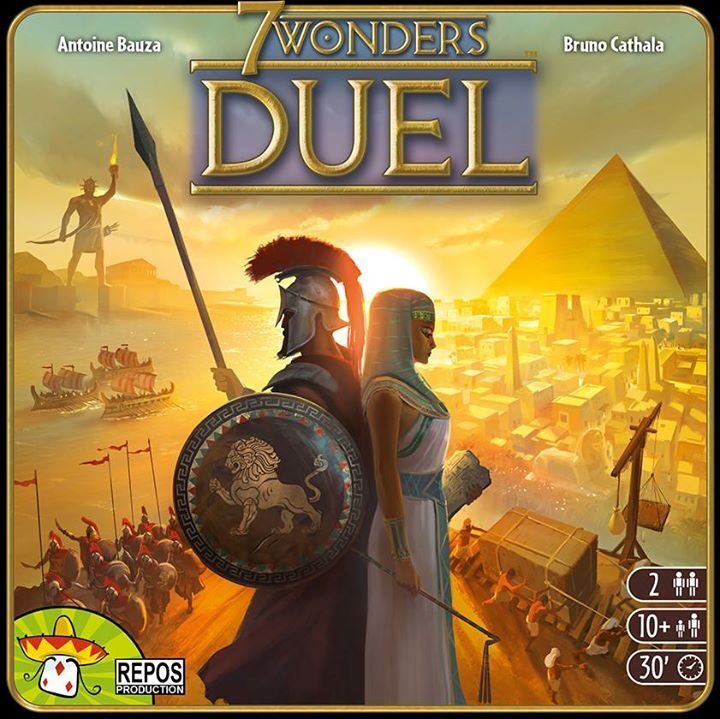
7 Wonders Duel | BGG Rank #24 | Rating 8.08 | 2 players only | 30 minutes

7 Wonders Duel - BGG Rank #24, one of the best board games ever made regardless of player count. Image © Repos Production
Rank 24 on BGG. Not rank 24 among two-player games - rank 24 across everything, beating out games designed for full tables. That tells you something.
7 Wonders Duel is a civilisation-building card game compressed into 30 minutes. Across three ages you draft cards from shared pyramidal layouts, developing your city’s science, military, commerce, and culture. Three victory conditions create genuine strategic tension: you can win militarily by pushing the conflict pawn to your opponent’s capital, scientifically by collecting six different science symbols, or just outpointing them on the civilian track.
The military and science victories mean you can never ignore any category. A player who gets four science symbols is one pair away from an instant win. A player who ignores military gets steamrolled before age three ends.
Why it works at two: 7 Wonders was already a good group game. Duel redesigned the drafting mechanics entirely for two - the pyramid layout creates real asymmetric card access that the base game never had. What emerged is tighter, more strategic, and arguably better than the original.
The catch: Player interaction is mostly indirect until military pressure ramps up. Players who want direct combat from turn one may find the early game too quiet.
6. Twilight Struggle - The Cold War (Weight: 3.61)
Twilight Struggle | BGG Rank #15 | Rating 8.23 | 2 players only | 120-180 minutes
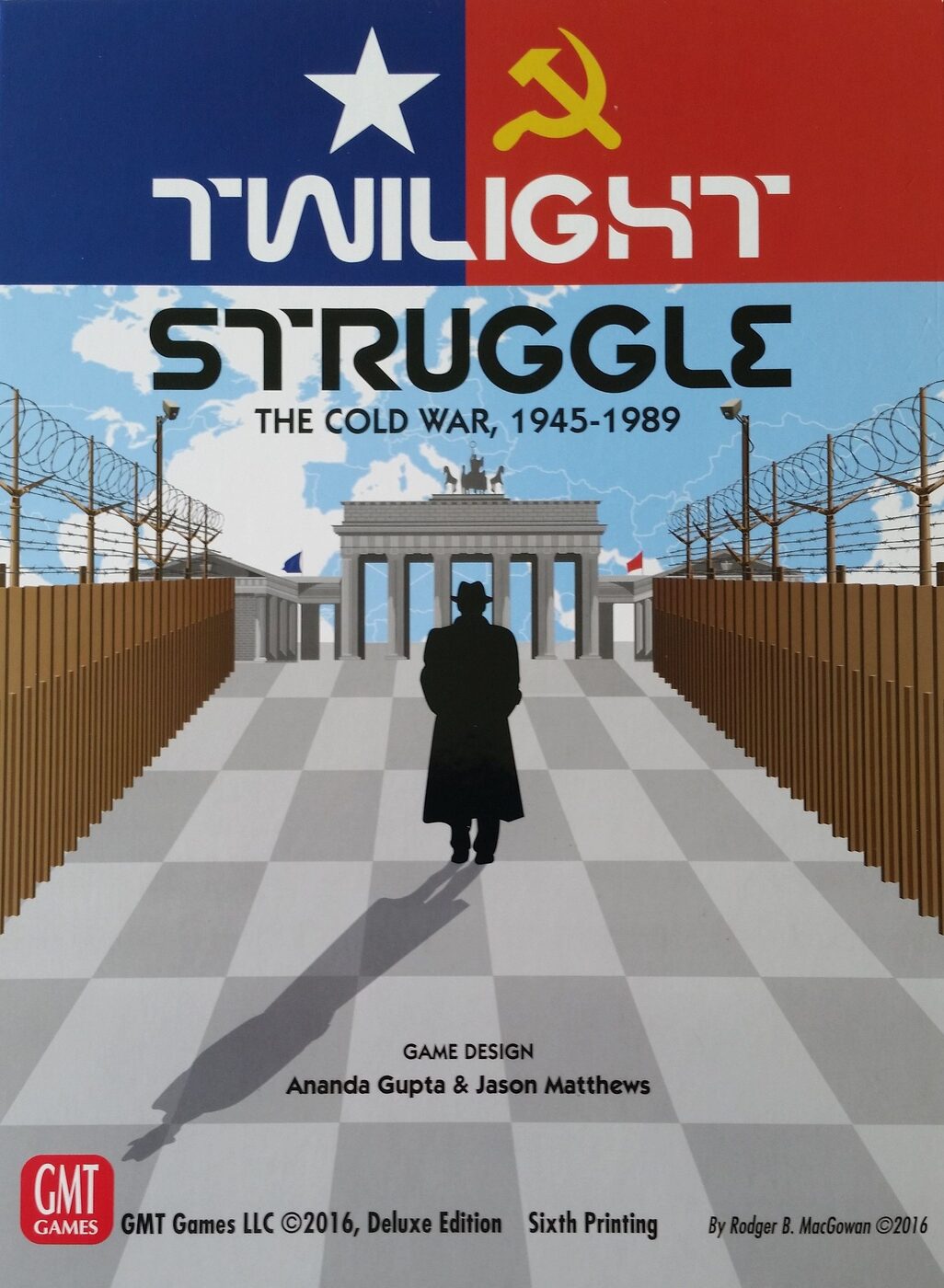
Twilight Struggle - one of the greatest games ever designed, period. Image © GMT Games
For thirteen years, Twilight Struggle sat at the top of the BGG rankings. The game that unseated it (Pandemic Legacy) did so through a campaign structure. In straight game design terms, Twilight Struggle remains one of the most technically impressive board games ever built.
You play the USA or USSR across nine rounds representing the Cold War from 1945 to 1989. Every card in the game is a real historical event - Korean War, Suez Crisis, Cuban Missile Crisis, Solidarity. The genius is that you must use your opponent’s cards too, choosing when to trigger their events or sacrifice their card’s operation points instead. Playing a card that benefits your opponent is inevitable. Knowing when to do it is the game.
The DEFCON track - nuclear war risk - is the sword of Damocles hanging over everything. Let it drop to 1, and whoever triggered it loses instantly, regardless of the board state. This creates a kind of constant background dread that no other game replicates.
Why it works at two: Twilight Struggle is asymmetric by nature - the USSR has early-game advantages, the USA tends to improve in the late war. The political situation of 1945-1989 shapes how the game plays. This only makes sense with exactly two opposing superpowers.
The catch: This is not a light game. At 3.61 weight it demands attention, historical curiosity, and 2-3 hours of uninterrupted time. First games are educational. Competence comes around game five. Mastery takes much longer. The time investment is front-loaded and real.
How to Choose
If you’re new to two-player games: Jaipur or Patchwork - both under 30 minutes, both accessible in one read of the rules.
If you want something that will last years: 7 Wonders Duel - it has the highest ceiling of any gateway game on this list and stays fresh through hundreds of plays.
If you want a cooperative option: Codenames: Duet - it plays alongside the other games here, not against them.
If you’re both experienced and want the full experience: Twilight Struggle - block off a Saturday afternoon and don’t look at your phone.
The right two-player game doesn’t depend on the two of you being well-matched or equally competitive. It depends on finding the weight and mood that suits the evening. Every game on this list does something the others don’t. Start with one.
BGG data sourced July 2026. Weights, ratings, and ranks reflect current community scores.