Two-player board gaming has never been in better shape. The last decade produced a wave of games designed explicitly for two - not two-player variants of games that really want four, but titles built from the ground up for one-on-one play. And the best of them sit comfortably among the highest-rated games on BGG overall.
Whether you’re looking for something fast and light for a weeknight, a competitive engine-builder for a dedicated session, or the most acclaimed strategy game ever made, there’s a two-player option that fits. Here are seven of the best, spanning every weight class and occasion - all BGG-verified.
Quick Reference
| Game | Players | Time | BGG Weight | BGG Rating | BGG Rank |
|---|---|---|---|---|---|
| Codenames: Duet | 2 only | 15-30 min | 1.36 | 7.40 | #278 |
| Jaipur | 2 only | 30 min | 1.46 | 7.48 | #202 |
| Lost Cities | 2 only | 30 min | 1.48 | 7.26 | #348 |
| Patchwork | 2 only | 15-30 min | 1.60 | 7.58 | #149 |
| 7 Wonders Duel | 2 only | 30 min | 2.23 | 8.07 | #24 |
| Agricola: All Creatures Big and Small | 2 only | 30 min | 2.35 | 7.32 | #468 |
| Brass: Birmingham | 2-4 players | 60-120 min | 3.86 | 8.56 | #1 |
The Picks
1. Codenames: Duet
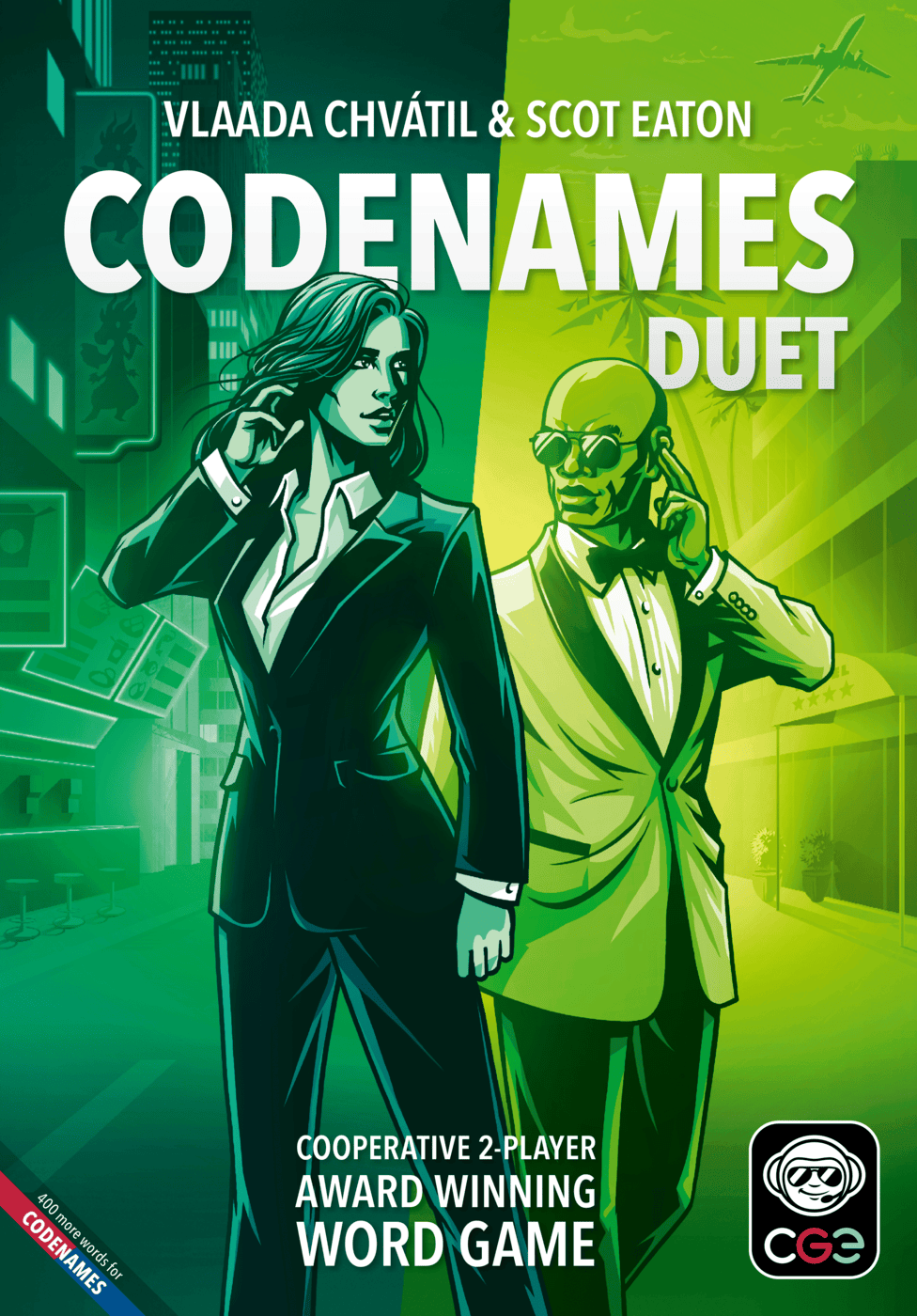
Codenames: Duet | 2 players | 15-30 min | Weight: 1.36 | BGG Rating: 7.40 | BGG Rank: #278
© Czech Games Edition / BGG
The original Codenames is a group game at heart. Duet strips it back to two players and flips it cooperative: both players need to identify all their agents before the turn timer runs out, giving each other one-word clues that cover multiple cards simultaneously. Each player sees a different side of the key card, so you’re each trying to guide your partner toward words they can’t yet see.
What makes Duet work when so many cooperative two-player games feel solitaire-adjacent is the information asymmetry. You know what your partner should avoid; they know what you should avoid. Your clues need to navigate both the hits and the hazards, which means even “simple” clues require careful thought about what the other person might infer.
It’s light, it’s fast, and it ends either in shared triumph or mutual bafflement - both of which are fun. At 15-30 minutes it’s the easiest game on this list to slot into a schedule.
Best for: Couples who want something collaborative. Also great as a first board game together - near-zero learning curve, plays in a lunch break.
2. Jaipur
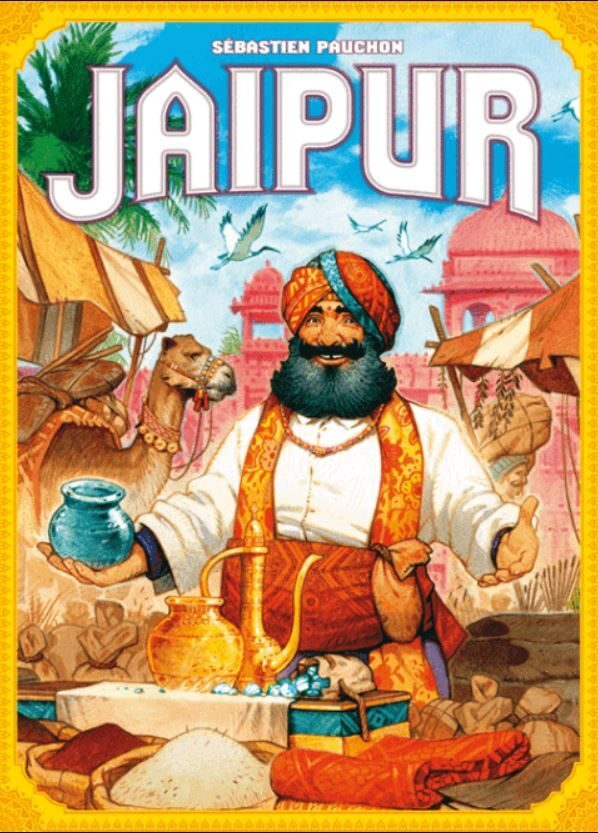
Jaipur | 2 players | 30 min | Weight: 1.46 | BGG Rating: 7.48 | BGG Rank: #202
© Space Cowboys / BGG
Jaipur has been the go-to answer to “what’s a good two-player card game?” for over a decade, and it still earns that reputation. You’re competing merchants in Rajasthan, trading goods - spices, cloth, leather, gems, gold - for rupees. On your turn you either take cards from the market or sell goods for tokens, with bonuses for selling multiple cards of the same type in one go.
The tension comes from timing. Selling early gets you tokens while they’re still worth something (token stacks deplete as goods sell). Waiting means bigger bonuses but your opponent might beat you to it - and once a commodity runs out, it’s gone. Camels are a joker mechanic that lets you swap out large portions of the market, which creates sudden, game-altering swings.
The whole thing plays in 30 minutes, teaches in five, and rewards play after play as you learn to read your opponent’s tempo. Jaipur is the rare game that manages to feel genuinely strategic within extremely simple rules.
Best for: The definitive gateway two-player game. Bring it out with anyone - gamer or not - and expect a second round immediately after the first.
3. Lost Cities
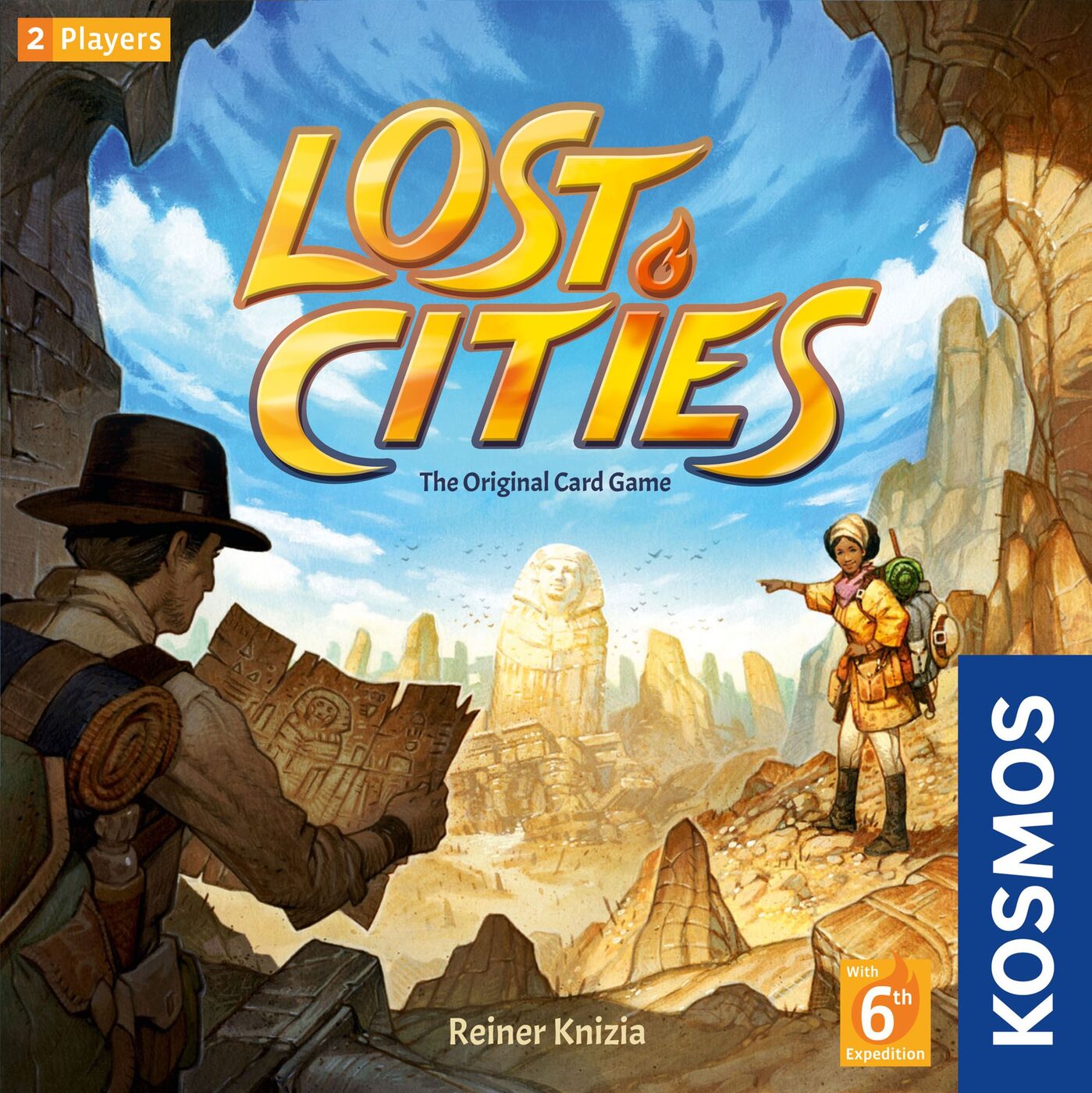
Lost Cities | 2 players | 30 min | Weight: 1.48 | BGG Rating: 7.26 | BGG Rank: #348
© KOSMOS / BGG
Reiner Knizia designed Lost Cities in 1999 and it remains one of the most elegant two-player games ever made. Five coloured suits represent expeditions to ancient sites. Each turn you play a card to an expedition (or discard one) and draw a replacement. Cards must be played in ascending order within each colour, and starting an expedition costs 20 points - so you want to only commit to expeditions you can push high enough to profit.
The game generates genuine anguish through its discard pile. Cards you discard are available for your opponent. Playing the wrong card can fuel their expedition just as yours stalls. The scoring system - negative early, positive later, bonus for eight or more cards - means every expedition is a calculated risk that can easily blow up.
Lost Cities is sometimes described as the Knizia “game about pain.” That’s fair. It’s also brilliant, and its 25-year longevity is testament to how much it packs into a single deck of cards.
Best for: Players who want a compact, replayable abstract with real decision depth. Excellent travel game.
4. Patchwork
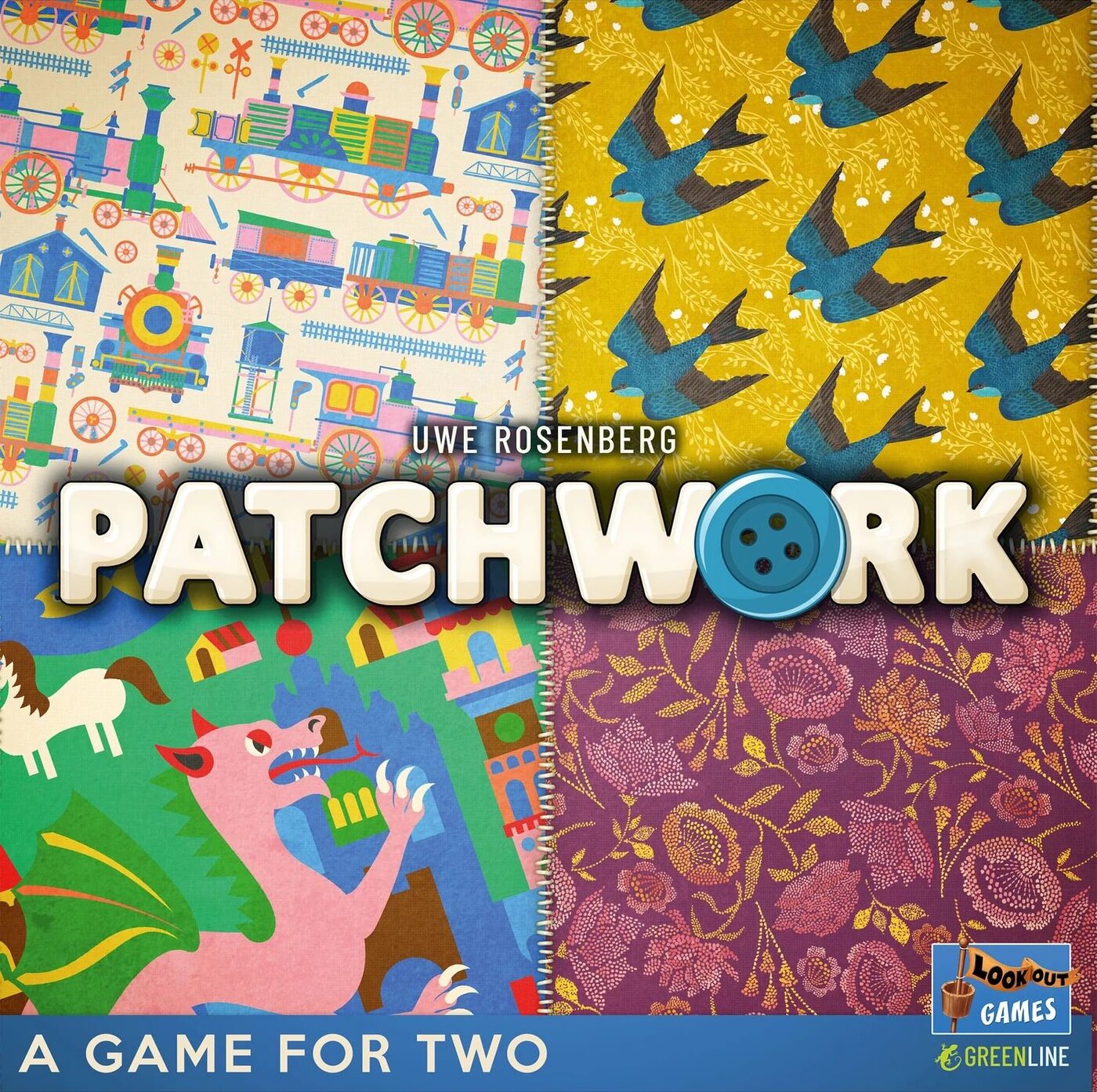
Patchwork | 2 players | 15-30 min | Weight: 1.60 | BGG Rating: 7.58 | BGG Rank: #149
© Lookout Games / BGG
Uwe Rosenberg designed some of the heaviest games in the hobby - Agricola, Caverna, A Feast for Odin. Patchwork is his masterpiece in miniature: a two-player puzzle about filling a 9×9 quilt grid with tetromino-shaped fabric pieces, earning buttons (currency) along the way, and racing around a shared time track.
The time track is the genius move. Each patch costs buttons to buy and time to place. You always play as whoever is furthest back on the track, which means one player might take several turns in a row if they’re consistently behind. Managing the tempo - buying small cheap pieces to stay ahead in time, or splashing out on a big lucrative piece that sets you back - is the core decision throughout.
Empty squares at the end cost you two points each, so a half-filled board is a disaster. The best Patchwork players develop a feel for which holes can realistically be filled and plan accordingly. It sounds like a light puzzle. It plays with surprising depth.
Best for: Creative types, puzzle solvers, and anyone who claims they don’t like strategy games. One of the best “one more game” games on this list.
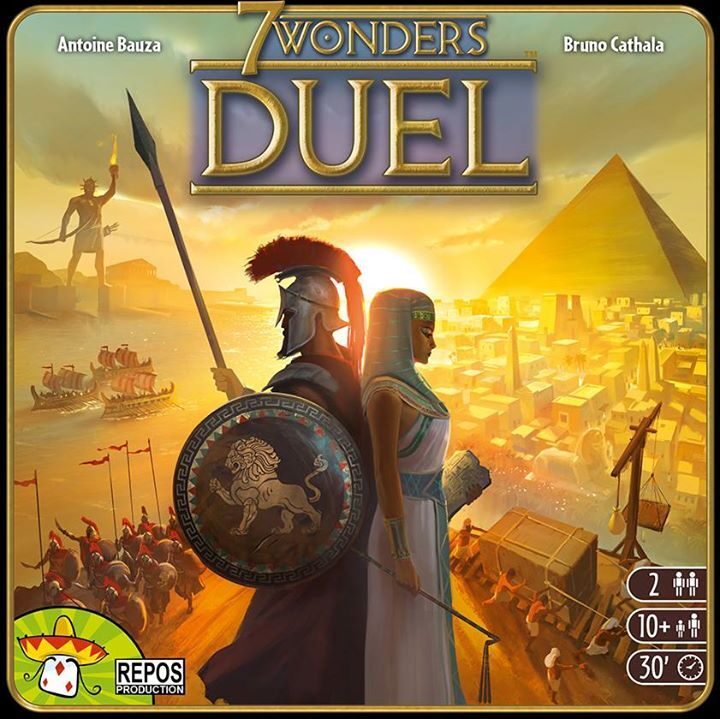
5. 7 Wonders Duel
7 Wonders Duel | 2 players | 30 min | Weight: 2.23 | BGG Rating: 8.07 | BGG Rank: #24

© Repos Production / BGG
The benchmark. 7 Wonders Duel takes the card-drafting civilisation-building of 7 Wonders and redesigns it entirely for two. Three ages of cards are laid out face-down in specific pyramid formations. You pick cards from the exposed edges, each choice potentially revealing new options for your opponent. Build your civilisation - military, science, commerce, civic structures - and aim for one of three victory conditions: military supremacy, scientific dominance, or a points victory at the end of age three.
The military and scientific victory conditions are what separate Duel from a standard points-race. Military swings back and forth on a track between you; if the marker reaches your capital, the game ends immediately in your opponent’s favour. Science works similarly - collect six different scientific symbols and you win outright. These instant-win conditions mean you can never purely optimise your own engine: you have to watch what your opponent is building and interrupt when necessary.
At BGG rank #24 overall, Duel sits among the greatest games ever made - remarkable for something that plays in 30 minutes. The decisions are dense for the time investment, which is the only caveat: it rewards repeated play more than most games at this weight class. By game three or four you start to feel the strategic depth open up.
Best for: Players who want competitive two-player at its absolute best. The single game on this list you’re most likely to still be playing in five years.
6. Agricola: All Creatures Big and Small
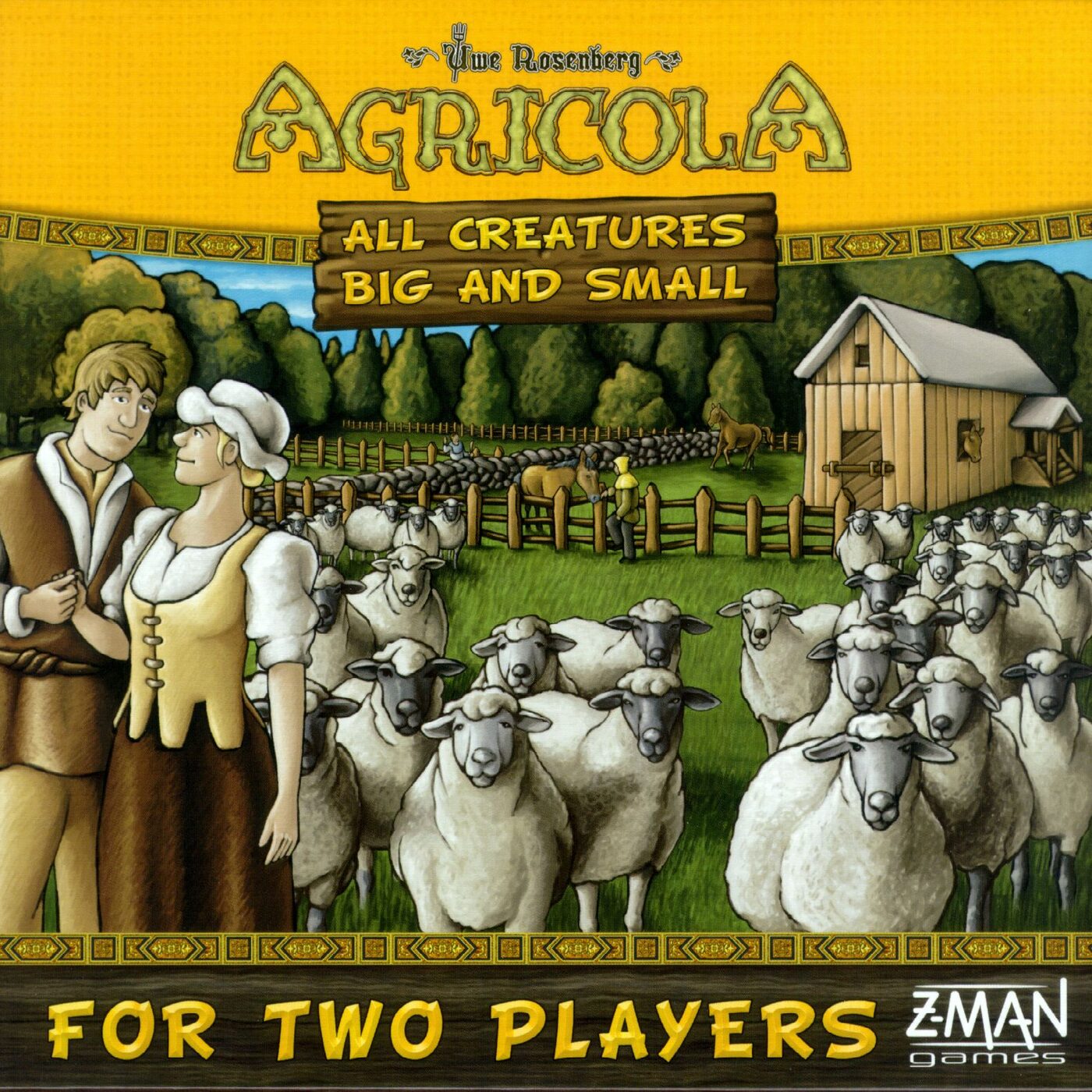
Agricola: All Creatures Big and Small | 2 players | 30 min | Weight: 2.35 | BGG Rating: 7.32 | BGG Rank: #468
© Lookout Games / BGG
Agricola: All Creatures Big and Small (often called ACBAS) strips the full Agricola down to its worker-placement skeleton and makes it a tight, tense 30-minute two-player duel. No feeding your farmers. No crops. Just you, your opponent, three workers each, and the goal of breeding as many animals - horses, cows, pigs, sheep - as possible before the game ends.
Each round a new set of action spaces opens up. Take a space your opponent wanted and they’re blocked. Let them take it and they gain resources you needed. ACBAS is a masterclass in the tension that worker placement creates at low player counts - every action denial feels significant because there are so few of both workers and spaces.
The puzzle comes from the stables: animals need enclosed spaces to live in, and building enough fences to house the animals you’re breeding is itself a spatial and resource challenge. Fit everything together efficiently and you score well. Let your farm sprawl without planning and you’ll end the game with animals escaping (they don’t, but the points do).
At 30 minutes for a game this dense, ACBAS is arguably the best introduction to worker placement available.
Best for: Anyone curious about worker placement. Also excellent for Agricola fans who want something faster - the full game’s spirit is completely intact.
7. Brass: Birmingham
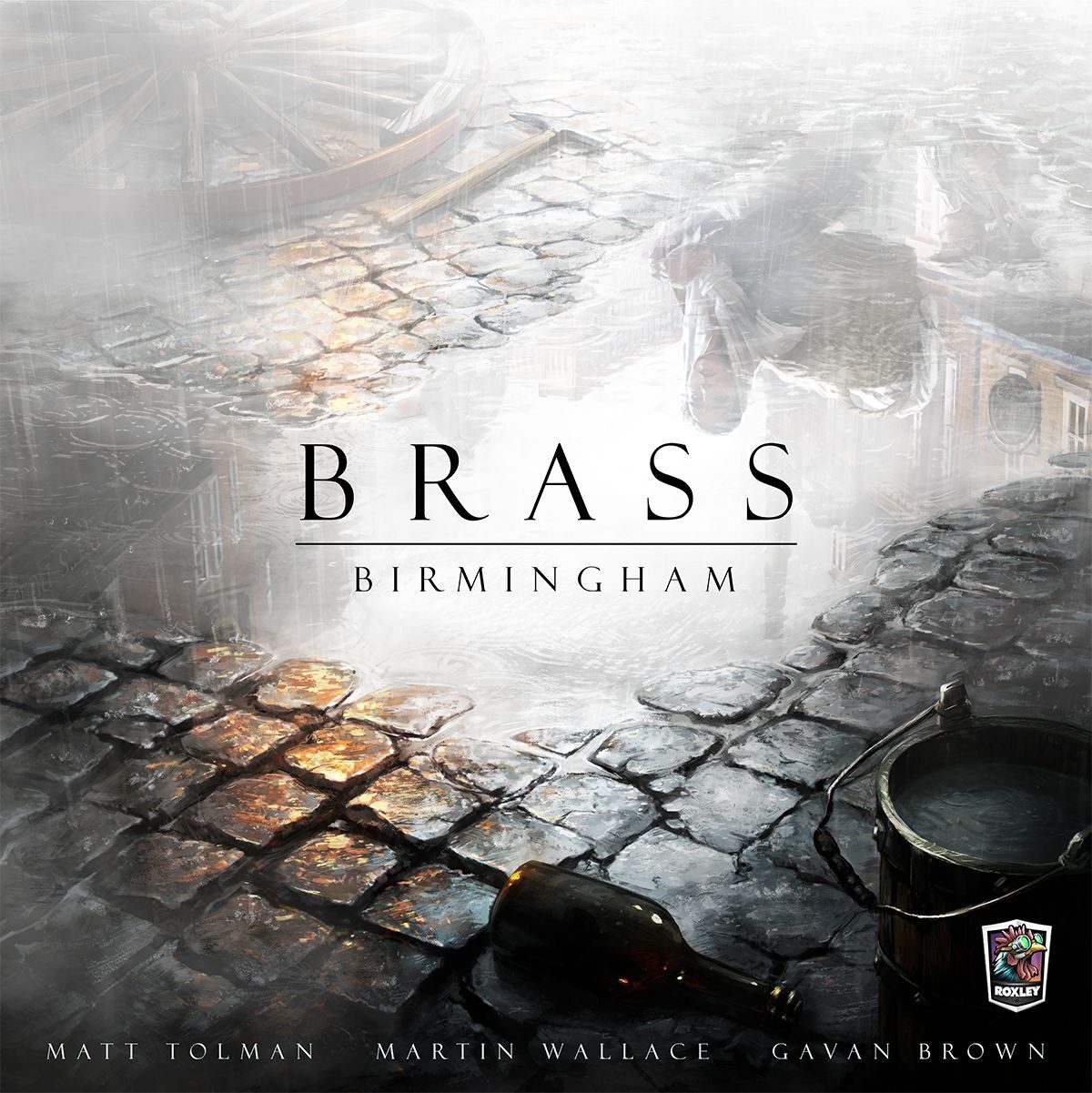
Brass: Birmingham | 2-4 players | 60-120 min | Weight: 3.86 | BGG Rating: 8.56 | BGG Rank: #1
© Roxley Games / BGG
The #1 game on BoardGameGeek plays at two, and it plays well at two. That’s not to be taken for granted - many games scaled for two from higher player counts feel hollow. Brass: Birmingham at two plays fast (closer to 60 minutes than 120) and tighter, with the network-building tension even more personal when there’s only one opponent to block you.
You’re industrialists in 18th-century Birmingham, building canals and railways across the English Midlands to link your industries to the markets that consume them. The game is played in two eras - canal and rail - and everything you built in the canal era is removed before the rail era begins, scored by what you connected. Building for yourself is rarely enough; you need to link to your opponent’s industries too, which creates constant interdependence even in a competitive game.
The weight is real - this is comfortably the heaviest game on the list, and the first play will feel opaque. But the second play is a different experience entirely. The logic of the network becomes clear, the card hand management clicks, and you start to see the genuine strategic depth underneath. Brass: Birmingham earned #1 for reasons that become obvious around game three.
Best for: Experienced gamers ready for something that rewards serious engagement. Clear the evening - even at two it deserves proper attention.
How to Choose
Pure beginners / casual nights: Start with Jaipur or Codenames: Duet. Both teach in under five minutes and create genuine fun on the first play.
You want something with real depth in a short window: 7 Wonders Duel is the answer. Nothing on this list does more with 30 minutes.
Puzzle solvers and spatial thinkers: Patchwork. It doesn’t look like a strategy game, plays like one.
You already play board games and want worker placement: Agricola: ACBAS gives you the tension of the full game in half the time.
You’re ready for a proper strategic commitment: Brass: Birmingham. The #1 game on BGG is #1 for a reason.
Date night that isn’t too competitive: Lost Cities or Codenames: Duet. Both are collaborative enough in tone that a loss doesn’t sting.
The two-player format rewards intimacy - you know exactly who you’re playing against, every decision is directed at one opponent, and the feedback loop between plays is immediate. These seven games represent the best the format has to offer in 2026. Any one of them is worth your shelf space.