There’s a specific kind of satisfaction that engine building delivers that almost nothing else in board gaming does: the moment your carefully constructed machine clicks into gear and a single action cascades into three, four, five rewards. Round one you’re scraping for resources. Round four you’re a production engine printing points.
Engine building is a mechanic, not a theme - it shows up in games about birds, galactic civilisations, frontier railroads, and magical gem factories. The variety is genuinely vast. But not every engine builder is worth your time or your shelf space.
These six are. Ordered from lightest to heaviest so you can find your entry point.
1. Gizmos - The Perfect Introduction (Weight: 2.1)
BGG: #415 | Rating: 7.4 | Players: 2-4 | Time: 40-50 min
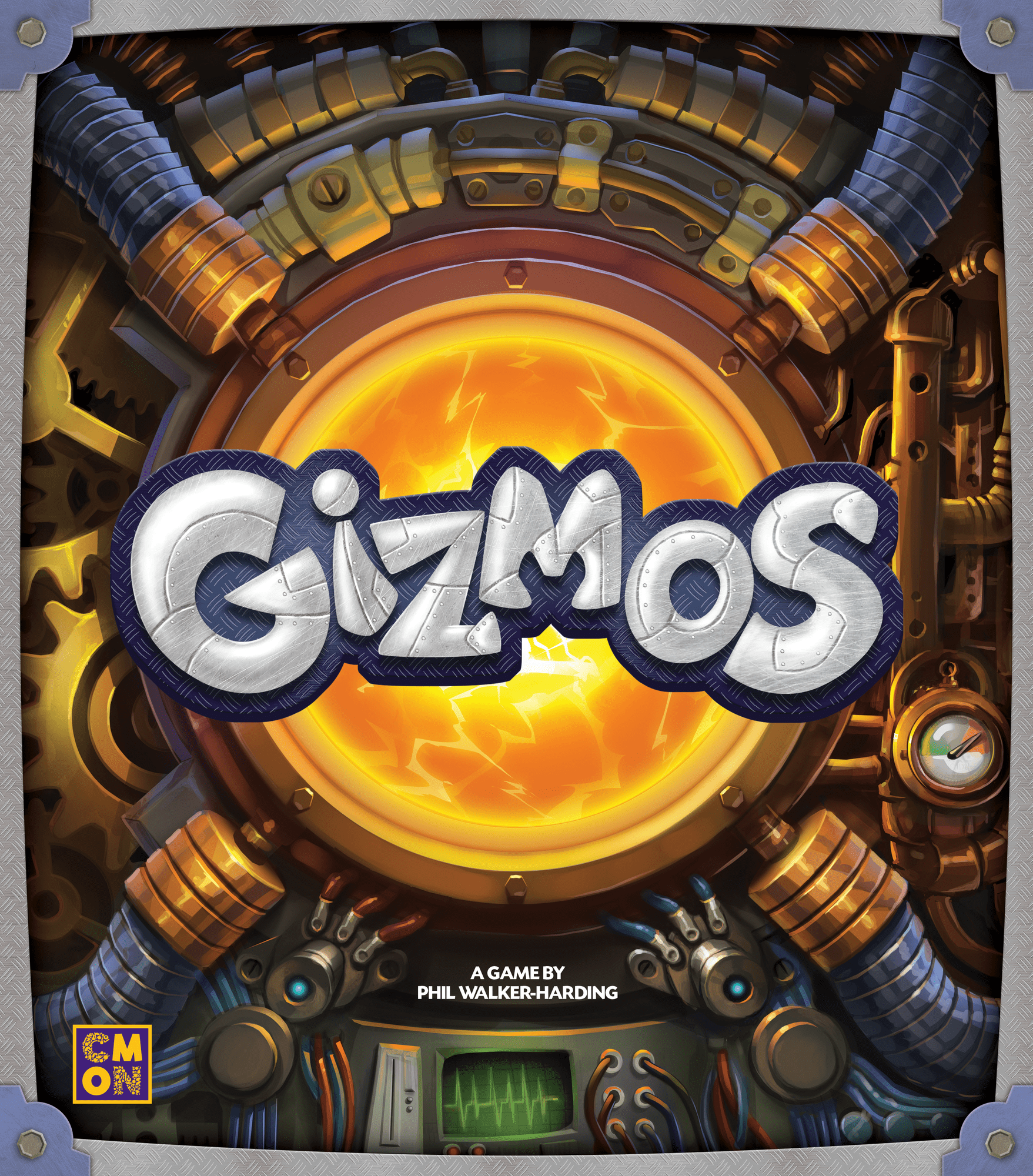
Gizmos - published by CMON (2018). Cover art: CMON.
If you want to understand engine building as a mechanic, start with Gizmos.
The game is almost engineered as a teaching tool. You’re building a machine from patent cards - each one adds a trigger to your engine. Some fire when you pick up energy. Some fire when you build. Some fire when you file. Chain them right and a single action turns into four. The moment it happens the first time, you understand why people play engine builders.
The marble dispenser is a genuinely clever bit of design - coloured marbles represent energy, randomised from a perspex tube, and picking the right colour from the visible row becomes its own little puzzle. The physical act of selecting energy feels connected to your engine in a way that most resource-gathering doesn’t.
At BGG weight 2.1, this is a genuine gateway title that rewards repeat plays. It doesn’t have the strategic depth of what’s further down this list, but it delivers the engine-building dopamine hit cleanly and efficiently. Two players, 45 minutes, teach in ten. Great first purchase.
2. Res Arcana - Elegant and Compact (Weight: 2.7)
BGG: #184 | Rating: 7.6 | Players: 2-4 | Time: 30-60 min
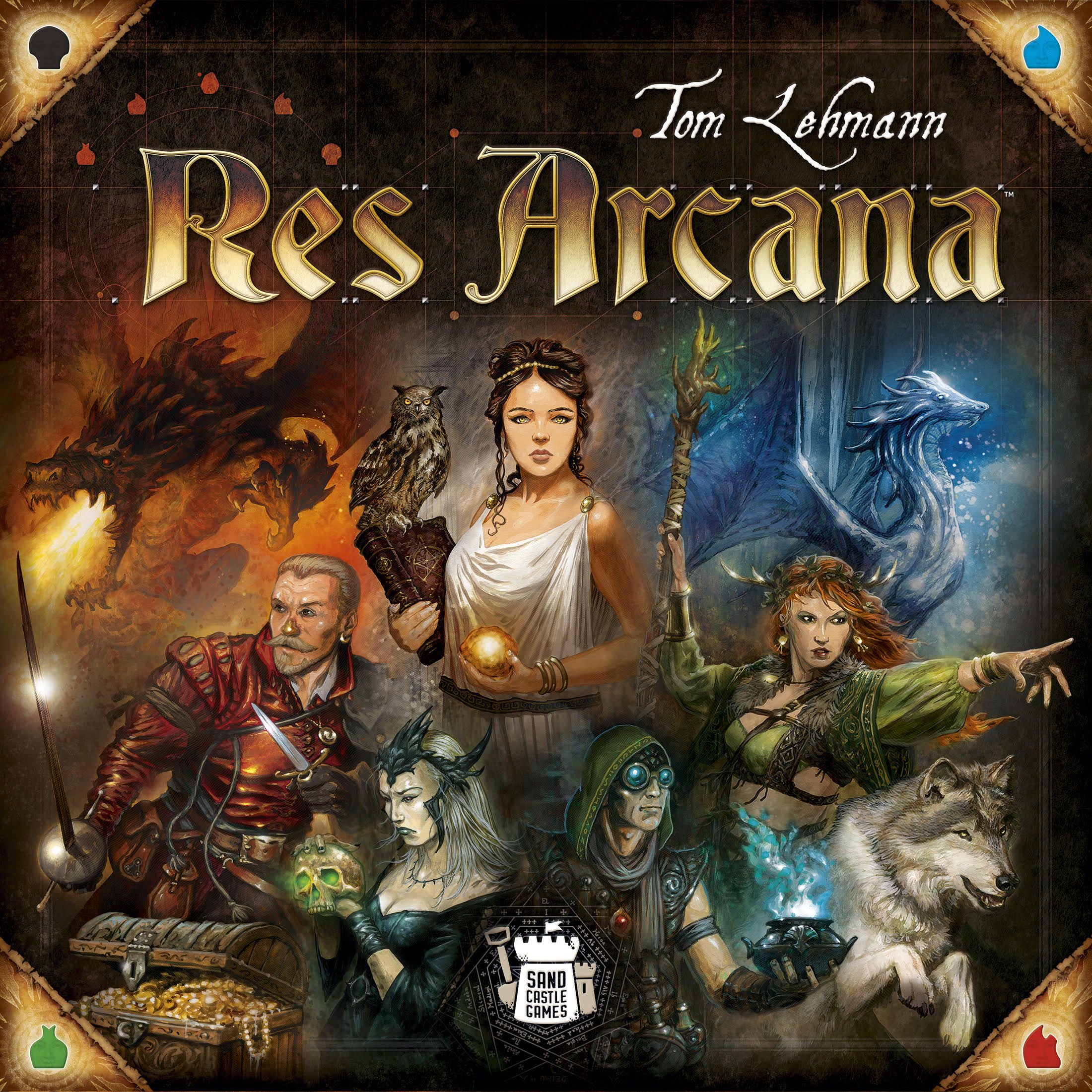
Res Arcana - published by Sand Castle Games (2019). Art: Julien Delval.
Res Arcana is the most surprising game on this list. It has an eight-card hand, takes 30-45 minutes, and produces more strategic depth per component than almost any game twice its size.
Tom Lehmann - the designer behind Race for the Galaxy - made this one. The core challenge: you’re dealt eight Essence cards at the start of the game. That’s your engine. You have to build a winning strategy from whatever those eight cards can become, using places of power and monuments on a shared central board to push your engine towards a victory condition.
The interaction between your starting hand and the available places of power is the whole game. No two sessions feel alike because the component combination changes everything. Players who’ve bounced off the iconography in Race for the Galaxy often find Res Arcana more accessible - the art is clear, the card text is readable, and the actions are concrete.
At BGG weight 2.7, it’s not quite a gateway game, but a confident one session 2-3 player could teach it. The 30-45 minute runtime means you can run it twice in an evening, which matters for a game this replayable.
3. Everdell - Beautiful and Accessible (Weight: 2.8)
BGG: #43 | Rating: 8.0 | Players: 1-4 | Time: 40-80 min
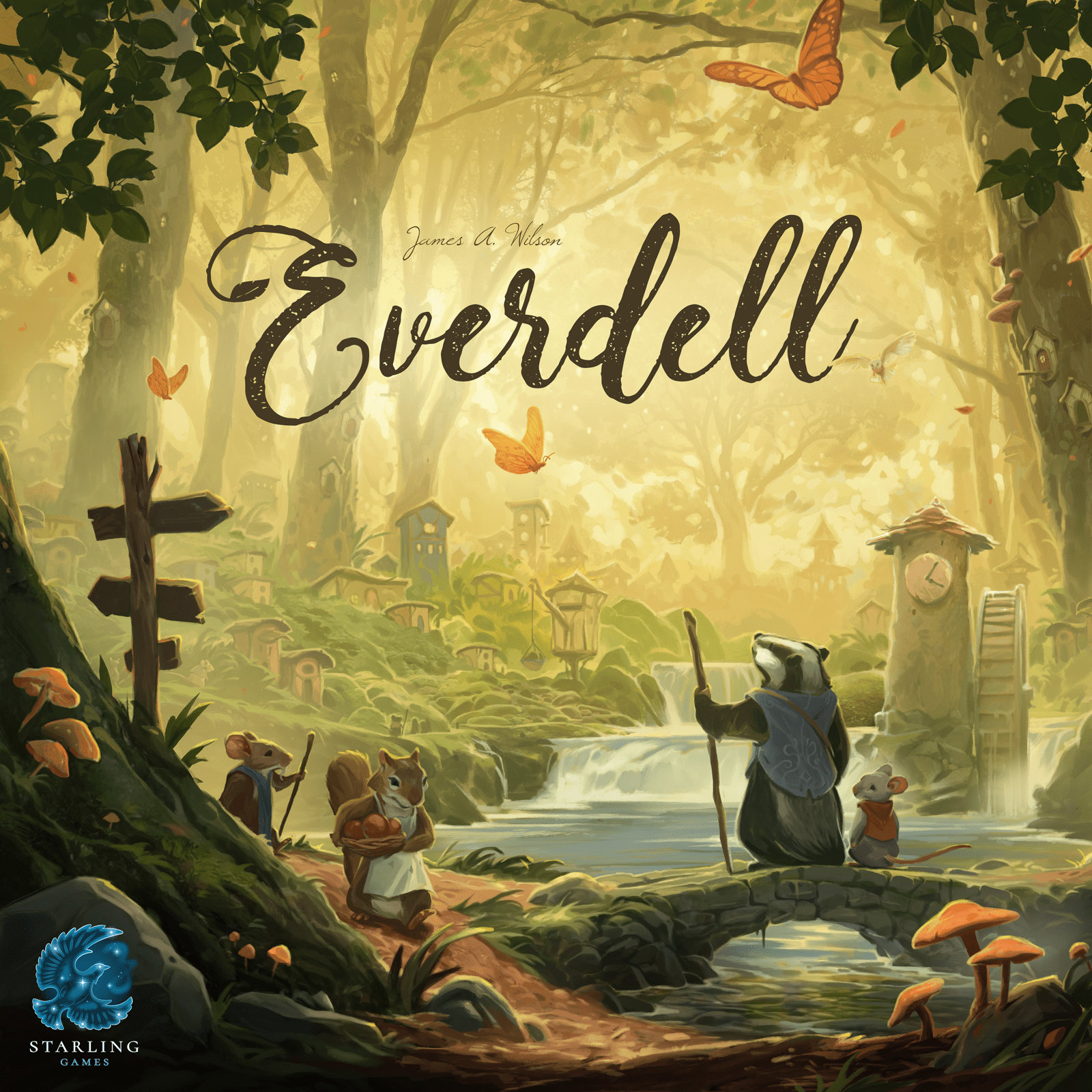
Everdell - published by Starling Games (2018). Art: Andrew Bosley.
Everdell is the game people photograph at conventions, then buy when they realise the gameplay actually holds up.
The art is Andrew Bosley’s finest work - a forested valley with seasons changing on the central board, critters and constructions illustrated with genuine warmth. But the game earns its BGG rank 43 on mechanics, not aesthetics.
Your city is a tableau of up to fifteen cards - critters and buildings. Each card has a unique ability. Many of them chain: a Critter that costs less when you have a specific Construction, a Construction that lets you play a free Critter, buildings that grant resources when triggered. The engine builds card by card across three seasons until your city is fifteen deep and every card placement triggers something.
The worker placement layer that funds your engine is clean and well-integrated. The forest clearing actions vary per game, and the end-of-season Meadow card refresh keeps the decision space fresh. Everdell’s solo mode is good - the Rugwort automa creates real pressure - though the game is at its best with three or four players.
At weight 2.8, it sits right at the enthusiast-accessible boundary. First plays feel slightly overwhelming, but the systems are intuitive once they click. This is one of the best gateway-to-enthusiast transitions in modern board gaming.
4. Race for the Galaxy - Deep, Fast, Uncompromising (Weight: 3.0)
BGG: #94 | Rating: 7.7 | Players: 2-4 | Time: 30-60 min
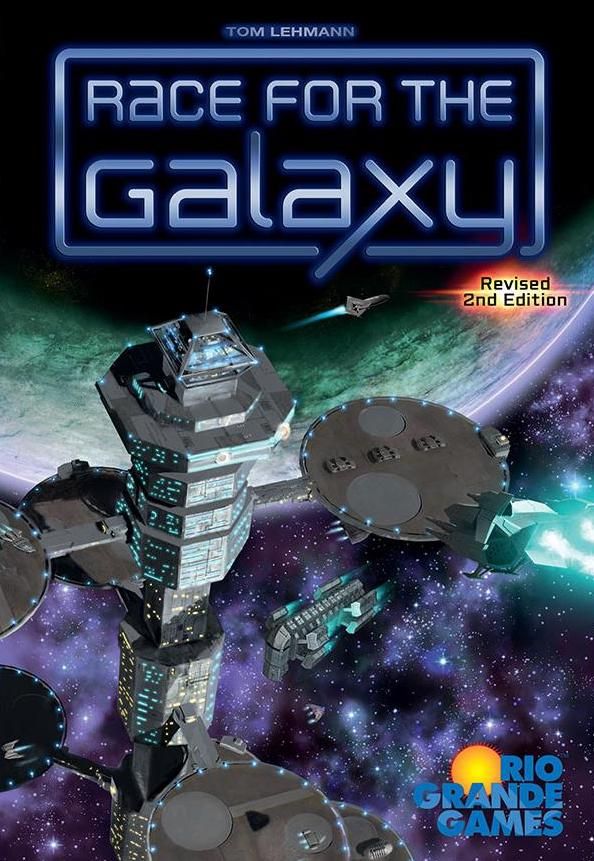
Race for the Galaxy - published by Rio Grande Games (2007). Art: Claus Stephan, Mirko Suzuki.
Race for the Galaxy has been in BGG’s top 100 since 2007. It belongs there, and it’s not going anywhere.
The iconography wall is real. Your first session you’ll spend as much time reading the reference card as playing. Push through. By game three, the symbols are second nature and Race becomes one of the fastest, densest, most satisfying engine builders at any price point.
The simultaneous action selection is the genius bit: every player secretly picks an action (Explore, Develop, Settle, Consume, Produce) and all chosen actions happen that round. Your engine is built to exploit the actions you pick, but the other players’ choices open additional opportunities. Reading the table - figuring out who’s exploring, who’s producing - is a real skill layer on top of the tableau building.
The engine arc is steeper than the other games on this list. A good Race engine generates goods, consumes them for victory points, and sustains itself across a full game while you race your opponents to 12 cards. When it fires, it produces a kind of efficient elegance that other games only approximate.
At weight 3.0, this is not a casual Tuesday game. But if you’re willing to invest two to three sessions to clear the learning curve, Race for the Galaxy pays dividends for years. Few games stay on shelves this long for no reason.
5. Scythe - Iconic and Strategic (Weight: 3.5)
BGG: #26 | Rating: 8.1 | Players: 1-5 | Time: ~115 min

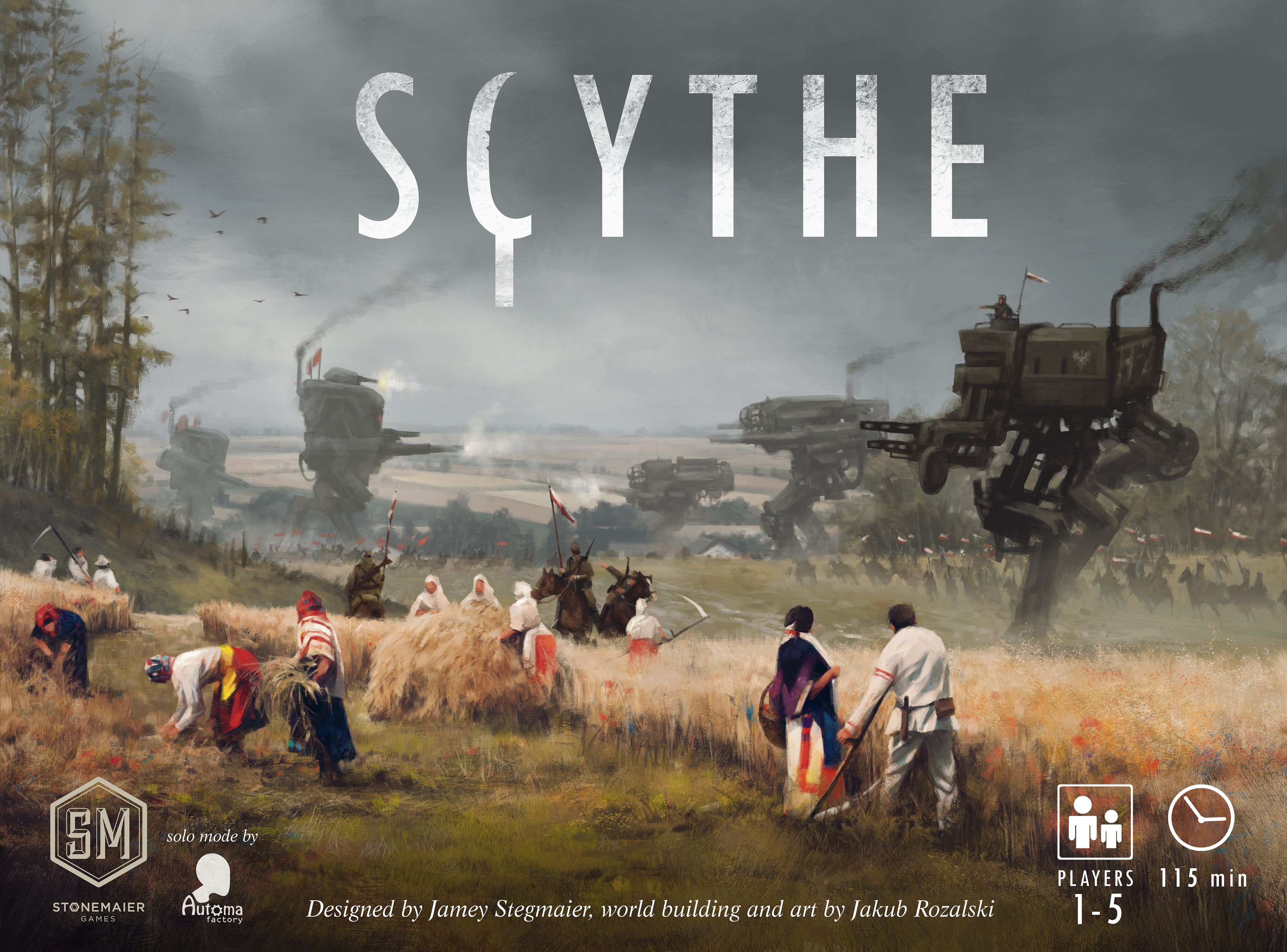
Scythe - published by Stonemaier Games (2016). Art: Jakub Różalski.
Scythe is the engine builder that convinced a generation of Euro gamers that thematic presentation and tight mechanical design could coexist.
The core system is deceptively clean: you play a card, take one of two action sections on your player mat (top row or bottom row), never the same section twice in a row. The top actions produce resources. The bottom actions spend them - deploying mechs, building structures, enlisting recruits, gaining workers. Every bottom action you take upgrades future actions and unlocks passive bonuses that snowball through the game.
The faction and player mat combinations create wildly different engine shapes. The Rusviet faction’s consistent action flexibility plays nothing like the Nordic faction’s river-crossing aggression. Learning to read your mat and build toward your faction’s strengths is most of the strategic game. The combat is almost incidental - it exists to create geography pressure, not to be the centre of play.
At BGG weight 3.45, Scythe is substantial but manageable. The rulebook is clear. The iconography is intuitive. Teach time is 30-40 minutes but the game flows smoothly once it starts. A 3-player game typically clocks in around 90 minutes once everyone knows it.
The solo automa mode holds up well - BGG solo poll marks it Recommended at 1 player. If you play solo regularly, it’s a genuine option, not a consolation prize.
6. Great Western Trail - The Masterclass (Weight: 3.7)
BGG: #21 | Rating: 8.2 | Players: 2-4 | Time: 75-150 min

Great Western Trail - published by eggertspiele/Plan B Games (2016, Second Edition 2021). Art: Klemens Franz.
Great Western Trail sits at BGG rank 21 for a reason. It is one of the most complete engine builders ever designed.
Alexander Pfister’s masterpiece asks you to drive cattle from Texas to Kansas City for delivery - but the cattle drive is just the frame. The real game is your deck, your buildings, and the specialists you hire. Each trip down the trail is faster, more rewarding, and more capable than the last. Your engine doesn’t just get bigger; it gets better at the specific things you chose to specialise in.
The building placement on the trail creates a semi-cooperative geography where your choices affect every other player’s journey. Build a hazardous location and your opponents pay a tax. Specialise in train deliveries and your engine diverges from a cow-specialist at the same table in ways that make the final scoring genuinely hard to predict.
The Second Edition (2021) cleaned up rough edges in the original ruleset without softening the depth. At BGG weight 3.7, this is an enthusiast title - plan an evening of 2.5-3 hours with experienced players. But if you’ve played down this list and are looking for the ceiling of what engine building can achieve at a table, Great Western Trail is it.
Which One Should You Buy?
| Game | Weight | Best For | BGG Rank |
|---|---|---|---|
| Gizmos | 2.1 | First engine builder, family groups | #415 |
| Res Arcana | 2.7 | 2-player focus, fast plays | #184 |
| Everdell | 2.8 | Mixed groups, visual appeal | #43 |
| Race for the Galaxy | 3.0 | Dedicated gamers, fast plays | #94 |
| Scythe | 3.5 | Thematic depth, solo | #26 |
| Great Western Trail | 3.7 | Experienced groups, ceiling | #21 |
New to engine building? Start with Gizmos or Everdell. Both deliver the core experience without demanding you know what you’re doing on play one.
Already comfortable with medium-weight games? Race for the Galaxy or Scythe. The learning curve on Race pays back every session after.
Want the best game on this list? Great Western Trail, but only if you have the group for it. At the right table, it’s as good as this genre gets.
All BGG data (rankings, ratings, weights) verified via BGG XML API, June 2026.