Two-player gaming has a different texture than multiplayer. There’s nowhere to hide. Every decision, every pause, every slight tilt of your hand is data your opponent might be reading. The best 2-player games are like chess matches with personality - tense, personal, and deeply satisfying.
Whether you’re looking for something to play with a partner on a weeknight, a sharper game to play with a competitive friend, or the kind of slow-burn epic that reshapes how you think about historical strategy, this list covers all of it. Seven games, ordered from lightest to heaviest, verified against BGG data, and road-tested by the board game community.
1. Jaipur
BGG Weight: 1.46 · 2 Players only · 30 min · BGG Rating: 7.48 · Rank #202 · BGG Page
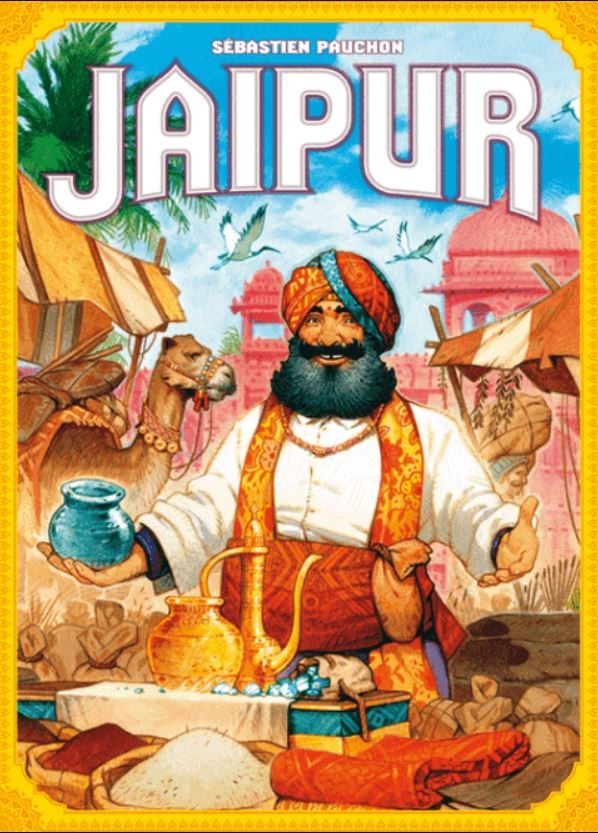
Jaipur is the game to pull out when someone says “I don’t really play board games.” It’s a 30-minute market trading card game set in Rajasthan, and it consistently astonishes people who expect rules complexity. The mechanisms are almost nothing: on your turn, you either take cards or sell cards. That’s it. And yet.
You’re racing to collect matching sets of goods - silk, spice, leather, rubies, gold - and sell them for tokens. The critical twist: bonuses for selling larger sets are disproportionately big. Selling three silk gives you three tokens; selling five gives you five tokens plus a bonus tile worth extra points. So the tension is always whether to cash out now or hold for the bigger bonus while your opponent sweeps the market out from under you.
Camels add a clever wrinkle. They’re not goods - you can never sell them - but you can swap an entire row of camels into your hand in a single move, grabbing a massive amount of goods at once. Managing your camel herd to time these explosions is half the game.
Why it works: First-play learning curve is basically zero. The decisions get genuinely interesting after two or three plays when you start reading your opponent’s camel count and denying the goods they’re clearly building toward. It’s light enough for a 10 pm weeknight and interesting enough that you’ll want a rematch immediately.
Best for: Couples new to modern board games, anyone who wants something fast but not brainless.
2. Patchwork
BGG Weight: 1.60 · 2 Players only · 15-30 min · BGG Rating: 7.58 · Rank #146 · BGG Page
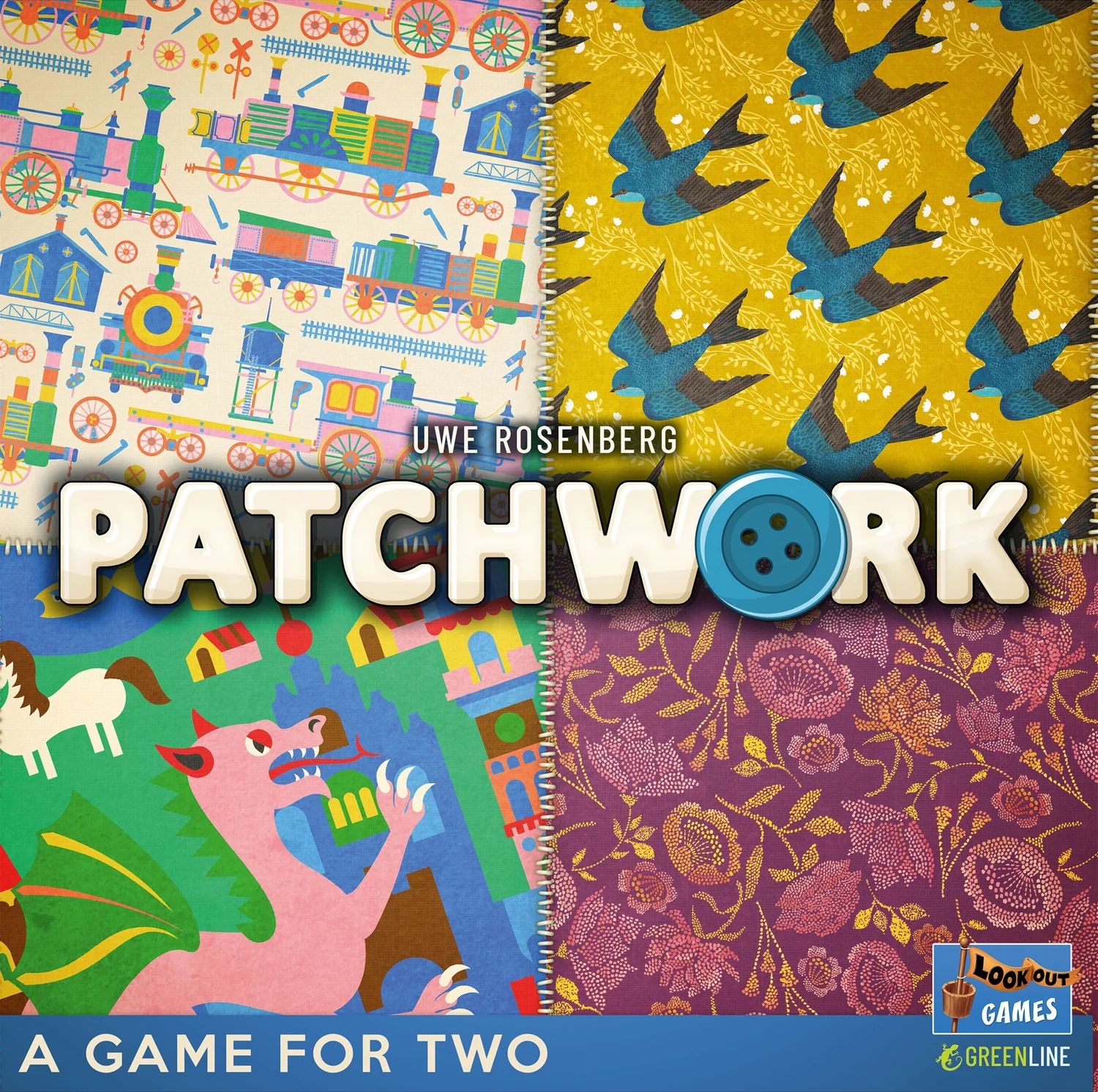
Uwe Rosenberg built A Feast for Odin, Agricola, and Caverna - heavy games that eat your evening. Then he designed Patchwork, a 20-minute game about sewing a quilt, and somehow made it one of the most elegant abstracts of the last decade.
You’re filling a 9×9 personal board with tetromino-shaped fabric patches. Each patch costs buttons (the currency) and time. The time track is crucial: players don’t alternate turns - instead, whoever is furthest behind on the time track takes the next action. Take a cheap, quick patch and you’ll move twice before your opponent goes once. Take a large, expensive patch and your opponent might get three turns while you’re stuck.
This creates a genuine time-management puzzle layered on top of spatial reasoning. You’re always calculating: is this patch worth the time it costs? Can I afford the buttons? Does it fit in my ever-more-awkward board?
At game end, empty squares cost you two points each - so the endgame is a brutal accounting of how well you packed your quilt. A beautiful spatial engine, wrapped in felt.
Why it works: It’s Tetris with a push-pull economy. Completely approachable, genuinely deep once you understand the time track meta, and at 20 minutes it plays incredibly fast for something with real strategic texture.
Best for: Abstract puzzle fans, couples who want something tactile and satisfying.
3. Star Realms
BGG Weight: 1.91 · 2 Players · 20 min · BGG Rating: 7.55 · Rank #176 · BGG Page
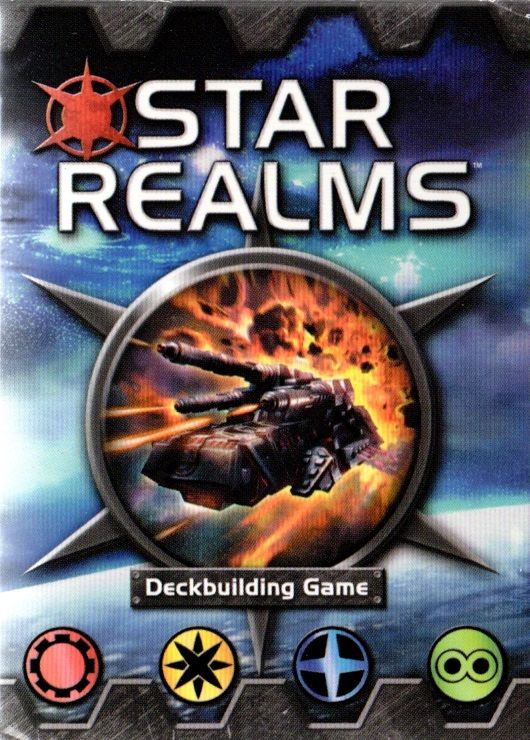
Star Realms is the best $15 you can spend on a 2-player game. It’s a deck-building card game that fits in a pocket, plays in 20 minutes, and delivers the kind of escalating tension that most games twice its size struggle to achieve.
You start with identical weak decks. Each turn you use trade points to buy better ships and bases from a shared market row, and use combat points to hit your opponent’s authority (the health total that starts at 50 and needs to reach zero). Bases sit on the table defending or generating bonuses. Destroy them or face their ongoing threat.
The four factions - Trade Federation (healing), Star Empire (card draw), Machine Cult (deck scrubbing), Blob (raw damage) - align with different playstyles, and the bonuses for playing two cards from the same faction reward building a focused deck rather than grabbing everything. A good Blob draw can smash an opponent for 15+ damage out of nowhere.
Why it works: The deck-building loop is extraordinarily tight here. You feel your deck improving every cycle - weak Scout cards replaced by actual warships, useless Vipers upgraded into cruisers. The game also has a genuinely mean defensive option in bases, which forces your opponent to deal with them before hitting you. There’s real strategy in a tiny package.
Best for: Fans of Dominion who want something faster and more direct. Also great as a travelling game.
4. Hive
BGG Weight: 2.31 · 2 Players only · 20 min · BGG Rating: 7.32 · Rank #334 · BGG Page
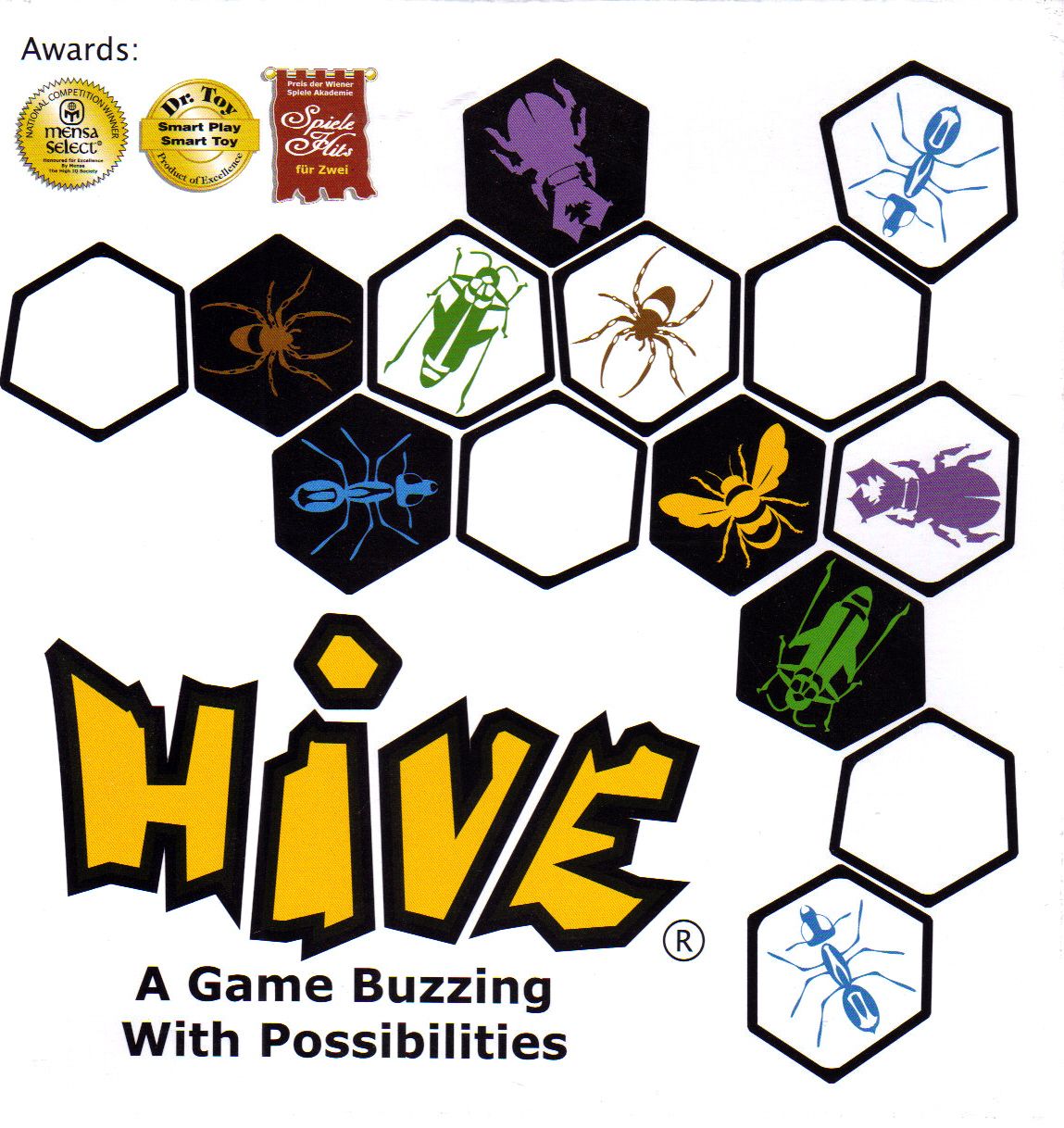
Hive requires no board, no setup, and no luck. It’s a pure abstract strategy game played with chunky Bakelite tiles, each representing an insect with a distinct movement rule. Your goal: surround the opponent’s Queen Bee completely while keeping your own Queen free. The first player to achieve that wins.
The Queen Bee can move one space. The Soldier Ant can move anywhere. The Beetle can climb on top of other pieces, locking them in place. The Grasshopper jumps in straight lines over pieces. The Spider moves exactly three spaces. Learning the movement rules takes five minutes; mastering the board state takes years.
What makes Hive remarkable is that the “board” is the hive itself - a constantly shifting cluster of tiles that you’re both adding to and moving within. Pieces that seem safely positioned can become traps. Opening moves matter enormously (the Queen must enter by turn 4 at the latest). And because there’s no randomness whatsoever, every loss is a lesson.
Why it works: Chess players love it. Abstract fans who find chess too rigid love it because the living board creates more dynamic mid-game states. The travel version (Pocket Hive) is virtually indestructible and plays in bags. BGG community consistently recommends the Ladybug and Mosquito expansions.
Best for: Strategy gamers who want a pure abstract with zero luck. Also excellent for competitive players who want to improve - there’s a ranked online community.
5. 7 Wonders Duel
BGG Weight: 2.23 · 2 Players only · 30 min · BGG Rating: 8.08 · Rank #24 · BGG Page

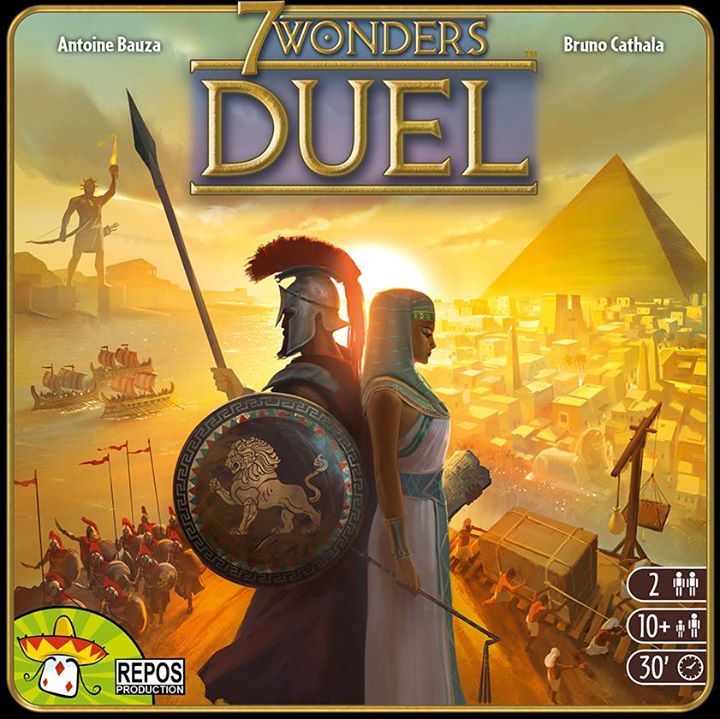
7 Wonders Duel is one of the best 2-player games ever made, full stop. It takes the civilisation-building card drafting of 7 Wonders and rebuilds it specifically for two from the ground up - and the result is tighter and more strategic than the original.
Over three ages, you’re taking cards from a face-up/face-down pyramid arrangement. Cards are only available when nothing covers them, so every pick changes what your opponent can access. You’re building your civilisation (resources, science, military, culture), racing to complete Wonders with massive bonuses, and constantly checking three possible victory conditions.
That’s what gives Duel its unique tension: you can lose before the end of the game. Collect six of seven different science symbols and you win immediately. Push the military track far enough to your opponent’s capital and you win immediately. Or score the most points at game end. All three are live threats simultaneously, and you’re always managing your own plan against your opponent’s.
Why it works: The card arrangement makes every choice interactive. Taking a card you don’t need to deny your opponent is often correct. The three victory paths mean momentum swings are real - you can be winning on points and suddenly find yourself two science symbols away from losing. Plays in 30 minutes. One of the most satisfying games at any weight.
Best for: Everyone. Genuinely the 2-player game to own if you own one. Great entry point for heavier games, satisfying for experienced players.
6. Undaunted: Normandy
BGG Weight: 2.27 · 2 Players only · 45-60 min · BGG Rating: 7.76 · Rank #182 · BGG Page
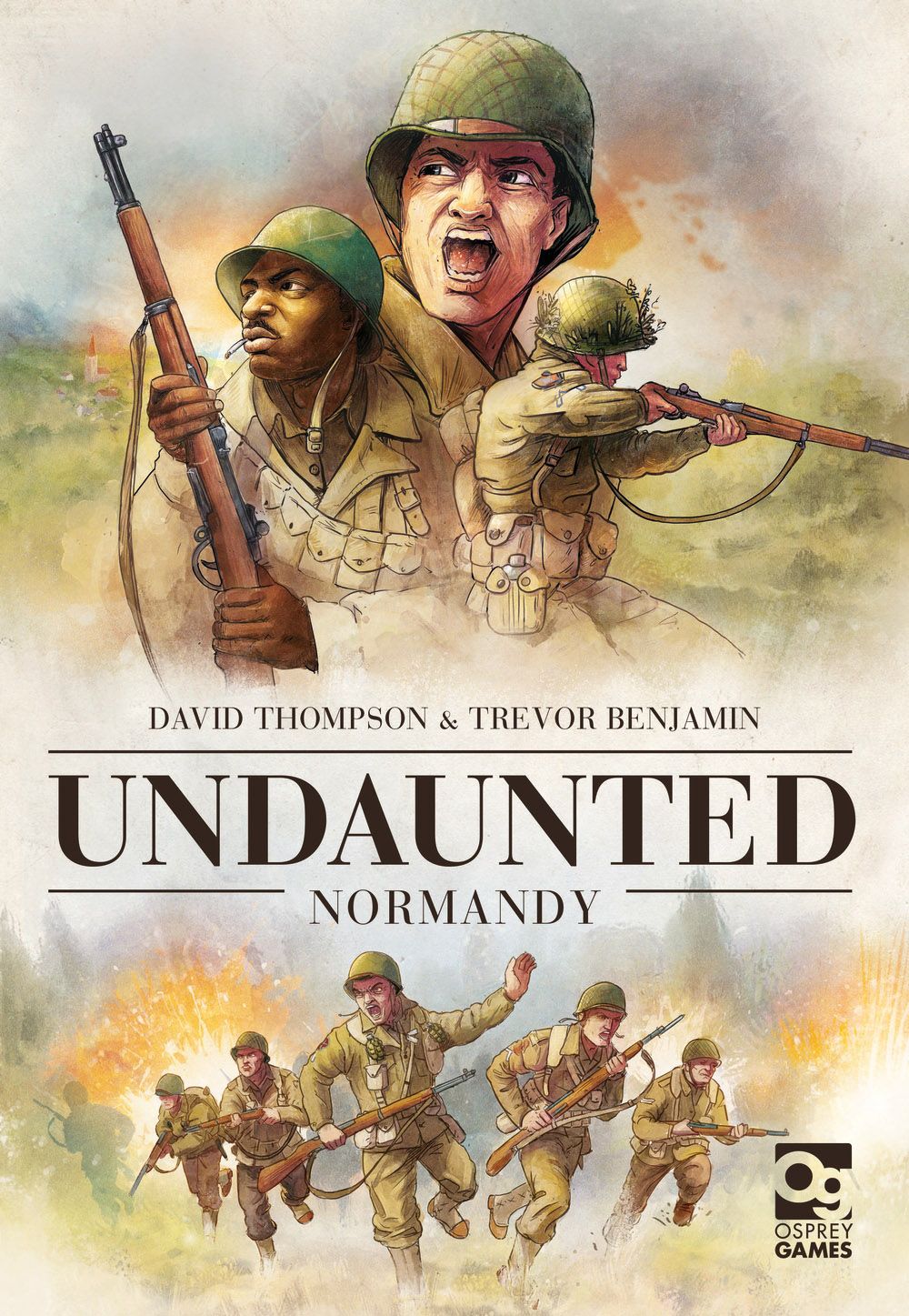
Undaunted: Normandy is the game that proved deck-building and wargaming belong together. You’re playing through a campaign of WWII skirmishes in Normandy - one player commanding US infantry, the other German defenders. The deck you build is your command structure: better cards mean faster activations, better scouts, more powerful units.
The card play is elegant. Each unit in the game has corresponding cards in your deck. Drawing an Infantry card lets you activate an infantry squad. Drawing a Scout card lets you move your scouts forward - and scouts are what reveal the tile-based map and expand your sight lines. Units that take casualties remove their cards from your deck, making your command structure genuinely weaker in a way that affects your hand size and options.
The campaign structure is excellent. Play all ten scenarios in order (roughly three sessions) and the strategic choices in one battle affect the starting conditions of the next. Taking an objective early means a bonus in the next scenario; losing a unit means starting shorthanded.
Why it works: It scratches the wargame itch without requiring a 20-page rulebook. The deck-building layer means there’s actual card construction to manage between scenarios. The scenarios are historically grounded, the map tiles are modular and atmospheric, and the campaign length (roughly 6 hours total) hits a sweet spot between commitment and payoff.
Best for: Wargame-curious players, fans of deck-building who want more narrative, couples who can commit to a campaign.
7. Twilight Struggle
BGG Weight: 3.62 · 2 Players only · 120-180 min · BGG Rating: 8.23 · Rank #14 · BGG Page
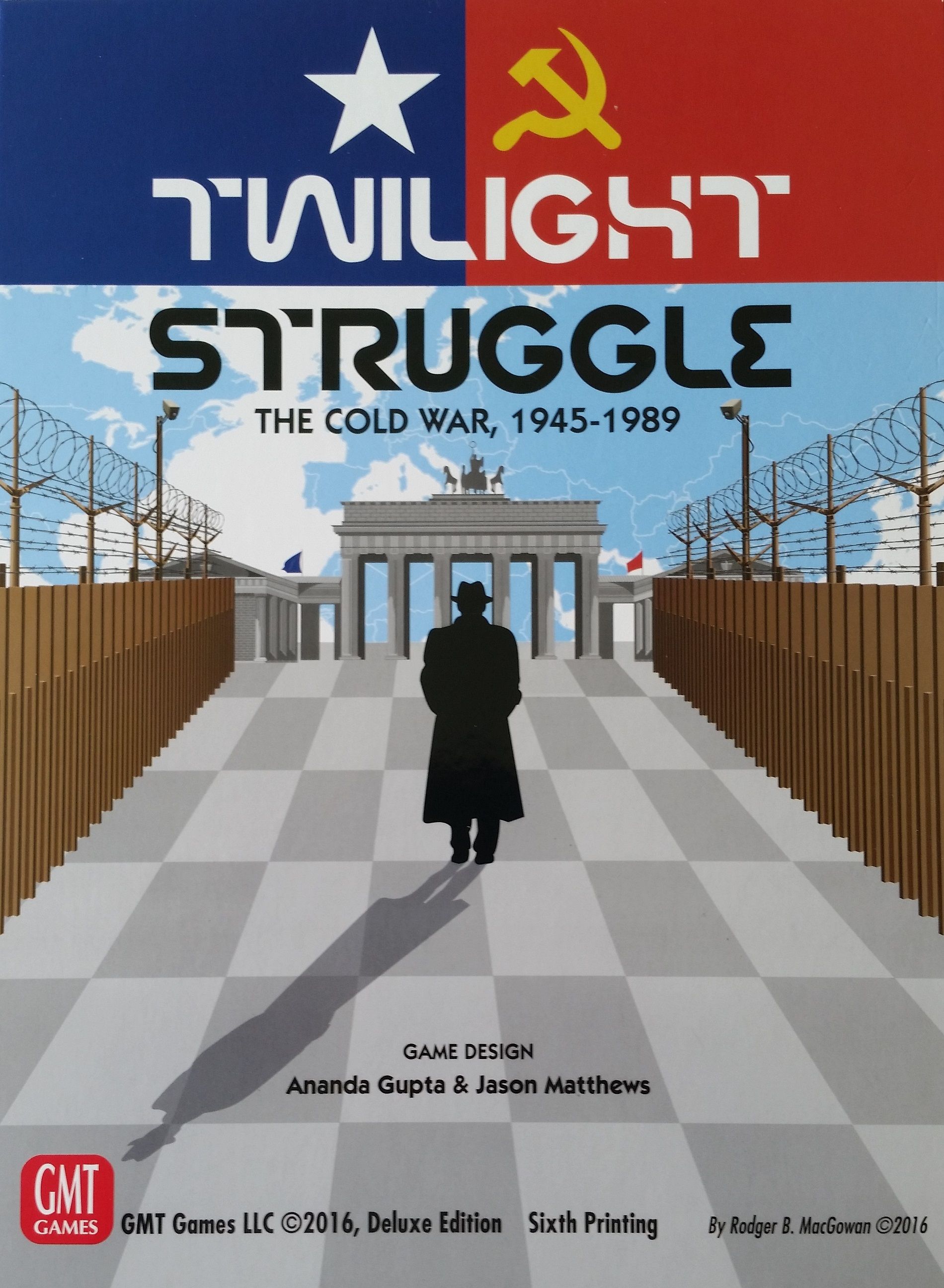
Twilight Struggle held the #1 spot on BGG for six years. It’s a Cold War card-driven game of ideological influence, proxy wars, and nuclear brinksmanship - and it remains one of the most thematic, tense, and replayable games ever made.
You and your opponent represent the US and USSR from 1945 to 1989. Each card represents a real historical event - the Marshall Plan, Decolonization, the Cuban Missile Crisis. You use cards either for their operations (adding influence to regions around the world) or trigger their event. The brutal twist: your hand contains both American and Soviet events. Play a card for operations and your opponent’s event triggers anyway. Every card play is a negotiation between what you gain and what you hand the other side.
The DEFCON track looms over everything. Certain aggressive moves push DEFCON toward 1 (nuclear war); if it ever reaches 1, the player who caused it loses the game instantly. This mechanic creates genuine restraint - you can see the moment your opponent has you cornered, but obliterating their position in Europe might be the move that ends civilisation.
Why it works: Three hours is a commitment, but the game earns it. You’re not just playing a game - you’re replaying history, watching the arc of the Cold War play out through your decisions. The historical events create moments (“The Berlin Wall goes up. Your response?”) that feel genuinely weighted. No other game delivers the same combination of historical education and strategic depth.
Best for: Experienced players comfortable with long games, history enthusiasts, anyone who wants a 2-player game to remember.
The Short Version
| Game | Weight | Time | Best For |
|---|---|---|---|
| Jaipur | 1.46 | 30 min | Beginners, couples |
| Patchwork | 1.60 | 20 min | Puzzle fans |
| Star Realms | 1.91 | 20 min | Deck-builder fans |
| Hive | 2.31 | 20 min | Abstract strategy |
| 7 Wonders Duel | 2.23 | 30 min | Everyone |
| Undaunted: Normandy | 2.27 | 60 min | Wargame-curious |
| Twilight Struggle | 3.62 | 180 min | Experienced players |
If you own zero 2-player games: start with Jaipur or 7 Wonders Duel. If you already have those: Undaunted: Normandy is the next step up in commitment and it pays off enormously. And if you’ve never played Twilight Struggle, add it to the list - it’s earned its legendary status.
All ratings and rankings sourced from BoardGameGeek.