There’s a specific kind of satisfaction that engine building games deliver that almost no other mechanic can match: the feeling of watching something you built from scratch start to run. Turn one you’re scraping by; turn fifteen your whole tableau is clicking together in a way you didn’t fully predict when you started.
If you’ve felt that and want more of it - or if you’ve heard the term and want to know where to start - this list covers the full range. From gateway games you can teach in ten minutes to sprawling economic monsters, here are the seven best engine building board games available right now, ordered by complexity.
What Is Engine Building, Exactly?
Engine building is a mechanic (sometimes a category) where your main job is constructing a system of cards, tiles, or actions that becomes increasingly efficient over the course of the game. Early turns feel slow - you’re laying groundwork. Later turns feel fast, because each action cascades into two or three more.
The engine is the point. The score is just how you measure it.
The List
1. Gizmos
BGG Rating: 7.36 | Weight: 2.06 | Players: 2-4 | Time: 40-50 min | Rank: #419
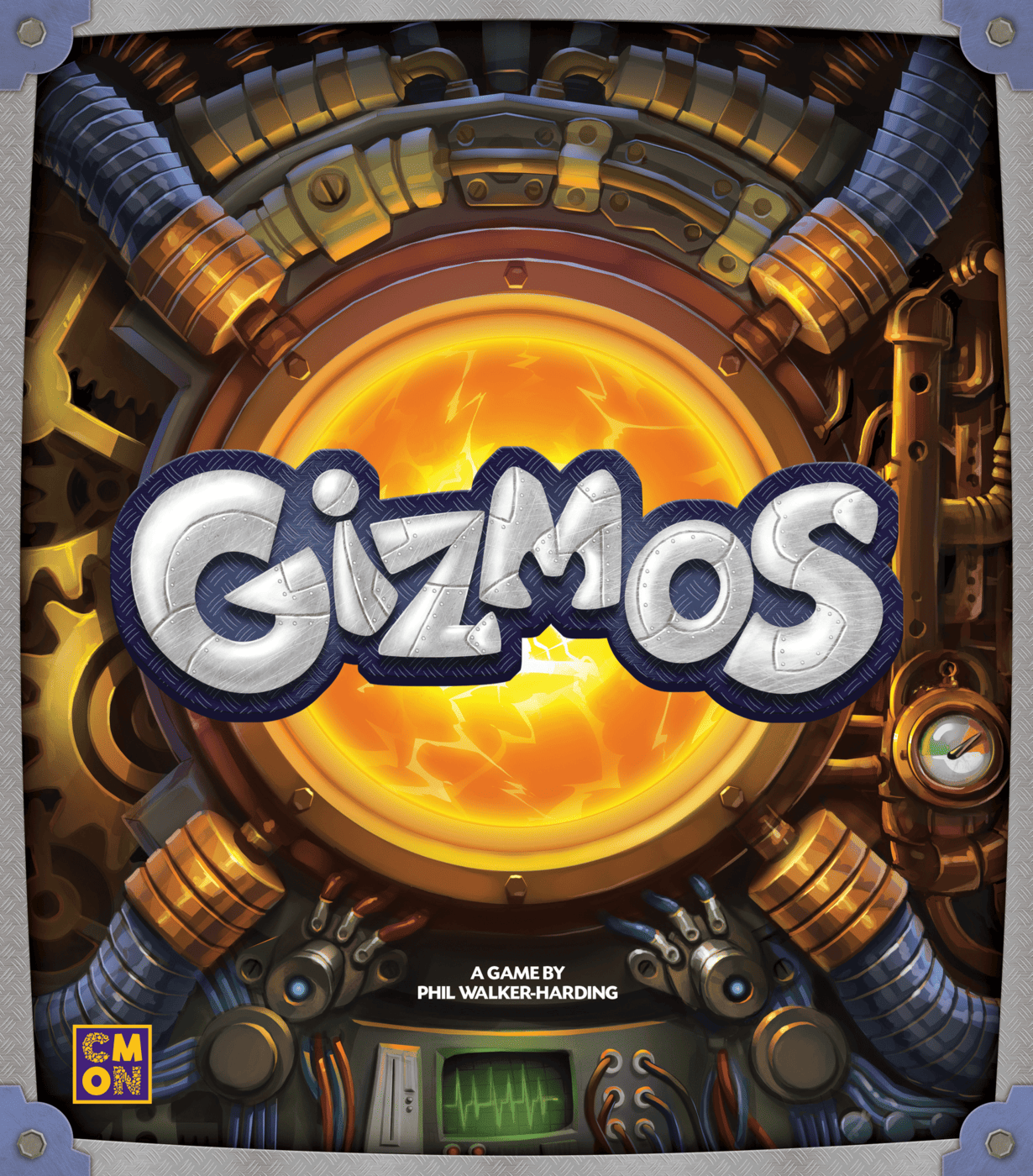 © CMON. Gizmos puts engine building front and centre with a satisfying marble dispenser.
Gizmos (BGG #246192) is the clearest, most direct implementation of engine building you’ll find. You buy upgrades (gizmos) that trigger other gizmos when conditions are met - stack enough of them and a single marble pick nets you resources, free cards, energy boosts, and victory points all at once.
The plastic marble dispenser is a gimmick, but it’s a great gimmick. More importantly, Gizmos is transparent: you can see exactly what each card does and how it chains. There’s no fog here, which makes it ideal for first-timers.
Who it’s for: Anyone new to the mechanic, or anyone who wants a light 45-minute game that still feels satisfying.
Who to skip it: Gamers who want depth and player interaction - Gizmos is mostly solitaire at a shared table.
2. Dominion
BGG Rating: 7.60 | Weight: 2.34 | Players: 2-4 | Time: ~30 min | Rank: #146
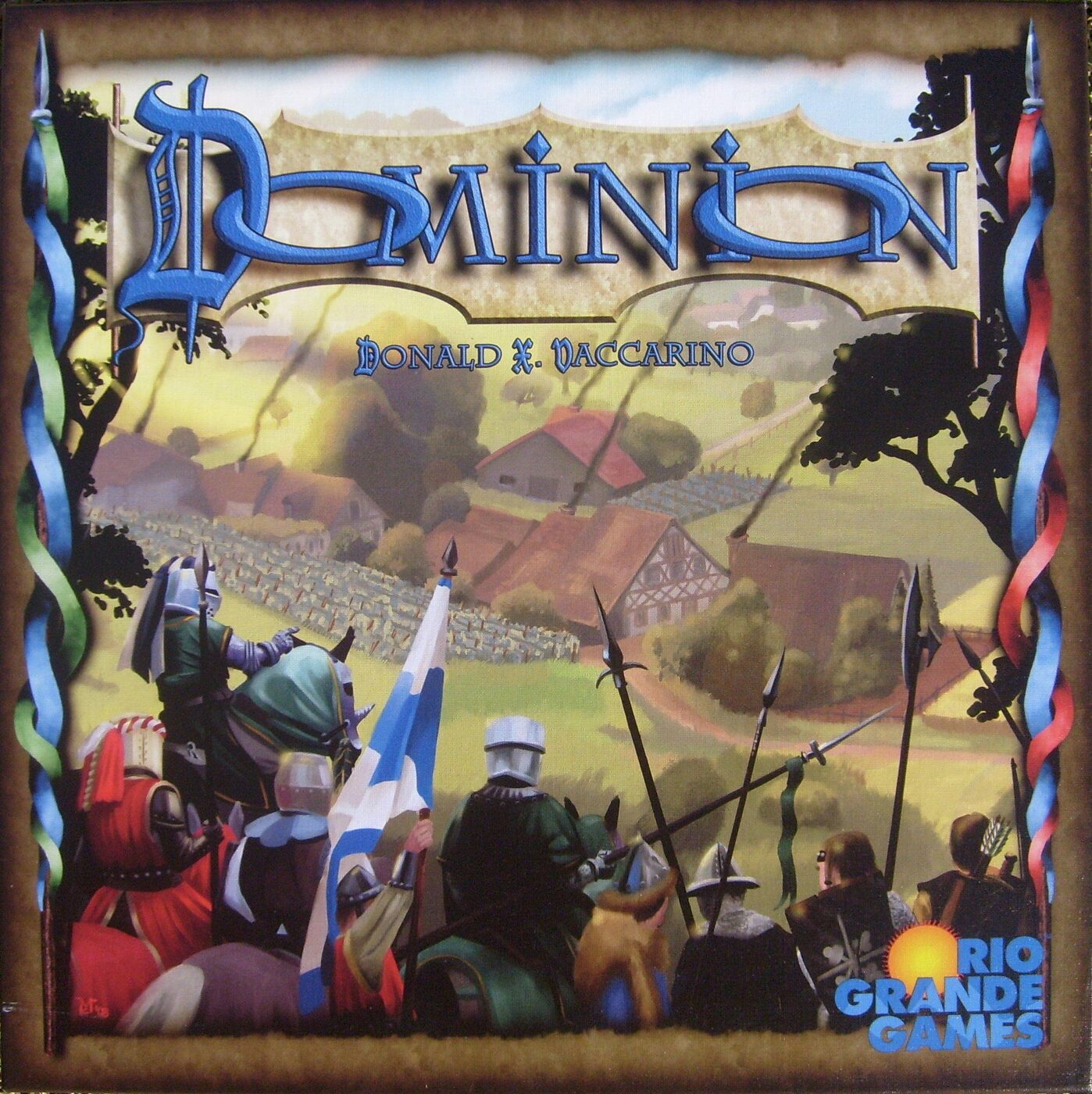 © Rio Grande Games. Dominion invented deck building - and it’s still one of the cleanest engines in the hobby.
Dominion (BGG #36218) invented deck building in 2008, and deck building is engine building with a shuffled twist. You’re constructing a deck of action cards that, when drawn in the right combinations, execute efficient chains.
What makes Dominion remarkable nearly 20 years on is how clean it still is. Each kingdom card set creates a different puzzle. Discard strategies, attack variants, money rush builds - there’s genuine decision density here wrapped in a 30-minute game. The base set alone contains more replayability than many games ten times its price.
Who it’s for: Anyone interested in the roots of engine building. Also exceptional for two players.
Who to skip it: Players who want tactile components or a sense of physical progression. Dominion is cards, cards, and more cards.
3. Wingspan
BGG Rating: 8.00 | Weight: 2.48 | Players: 1-5 | Time: 40-70 min | Rank: #38
 © Stonemaier Games. Wingspan’s bird cards are the engine - each one a triggered power that chains with others.
Wingspan (BGG #266192) needs no introduction at this point, but it belongs here because it’s the game that converted the most non-gamers into engine building enthusiasts. Each bird card you play into your habitat is a cog in a machine. Brown powers trigger when you take an action in that habitat; white powers fire when other players take actions. Over four rounds, the engine compounds.
What Wingspan does brilliantly is layer the engine building onto something visually and thematically compelling. The bird art is exceptional. The egg-and-food economy feels intuitive. And the solo Automa system is one of the better single-player implementations in the hobby.
Who it’s for: Groups with mixed experience, families stepping up from gateway games, solo players.
Who to skip it: Hardcore strategists looking for deep crunch - Wingspan’s engine can feel shallow once you’ve played it twenty times.
4. Everdell
BGG Rating: 7.98 | Weight: 2.83 | Players: 1-4 | Time: 40-80 min | Rank: #45
 © Starling Games. Everdell blends worker placement and card engine building in a gorgeous forest setting.
Everdell (BGG #199792) sits at the intersection of worker placement and engine building. Workers gather resources; resources fund cards; cards create a tableau of critters and constructions that trigger synergies and generate ongoing bonuses. The engine is your city - a hand-built settlement of up to 15 cards that you spend the game populating.
The standout quality here is the interconnection density. Meadow cards (the shared market) change every game, and since the synergies between card types shift dramatically based on what’s available, no two games build the same engine. Everdell rewards players who can read the board and adapt mid-plan.
It’s also gorgeous, with a 3D tree centerpiece that dominates your table in the best possible way.
Who it’s for: Players who want engine building with more interaction and table presence. Excellent at 3-4 players.
Who to skip it: Those who prefer tight, fast games - Everdell at 4 players can run long.
5. Race for the Galaxy
BGG Rating: 7.74 | Weight: 2.99 | Players: 2-4 | Time: 30-60 min | Rank: #94
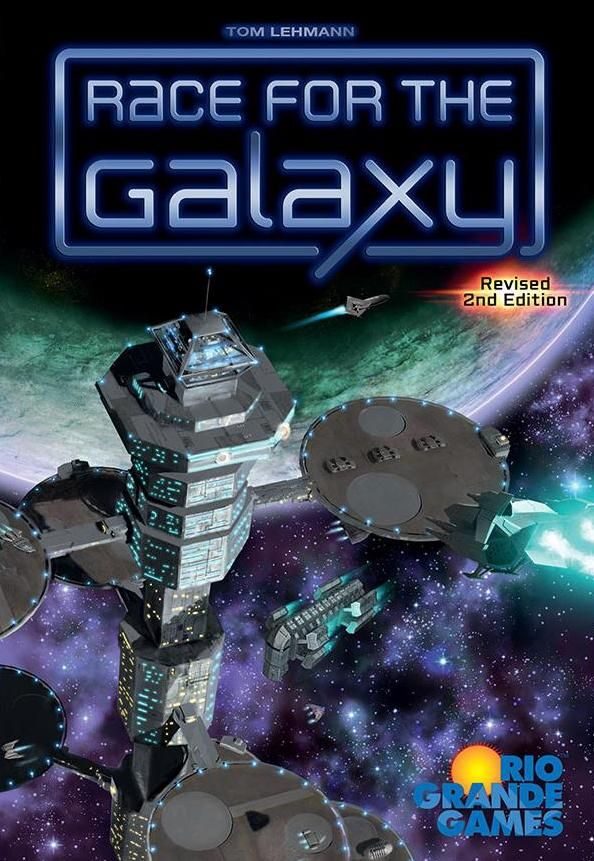 © Rio Grande Games. Race for the Galaxy is dense, fast, and deeply satisfying once it clicks.
Race for the Galaxy (BGG #28143) has a notoriously steep learning curve - the iconography is opaque and the first few games feel like reading a foreign language. Push through it. This is one of the tightest, most replayable engine builders in existence.
The core loop is elegant: every round, players simultaneously select one of seven phases. The phases you pick happen for everyone, but you get a bonus in the phase you chose. Your tableau of worlds and developments dictates what phases you want to emphasise, which shapes what phase you pick, which influences what your opponents get - all without a single word spoken.
Engines in Race for the Galaxy can go in wildly different directions: military conquest, trade empires, development chains, windfall exploitation. The depth per minute ratio is exceptional.
Who it’s for: Experienced gamers who want a meaty game that finishes in 45 minutes. Outstanding at two players.
Who to skip it: Anyone who won’t commit to the learning curve. The first two games are rough. If your group gives up after one play, this will collect dust.
6. Terraforming Mars
BGG Rating: 8.33 | Weight: 3.27 | Players: 1-5 | Time: ~120 min | Rank: #9
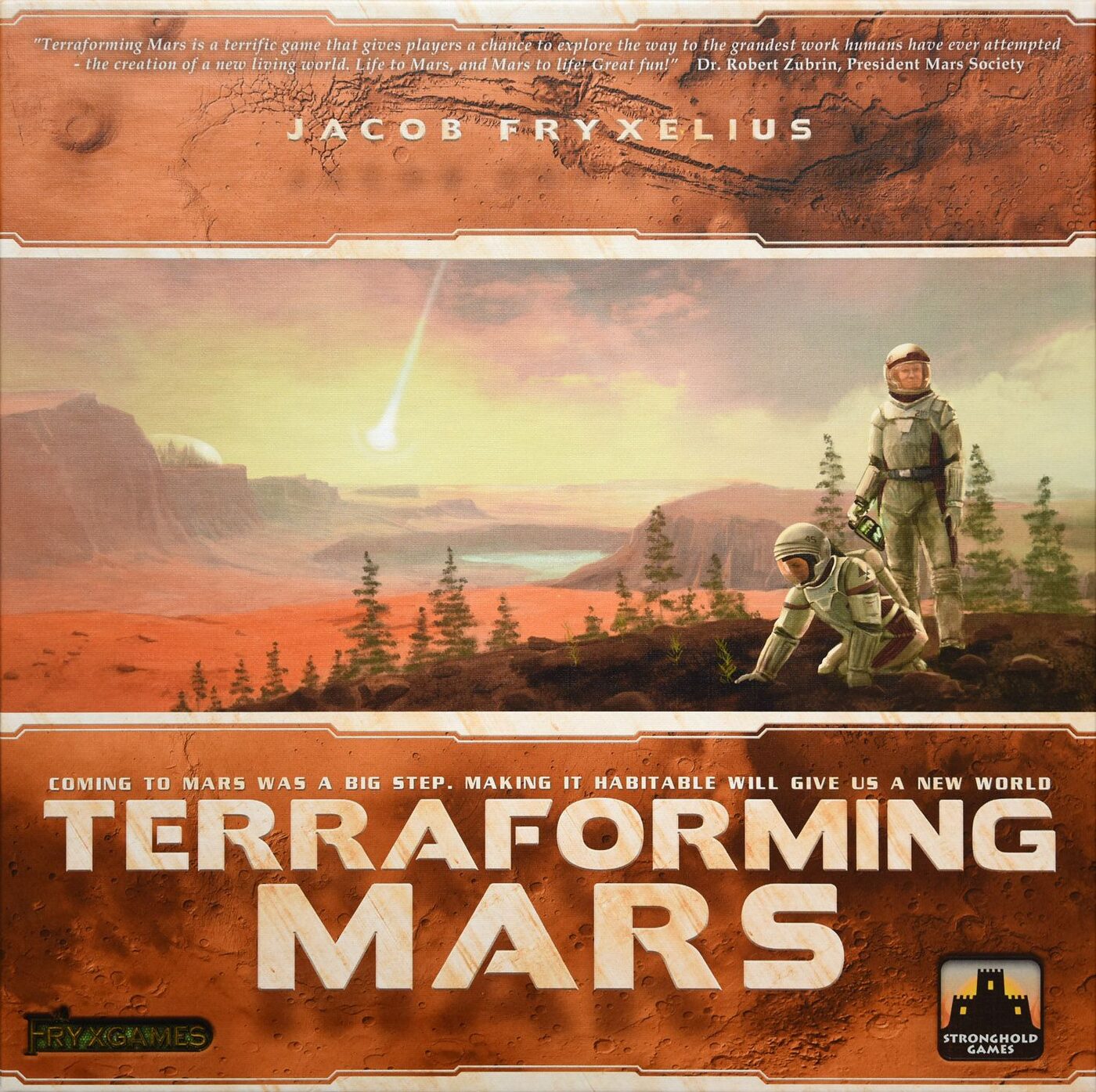 © FryxGames. Terraforming Mars gives you hundreds of project cards to build with - the engine variety is staggering.
Terraforming Mars (BGG #167791) is where engine building goes epic. You’re playing as a corporation competing to terraform the red planet - raising temperature, oxygenating the atmosphere, creating oceans - while building an economic engine of project cards that generate resources, reduce costs, and trigger immediate effects.
The production phase is everything. Each generation, you collect income based on your production tracks. The game is about raising those tracks efficiently while also advancing global parameters and competing for placement bonuses on the board. It’s richer and messier than anything above it on this list.
The card pool (240+ in the base game) ensures that your engine genuinely never looks the same twice. Different corporations have different starting positions and special powers, adding another layer of strategic variance.
Who it’s for: Players who want a serious two-hour engine game with significant depth and replayability.
Who to skip it: Anyone who gets frustrated by runaway leaders or analysis paralysis - TM can have both in the wrong group.
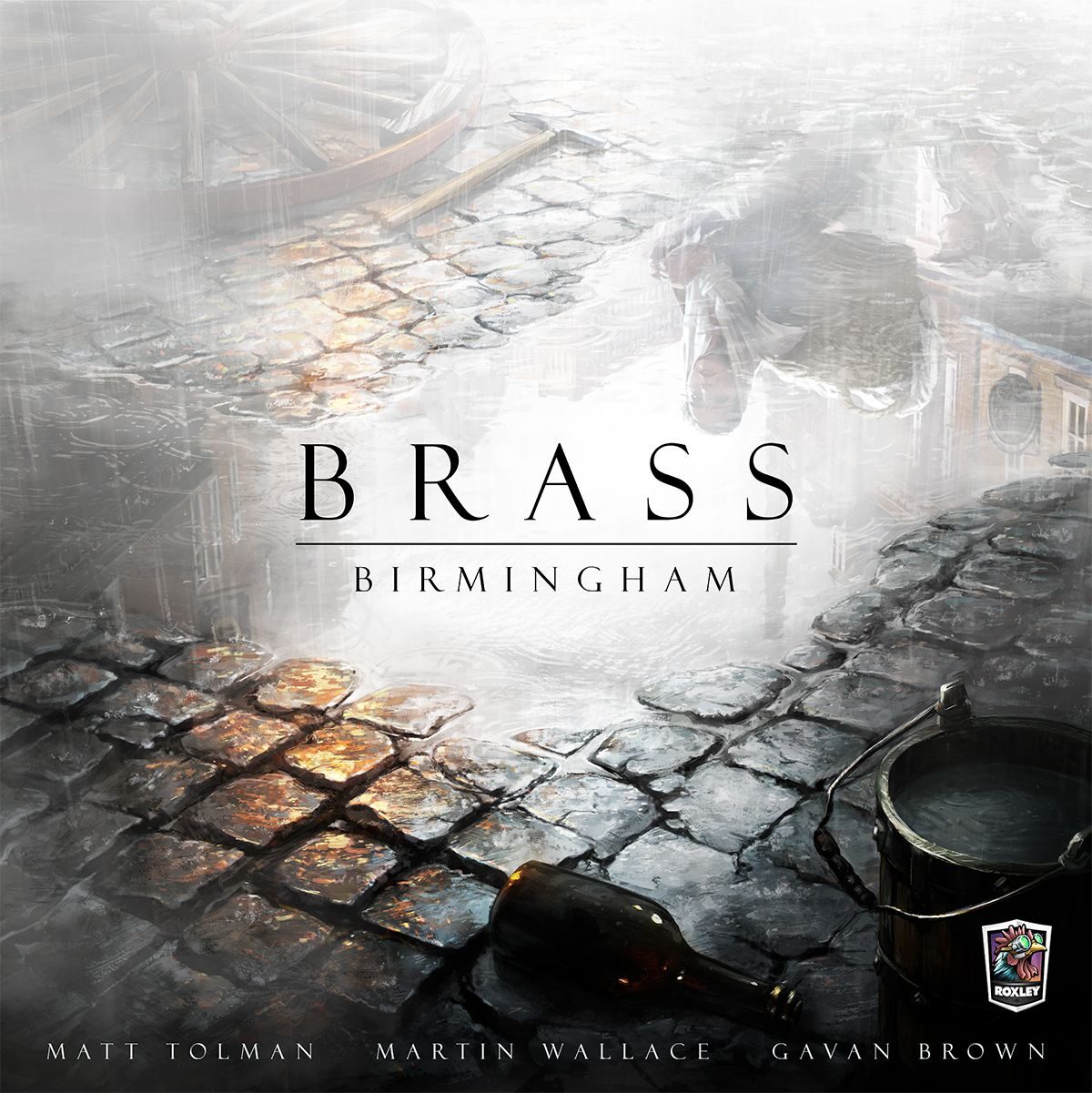
7. Brass: Birmingham
BGG Rating: 8.56 | Weight: 3.86 | Players: 2-4 | Time: 60-120 min | Rank: #1
 © Roxley Games. Brass: Birmingham sits at #1 on BGG for good reason - it’s an economic engine masterpiece.
Brass: Birmingham (BGG #224517) is the highest-rated board game on BGG and deserves that position. It’s an economic network builder set in the Industrial Revolution: you’re constructing canals and then railways, building industries that produce coal, iron, merchants, cotton, and manufactured goods.
The engine here is geographic and temporal. Industries must be built in the right places to supply the right networks. Canal links in era one are swept away; railway links in era two open the whole map. Every card in your hand is dual-purpose - either a location where you can build, or an industry you can develop. This constraint is central to the game’s genius.
What separates Brass: Birmingham from everything else on this list is the economic interdependence. You need coal to build; coal comes from coal industries, either yours or an opponent’s (and using theirs benefits them too). This creates a web of soft cooperation and strategic tension that makes every decision feel consequential.
Who it’s for: Experienced gamers who want the best engine building game available, full stop.
Who to skip it: Groups that struggle with longer teach times or who want direct confrontation. Brass is subtly competitive, not obviously aggressive.
Quick Comparison
| Game | Weight | Time | Players | BGG Rank |
|---|---|---|---|---|
| Gizmos | 2.06 | 40-50 min | 2-4 | #419 |
| Dominion | 2.34 | ~30 min | 2-4 | #146 |
| Wingspan | 2.48 | 40-70 min | 1-5 | #38 |
| Everdell | 2.83 | 40-80 min | 1-4 | #45 |
| Race for the Galaxy | 2.99 | 30-60 min | 2-4 | #94 |
| Terraforming Mars | 3.27 | ~120 min | 1-5 | #9 |
| Brass: Birmingham | 3.86 | 60-120 min | 2-4 | #1 |
All weights and ratings from BGG as of August 2026.
Where to Start
Total newcomers: Start with Gizmos or Wingspan. Both are approachable, teach well, and deliver that “aha” moment when the engine clicks into gear.
Experienced gamers: Go straight to Brass: Birmingham or Terraforming Mars. These are the games people mean when they say engine building is one of the best mechanics in the hobby.
Two-player focus: Race for the Galaxy or Dominion are exceptional at two and play in under an hour.
Solo play: Wingspan, Everdell, Terraforming Mars, and Brass: Birmingham all have solo modes of varying quality. Wingspan’s Automa is the most polished; TM’s solo variant is the most challenging.
The engine building genre rewards patience and investment. Each game on this list has a steeper learning curve than a dice-chucking filler - but the payoff, when you see your machine running at full tilt, is worth every confused first play.
Pick one. Build something.