Two players. One table. The question is always the same: what do we actually play?
Two-player gaming has had a genuine renaissance over the past decade. Publishers have stopped treating the 2-player format as an afterthought or a shrunken version of a bigger game, and started designing specifically for it. The result is a category packed with some of the sharpest, most elegant designs in the hobby.
This list covers eight games that actually earn their place on the shelf - verified against BGG data, spanning the full weight spectrum, and road-tested enough to have a real reputation. No filler, no padding. Just eight games worth owning.
Quick-reference: BGG Stats at a Glance
| Game | BGG Rank | Rating | Weight | Play Time |
|---|---|---|---|---|
| Star Wars: Rebellion | #10 | 8.42 | 3.75 | 180-240 min |
| Twilight Struggle | #16 | 8.23 | 3.61 | 120-180 min |
| 7 Wonders Duel | #24 | 8.07 | 2.23 | 30 min |
| Patchwork | #148 | 7.58 | 1.60 | 15-30 min |
| Targi | #176 | 7.58 | 2.34 | 60 min |
| Jaipur | #201 | 7.48 | 1.46 | 30 min |
| Codenames: Duet | #276 | 7.41 | 1.36 | 15-30 min |
| Agricola: ACBAS | #465 | 7.32 | 2.35 | 30 min |
1. 7 Wonders Duel - The Sweet Spot Everyone Agrees On
BGG #24 | Rating: 8.07 | Weight: 2.23 | 30 minutes

Image credit: Repos Production / BoardGameGeek
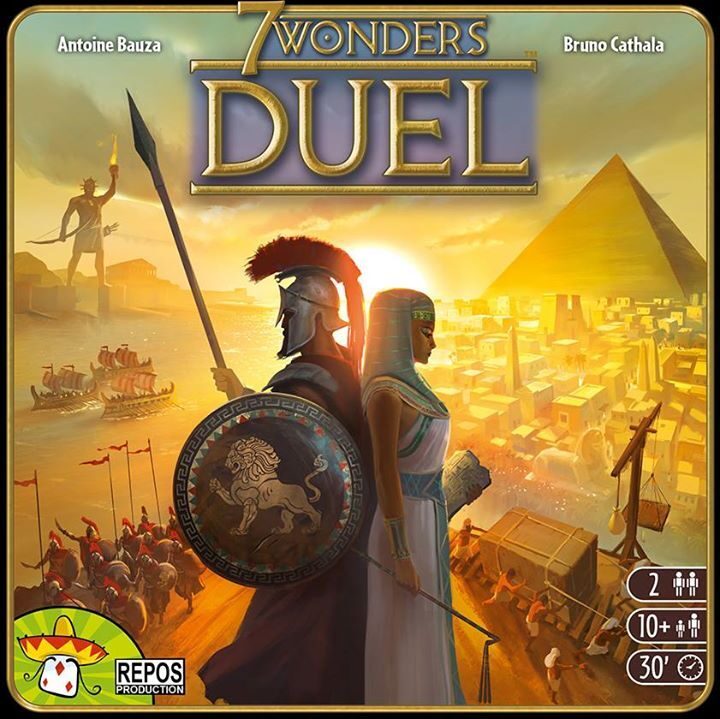
If you own exactly one 2-player game, it should probably be this one. 7 Wonders Duel sits at #24 on BGG’s all-time rankings - and it absolutely belongs there.
Antoine Bauza and Bruno Cathala took the civilization-building engine of 7 Wonders and rebuilt it from the ground up for two players. The result is a game that plays in 30 minutes but demands real decisions from the first card you draft. The card pyramid creates natural information asymmetry: some cards are face-down until an adjacent card is taken, which means every pick can set up or defuse your opponent’s next move.
Three paths to victory add genuine tension. You can race for a scientific supremacy (six different symbols), storm for military dominance (push the conflict marker past 9), or accumulate the most points. Good opponents don’t let any one path go unopposed for long.
The weight sits at 2.23 - comfortable for beginners to learn in a session, deep enough that experienced players can study it for months. It’s one of very few games that genuinely works as a gateway and a competitive game.
Best for: Anyone. This is the correct first 2-player game purchase.
2. Jaipur - The Best 30-Minute Game in the Category
BGG #201 | Rating: 7.48 | Weight: 1.46 | 30 minutes
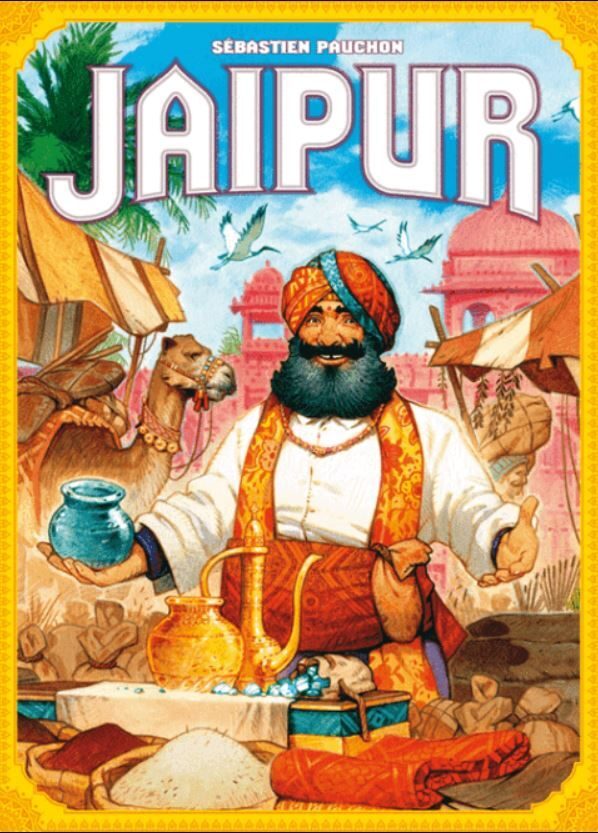
Image credit: Space Cowboys / BoardGameGeek
Jaipur has been around since 2009 and still gets pulled out more than most games published this decade. That’s a signal worth paying attention to.
You’re a trader in the maharaja’s city, taking and selling goods - spices, leather, silk, gold, silver, diamonds - while competing for market position. The tension comes from timing: selling early gives you guaranteed income but smaller bonuses; waiting accumulates goods but risks your opponent clearing the market before you.
The camel mechanic is clever without being complicated. Camels act as a buffer - you can take the entire camel herd from the market into your hand (they don’t count against your hand limit), then use them as a swap mechanism to pick up goods you actually want. It creates natural rhythm and satisfying pivots.
At weight 1.46, it’s one of the lightest games on this list. The rules fit on one page. That’s not a weakness - it means the interesting decisions are never buried under rules overhead.
Best for: Non-gamers, couples, anyone who wants something that packs down in 20 minutes.
3. Patchwork - The Puzzle Game That Rewards Every Brain Type
BGG #148 | Rating: 7.58 | Weight: 1.60 | 15-30 minutes
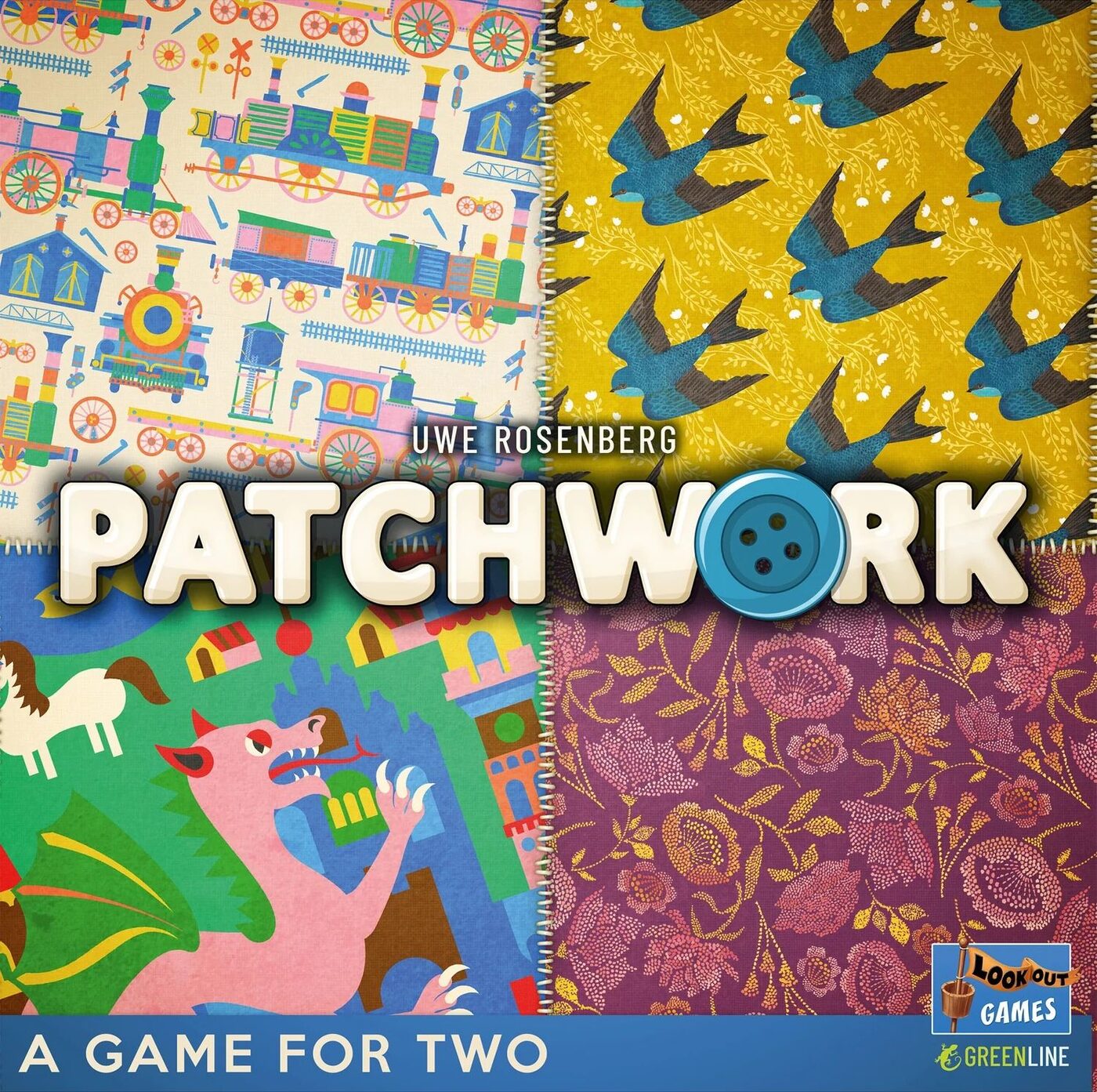
Image credit: Lookout Games / BoardGameGeek
Patchwork is Uwe Rosenberg at his most elegant. Two players compete to fill a personal 9×9 quilt board with Tetris-shaped patches, balancing immediate button income against the long-term cost of leaving gaps.
The time track is the masterstroke. Instead of taking turns alternately, whoever is furthest back on the track moves - meaning a series of cheap, fast moves can give you far more actions than a slow, expensive patch. You’re managing time as a resource, not just space.
At 15-30 minutes and weight 1.60, this is one of the more accessible games on the list, but don’t let that fool you. Spatial reasoning and long-term planning matter here. The 7×1 special tile awarded to the first player to complete a 7×7 section creates a secondary race within the main competition.
BGG rank #148 for a 15-minute tile-placement game tells you a lot. This one earns its place on every recommendation list because it consistently delivers.
Best for: Abstract thinkers, puzzle fans, people who secretly love Tetris.
4. Targi - The Most Underrated Game on This List
BGG #176 | Rating: 7.58 | Weight: 2.34 | 60 minutes
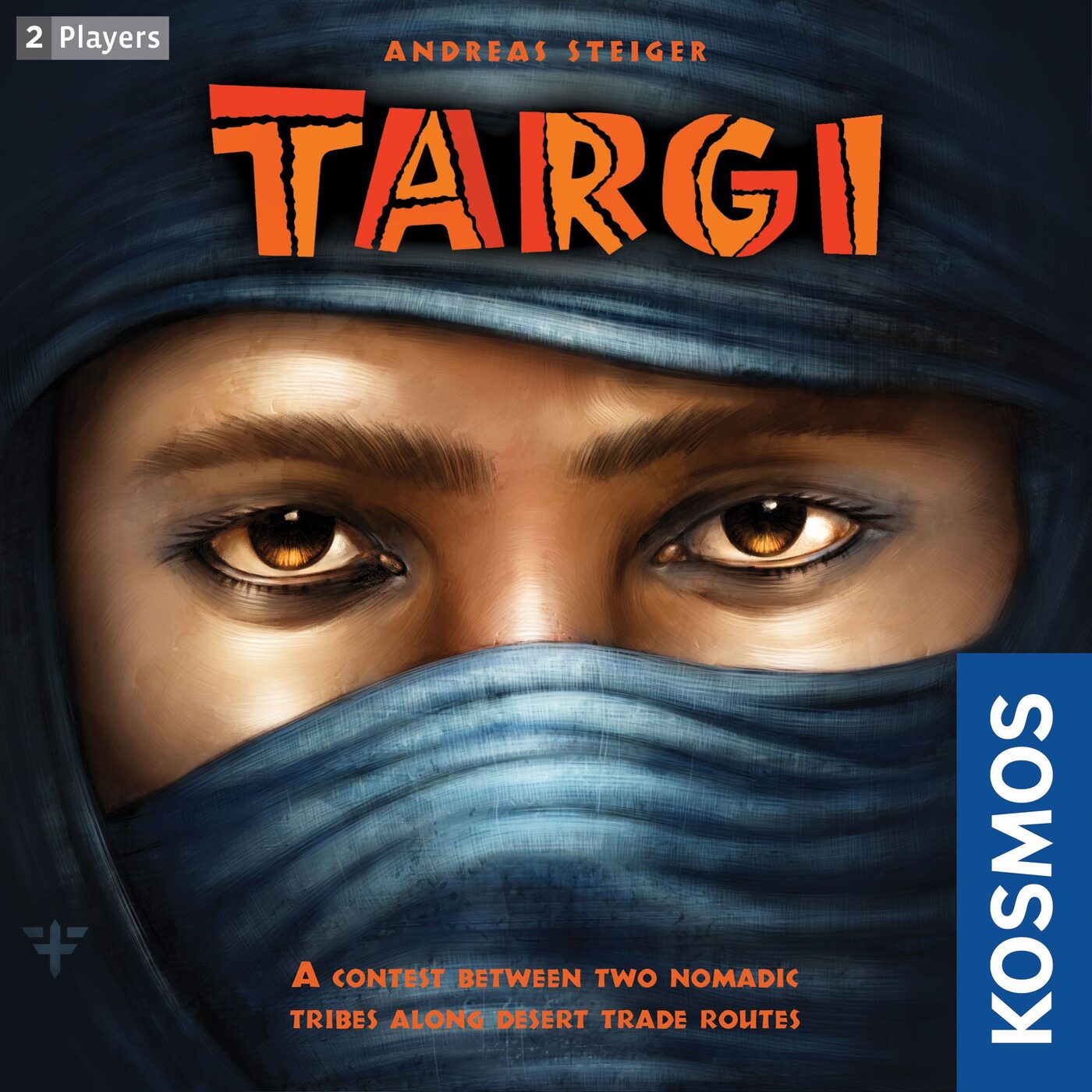
Image credit: KOSMOS / BoardGameGeek
Targi doesn’t get enough attention outside dedicated 2-player circles, which is a shame - it’s a genuinely excellent worker-placement game.
You’re leading a Tuareg tribe, placing workers on the border of a 5×5 grid and collecting the intersection card in the middle. The catch: your opponent’s workers block your options, and the Robber pawn moves automatically, removing border cards before you can claim them. Every turn involves pressure from multiple directions.
The tribal cards you collect have persistent effects that stack and interact. A well-built engine from three or four synergistic cards can flip the game - but getting there requires blocking your opponent from doing the same thing first.
At weight 2.34, it’s a step up from Jaipur or Patchwork but nothing intimidating. The 60-minute play time feels efficient rather than padded. If you play worker-placement games like Viticulture or Agricola and haven’t tried this, it should be your next purchase.
Best for: Worker placement fans, gamers looking for a meaty 2-player experience under £30.
5. Agricola: All Creatures Big and Small - Farming Distilled
BGG #465 | Rating: 7.32 | Weight: 2.35 | 30 minutes
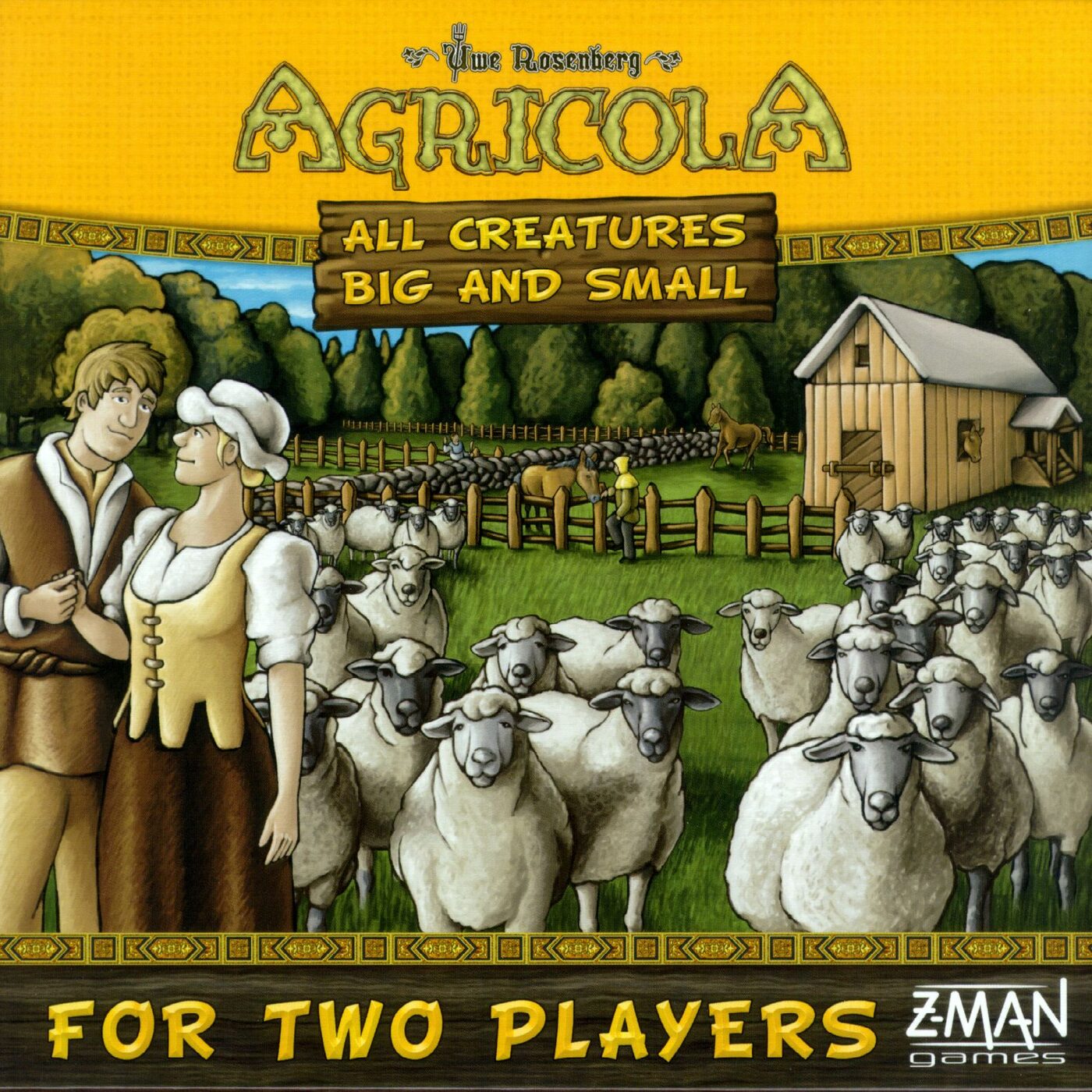
Image credit: Lookout Games / BoardGameGeek
The full Agricola is a 90-minute survival exercise for two to five players. All Creatures Big and Small strips it back to pure animal husbandry for exactly two, and it’s a sharper experience for it.
You’re expanding your farm, building enclosures, collecting resources, and breeding animals - sheep, pigs, cattle, horses. The worker placement is tight: with only two players and 8 spaces, almost every action taken is one your opponent wanted. The game rewards planning three or four turns ahead while adapting to what’s available.
It plays in 30 minutes and packs away small, which makes the weight-to-time ratio exceptional. The BGG rank (#465) is dragged by comparison with the full game rather than standalone quality. On its own terms, this is a genuinely satisfying mid-weight puzzle.
Best for: Agricola fans who want the 2-player version, or couples who want a competitive euro that doesn’t overstay its welcome.
6. Codenames: Duet - The Co-op That Actually Works
BGG #276 | Rating: 7.41 | Weight: 1.36 | 15-30 minutes
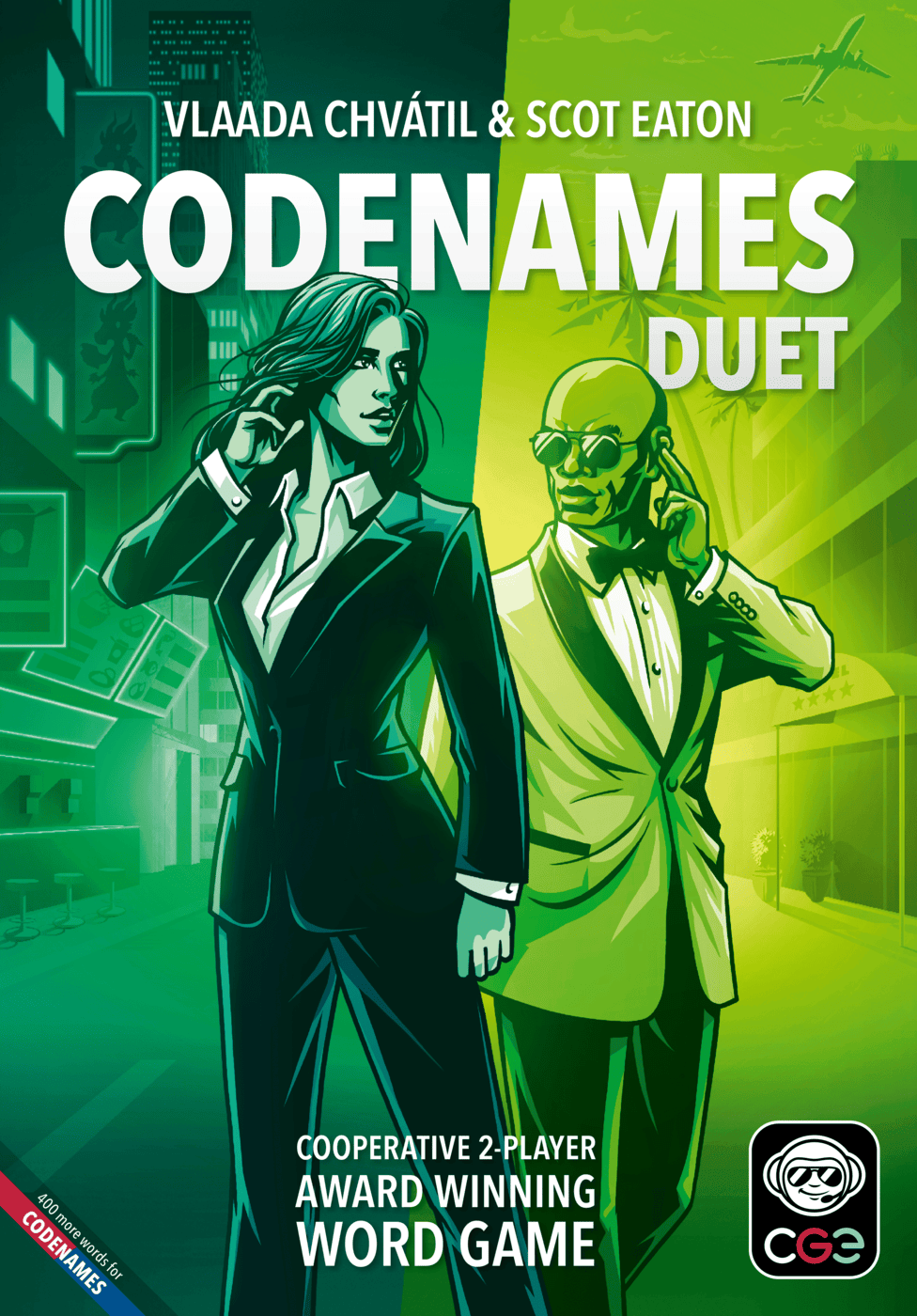
Image credit: Czech Games Edition / BoardGameGeek
Most co-op games for two players feel like a multiplayer game with one player removed. Codenames: Duet was designed specifically for two, and it shows.
Both players are spymasters simultaneously. Each player sees a different key card - some agents overlap, some are marked as assassins on your grid but not your partner’s. You take turns giving clues while the other guesses, building a shared understanding of each other’s thinking under time pressure.
The cooperative framing removes the competitive edge and replaces it with a different kind of tension: communicating clearly enough that your partner hits the right words without hitting the assassins you can see and they can’t. The campaign mode - moving through a map of locations with different time limits - adds replay structure.
At weight 1.36, this is the most accessible game on the list. That’s a feature, not a compromise. Sometimes you want to play a word game with someone who doesn’t play board games.
Best for: Non-gamers, couples who want something truly co-op, word game fans.
7. Twilight Struggle - The Cold War Classic
BGG #16 | Rating: 8.23 | Weight: 3.61 | 120-180 min
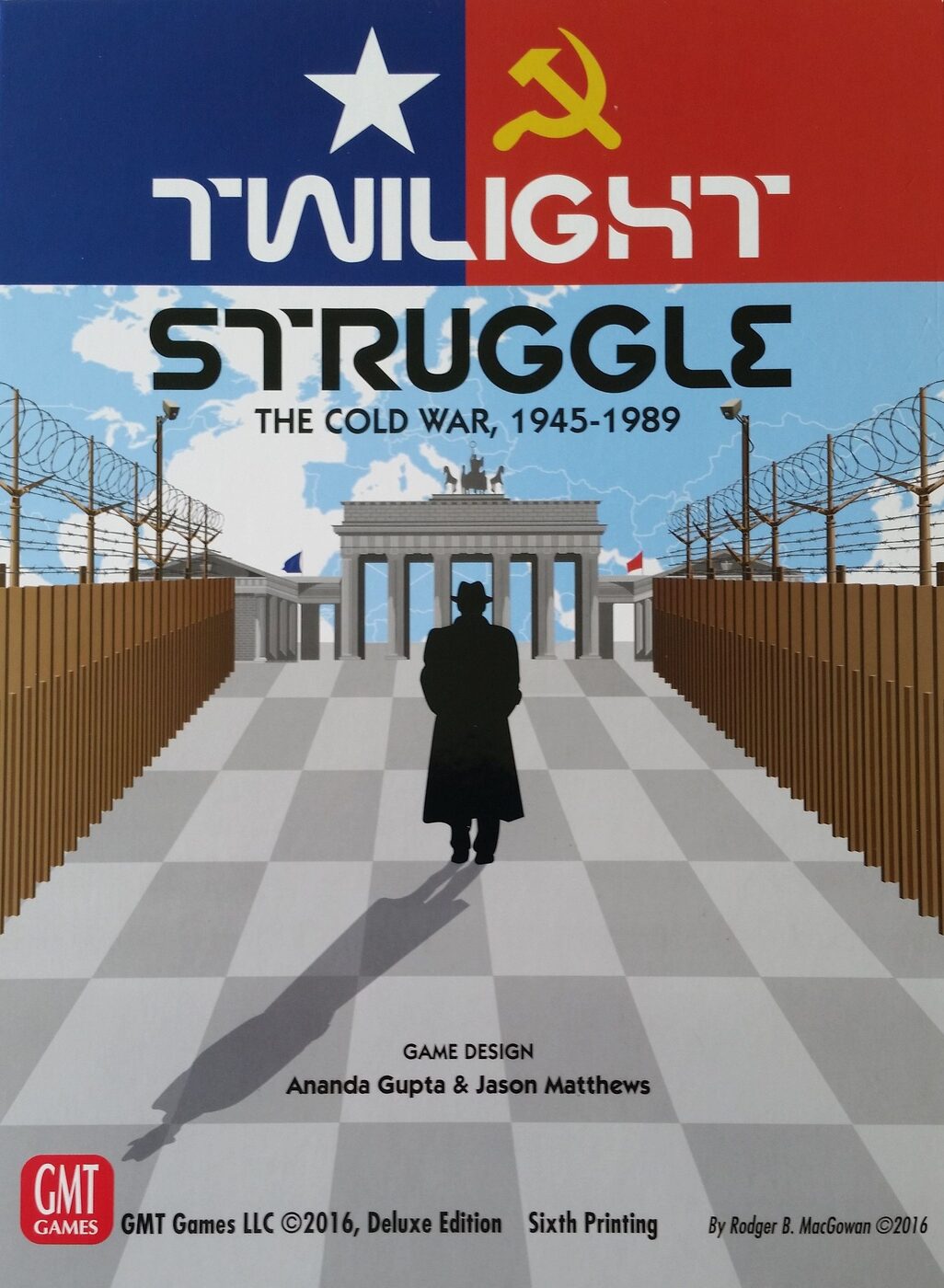
Image credit: GMT Games / BoardGameGeek
Twilight Struggle held the top spot on BGG’s all-time rankings for years, and while it’s settled at #16, that just reflects how many excellent games have been released since 2005. It’s still one of the best games ever designed.
One player is the US, one is the USSR. You’re playing cards to influence countries, score regions, trigger historical events, and manage the DEFCON track - because if nuclear war breaks out, the player who triggered it loses immediately. The card play is the genius: every card can be played for its ops value or to trigger its historical event, but the events often benefit your opponent. Choosing when to eat a bad event versus how to spend operations is the central tension of every hand.
Weight 3.61 is significant. The rules aren’t especially complex, but the card knowledge matters enormously - experienced players have the 100+ card deck memorised and are planning several turns ahead. The asymmetry between the two superpowers is subtle but real: the USSR has early-game advantages, the US builds strength through the mid and late game.
This one asks for a real time commitment (120-180 minutes). Give it that, and you’ll understand why it’s still discussed reverently twenty years on.
Best for: History enthusiasts, dedicated gamers, anyone who wants the kind of strategic depth you don’t find in lighter games.
8. Star Wars: Rebellion - The Epic Asymmetric Monster
BGG #10 | Rating: 8.42 | Weight: 3.75 | 180-240 min
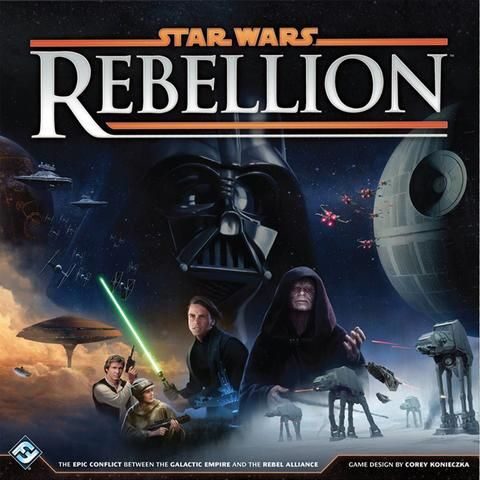
Image credit: Fantasy Flight Games / BoardGameGeek
Star Wars: Rebellion sits at #10 on BGG’s all-time rankings with an 8.42 rating. The weight (3.75) and play time (three to four hours) tell you this isn’t a casual evening - it’s a session.
One player controls the Galactic Empire. One player controls the Rebel Alliance. The asymmetry is radical: the Empire wins by finding and destroying the Rebel base; the Rebels win by surviving long enough for the galaxy to rally to their cause. You’re not playing the same game as your opponent in any meaningful sense.
Leader deployment drives the action. You send characters - Luke Skywalker, Darth Vader, Princess Leia, Han Solo - on missions across the galaxy. Combat is resolved with custom dice, and the card effects layer Star Wars lore directly into gameplay. Losing a leader during a mission, watching your probe droids narrow down the Rebel base location, managing the Imperial fleet while the Rebels sabotage your supply lines - it all coheres into something that genuinely feels like the films.
Technically rated 2-4 players, but Rebellion is a 2-player game at its core. The 4-player variant adds complexity without adding proportional depth.
Best for: Star Wars fans (obviously), but also anyone who wants the most immersive asymmetric wargame experience in the hobby.
How to Choose
If you want one game that works for everyone: Start with 7 Wonders Duel. It’s the most versatile game on this list and it punches above its weight at every skill level.
If play time is the main constraint: Jaipur or Patchwork deliver complete, satisfying games in 30 minutes or less.
If you want something co-op: Codenames: Duet is the clear choice - and it’s the easiest to introduce to someone who’s never played a modern board game.
If you want depth and don’t mind the weight: Twilight Struggle for pure strategic tension, Star Wars: Rebellion for immersive asymmetric drama.
If you’re a euro gamer who wants something underrated: Targi is the one most dedicated 2-player gamers wish more people knew about.
All eight deserve shelf space. Pick based on what you’ll actually play, not what looks most impressive at 2am on BGG.
BGG data verified August 2026. Ratings and ranks subject to change.