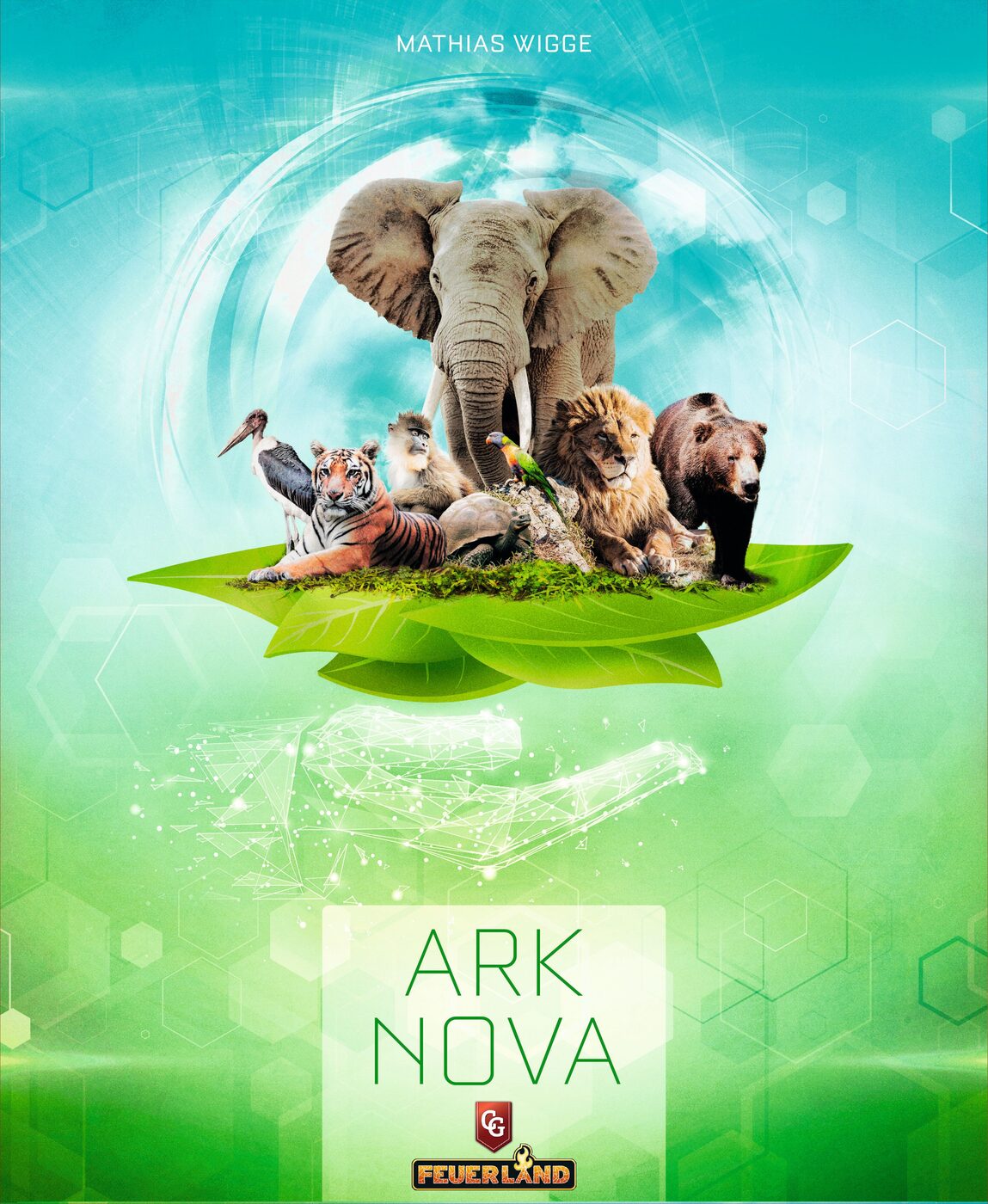
BGG #2 and #9 respectively. Two of the greatest board games ever designed, both card-driven engine builders, both sitting in the 90-150 minute range, both beloved by heavy euro fans worldwide. If you can only pick one, this comparison is for you.
Short version: the “right” answer depends entirely on what you want from a game night. Long version: keep reading.
The Games at a Glance
| Ark Nova | Terraforming Mars | |
|---|---|---|
| BGG Rank | #2 | #9 |
| Rating | 8.54 | 8.33 |
| Weight | 3.80 / 5 | 3.27 / 5 |
| Players | 1-4 (best 2) | 1-5 |
| Play Time | 90-150 min | 120 min |
| Year | 2021 | 2016 |
| Designer | Mathias Wigge | Jacob Fryxelius |
Both games share a genre label - card-driven engine builder - but under the surface they’re doing completely different things. Understanding how they differ is what makes the choice obvious once you know your own preferences.
Theme: Zoo vs Red Planet
This is the first fork in the road, and it matters more than you’d think.
Terraforming Mars puts you in charge of a corporation racing to make Mars habitable. You raise oxygen, temperature, and ocean coverage while simultaneously building an economic engine. The theme lands well: you genuinely feel like you’re terraforming a planet. Cards reference plausible near-future tech, real Martian geography, and competing megacorps. For science fiction fans, this game is catnip.
Ark Nova casts you as a zoo director building conservation projects and accommodating animals from around the world. The 255 animal cards feature real species with genuine conservation data baked into their abilities - a Sumatran tiger card plays differently from a capybara card, and the reasons feel authentic. The game operates on two levels simultaneously: the zoo-building fantasy and a real ecological mission, which gives it an unusual warmth that Terraforming Mars doesn’t quite have.
Neither theme is superior. They’re genuinely distinct emotional experiences. Know what makes your table light up.
Mechanisms: Different Engines Entirely
Both games are “card-driven engine builders” but the engines work nothing alike.
Terraforming Mars is a hand management game built around a project card market. You buy cards at the start of each round (3 MC each), play them from hand, and gradually build an engine from the interactions between everything on the table in front of you. At peak engine, you’re generating 40+ MCs per round and producing resources you couldn’t have anticipated three turns ago. It’s horizontal, sprawling, and deeply satisfying in a chaotic way.
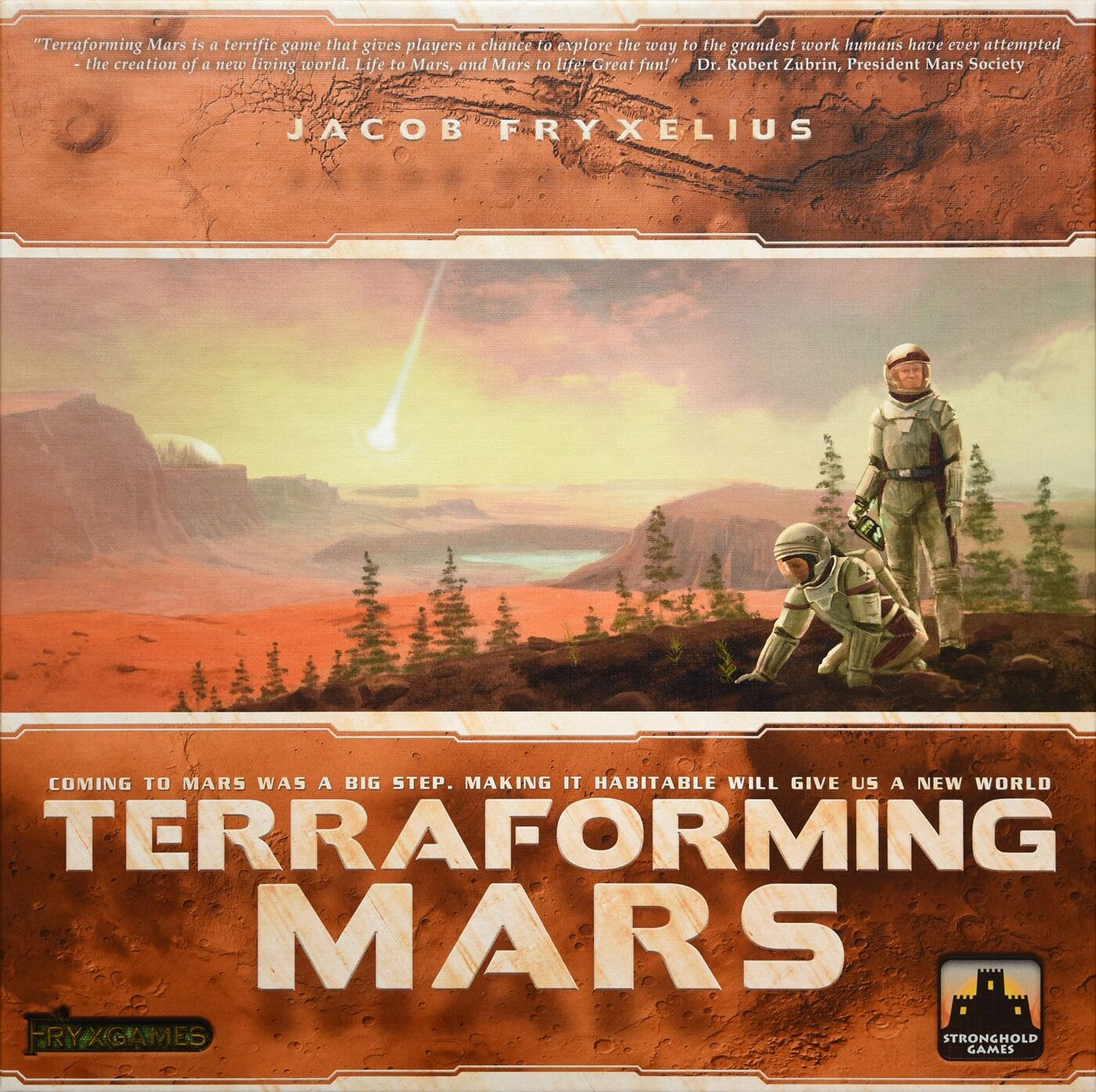 Terraforming Mars - BGG #9, weight 3.27. © Stronghold Games / Fryx Games
Ark Nova uses a rondel-like action slot system. You have five action cards (Cards, Build, Animals, Association, Sponsors), each gaining power based on its current slot position. The further right a card sits, the stronger the action - but using it resets it to the far left. This creates an elegant pacing mechanism: every turn you’re deciding which action to save for maximum power versus which to sacrifice now for immediate need. It’s more deliberate, tighter, and more interactive than TM’s engine.
Ark Nova also uses a dual-track scoring system - appeal points and conservation points - where the gap between your two tracks determines your score. You need both to converge, and you can end the game on your opponent’s turn if the tracks cross. That tension is something Terraforming Mars, with its generation-based structure, simply doesn’t create.
Complexity check: The BGG weight gap is real. Ark Nova’s 3.80 versus TM’s 3.27 reflects genuine additional mental load - the action slot timing, the dual-track endgame trigger, the card type interactions. First games of Ark Nova are noticeably more taxing, and the game rewards mastery more directly.
Player Count: Where Each Game Shines
This is a decision-driver that often gets overlooked.
Ark Nova is a 2-player game at heart. BGG community voting is unambiguous: 1,544 votes for Best at 2p, compared to 224 for solo, 667 for 3p, and just 112 for 4p. At four players, the personal zooboards are enormous, downtime accumulates, and the elegant action timing gets diluted. It functions at 3p but 2p is where it’s designed to be experienced.
Terraforming Mars scales legitimately across its 1-5 player range. Corporate competition intensifies with more players (map competition, milestone races, event card manipulation), and the 2p game is equally compelling. If your group size varies, TM gives you meaningful flexibility that Ark Nova doesn’t.
For regular 3-4 player groups: TM wins the player count flexibility argument comfortably. For 2-player households: Ark Nova is the better game.
Solo Mode
Both have solo modes worth playing, though they work differently.
Ark Nova gives you a tight 15-round race against pressure from the conservation track. The dual-track convergence mechanic translates naturally to solo - you’re solving a resource allocation puzzle with a hard deadline. BGG votes: 224 Best / 996 Recommended / 306 Not Recommended at 1 player. Genuinely strong.
Terraforming Mars asks you to complete full terraforming by generation 14. It’s clean and puzzle-like. The community-created Automa for competitive solo play is more satisfying than the official mode, and the Ares Expedition standalone edition (designed from the ground up as a shorter, cleaner game) has a better solo implementation if solo is a top priority for you.
For solo: Ark Nova has a slight structural edge. TM has a broader ecosystem of solo variants if you want options.
Replay Value
Both offer excellent replay value, achieved through different means.
Terraforming Mars has a vast card pool (over 200 in the base game, hundreds more across expansions) and corporation asymmetry that drives wildly different playstyles. The card market randomness means no two games resolve the same way. Expansions meaningfully evolve the game - Prelude in particular is near-essential, compressing the slow early game into something more dynamic.
Ark Nova has fewer cards (255) but higher decision density per card. The five card types interact in layered ways that take a dozen plays to fully map. Animal cards alone - each with unique placement requirements, abilities, and conservation tags - generate enormous variety within the base game. The second map (Zoo Map B) provides a fresh strategic context once you’ve mastered the original.
Both games have long legs. TM’s expansion ecosystem gives it more runway for long-term investment; Ark Nova rewards base game mastery more deeply and doesn’t require additional purchases to stay interesting after 30 plays.
Production Quality
Ark Nova wins this without much competition. The personal zoo boards are double-layered cardboard, the animal cards are beautifully illustrated with real photography, and the appeal/conservation track dials are a tactile pleasure to use.
Terraforming Mars’s base game is notoriously functional-over-flashy - basic card art, generic cubes, minimal player board personality. The Big Box edition addresses this significantly, as do third-party upgrades, but you’re spending more to get there. Ark Nova is impressive out of the box.
The Verdict
Buy Ark Nova if:
- You mostly play at 1-2 players
- You want a tighter, more deliberate system with a clever action mechanism
- Wildlife conservation resonates more than sci-fi corporation management
- You prefer one deeply mastered base game over an expanding content ecosystem
Buy Terraforming Mars if:
- You play regularly at 3-4 players
- You love the expansion cycle and want new content over time
- Near-future science fiction themes fire up your table
- You want a slightly more accessible on-ramp (weight 3.27 vs 3.80 is a real difference)
The answer most heavy euro players eventually land on: these are different games that happen to share a genre. Ark Nova didn’t dethrone Terraforming Mars - it carved out its own permanent spot next to it. Both belong in any serious collection.
If you’re buying your first: let player count and theme make the call. If you already own one: the other is an easy yes.
BGG data verified 15 July 2026. Ark Nova: BGG #2, weight 3.80, rating 8.54 (ID: 342942). Terraforming Mars: BGG #9, weight 3.27, rating 8.33 (ID: 167791).
Ark Nova cover © Capstone Games. Terraforming Mars cover © Stronghold Games / Fryx Games.